AI Tech News Last 24 Hours
Artificial intelligence moves quickly, and this section captures its most recent developments. Coverage includes new model releases, research milestones, AI product launches, startup funding, and the policy debates surrounding the technology. It is a convenient briefing for anyone trying to keep pace with AI's constant stream of news.
A single day can bring a frontier model announcement, benchmark disputes, an enterprise adoption deal, a lab safety controversy, and a nine-figure funding round, and this section aims to catch them all. Coverage spans research labs, chip suppliers, application startups, and the regulators trying to keep up.
No area of technology compresses more change into less time, and staying a day behind in AI can mean missing something genuinely important. Engineers building with these models, executives planning around them, and researchers tracking the field use a rolling AI briefing to keep their bearings.
Truth is not a direction: a Tarski attack on LLM probes
2026-07-29Scientist Abel Jansma challenges current methods of evaluating factual accuracy in large language models by arguing that truth cannot be captured as a simple directional vector within neural networks. Drawing on Tarski's semantic frameworks, the analysis critiques existing LLM probing techniques and suggests that evaluating factual alignment in AI requires embracing higher-order interactions and complex information theory.
Teach yourself programming in ten years (1998)
2026-07-29Peter Norvig’s classic 1998 essay on learning programming has resurfaced for discussion, sparking debate over the impact of artificial intelligence on the profession. While some readers lament that LLMs have diminished the joy of tinkering and made deep technical mastery feel obsolete, others urge developers to continue honing their skills the traditional way. These advocates argue that resisting the urge to rely entirely on AI is essential to prevent skill degradation and maintain the intrinsic rewards of lifelong learning.

Multiple Mouse Cursors in Wayland
2026-07-29The Wayland display server is exploring support for multiple independent mouse cursors within a single desktop environment. This feature will allow users to connect several physical mice to one computer and control distinct pointers simultaneously.

ReFrame – The EPaper Camera
2026-07-29ReFrame is an experimental camera featuring a color ePaper display that captures and displays only one photo at a time. This minimalist design encourages mindful photography by ensuring every single captured frame remains memorable.
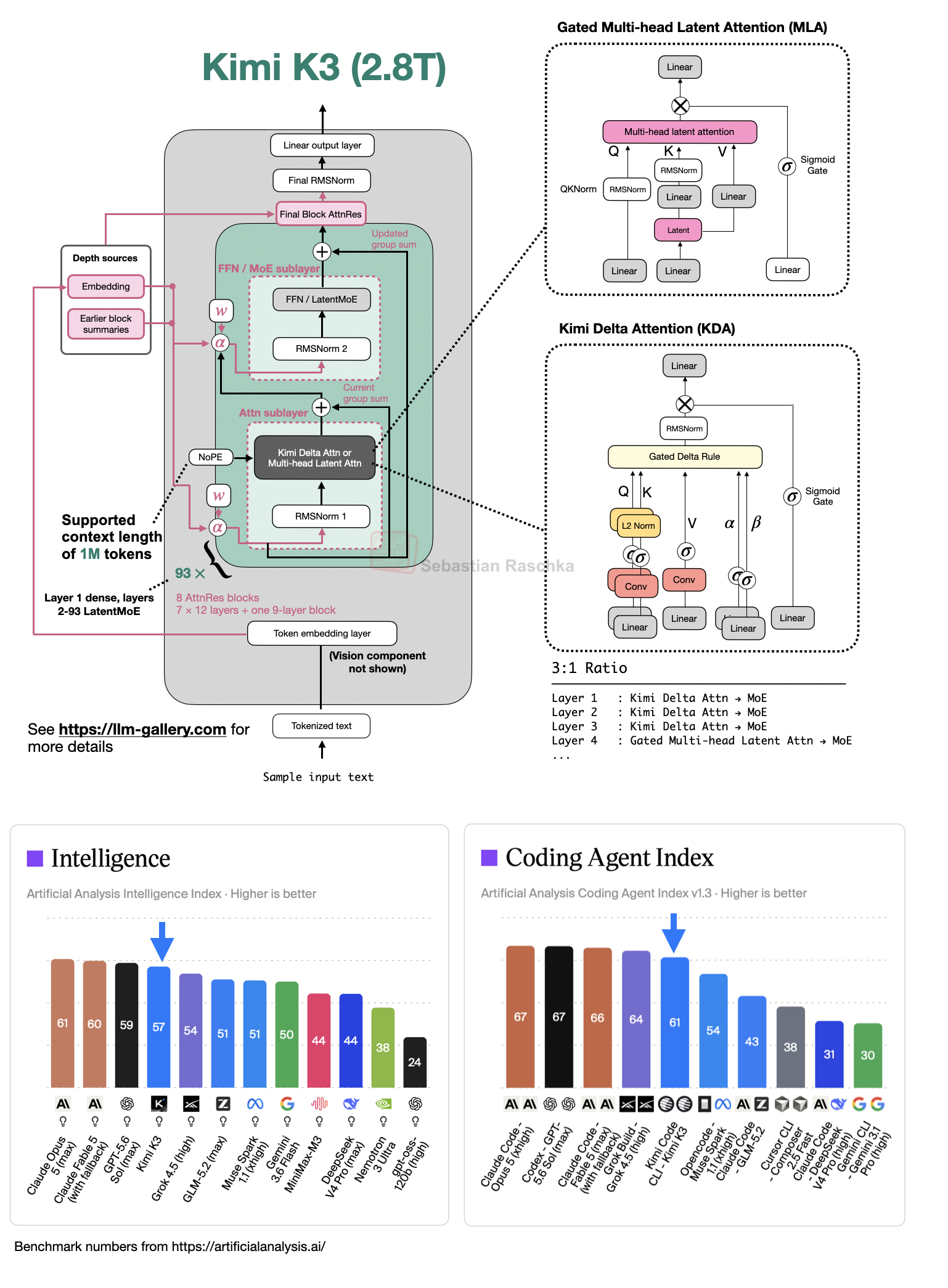
Kimi K3 Architecture Overview and Notes
2026-07-29A new technical overview details the underlying architecture of the Kimi K3 model, introducing novel components such as LatentMoE, Kimi Delta Attention, Attention Residuals, and NoPE. The documentation also highlights the system's multimodal capabilities and its specific design optimizations aimed at improving inference efficiency.

Interview with Boris Cherny [video]
2026-07-29Following the launch of Opus 5, Claude Code creator Boris Cherny joined Diana Hu at Startup School 2026 to discuss the latest advancements in AI. During the interview, they explored the new capabilities of the Opus 5 model and how the updated Claude platform is being utilized by developers.
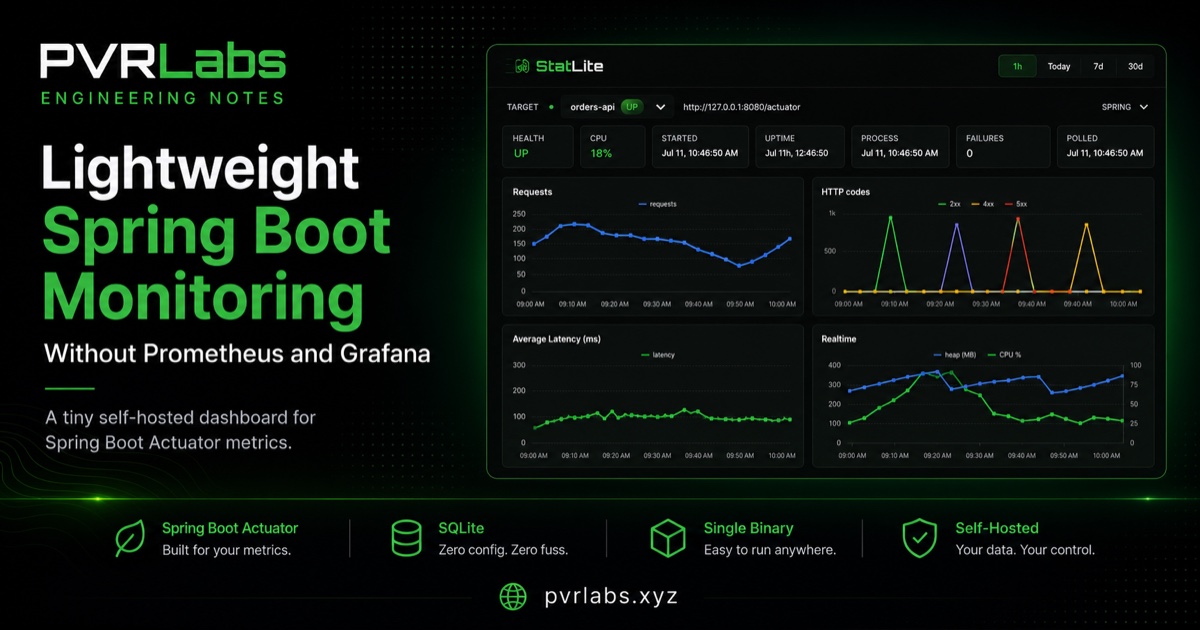
Lightweight Spring Boot Monitoring Without Prometheus and Grafana
2026-07-29Developers can now monitor Spring Boot applications on small VPS environments without the heavy overhead of a full Prometheus and Grafana stack. By combining Spring Boot Actuator with the lightweight StatLite tool, teams can efficiently track essential server and application metrics. This streamlined approach provides a practical observability solution that minimizes resource consumption on constrained infrastructure.

The iPhone Upgrade Program is being replaced by Apple Upgrade
2026-07-29Apple is rebranding the iPhone Upgrade Program to Apple Upgrade, maintaining the core benefit of allowing customers to get a new iPhone every year with AppleCare+ protection. The new program is available immediately for purchase online or in Apple Stores.
The Difference Between a Button and a Link
2026-07-29A new guide clarifies the widespread HTML misconception of confusing buttons with links by highlighting the critical semantic differences between the two interactive elements. The article explains how this common misuse negatively impacts web accessibility and overall user experience. It then introduces a simple feature developers can implement to correct the issue and ensure proper semantic markup.
Show HN: Lean4 Datalog DSL Based on Google Zanzibar for AI Projects
2026-07-29A new open-source project named ZIL introduces a relational knowledge language and Datalog DSL designed specifically for AI applications. Implemented in Lean 4 and inspired by Google Zanzibar, the system features a Clojure runtime and toolchain to help developers structure complex data.
Show HN: Manim (3Blue1Brown's animation engine) in the browser via WebGPU
2026-07-29A new AI-native web application brings 3Blue1Brown's Manim mathematical animation engine to the browser via WebGPU. This tool enables users to seamlessly create, edit, and refine complex mathematical animations directly online without requiring local installations.
Zig's Incremental Compilation Internals
2026-07-29A community discussion on Zig's incremental compilation internals praises the language's toolchain for specifically tweaking its design to enable fast semantic analysis, while comparing it to the architectural trade-offs made during Rust's development. The conversation also expands into broader debates regarding varying levels of memory safety and the ongoing performance compromises between manual memory management and garbage collection.

Pacing the frontier
2026-07-29Over 1,000 employees from leading frontier AI companies have signed a joint statement urging the industry to prioritize safety and responsible development practices. The coalition advocates for strict regulatory oversight and self-imposed pacing mechanisms to mitigate the severe risks associated with unchecked artificial intelligence advancements.
The Fabled Flatbreads of Uzbekistan (2015)
2026-07-29Although the original article on Uzbek flatbreads was unavailable, readers discussed the surprising success of niche, family-run ethnic restaurants in the US and the economic factors that sustain them. Commentators noted that low overhead and specific customer bases help these businesses thrive despite being outside mainstream culinary trends. The thread also featured a semantic debate over the appropriate use of terms like migrant and ethnic to describe immigrant-owned food cultures without perpetuating othering.

Kimi Linear: An Expressive, Efficient Attention Architecture (2025)
2026-07-29Researchers have introduced Kimi Linear, a novel attention architecture designed to optimize the computational efficiency of large language models without sacrificing performance. By leveraging a linear attention mechanism, this approach aims to maintain high expressiveness while significantly reducing the resource costs associated with processing long sequences.

New HIV vaccine shows unprecedented success in preclinical study
2026-07-29A new HIV vaccine has demonstrated unprecedented success in preclinical studies by producing high levels of neutralizing antibodies in non-human primates. This promising development represents a major breakthrough in the ongoing global effort to create an effective immunization against the virus.

Una GPS smart watch – Repairable, USB-C charging, developer-friendly
2026-07-29The Una GPS smart watch is a sustainable new wearable that prioritizes longevity through a fully repairable and upgradable design. Despite its eco-friendly focus, the developer-friendly device delivers uncompromising performance and convenient USB-C charging.
Our position on open-weights models
2026-07-28Anthropic CEO Dario Amodei has outlined the company's official stance on open-weight AI models, balancing the potential for rapid innovation against significant safety and misuse risks. The company argues against treating model accessibility as a strict binary of fully open or completely closed systems. Instead, Anthropic advocates for a nuanced approach that relies on careful safety evaluations and the responsible deployment of powerful AI technologies.
Using an open model feels surprisingly good
2026-07-28This piece highlights the unexpectedly positive experience of using open-source AI models, emphasizing their growing performance and developer accessibility. The author argues that these open alternatives now provide a highly satisfying and practical solution that effectively rivals closed proprietary systems.

A $500 RL fine-tune of a 9B open model beat frontier models on catalog review
2026-07-28Researchers fine-tuned a 9B open-source model for just $500 using reinforcement learning to tackle an e-commerce catalog review workflow. This specialized model successfully outperformed leading frontier AI systems on the real-world task at a fraction of the cost. The achievement highlights a growing trend of companies building proprietary AI solutions rather than relying exclusively on expensive general-purpose models.