AI Tech News Last 24 Hours
SubmitArtificial intelligence moves quickly, and this section captures its most recent developments. Coverage includes new model releases, research milestones, AI product launches, startup funding, and the policy debates surrounding the technology. It is a convenient briefing for anyone trying to keep pace with AI's constant stream of news.
A single day can bring a frontier model announcement, benchmark disputes, an enterprise adoption deal, a lab safety controversy, and a nine-figure funding round, and this section aims to catch them all. Coverage spans research labs, chip suppliers, application startups, and the regulators trying to keep up.
No area of technology compresses more change into less time, and staying a day behind in AI can mean missing something genuinely important. Engineers building with these models, executives planning around them, and researchers tracking the field use a rolling AI briefing to keep their bearings.
2026-11-08

Goldman Sachs is withdrawing Claude Code from its bankers and traders and handing AI coding agents back to its engineers under new internal guidance. The reversal comes after its tech chief praised trader-built AI tools in July and just weeks before Goldman takes Anthropic public.
CommentsNvidia CEO Jensen Huang’s letter to staff about an affair has sparked discussion after one report described the woman as a suspected Chinese spy, while Nvidia’s official message focuses on national security concerns and does not confirm the spy allegation. Readers noted that the relationship and the espionage question are separate issues and debated the security risks facing powerful executives, including honey traps and the need for safeguards.
Comments
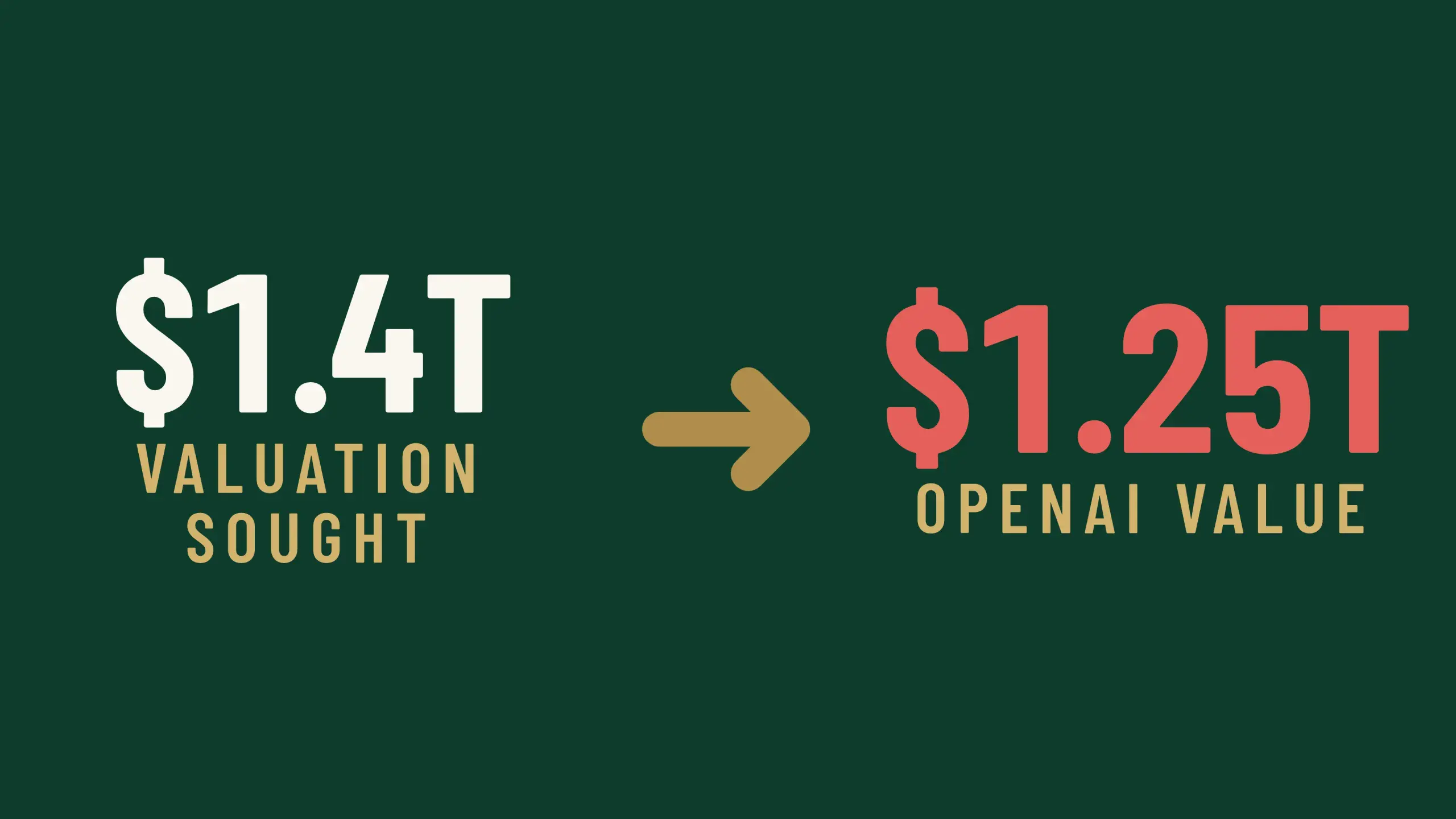
OpenAI raises $11B at a $1.25T valuation
2026-11-08OpenAI has raised $11 billion at a $1.25 trillion valuation, though not on the terms it wanted. The gap between its growth story and investor appetite is now hitting two giants, with one facing a bookkeeping hit and the other becoming more dependent on the funding flow.
Comments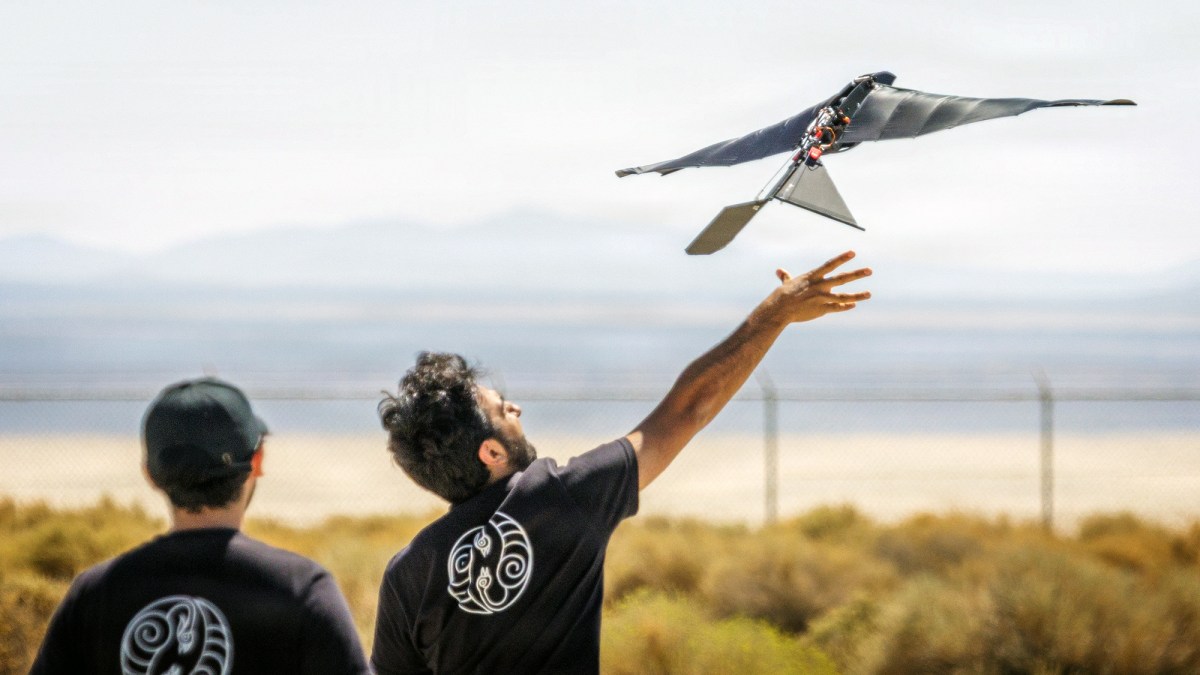
U.S.-based Ornadyne’s bird-mimicking drones evaded detection during an Air Force technology exercise. The drones are designed to resemble birds found in any region of the world.
CommentsGitHub Down Again?
2026-11-08GitHub users reported another frustrating outage, with some unable to download Linux distros and tools while the official status page showed everything as operational. Commenters criticized GitHub’s reliability and status-page transparency, noting that incidents often go unlisted and that outages tend to hit during peak demand. Some suggested third-party uptime trackers, though even those were questioned as the incident unfolded.
CommentsIn the November 2026 Ask HN thread, developers shared a wide range of side projects and tools, including a YouTube pitch-shifting extension, a Google Local Service Ads-integrated CRM for field-service businesses, a singing-training app, and a macOS document library that indexes files in place. Other highlights included open-source public transit software used by major cities, LLM-powered sunset alerts for San Francisco, real-time meeting speech feedback, an AI loan-servicing platform, and a fresh attempt at the Netflix Prize using LLMs.
CommentsA Linux script called RAM Altman is meant to email Sam Altman every day with a report on how much unused RAM the user’s PC has. Readers also discussed invasive anti-ad-blocker modals and compute centralization, with one noting the script isn’t configured to actually email Altman by default.
Comments
Since November 5, Outlook.com and Hotmail have been bouncing email from domains that lack a DMARC record, affecting even small senders. Senders now need to publish a DMARC record to avoid delivery failures. The suggested fix is a single DMARC DNS record.
CommentsDrugmaker CEOs are skeptical of Silicon Valley’s promise that AI will cure disease, with reader discussion questioning how many concrete life-saving breakthroughs AI has delivered so far—AlphaFold is often cited, but commenters say the evidence remains limited. Readers argue AI can still help by improving diagnosis, analyzing research and patient data, and matching treatments without needing to cure disease outright. They also warn that AI could accelerate pharma work but may amplify centralized reasoning, political bias, and research monoculture.
CommentsAd data collected by popular apps is giving police a powerful surveillance tool, with commenters arguing Google is failing to enforce its own Play Store policies against selling sensitive user data through third-party SDKs. They advise users to restrict location permissions, be wary of apps like weather services that request background location, and prefer browsers with ad blockers, though app-first services make that difficult for ordinary users.
CommentsA new approach brings just-in-time bitmap text rendering to microcontrollers, generating glyph bitmaps on demand to reduce memory use and support flexible fonts on constrained hardware. It targets embedded displays where storage and compute resources are limited.
CommentsMizu introduces zero-copy parallel and asynchronous execution between R and Python over shared memory, aiming for thread-speed performance. The shikokuchuo/pymizu project provides tooling for running Python workloads alongside R without copying data across process boundaries.
CommentsGoodbye Claude, Hello Pi
2026-11-08The “Goodbye Claude, Hello Pi” post centers on a developer moving from Claude Code to Pi, a coding-agent harness that supports OpenAI Codex out of the box with basic integration and optional extensions for usage tracking. Discussion around it covers frustrations with Claude Code, such as errors tied to simple shell aliases, and comparisons between Pi, opencode, and local-model workflows. The author is identified as a Salesforce developer, suggesting the piece is a personal migration account rather than a formal product announcement.
Comments
Paul Ford argues that modern web browsers are capable enough to support incredibly rich app development, making dedicated native apps less necessary. He notes that building these experiences on the web is now radically easier than it used to be.
CommentsA new open field guide catalogs 39 types of CAPTCHA, detailing identification signals and methods for breaking them. It covers free and open-source bypass techniques along with paid alternatives, and includes a searchable web version.
CommentsThe History of Djgpp
2026-11-08A reader discussion of DJGPP’s history highlights how the free DOS-based 32-bit C/C++ toolchain was foundational for many developers in the 1990s, especially when compilers were expensive and most people had only DOS PCs. Commenters credit DJGPP and the Allegro game library with early C/C++ experience and as a gateway to Linux and Emacs, with one noting it was used in 1992 for a photon-counting imaging system. The thread also touches on the project’s capitalization and author DJ Delorie’s naming preferences.
CommentsZapFast is a new native WhatsApp client built in Rust and using the egui GUI library, with a focus on fast performance. The project is available as crmne/zapfast.
Comments
A new feature explores the 15-year fan translation effort behind a classic JRPG, Xanadu. The oversized issue also interviews teams behind two more human-made fan translations, highlighting the dedication behind these projects amid concerns about AI-generated "slop."
CommentsThe Show HN post “Vegetable Gardening for Engineers” sparked discussion of gardening as a chaotic, complex hobby that can be a refreshing escape from technical work but is often expensive and low-ROI compared with store-bought produce. Commenters highlighted yearly battles with snails, aphids, mold, and birds, while some noted plants are hardier and more self-sufficient than novices assume. Hydroponics was called a different beast, and homegrown organic produce still offers taste and experiential benefits.
CommentsiSponsorBlockTV is an open-source SponsorBlock client designed for all YouTube TV clients. The GitHub project by dmunozv04 aims to bring sponsor-segment skipping to TV-based YouTube apps. It is open for development and contributions on GitHub.
CommentsPlaying with the STM32MP2
2026-11-08The discussion around STM32MP2 focuses on ST’s STM32MP257 application processors, which pair dual Cortex-A35 cores with Cortex-M33 and target Linux despite carrying the STM32 name. Readers debate the confusing product-line positioning and high $425 EV board cost, while noting interest in small MMU-equipped application processors and alternatives like PocketBeagle 2. The thread also touches on frustration with ARM’s continued dominance of older small-core designs.
CommentsHow I Fight AI Brain Fry
2026-11-08A new piece explores the “AI brain fry” that developers experience when working with terminal-based assistants like Claude Code and Codex. It shares the author’s personal tactics for managing cognitive overload and staying productive while using AI coding tools.
CommentsChimera Vocal Synth
2026-11-08CHIMERA is a new physically modelled voice synthesizer that generates every sound from a simulated airway. Rather than relying on samples, it builds vocal output by directly modeling the mechanics of vocal production.
CommentsThe article explores how researchers might train transformer models at quadrillion-parameter scale, focusing on the infrastructure and algorithmic challenges involved. It draws on a paper (arXiv:2610.37842) that outlines approaches for making such extreme-scale training more feasible.
CommentsA new article explains how to prove equations using diagrams, and a reader found the piece interesting while nitpicking its terminology. For a J-shaped diagram D, the reader says J is more precisely an “index category” or “scheme” than a “shape,” though such terminology is not universal.
CommentsA developer claims to be rewriting IBM SPSS Statistics alone in 100% safe Rust, but commenters are skeptical that the project is AI-assisted and lacks a clear use case for actual SPSS users. Critics argue it risks fragmenting academic statistical tooling, conflates Rust memory safety with correctness, and raises concerns about AI-generated “slop” with no users or validation.
Comments
The news piece focuses on Edward Hopper’s iconic 1942 painting Nighthawks, an oil on canvas held by the Art Institute of Chicago. It highlights the work’s enduring place in American art and notes that the museum acquired it through its Friends of American Art fund.
CommentsA recent revival of interest in 1970s and 1980s 8-bit microcomputers has brought attention back to Z80-based systems and CP/M. This article explains how to get started with CP/M using an emulator on Linux and play Zork 1.
CommentsThe author advocates “development-driven specs” over spec-driven development, treating specifications as artifacts that evolve alongside implementation. The piece is tied to waywardgeek/ensemble, where an AI coding agent builds a book and then helps produce the next edition.
CommentsConsumer brain-wave headsets are raising privacy concerns as companies compete to collect and use neural data. The article, originally titled “The scramble for your brain data,” examines how this emerging market could threaten users’ privacy. It highlights the need for safeguards around sensitive brain data.
Comments