AI Tech News Last 24 Hours
SubmitArtificial intelligence moves quickly, and this section captures its most recent developments. Coverage includes new model releases, research milestones, AI product launches, startup funding, and the policy debates surrounding the technology. It is a convenient briefing for anyone trying to keep pace with AI's constant stream of news.
A single day can bring a frontier model announcement, benchmark disputes, an enterprise adoption deal, a lab safety controversy, and a nine-figure funding round, and this section aims to catch them all. Coverage spans research labs, chip suppliers, application startups, and the regulators trying to keep up.
No area of technology compresses more change into less time, and staying a day behind in AI can mean missing something genuinely important. Engineers building with these models, executives planning around them, and researchers tracking the field use a rolling AI briefing to keep their bearings.
2026-11-01

A new arXiv paper provides a proof of the Platonic Representation Hypothesis and shows how Joint Embedding Predictive Architectures (JEPAs) can improve it, offering theoretical grounding and practical advances for representation learning. The work aims to clarify why different models converge on similar representations and how JEPA-based methods can strengthen that convergence.
Comments
Everyone Has Email. Nobody Uses It Right
2026-11-01Email remains the internet’s most important tool, yet many people fail to use it effectively. This practical guide explains why email still matters and offers tips for mastering it.
Comments

A 1580 map by an unnamed Ñudzahui painter, made for a Spanish king, shows how a community portrayed its history and land claims on its own terms. The map illustrates that data visualization is never neutral, since every map reflects choices, power, and perspective.
Comments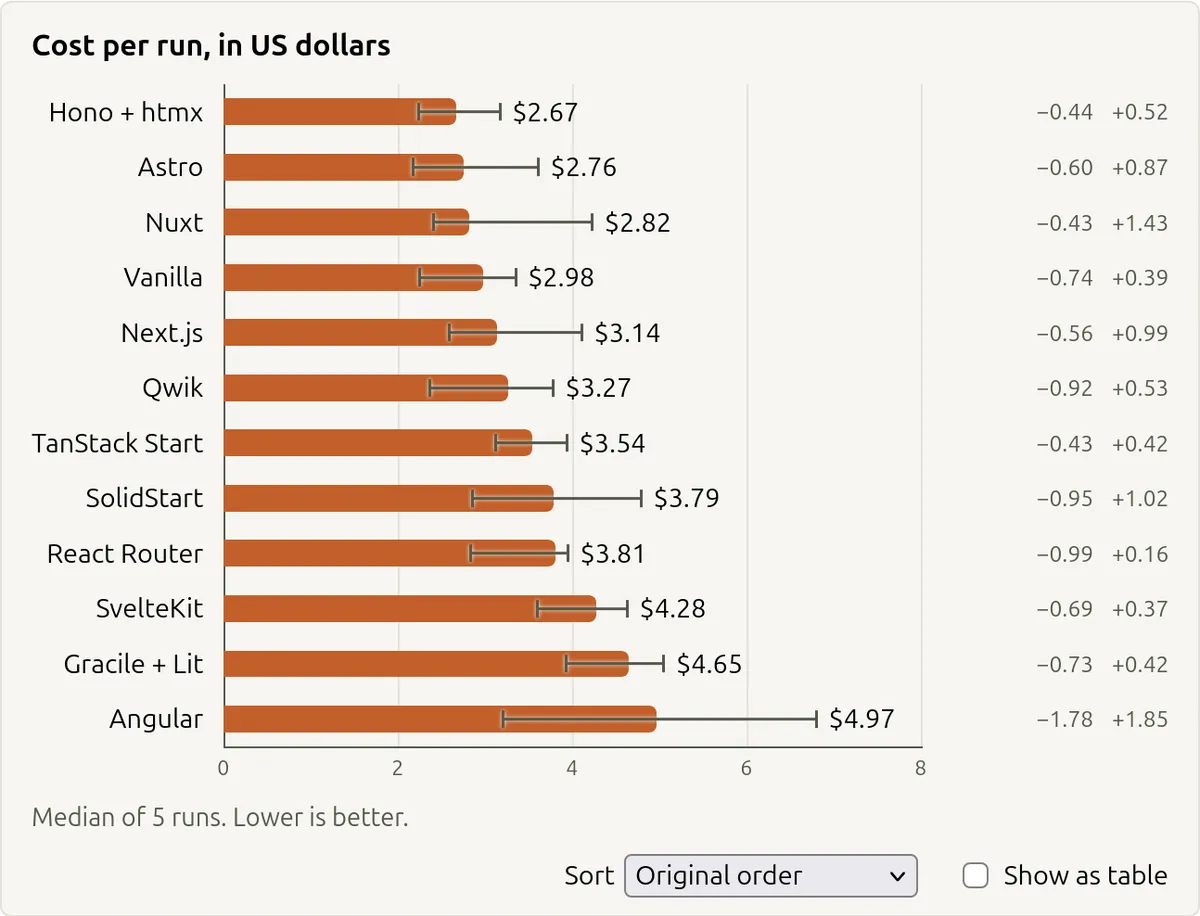
The AI cost of JavaScript frameworks
2026-11-01The article argues that JavaScript framework choices are often based on vibes, and that AI coding assistants add a new measurable cost: larger, more complex frameworks consume more context and tokens, making AI-assisted work slower and more expensive. It recommends weighing AI-readability and token efficiency alongside performance and developer experience.
CommentsWith a U.S. jobs pickup potentially keeping the Fed on track for another rate hike, discussion focused on whether rates remain too low, with one reader arguing that 5% is near the historical average and that years of ZIRP have distorted perceptions. The commenter cited Volcker’s 1980s push above 20% as evidence that aggressive tightening may be needed to break inflation.
CommentsThis piece explores what parchment paper actually is, tracing its origins and explaining how it became such a common baking tool. It answers common questions about the material and why it’s now a staple in kitchens.
Comments
The She-Wolves of Jülich
2026-11-01Stories of the “She-Wolves of Jülich” in 16th-century press painted werewolves as man-eating and menacing, revealing how early media linked monstrousness to female deviance. The tales expose a centuries-old fear of women embedded in sensational reporting.
Comments
Proton’s CEO dismissed a request for security testing as “loser thinking,” drawing attention to the company’s stance on AI-generated code. The episode highlights that for a privacy-focused company, the real product is not whether AI writes code but the guardrails that keep that code secure.
CommentsA developer vibecoded a 2D pixel-art medieval fantasy game in six hours after being inspired by an article on creating sprites with Opus 5.5, which produced surprisingly good results. The quick project is shared with a playable link as an experiment in AI-assisted game creation.
Comments