AI Tech News December 13 2025
Artificial intelligence produces a constant flow of announcements, and some days stand out more than others. This section gathers AI news in the format of a dated briefing, focused on the stories around December 13, 2025.
Typical stories include new model launches and benchmark comparisons, AI features in popular products, research papers, partnerships between AI labs and cloud providers, and debates about safety and regulation.
A dated view of AI news shows how fast the field moves from one month to the next. Developers, researchers, investors, and business leaders use it to put new announcements into context.
2026-07-16
Kimi K3: Open Frontier Intelligence
2026-07-16Kimi K3 has been introduced as the world's first open 3-trillion parameter AI model, delivering frontier-level performance across coding, knowledge work, and reasoning. The model also features native multimodality and a one-million-token context window.
Comments
Decoy Font
2026-07-16Decoy Font is a new typeface designed to thwart AI text recognition by combining every standard letter with a visual decoy. This obfuscation technique prevents automated systems from easily reading user text, and the font is available for online testing or direct TTF download.
Comments

NotebookLM is now Gemini Notebook
2026-07-16Google has renamed NotebookLM to Gemini Notebook, maintaining its status as a standalone product while expanding its capabilities. The updated tool now features deeper integration with Google services and introduces a new secure cloud computer.
Comments
Researchers have found that classical machine learning algorithms can effectively identify text generated by large language models without relying on complex deep learning architectures. This traditional approach provides a highly efficient and lightweight alternative for systems designed to detect AI-generated content with minimal computational overhead.
CommentsIn a recent experiment, Claude Fable 5 and GPT-5.6 Sol were tasked with autonomously directing a music video using the same song, a $100 budget, web search, and local ffmpeg. This creative challenge highlights the rapidly advancing autonomous capabilities of next-generation AI models in complex multimedia production.
Comments
LM Studio has introduced Bionic, a new AI agent specifically designed to help users execute practical tasks using open models. The tool focuses on real-world productivity and is built to seamlessly get things done. This release marks a significant step in making open AI models more actionable for everyday users.
CommentsA recent guide explains how to train a generative AI kick drum model locally on a low-end Linux machine with just 6GB of VRAM. The accompanying community discussion explores the broader landscape of AI audio synthesis, debating the merits of parameter-based tools like SynPlant against the challenges of accurately replicating the organic timbral nuances of physical instruments. Ultimately, readers weigh whether the future of generative audio lies in exact resynthesis or in creating highly tweakable, expressive sound design parameters.
Comments
A recent article highlights the paradox of individuals who acknowledge the valid criticisms of Large Language Models yet continue to rely on them extensively. The author argues that this seemingly contradictory adoption of AI is a common mindset shared by many users today.
CommentsA new open-source educational guide titled The Little Book of Reinforcement Learning has been launched on GitHub by developer alxndrTL. The community-driven project aims to provide an accessible introduction to reinforcement learning concepts for developers and AI students. Contributors are actively encouraged to help expand and improve the resource.
CommentsLLM Networking with MikroTik
2026-07-16The author reports successfully using Large Language Models to configure and deploy MikroTik networks over the past several months. They note that the AI-assisted setups have gone exceptionally well, though they consciously avoid using trendy buzzwords to describe the process. This positive experience highlights the growing practical utility of AI in modern network administration.
Comments2026-07-15

Inkling: Our Open-Weights Model
2026-07-15Inkling has released its first open-weights model. The new system features a multimodal Mixture-of-Experts architecture with controllable reasoning effort. Developers can now access and fine-tune the model on the Tinker platform.
CommentsA detailed look at the computers used in Jurassic Park sparked a broader debate among readers about the impact of AI on the social internet. While users appreciated that AI and forums can instantly resolve obscure movie trivia, many lamented that this convenience removes the incentive for humans to openly share and discuss knowledge online. Consequently, commenters warned that relying on AI could lead to an information dark age where organic community insights are lost or locked behind paywalls.
CommentsA developer successfully ran Google's Gemma 4 26B AI model on a 13-year-old Xeon CPU without using a GPU. By working around the legacy hardware's lack of AVX2 instruction sets, the system achieved a text generation speed of five tokens per second, demonstrating that modern Mixture of Experts models can operate on highly constrained infrastructure.
CommentsAn article advocating for government and corporate investment in open-source AI has prompted readers to propose funding targeted, hardware-specific benchmark competitions to incentivize the development of optimized consumer-level models. However, commentators highlight the significant logistical costs of curating fair evaluations and remain divided on whether financial prizes or mandatory open-weight releases offer the best path forward for the movement.
CommentsTowards a harness that can do anything
2026-07-15Discussions surrounding the article highlight a consensus that AI agents should be built on deterministic code scaffolds rather than relying solely on fluid prompts. Developers argue that LLMs should be used strictly to handle edge cases and generate permanent automation scripts, treating prompt-only workflows as inferior to committing actual code. Additionally, the conversation underscores the rising importance of Behavior-Driven Development and Gherkin-style testing to define agent behaviors before codifying them into deterministic execution.
CommentsA recent article details how a researcher successfully bypassed the safety guardrails of Anthropic's Claude AI model using clever prompt injection techniques. By exploiting these vulnerabilities, the author tricked the system into revealing sensitive and private information. This demonstration highlights the ongoing challenges of securing large language models against manipulation and unintended data leaks.
Comments
Y Combinator S26 startup Coasty has launched an API designed for computer-use agents to run autonomous tasks on managed machines. The platform allows developers to compose these tasks into workflows and utilize prediction primitives for direct control, offering both a standard REST API and an LLM-friendly plain-text documentation format.
Comments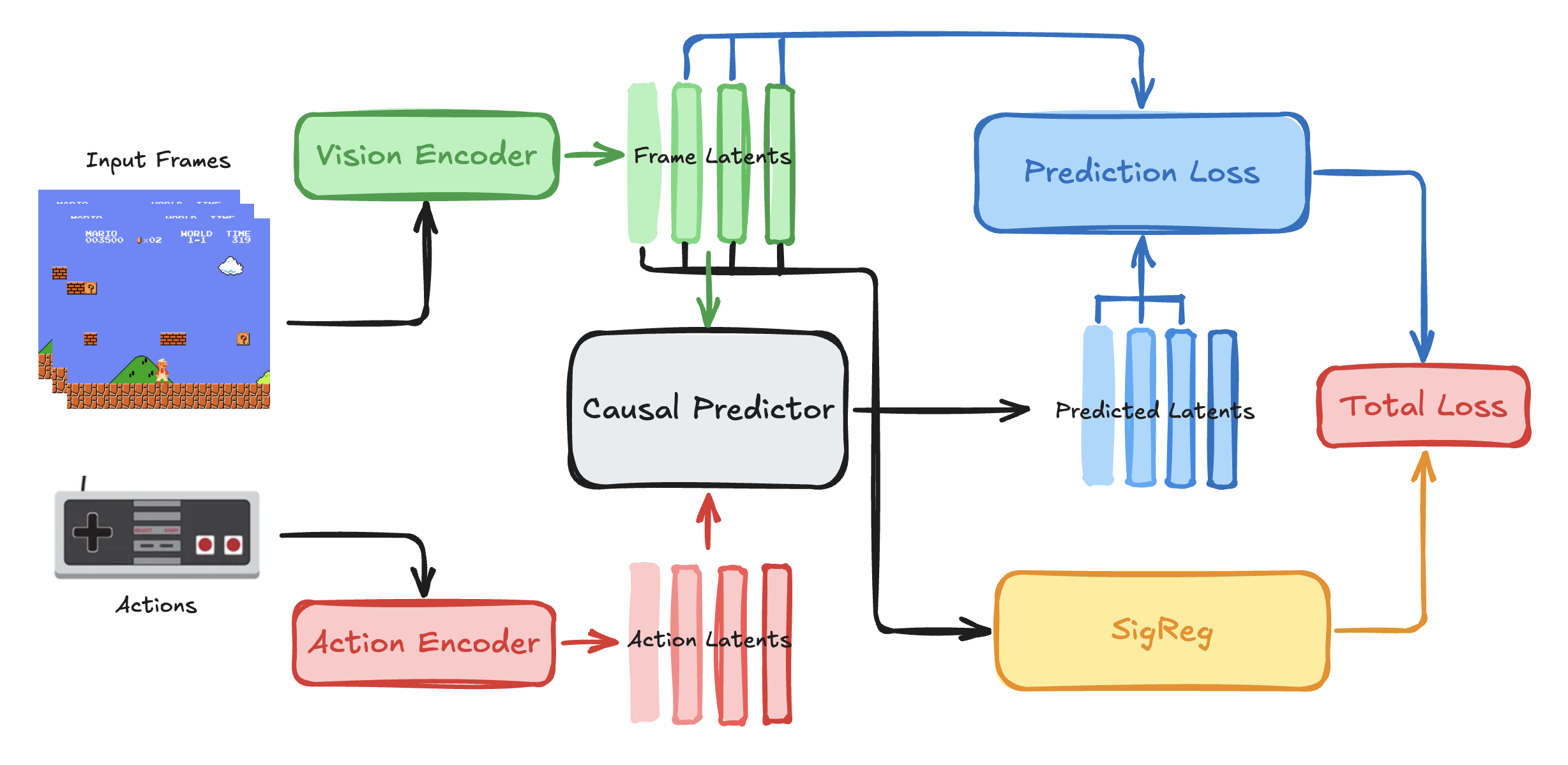
Researchers have developed LeMario, a from-scratch JEPA world model trained on the classic Super Mario game. This project aims to advance AI research by studying action-conditioned prediction and reward-free planning within a simulated environment.
CommentsMetal-organic frameworks are highly efficient, customizable chemical catalysts that recently earned pioneer Omar M. Yaghi the 2025 Nobel Prize in Chemistry. Yaghi has since relocated his research to Tsinghua University in China, citing slashed US research funding, restricted international collaborations, and a stronger push for AI-driven science. His departure underscores growing concerns about the defunding of American research institutions and the resulting brain drain of top scientific talent.
CommentsShow HN: Firefox in WebAssembly
2026-07-15A developer successfully ported Firefox to WebAssembly for an experimental project, reportedly spending over 25000 dollars in large language model tokens for debugging and research. The resulting online discussion debated the actual financial cost while highlighting how AI democratizes complex software engineering tasks that would otherwise require rare human expertise.
Comments
Scammers are increasingly exploiting AI voice cloning technology to execute convincing frauds that bypass traditional security defenses in as little as three seconds. By simulating the distressed voices of loved ones, criminals can easily manipulate victims into acting impulsively, highlighting a severe and growing threat to consumer protection.
CommentsA recent BIS report warns that the AI industry's shift toward debt financing poses a significant risk to the global economy. This has sparked debate over whether currently unprofitable AI giants could eventually become too big to fail and require massive government bailouts. Commenters remain divided on the likelihood of such interventions, with some viewing potential rescues as legalized corporate corruption and others pointing to national security imperatives.
Comments2026-07-14

A new guide explains how to modify the text output of Claude Code to prevent the AI from using the phrase load-bearing. This simple hack allows users to restrict the model's vocabulary and make their daily interactions with the assistant a little bit sillier.
CommentsBonsai 27B is a new 27-billion parameter AI model capable of running on smartphones that outperforms similarly sized models like Gemma 4 in math and coding, despite lagging in vision tasks. Its impressive on-device performance has sparked community discussions about the shift toward specialized local AI tools rather than massive general-purpose models. Readers also debated the merits of Mixture of Experts architecture and the ongoing value of inductive biases in scaling edge AI.
Comments
The Tower Keeps Rising
2026-07-14The rise of vibecoding allows developers to build software using natural language prompts instead of traditional syntax. However, experts warn that this growing reliance on conversational AI could eventually lead to the fragmentation and collapse of a shared programming language.
Comments
A recent article explores the potential risks of over-relying on artificial intelligence to handle our cognitive tasks. The piece questions whether this growing dependence diminishes human autonomy in the process. Ultimately, it emphasizes the intrinsic value of preserving independent thought rather than offloading it entirely to machines.
Comments
A zero-day vulnerability has been discovered in Cursor, prompting researchers to resort to full public disclosure. This drastic measure was taken to force action on a critical security flaw that the vendor has shown no interest in fixing.
CommentsThe creator of the JUCE framework has officially launched Juggler, a new open-source GUI coding agent. The tool is designed to help developers quickly build, modify, and manage user interfaces. The project is now publicly available on GitHub, inviting the community to test and contribute to its ongoing development.
Comments
Open-source software forms the backbone of modern digital infrastructure, but the rapid rise of AI in the agentic era is undermining the economic incentives that sustain it. The article examines the zero-cost fallacy to highlight the hidden financial burdens placed on developers whose code is increasingly used to build AI agents. Ultimately, it questions what new structural changes are necessary to keep these foundational tools viable.
Comments
YC S26 startup Agnost AI has launched a tool to help developers extract user feedback and identify hidden failures in production AI agent conversations. The platform analyzes these interactions to automatically turn high-impact patterns into actionable fixes. It is already trusted by Google and more than 25 other AI teams.
Comments