AI Tech Developments News Past 24 Hours
SubmitArtificial intelligence moves fast, and this section is built to keep pace. It collects recent news on model releases, research advances, AI products, and the companies and labs pushing the field forward. Whether you follow AI professionally or out of curiosity, this is a quick way to stay current.
The stream typically includes new model announcements and benchmark claims, research papers that shift what practitioners consider possible, funding for AI startups, and the steady rollout of AI features into everyday software. Debates over safety, evaluation, and the cost of compute weave through much of it.
Staying current matters because capabilities that seemed distant can become products within months, changing what teams should build and buy. Engineers, product managers, researchers, and executives making AI decisions rely on a rolling digest like this to avoid planning around yesterday's assumptions.
2026-11-14

FAA issues national ground stop
2026-11-14The FAA ordered a nationwide ground stop for departing flights on Friday. The order lasted more than five hours and brought U.S. air traffic to a standstill.
CommentsSpaceX’s Starship Flight 15 ended with a catch, advancing the goal of a fully reusable booster-and-ship system. Commenters see rapid assembly-line production and eventual unrefurbished reflight as potentially transformative, though heat-shield durability and orbital refueling remain key hurdles for lunar and Mars missions.
Comments

An analysis of 159,041 Lovable projects found that many exposed sensitive data without requiring users to log in. The exposed information included passport details and more than 200,000 private messages.
Comments
A new Wall Street Journal report alleges that Nvidia artificially inflated the GPU and memory shortage by investing in AI startups that then purchased Nvidia GPUs and built data centers. The report follows the departure of now-former Nvidia CEO Jensen Huang and claims the company effectively engineered scarcity to sustain demand.
Comments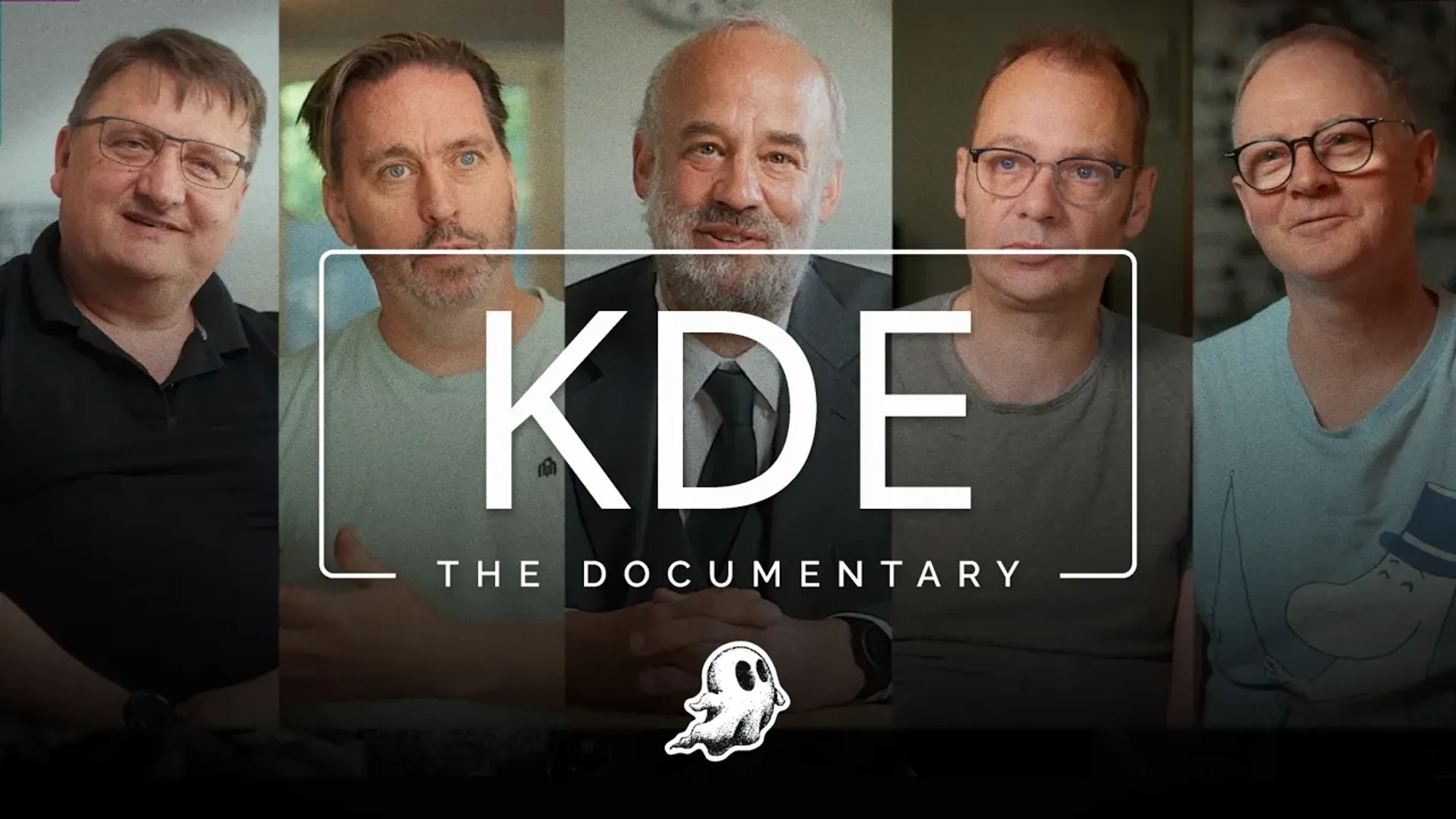
The documentary KDE: The Documentary chronicles the pioneering open-source community behind KDE, which offered a free and open alternative to proprietary desktops such as Windows. It traces the project’s story back to its origins in 1996 and highlights the community’s role in building accessible desktop software.
Comments
Ukrainian drone strikes hit nine Russian oil refineries in 13 days, knocking out 36% of Russia’s oil refining capacity. The blitz marks a significant escalation in attacks on Russian energy infrastructure.
CommentsFAA lifted National Ground Stop at 0119Z
2026-11-14The FAA lifted a National Ground Stop at 01:19 UTC, according to its advisories database. No further details about the reason for the stoppage or affected flights were included in the advisory.
Comments
Amtrak’s booking system experienced a network outage that coincided with a nationwide FAA ground stop, causing major issues for users. The company said its booking system is now returning to normal.
Comments
Tech companies are again reshaping the notion of privacy, moving from a personal-choice framing to one where one person’s device can affect everyone nearby. Meta and Google’s smart glasses can record what the wearer sees or use AI to describe it, and similar AI-enabled audio features are raising new bystander-privacy concerns.
Comments
Italy’s privacy regulator fined Meta €805 million over photo privacy, saying the company failed to obtain users’ “specific” consent for handling their photos. The penalty adds to Meta’s mounting regulatory challenges in Europe.
Comments
LinkedIn and Monster have taken down more than 1,000 fake job postings following a CBC News investigation. The probe found that over 1,500 misleading listings on the platforms were connected to a multi-level marketing company.
Comments
Google’s Project Zero is switching to a straight 90-day vulnerability disclosure deadline, publishing details 90 days after a report. The change ends its since-2021 “90+30” policy, which gave vendors up to 90 days to remediate plus an additional 30-day window after a patch before disclosure.
Comments
The Claude Delusion
2026-11-14The Claude Delusion’s critique of Bill Gates as an overconfident judge of AI coding progress drew pushback from readers, who argue his decades of software experience make him a credible authority even if his 1970s programming background is less relevant to modern systems. Commenters also suggest the author’s skepticism toward LLM engineering may be shaping a selective argument that dismisses Gates as a biology nonexpert while downplaying his software credentials.
Comments
What Happened to 3Com?
2026-11-14A retrospective traces 3Com’s rise from Bob Metcalfe’s networking innovations through the dot-com boom and iconic 3C509 network card, explaining how the once-dominant brand faded rather than exited with fanfare. Despite its early influence, 3Com was ultimately absorbed into HP, ending its run as an independent networking company.
Comments
Possible Futures
2026-11-14A new piece titled “Possible Futures” presents a map of possible futures, framing uncertainty as a set of alternative scenarios rather than a single forecast. It invites readers to explore how different trajectories might unfold and be compared.
CommentsReaders discussing the Ask HN thread suggest the most useful concrete AI skills are engineering fundamentals—especially scaling verification through testing practices, clear problem framing, and knowing when an LLM is stuck—rather than generic prompt tricks. Others recommend hands-on experience building models or harnesses around completion models to understand how LLMs actually behave. Some argue the core skill is management-style communication and requirements structuring, especially when working with cheaper or less capable models.
Comments
A new Show HN project offers a live and replayable map of U.S. air traffic during the FAA’s nationwide ground stop on Nov. 13, 2026. It visualizes flights airborne compared with a normal Friday, along with departures and the resulting backlog at major airports.
Comments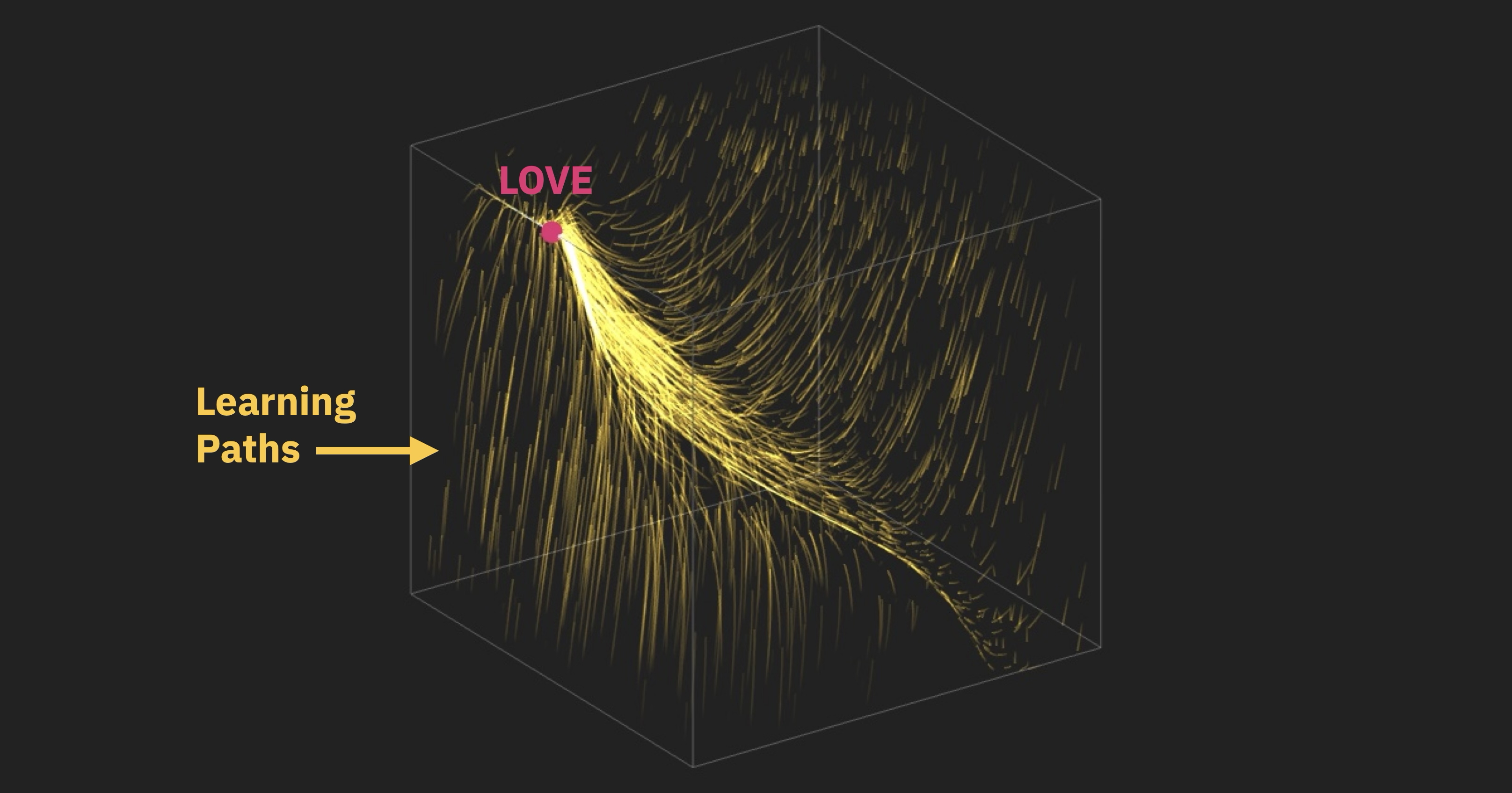
This piece offers a visual explanation of reinforcement learning, using graphics to clarify how the machine-learning approach works. It serves as an accessible overview of core reinforcement-learning concepts.
CommentsA study of three open-source models—Alibaba’s Qwen 3, Google’s Gemma 3, and Meta’s Llama 3.1—found that generative AI can use more energy and show accuracy disparities on non-English text, with some languages triggering repeated output and sharp token/energy spikes. Critics noted the article buries key methodology details and that the models tested are already dated.
Comments
Anthropic has upgraded Claude Code Projects so it can run parallel AI workers hands-free. The Projects coordinator is now proactive, answering questions and posting thread status updates directly in chat.
CommentsHow Not to Build a Music Player
2026-11-14Readers discuss how many local and free music players fail at shuffle, often replaying songs in the same predictable order or looping a small subset instead of randomizing the full library. Complaints also cover USB/car players with broken shuffle, crashes, and missing subdirectory support, while some users contrast this with better implementations like PlexAmp and Amperfy.
Comments
This technical overview explains how phone unlocking tools work, clarifying their mechanisms and the security or carrier locks they target. It aims to distinguish legitimate unlocking methods from risky or ineffective approaches so readers understand what these tools can and cannot do.
Comments
A new guide explains how to build a decentralized messenger protocol without central servers by using federation, similar to email. It walks through designing a simple protocol from scratch, covering server discovery via .well-known files and end-to-end encryption.
Comments
Seagate has introduced the FireCuda Forge, a new hybrid drive that revisits the long-standing idea of combining flash storage with a traditional hard disk. The launch raises familiar questions about whether hybrid drives can deliver meaningful speed and value as SSDs become cheaper and more common.
Comments
L3Harris issued a statement regarding the Nov. 13 ground stop. The company said it has been modernizing the communications infrastructure supporting the National Airspace System in close coordination with the FAA.
CommentsA Show HN project presents a model zoo of 15 blood glucose forecasting models trained and tested on the creator’s own data. The T1DMAI repository shares these personal-data-trained forecasters for blood glucose prediction.
Comments
The article details serving GLM-5.3 across two NVIDIA DGX Stations with vLLM, achieving 607.8 tokens per second. It highlights how frontier-scale models exceed single-machine GPU memory and require distributed local inference to keep all weights in GPU memory.
CommentsCreating a self booting ZIP archive
2026-11-14A new article explores how to create a self-booting ZIP archive, with readers praising uncompressed ZIPs as an underappreciated container format. The discussion notes that individual files in a large ZIP can be fetched over HTTP when the server supports range requests, while one longtime developer jokes the topic makes their computing knowledge feel close to zero.
CommentsItaly has fined Meta $887 million over how Android users’ data, including gallery access, was handled. Discussion suggests the issue was not an exploit but Meta failing to clearly explain what users were consenting to when granting the app access to photos. Commenters criticized the article’s lack of detail and dismissed the penalty as another slap on the wrist for Meta.
CommentsReaders note that writing assembly language programs on paper before entering and testing them on the target machine was standard practice for 8-bit hobbyists who couldn't afford a second computer. With simple instruction sets and careful, slow programming, many could get most code right by hand, a practice some recall nostalgically and compare to hand-assembling machine code. The discussion frames Woz’s pre-hardware BASIC work as part of that painstaking but familiar 8-bit development culture.
Comments