AI News Today Big Tech
The race to lead in artificial intelligence is being run largely by the biggest names in tech. Here you will find stories about AI models, products, partnerships, and strategy from companies such as Google, Microsoft, Meta, Amazon, and Apple. The section also covers the chips, data centers, and talent wars behind the headlines.
Expect news on frontier model launches, AI assistants being woven into operating systems and office software, and the enormous capital expenditures going into GPUs and data centers. Partnership and licensing deals between platform companies and AI labs are a recurring theme, as are high-profile researcher moves between rivals.
The stakes are unusually high because AI leadership could decide which of today's giants dominates the next computing era. Investors watch these companies' AI spending for market signals, developers build on their platforms, and policymakers study their moves when weighing how the technology should be governed.
2026-09-09

Muse – Meta’s personal AI agent
2026-09-09Meta has introduced Muse, a new personal AI agent designed to assist users with a variety of everyday tasks. The tool aims to streamline daily workflows and boost overall productivity by seamlessly managing routine activities.
Comments
How to build a printer
2026-09-09A new DIY project details the process of building a custom printer using electronic paper. The creator demonstrates how to leverage e-ink technology to construct a fully functional e-printer from the ground up.
Comments

AlphaGenome Atlas is a newly introduced high-resolution database that provides a comprehensive map of human DNA. The platform predicts the functional effects of every possible single nucleotide variant within the human genome. This tool offers researchers a powerful new resource for analyzing genetic variations and their biological impacts.
Comments
An Accidental Blackboard
2026-09-09Thoughtworks colleagues share practical insights and lessons learned from integrating AI into their software delivery workflows. The article highlights how teams are organically collaborating and experimenting with these tools, creating an accidental blackboard for continuous innovation and shared knowledge.
Comments
An AI-generated solution to the Navier-Stokes Millennium Prize Problem has been shared, accompanied by a detailed writeup. The submission also features a formal mathematical proof written in the Lean theorem proving language.
CommentsMathematician Terence Tao warns that artificial intelligence is rapidly depleting the finite supply of highly fruitful open math problems. Although the total number of mathematical questions is theoretically infinite, the vast majority lack the insight necessary to advance the field. This non-renewable mining by AI threatens to make truly valuable mathematical problems scarce.
Comments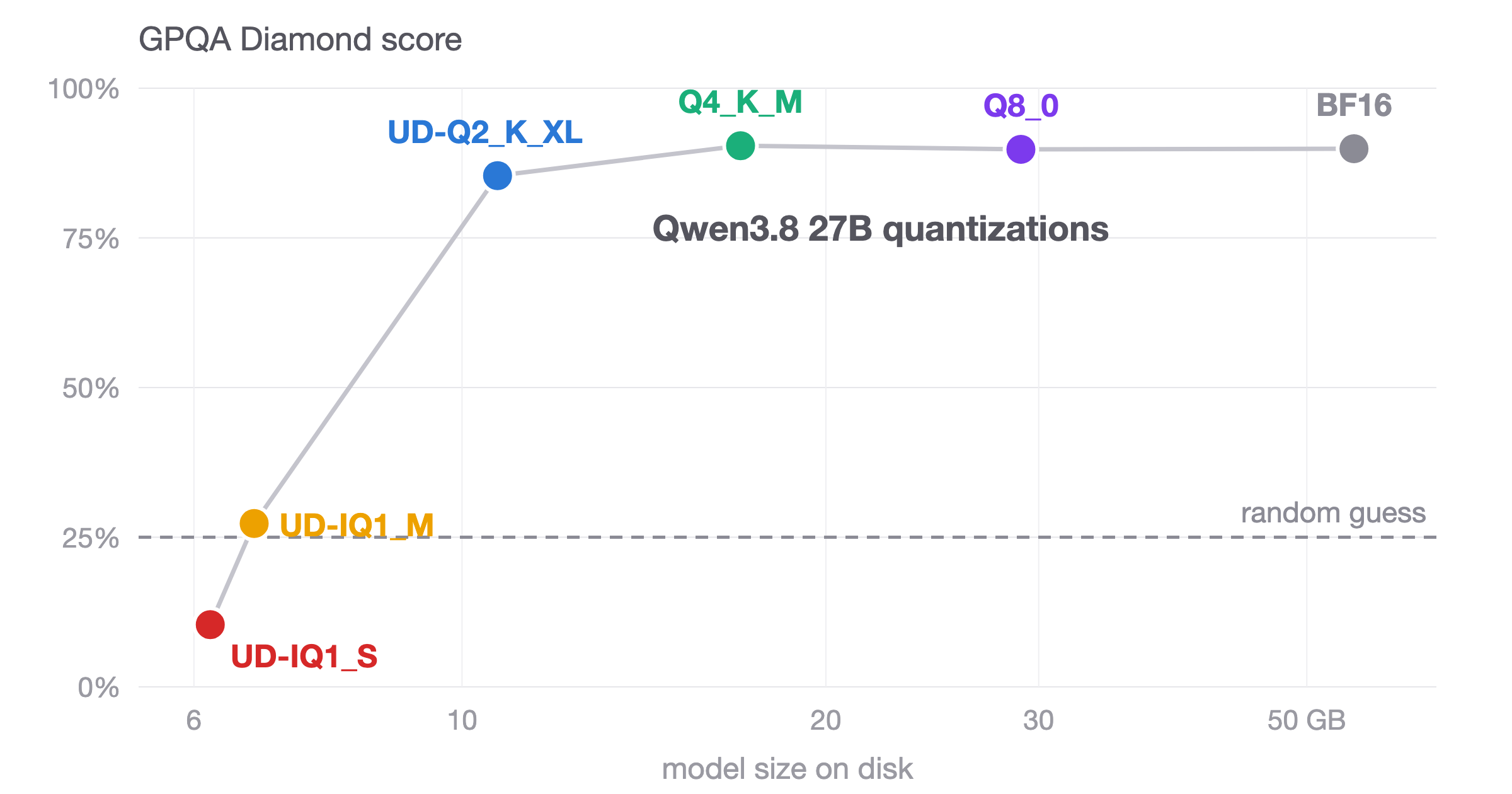
A recent benchmark evaluated Unsloth GGUF quantizations of the Qwen3.8 27B model using llama.cpp across multiple rigorous tests. The results show that the 4-bit version matches full BF16 precision while fitting on a single RTX 4090. However, extreme compression to 1-bit causes the model's performance to completely collapse.
CommentsA new GitHub repository called i-have-adhd introduces a specialized skill for AI coding agents to prevent them from burying the final answer in verbose explanations. The tool is specifically designed to provide an ADHD-friendly output by keeping responses direct and concise. This helps developers quickly locate and use the generated code without getting lost in unnecessary text.
Comments
AI Responsibility – OpenAI and Anthropic
2026-09-09A former pretraining researcher has resigned from Anthropic after spending three years working at both OpenAI and Anthropic. The departing employee accused both AI companies of acting irresponsibly by recklessly racing toward self-improving superintelligence and gambling with human lives.
CommentsDiscussions surrounding an article on the microeconomics of artificial intelligence center on the true nature of large language models, contrasting reductionist views of them as mere statistical autocorrect with the reality of their complex emergent properties. Participants debate whether the static, frozen weights of these models limit their adaptability, despite their ability to generate non-deterministic outputs and perform advanced reasoning. Ultimately, the conversation questions how economists are practically applying these sophisticated AI systems to improve predictive modeling.
CommentsNavier-Stokes – Tristan Buckmaster [pdf]
2026-09-09Mathematician Tristan Buckmaster accuses OpenAI of training its models on his private chat data after the company claimed to independently solve a complex Navier-Stokes math problem using an approach strikingly similar to his own. The dispute escalated when OpenAI offered Buckmaster partial credit for the breakthrough on the condition that he remove his co-author, an Anthropic employee, from the publication. Refusing to drop his colleague, Buckmaster rushed to publish their work independently, raising significant concerns about AI companies potentially exploiting user data for model training.
CommentsDevelopers can now run the massive 2.8 trillion parameter Kimi K3 AI model locally on a MacBook Pro at a speed of one token per second. This achievement is powered by the ARGODRIVE Deltafin project, which streams the model across four SSDs on Apple Silicon hardware.
Comments
Getting phpBB 1.4.4 working in Docker
2026-09-09The final 2001 release of the phpBB forum software has been successfully containerized to run in a modern Docker environment using a legacy stack of PHP5, Apache, and MySQL 4. The project gets version 1.4.4 up and running and includes screenshots of the retro application in action.
CommentsA Topological Picture Book, Rendered
2026-09-09A new interactive web project beautifully renders topological illustrations originally hand-drawn by a former professor, earning praise from former students for capturing his classic aesthetic. While the visualizations have inspired developers to explore similar rendering techniques for arbitrary 3D models, users suggest UI improvements for better touchscreen rotation and mobile viewing.
Comments
The Helicopter with Radioactive Blades
2026-09-09A newly surfaced video highlights an unexpected historical detail about the CH-53 Sea Stallion, a massive helicopter introduced in 1966. The footage reveals that the historic aircraft was built with radioactive blades.
Comments
Mercury 2.5
2026-09-09Mercury 2.5 is the market's most capable diffusion LLM, operating at an impressive 1,107 tokens per second. It delivers a 40% increase in intelligence over Mercury 2, offering performance comparable to cost-optimized frontier models.
CommentsDiscussions surrounding an article comparing GCC's nested functions and C++ lambdas highlight significant implementation complexities, particularly the need for trampolines to cast nested functions to bare function pointers. Critics argue the original author overlooks these semantic differences and the resulting compiler optimization challenges, suggesting that modern closure models remain more practical than adding nested functions to the C standard.
CommentsTracing np.add, all the way down
2026-09-09A new blog post provides a deep technical dive into the NumPy codebase by tracing the execution path of the np.add function. Drawing on recent contributions to the library, the author explains how this core operation is implemented all the way down to the lowest levels of the framework.
Comments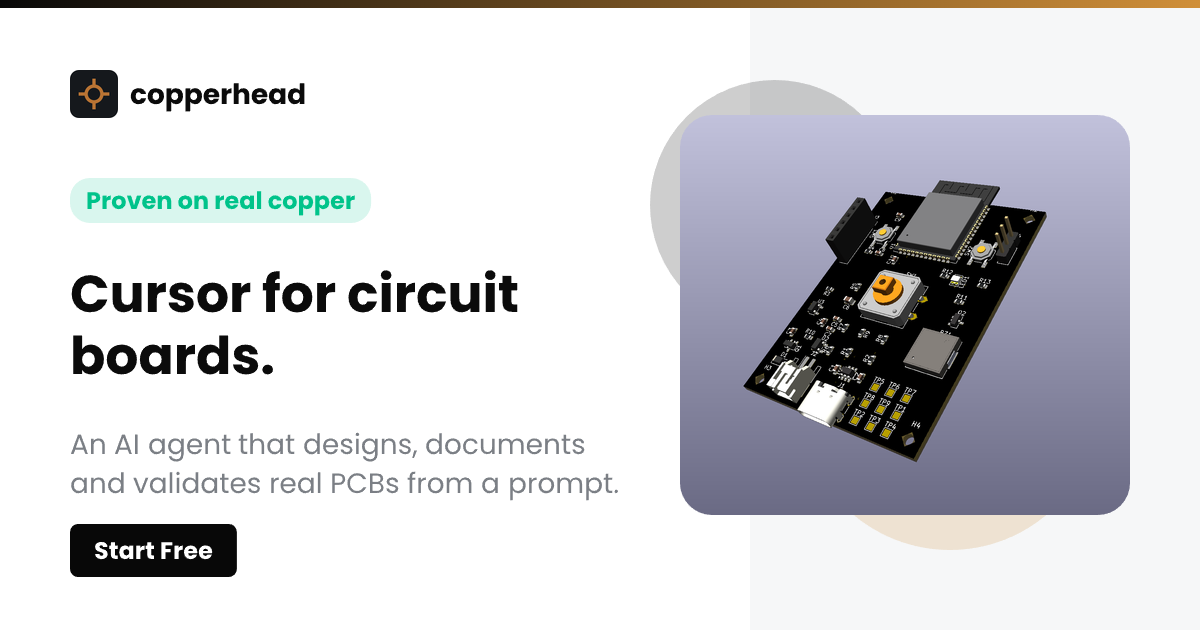
Copperhead is a new open-source AI agent that designs, documents, and validates real printed circuit boards directly from text prompts. Billed as the Cursor for circuit boards, the tool aims to significantly streamline the hardware design process by translating natural language into fully functional PCB layouts.
CommentsReverse Engineering an ASIC
2026-09-09A new article details the reverse engineering of an ASIC by deriving a netlist from the physical silicon to uncover its underlying logic and hidden outputs. Readers highly praise the project for its beautifully designed, educational website and its insightful explanation of how a netlist serves as a crucial intermediate step between conceptual hardware design and physical manifestation.
Comments2026-09-08
Jellyfin 12.0
2026-09-08Jellyfin has released version 12.0, introducing crucial bug fixes for audio and video desync issues alongside improved EOTF processing and new Brainz integrations. The latest update for the open-source media server also highlights significant community contributions, including key development work by crobibero.
Comments
John Margolies has compiled a remarkable collection of photographs documenting the eccentric roadside architecture and ephemera of America. This visual archive captures the unique commercial landscapes that define the country's unconventional cultural history.
CommentsA developer has published a reconstructed version of the infamous Stuxnet cyber-weapon source code on Hacker News strictly for educational and research purposes. The recreated malware is configured to run exclusively on older Windows XP and Windows 7 operating systems.
Comments
A newly published arXiv paper demonstrates how a classic Trusting-Trust compiler attack can be scaled to compromise an entire Linux distribution through binary manipulation. The research highlights a critical software supply chain vulnerability where malicious code can be hidden within pre-compiled binaries, completely bypassing traditional source code audits. These findings underscore the persistent risks of relying on unverified binary packages in modern computing environments.
Comments
WeatherNext 3
2026-09-08WeatherNext 3 has been officially unveiled as the most advanced global weather AI model to date, representing a significant upgrade in artificial intelligence capabilities for worldwide meteorological forecasting. The new system is expected to deliver highly improved predictive accuracy and comprehensive environmental data analysis for users across the globe.
Comments
A recent investigation reveals that LG Smart TVs utilize first-party automatic content recognition technology to track and collect viewing data across all inputs. This continuous data harvesting raises significant privacy concerns, potentially compromising the viewing habits of up to 216 million users worldwide.
CommentsShow HN: Jigsaw Haiku
2026-09-08Jigsaw Haiku is a new browser-based word puzzle game where players assemble haikus using interlocking jigsaw tiles. Community feedback highlighted frustrations with borders obscuring text edges, restrictive piece placement, and choppy dragging performance across different devices. In response, the developer has already fixed the visual clipping issues and is exploring options for free-form piece placement and smoother rendering.
Comments
Show HN: Interactive Tree of Life
2026-09-08A new interactive web tool called the Tree of Life allows users to explore and compare biological data across 11 distinct scientific trees. The platform enables a detailed examination of ancestry, physical traits, fossils, habitats, and sources to help visualize complex evolutionary relationships.
CommentsOrganized by Caltech undergraduates, the Caltech Mathathon is the first hackathon dedicated to applying artificial intelligence to research-level mathematics. Participants receive $20,000 in AI credits and are evaluated on their mathematical intuition and ability to understand proofs, with chat logs required to verify that the core problem-solving work was completed during the event.
Comments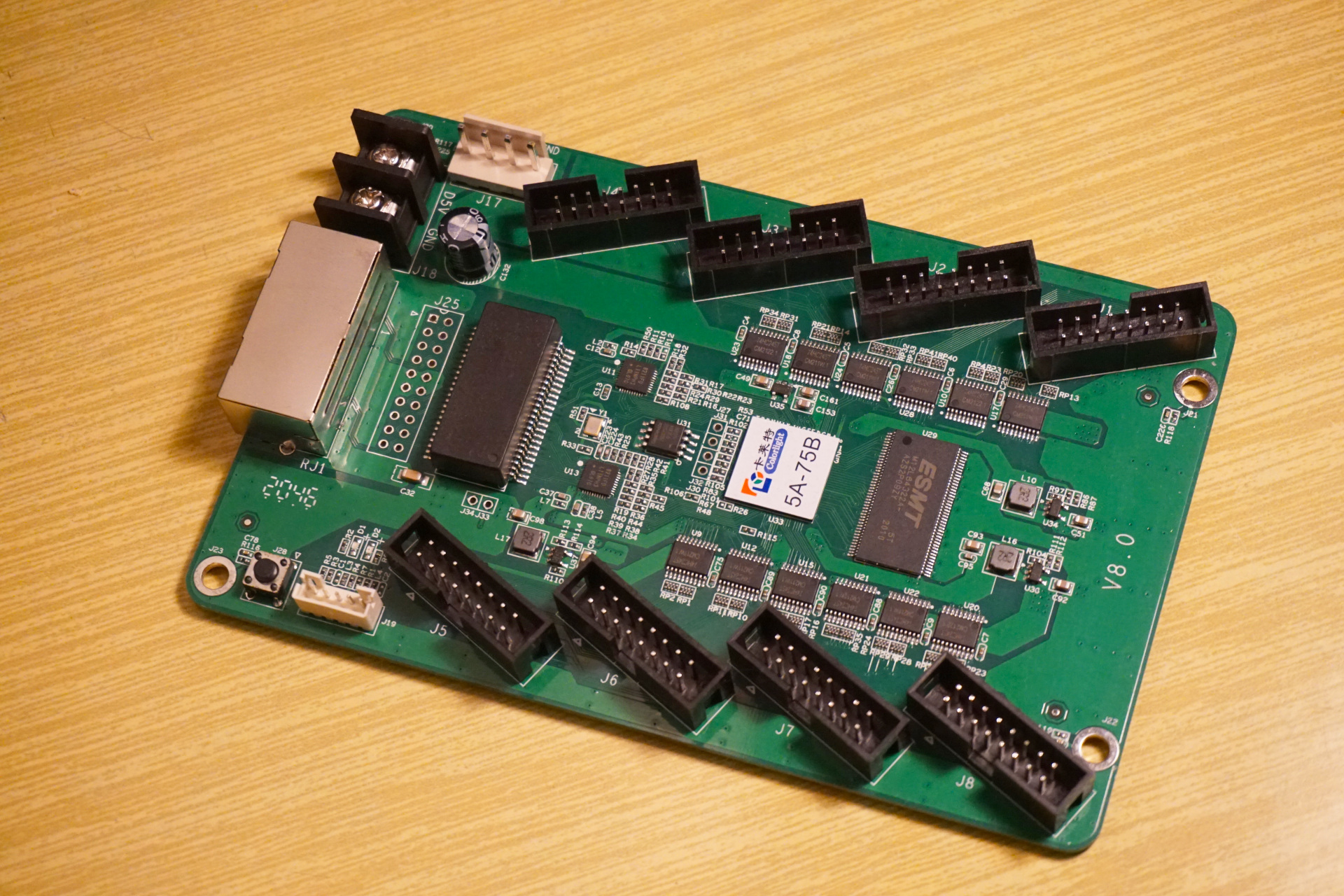
Chris Lasocki explores the Colorlight 5A-75B, a highly affordable ECP5 FPGA development board that has gained traction among hardware enthusiasts. This in-depth article examines the board's technical capabilities and highlights its potential for budget-friendly electronics projects.
Comments