AI News Today Big Tech
The race to lead in artificial intelligence is being run largely by the biggest names in tech. Here you will find stories about AI models, products, partnerships, and strategy from companies such as Google, Microsoft, Meta, Amazon, and Apple. The section also covers the chips, data centers, and talent wars behind the headlines.
Expect news on frontier model launches, AI assistants being woven into operating systems and office software, and the enormous capital expenditures going into GPUs and data centers. Partnership and licensing deals between platform companies and AI labs are a recurring theme, as are high-profile researcher moves between rivals.
The stakes are unusually high because AI leadership could decide which of today's giants dominates the next computing era. Investors watch these companies' AI spending for market signals, developers build on their platforms, and policymakers study their moves when weighing how the technology should be governed.
2026-07-12

A recent comparison of AI coding assistants reveals that Claude Code incurs significant token overhead, sending 33,000 tokens to the API before even processing the user prompt. In contrast, OpenCode sends only 7,000 tokens in its default configuration. This hidden cost disparity is primarily driven by differences in instruction files, MCP schema weights, and subagent multipliers.
Comments
How to read more books
2026-07-12This article outlines a personal method and practical strategies for increasing the number of books read annually. The author shares actionable habits and productivity tips designed to help readers optimize their daily routines. By implementing these specific techniques, individuals can efficiently consume more literature and improve their overall reading consistency.
Comments
A developer recovering from health issues is leveraging AI coding tools to build a 2D roguelite game, prompting a broader Hacker News discussion on AI's role in game development. While participants praise AI for handling complex architecture and logic, they note it currently struggles with timing-based mechanics due to its inability to process real-time movement. However, commenters remain optimistic that rapid advancements in specialized inference hardware will soon overcome these temporal limitations.
CommentsMesh LLM utilizes the iroh network to pool GPU resources across multiple machines, creating a unified distributed AI computing system. This allows developers to access a single OpenAI-compatible API using their existing hardware, offering a scalable solution for running large language models without relying on centralized servers.
CommentsLARP is a satirical concept offering fake revenue infrastructure by pairing founders to exchange $10,000 and artificially book income without any actual cash changing hands. The premise pokes fun at the extreme measures entrepreneurs might use to inflate their metrics and fabricate traction.
Comments
A development team recently migrated their production AI agent to GPT-5.6, ending a four-month streak where Claude Opus dominated their performance evaluations. This transition delivered significant improvements, including a 2.2x increase in speed and a 27% reduction in costs. The article outlines the key technical lessons and practical insights gained during the migration process.
Comments
How we can reduce traffic congestion
2026-07-12Google researchers modified their Maps routing algorithm to divert traffic away from congested roads, yielding a two percent increase in driving speeds and lower fuel consumption across ten major cities. However, the initiative has sparked debate regarding the need for government oversight on algorithmic changes and raised concerns that tech-driven solutions may distract from the necessity of investing in public transit.
Comments
A new technical analysis reveals the exact data transmitted by the Grok Build command-line tool back to xAI servers. By inspecting the wire-level network traffic, the report provides developers with rare transparency into the privacy implications and telemetry practices of the AI development environment.
Comments
Why write code in 2026
2026-07-12This article explores the enduring value of programming in 2026, highlighting why writing code remains a crucial and rewarding pursuit for tech professionals. It outlines a variety of compelling reasons to continue building software, emphasizing the ongoing importance of technical skills and human problem-solving in the modern digital landscape.
CommentsI love LLMs, I hate hype
2026-07-12The author expresses profound enthusiasm for genuine artificial intelligence progress while actively rejecting the surrounding industry hype. Having dedicated their career to the field, they celebrate recent breakthroughs in large language models and coding agents. They highlight a seamlessly working local AI setup as proof that the long-awaited Year of the Linux Desktop has finally arrived.
Comments
I Learned to Read Again
2026-07-12In a reflective essay on digital consumption habits, the author chronicles their transition from physical books to screen-based reading and the eventual return to print. The piece examines how digital media altered their cognitive focus and highlights the personal benefits of reclaiming deep reading through traditional books.
Comments
Automation Without Understanding
2026-07-12A recent arXiv paper titled Automation Without Understanding explores the current landscape of artificial intelligence, where systems perform complex automated tasks without genuine comprehension. The study highlights the potential risks of deploying models that lack true reasoning capabilities. Consequently, the authors urge developers to prioritize interpretability and safety in future AI designs.
CommentsGhostel is a new terminal emulator for Emacs powered by libghostty that integrates terminal output directly into native Emacs buffers for seamless keyboard navigation and text manipulation. By treating terminal text as standard buffer content, the project aims to outperform existing Emacs packages like vterm and eat while eliminating the need for standalone terminal applications.
Comments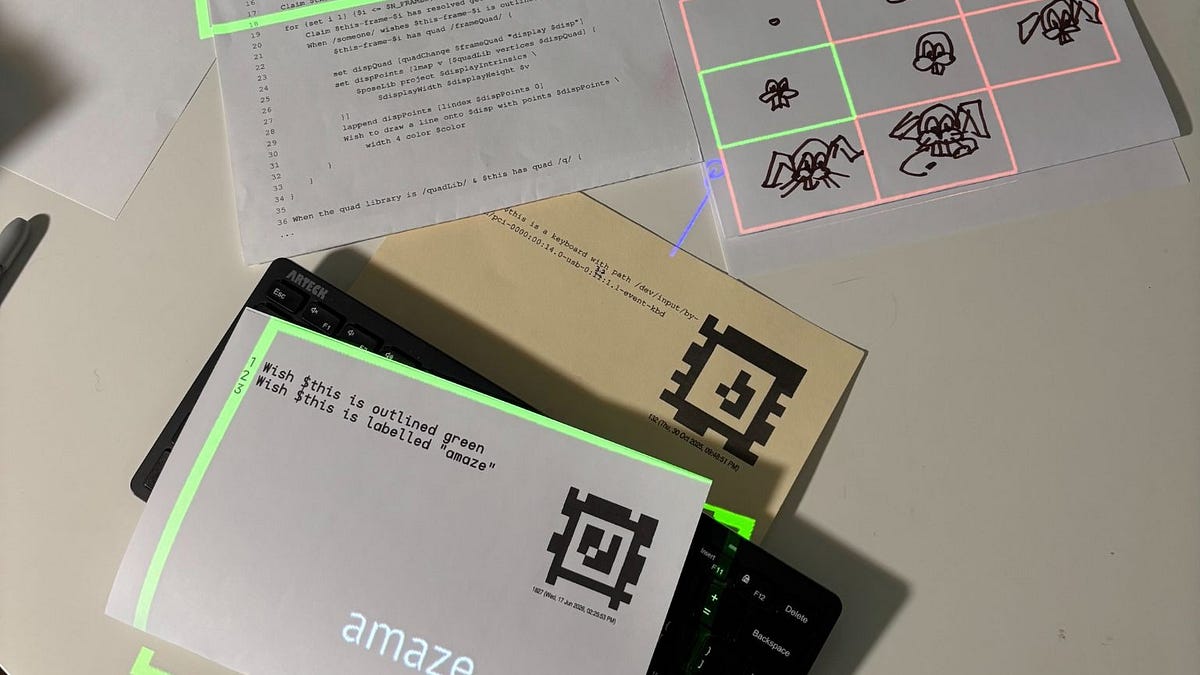
Against Usefulness
2026-07-12A recent New York Times Magazine feature explores the growing movement of physical computing and analog machines that prioritize the joy of creation over practical utility. By highlighting inventive projects like marble-powered paper computers, the article critiques modern technology's relentless obsession with optimization and celebrates the beauty of building fascinating, purely expressive devices.
CommentsResearchers in mechanistic interpretability are applying causality theory to large language models to determine if their internal operations reflect genuine reasoning or mere pattern memorization. By tweaking specific weights and activations, scientists aim to uncover how these networks process information, recently identifying shared underlying methodologies for tasks like calculating time and calendar dates. Although some argue that the immense complexity of neural networks makes them impossible to fully reverse-engineer, this approach seeks to translate encoded knowledge into human-understandable cognitive concepts.
CommentsA dock that wakes up reliably
2026-07-12Commenters discuss various troubleshooting steps for unreliable USB-C dock wake-up issues, suggesting tests with Android devices, Bluetooth peripherals, and USB packet debuggers. The community emphasizes that these waking failures are rarely isolated to the dock itself, but instead stem from complex interactions between laptop ports, monitors, and protocols like Thunderbolt or HDMI CEC. Ultimately, users note that modern peripherals function as interconnected network devices, transforming what seems like a simple connection into a multi-device debugging challenge.
Comments
A new federal regulation threatens to cut off federal student loans for college programs where graduates earn less than workers without a degree. While the rule aims to protect students from unmanageable debt, it raises broader questions about whether the value of a college degree should be measured solely by financial outcomes.
Comments2026-07-11

Apple has filed a lawsuit against OpenAI, accusing the AI company of stealing its trade secrets. The legal action specifically targets former Apple employees who allegedly transferred proprietary information to OpenAI. The tech giant claims these ex-workers illegally obtained and shared confidential data to benefit OpenAI's development efforts.
Comments
AI neoclouds like CoreWeave and Nebius are experiencing soaring revenues and stock prices due to massive demand for GPU infrastructure. However, lacking the deep cash reserves of Big Tech, these companies are relying on complex, circular financing structures to fund their rapid expansion. This unconventional approach to securing capital has raised red flags regarding the long-term sustainability of their business models.
Comments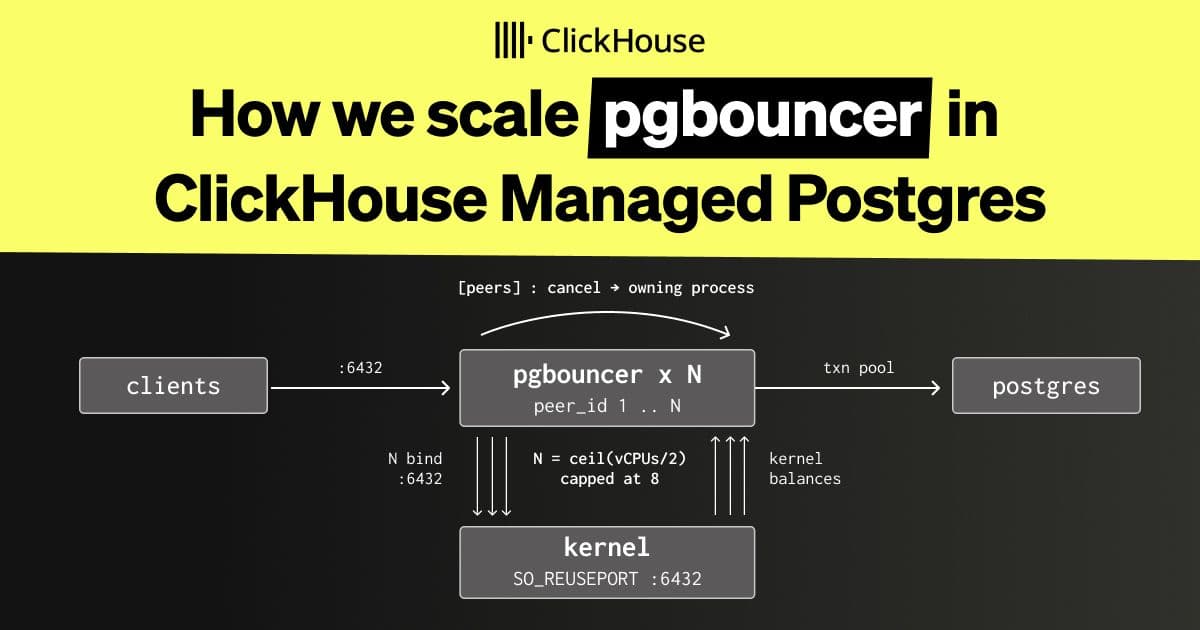
We scaled PgBouncer to 4x throughput
2026-07-11ClickHouse Managed Postgres overcame PgBouncer's single-threaded CPU limitations by deploying a peered fleet of processes utilizing the so_reuseport feature to scale across all available cores. This approach allows the connection pooler to fully utilize the entire CPU capacity of the host machine. Consequently, the team achieved a fourfold increase in throughput, as confirmed by recent performance benchmarks.
Comments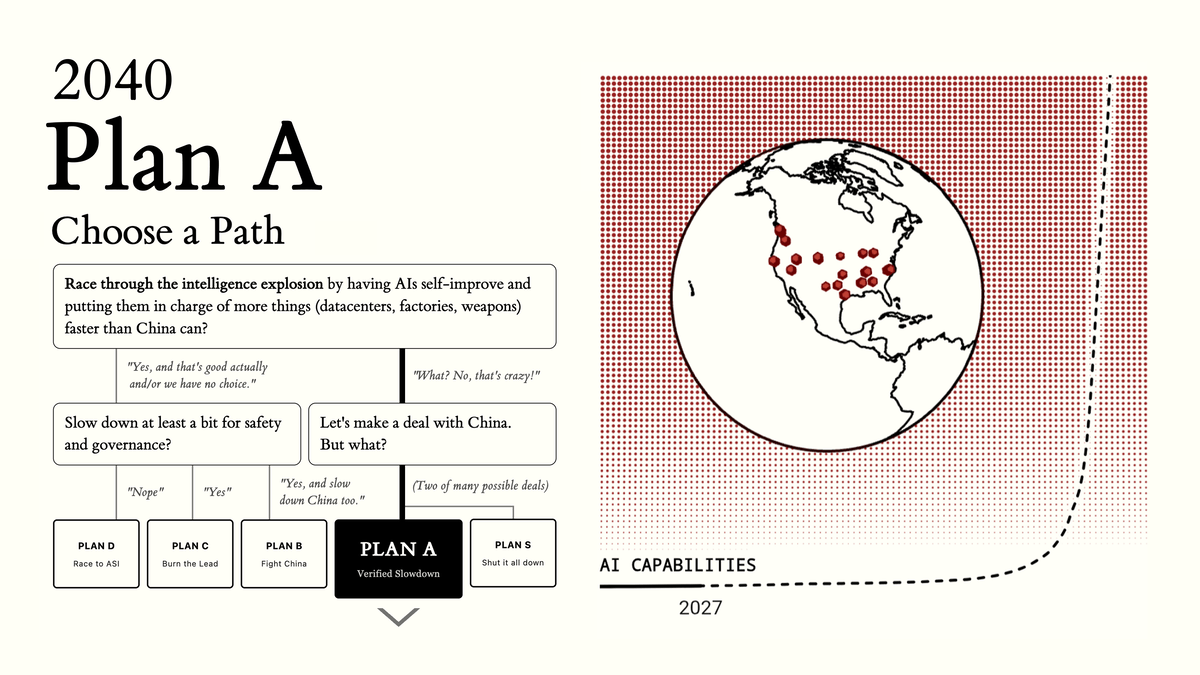
AI 2040: Plan A
2026-07-11The new report AI 2040: Plan A offers a detailed forecast and strategic recommendations for the United States, China, and the global community to navigate the impending era of artificial superintelligence. It outlines critical steps for international collaboration to manage the complex geopolitical and technological challenges associated with this transformative milestone.
CommentsA 1993 retrospective on the history of Singular Value Decomposition honors numerical analysis pioneers like Gene Golub, William Kahan, and Christian Reinsch for developing the practical SVD algorithm still used today. Accompanying reader discussions explore the mathematical intuition behind SVD, comparing it to generalized eigenvalues and explaining its utility in decomposing linear mappings into rotations and coordinate scaling.
CommentsAlternate clock designs and time systems
2026-07-11A recent article on alternate clock designs sparked a community discussion highlighting innovative and unconventional methods for visualizing time. Readers shared several creative web projects, including a twelve-variation visualizer and a unique Triclock design. The conversation also featured minor bug reports and widespread praise for specific favorites, most notably a digital Pi clock and a mesmerizing falling sand visualization.
CommentsRISCBoy is a completely open-source portable gaming console engineered from the ground up, featuring a custom CPU, graphics processor, and printed circuit board. The comprehensive hardware design and all associated project files are publicly available for developers and tech enthusiasts to explore and modify.
Comments
Scientists warn that modern design elements like LED lighting and repetitive architectural patterns can overload the brain's visual processing system. This continuous sensory strain is causing physical distress, headaches, and nausea for millions of people.
Comments
American rower Kelsey Pfendler successfully completed a historic solo journey of over 2,400 miles from California to Hawaii. In doing so, she achieved multiple milestones by becoming the first American woman, the youngest woman, and the fastest woman to ever make the solo crossing.
CommentsThe Python library Otary for image processing and 2D geometry has launched a new tutorials section featuring step-by-step guides and interactive Jupyter notebook workflows. These resources aim to help developers practically apply the library's clean API to real-world computer vision tasks beyond standard documentation. Community members note the tool excels at solving niche problems in just a few lines of code, often succeeding where large language models fail.
CommentsBook: RISC-V System-on-Chip Design
2026-07-11A new book titled RISC-V System-on-Chip Design, authored by David Harris, James Stine, Sarah Harris, and Rose Thompson, is now available for purchase on Amazon. The publication focuses on system-on-chip design utilizing the RISC-V architecture, and buyers can currently receive free shipping on qualifying orders.
CommentsIn a 2019 blog post, Paul Khuong draws a conceptual parallel between thread preemption and garbage collection to explain the complexities of memory reordering. He illustrates how preemption can inherently resolve concurrent memory ordering issues, offering a unique perspective on system optimization. This insight adds to his broader body of work exploring advanced computing concepts, mathematical theories, and compiler design.
CommentsReflecting on the 1984 book Digital Deli, readers discussed the extreme hardware constraints of early personal computing, noting how one contributor hand-coded the bestselling Apple Writer word processor using just 8KB of memory. The discussion contrasted these tight historical limitations with modern software bloat and today's massive GPU memory requirements. Participants also observed a cyclical trend in the industry, suggesting that modern AI tools are ushering in a new era of independent cottage programmers reminiscent of the early PC days.
Comments