Software Tech News
2026-05-14

Despite Apple spending five years fortifying its systems against memory corruption, security researchers have developed the first public macOS kernel exploit for the new M5 chip. Working alongside Mythos Preview, an engineering team successfully built a functional exploit in just five days.
CommentsNew Nginx Exploit
2026-05-14A newly discovered exploit for the Nginx web server is now available on GitHub, specifically targeting the CVE-2026-42945 vulnerability. Developed by DepthFirstDisclosures, the exploit tool named Nginx-Rift is currently open for community code review and contributions.
Comments
Rewrite Bun in Rust has been merged
2026-05-14The popular all-in-one JavaScript runtime and package manager Bun has officially merged its major rewrite in the Rust programming language. Spearheaded by creator Jarred Sumner, this architectural transition leverages Rust's performance and memory safety to further enhance the tool's speed and reliability.
CommentsScorched Earth 2000 – Web
2026-05-14Readers reminisce about bypassing early shareware DRM and payment enforcement in classic games like Scorched Earth and Escape Velocity by editing game files or altering system clocks. The discussion highlights the forgiving attitudes of early software creators toward piracy and local cheating. Additionally, the thread mourns the passing of Escape Velocity co-creator Peter Cartwright, noting that his Kickstarter to remaster the game was successfully funded after his death.
Comments
Twin brothers wiped 96 government databases just minutes after being terminated from their jobs. This retaliatory data destruction highlights the critical need for organizations to revoke employee system credentials before conducting staff dismissals.
Comments
HDD Firmware Hacking
2026-05-14A new technical deep dive explores the inner workings of storage devices by dumping, reverse engineering, and modifying the firmware of various HDDs and SSDs. This hands-on project provides a comprehensive look at how hard drives function at the lowest software levels.
Comments
The UK government has replaced its use of Palantir software with a newly developed, internally built IT system for managing refugee data. Officials stated that the in-house solution offers greater flexibility while maintaining high security standards.
Comments
A newly discovered vulnerability in Tesla Wall Connectors allows attackers to bypass firmware downgrade protections by exploiting the bootloader through the physical charge port connector. This flaw could enable malicious actors to install older, potentially insecure firmware versions on the electric vehicle charging stations.
Comments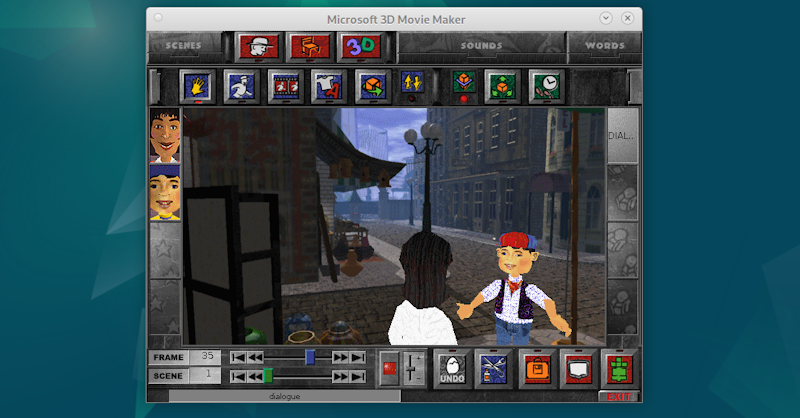
Porting 3D Movie Maker to Linux
2026-05-14An open-source project is porting Microsoft's nostalgic 1990s animation software, 3D Movie Maker, to the Linux operating system. This effort allows users to experience the classic movie-making features and the iconic dog mascot McZee on open-source platforms.
Comments
This piece breaks down the GGUF file format to explain the essential metadata and extra components needed to run a language model independently of its raw weights. Additionally, it highlights the current limitations of the format by identifying what crucial information is still missing for seamless deployment.
CommentsA new open-source project introduces a specialized skill for AI coding assistants like Claude Code and OpenAI Codex to foster deliberate practice. The tool, named learning-opportunities, helps developers actively refine their programming abilities while working alongside AI. By prompting users to engage critically with the code, it prevents over-reliance on automated generation and promotes continuous learning.
CommentsClaude for Legal
2026-05-14Anthropic has released an open-source GitHub repository called Claude for Legal, providing a suite of plugins tailored specifically to streamline legal workflows. Developers are encouraged to contribute to the project's ongoing development to help integrate the company's AI capabilities into specialized legal processes.
CommentsShow HN: Nibble
2026-05-14A new open-source project named Nibble allows developers to generate LLVM IR without using malloc or relying on external dependencies. The lightweight tool is available on GitHub and is designed to be entirely self-contained. This makes it a highly practical solution for low-level code generation in constrained environments.
Comments
A newly discovered zero-day exploit named YellowKey is currently targeting Microsoft BitLocker encryption. Additionally, security teams are tracking a second zero-day vulnerability called GreenPlasma that enables local privilege escalation.
Comments
Meta is testing a new Threads feature that allows users to tag a Meta AI account to ask questions and receive answers. However, users do not have the option to block the AI account if they prefer not to interact with it.
CommentsOblivious DNS over HTTPS is a protocol that separates user identity from DNS queries without requiring account sign-ups. A developer has released Numa v0.14, an MIT-licensed tool for deploying clients and relays, alongside the launch of the second public ODoH relay to expand the anonymous DNS ecosystem.
Comments2026-05-13

Linux gaming performance is improving significantly as Windows APIs are increasingly integrated directly into the Linux kernel. Thanks to this ongoing integration, the number of unplayable games on the operating system continues to shrink.
Comments
US residents can register free subdomains under their local city and state domains by coordinating with their delegated domain manager. The setup process requires using Amazon Lightsail for nameservers, submitting an interim template, and pointing DNS records to a webhost.
Comments
I moved my digital stack to Europe
2026-05-13Driven by a desire for digital sovereignty, the author details their experience migrating their tech stack to European cloud providers. The piece examines this shift away from US tech giants and argues that Europe's cloud infrastructure has matured into a highly capable and competitive alternative.
CommentsThe FULU-Foundation is actively seeking GitHub contributors for its open-source OrcaSlicer-bambulab project to restore full BambuNetwork support for Bambu Lab 3D printers. Developers interested in advancing 3D printing software can join the initiative by creating a GitHub account to assist with development.
Comments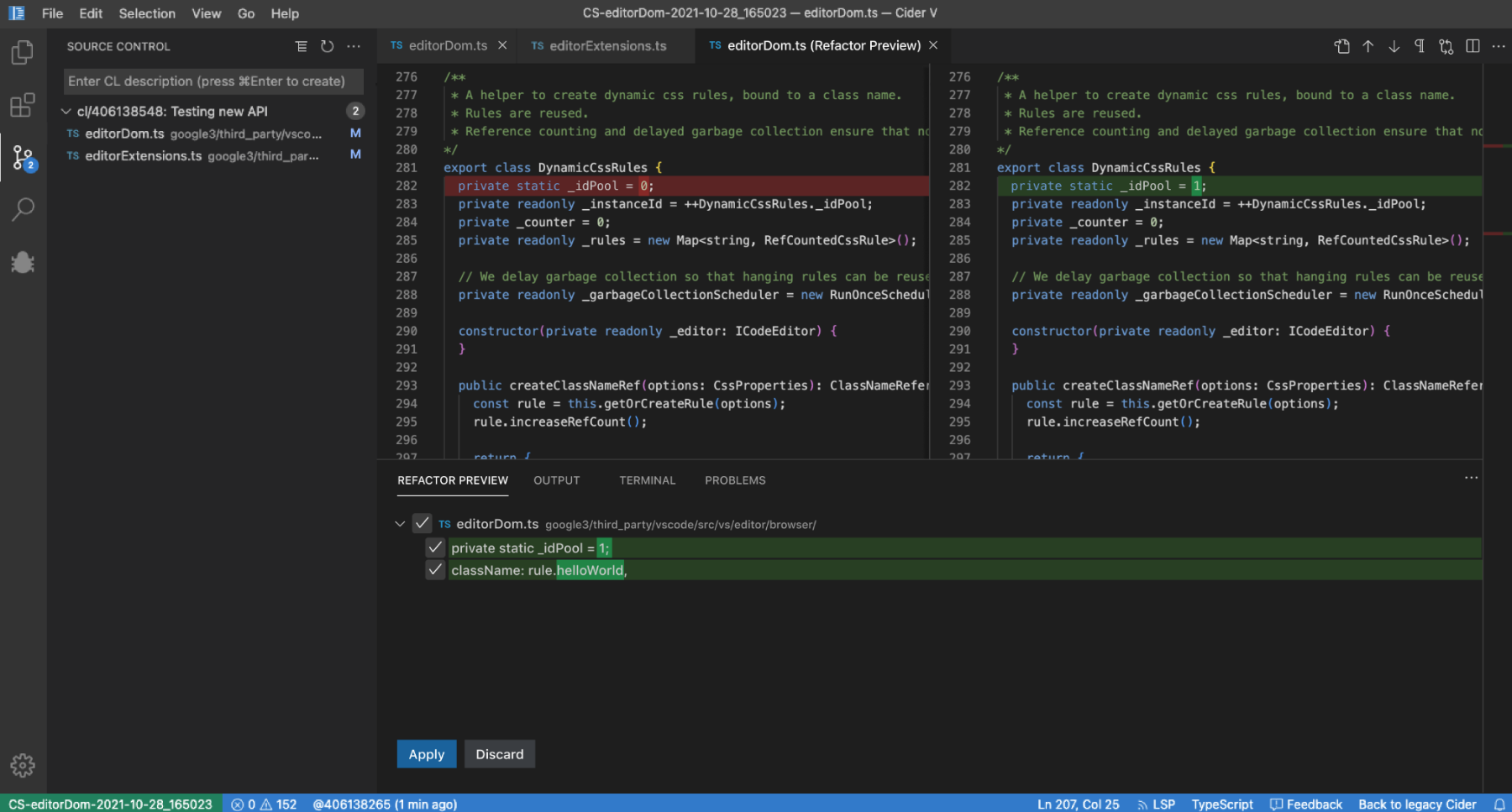
A History of IDEs at Google
2026-05-13Laurent Le Brun's blog post details the evolution of Google's internal development environments, tracing the company's shift from relying on third-party tools to building bespoke, cloud-based IDEs tailored for its massive monorepo. This overview highlights how the immense scale and complexity of Google's codebase forced the tech giant to engineer highly customized, scalable software ecosystems rather than relying on commercially available tools.
CommentsThe Emacsification of Software
2026-05-13As AI makes software production increasingly effortless, developers are retreating into highly personalized, isolated coding environments akin to custom Emacs configurations. While this trend maximizes individual productivity, it creates severe bottlenecks for collaboration and code sharing because these custom environments are nearly impossible for others to understand or integrate. This shift is now challenging traditional version control platforms like GitHub and forcing teams to rethink how they collaborate on highly fragmented, individually generated code.
Comments
Python 3.14 introduced a new incremental garbage collector that caused significant memory pressure in production environments. Consequently, developers have decided to revert this feature in both Python 3.14 and 3.15 to restore the previous garbage collection system.
Comments
Leaving GitHub for Forgejo
2026-05-13A DevOps consultancy details its decision to migrate code repositories and development workflows from GitHub to Forgejo, prioritizing self-hosted and open-source solutions. This move reflects a growing trend among tech professionals to seek greater control, security, and operational continuity outside of proprietary platforms.
CommentsDeveloper nooga has released a work-in-progress roguelike game that procedurally generates a new name for every playthrough. Written in a concise 4,000 lines of code, the open-source project is currently available on GitHub for community contributions.
CommentsScrcpy v4.0
2026-05-13The open-source tool Scrcpy has released version 4.0, continuing to offer users a seamless way to display and control their Android devices directly from a desktop computer. This latest update marks a major milestone for the Genymobile project, which remains actively open for community contributions on GitHub.
Comments
Major publishers including the New York Times and USA Today have blocked the Internet Archive from automatically saving their content by updating their web crawler directives, prompting a petition to urge them to reverse the decision. Readers expressed frustration that the Internet Archive strictly respects these rules while AI companies routinely ignore them without facing legal consequences. The discussion also highlighted broader debates regarding copyright enforcement, the financial sustainability of digital journalism, and the distinction between automated web crawling and direct content redistribution.
Comments
A recent arXiv paper introduces a novel method for deterministic, fully-static whole-binary translation that completely eliminates the need for heuristics. By translating entire software binaries at compile time with strict predictability, this approach ensures exact cross-architecture code execution without relying on dynamic runtime analysis. This systematic technique promises to significantly improve software portability and performance across diverse hardware platforms.
CommentsS-100 Virtual Workbench
2026-05-13The S-100 Virtual Workbench provides an emulation environment for classic S-100 bus computers, sparking nostalgic conversations among veteran developers about their early programming experiences. Readers fondly recalled the hardware limitations and DIY ethos of the era, sharing memories of coding on Heathkit machines and early minicomputers. These discussions highlight how overcoming the technical constraints of early personal computing shaped a generation of hobbyists and programmers.
Comments
A Linux kernel optimization inadvertently caused a severe performance drop in the QUIC protocol. The bug occurred because the system pinned the CUBIC congestion window at its minimum floor by confusing RTT wait times with actual application idleness. Developers resolved the issue by updating the code to accurately measure and distinguish between these two types of idle periods.
Comments