Programming Tech News
Submit2026-11-16

Carnegie Mellon University has made lectures from its Kenneth C. Griffin School of Computer Science available for free on YouTube. The school plans to add self-paced courseware next.
CommentsIn a blog post, Jimmy Breck-McKye argues that software failures are no longer isolated incidents but symptoms of systemic problems in how software is built and maintained. He contends the industry must address underlying structural issues rather than treating each breakdown as a one-off.
Comments
How to make almost anything
2026-11-16A discussion around an overview course on making almost anything weighs criticism that it only skims topics against the argument that broad exposure is valuable because students learn what is possible and where to start. Commenters say such survey knowledge complements later specialization and on-the-job learning, and may matter more as AI agents take over implementation while engineers focus on knowing what can be done.
CommentsA small browser flight demo made with UI8's Forge. You fly a pixel-art fighter jet over islands drawn with sprite stacking, from just above the waves up to high altitude. Press Space to switch between overhead, chase and cockpit views, click to roll, and hold to fire the thrusters.
Comments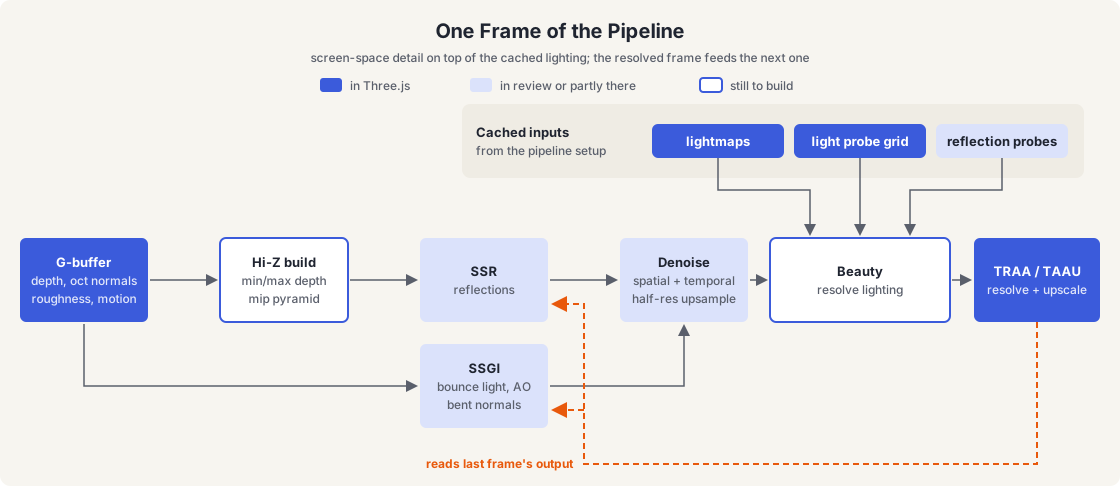
A developer is documenting an effort to bring native Three.js rendering quality closer to AAA game engines, covering the pipeline from G-buffer to temporal upscaling. The piece examines lightmap, probe, and screen-space reflection stages against what games require, what Three.js currently offers, and which pull requests are in review or still needed.
Comments
OpenCode Browse
2026-11-16OpenCode Browse lets OpenCode and other MCP clients control a user's real browser. Agents can read, click, type, take screenshots, and record tabs, while login and 2FA prompts are handed back to the user. The tool aims to give agents real-browser access without taking over authentication.
Comments
Aristotle Expands into Rust
2026-11-16Aristotle announced its expansion into Rust, citing the language’s rapid growth and use for high-stakes software. The move extends Aristotle’s capabilities to Rust developers.
CommentsJolt – Clojure that speaks C
2026-11-16Jolt is a new Clojure implementation built on Scheme, running natively via Chez and targeting JavaScript through Gambit. It includes a self-hosted compiler and a Clojure-compatible standard library while avoiding the JVM.
Comments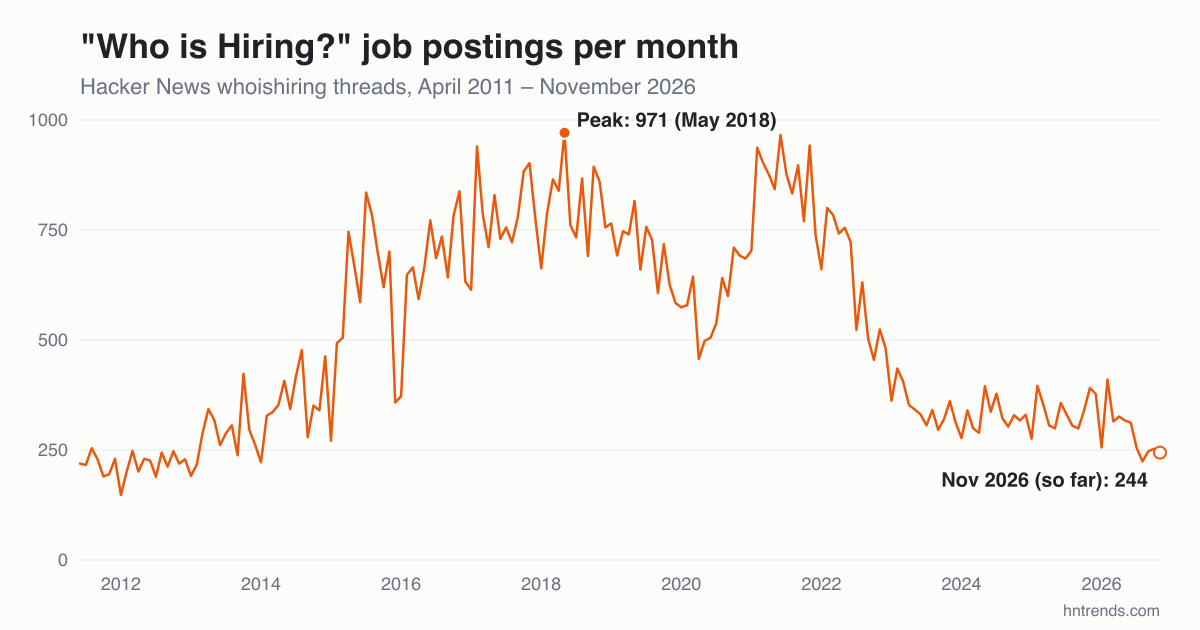
Hacker News' “Who is Hiring?” postings are hovering near 12-year lows, even as AI appears in more than half of all listings. The November 2026 roundup also tracks the most popular programming languages and technologies among those postings.
CommentsReaders revisiting a 2012 guide to breaking into security say the field’s career ladder has tightened amid post-ZIRP and AI shifts, though boutique security still rewards hands-on hacking and peer recognition more than certificates. Incident-response hiring remains focused on broad knowledge and resilience under pressure, with AI proving useful mainly for low-level tasks like log review.
Comments
“…and the proof is checked in Lean”
2026-11-16The post explains how to interpret claims that a theorem is correct because it was checked in Lean, noting that Lean code provides an important signal. However, if the code is AI-generated, additional tests are needed to validate the claim.
CommentsMini.nvim Is Now on Tangled
2026-11-16Mini.nvim, a collection of more than 45 independent Lua modules that enhance the Neovim experience with minimal effort, is now available on Tangled. The project continues to offer lightweight, modular improvements for Neovim users.
Comments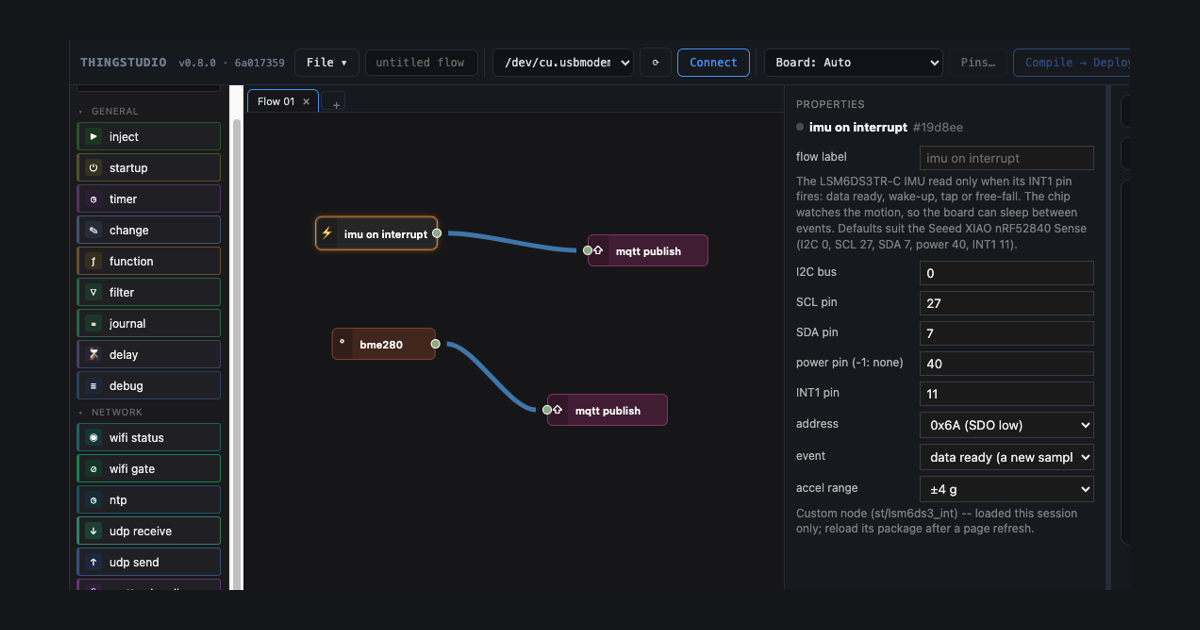
ThingStudio is a new open-source, Apache 2.0 beta tool that brings Node-RED-style flow programming to microcontrollers including ESP32, Raspberry Pi Pico, nRF52840, and STM32 boards. It compiles visual flows to MicroPython so the board runs them independently.
Comments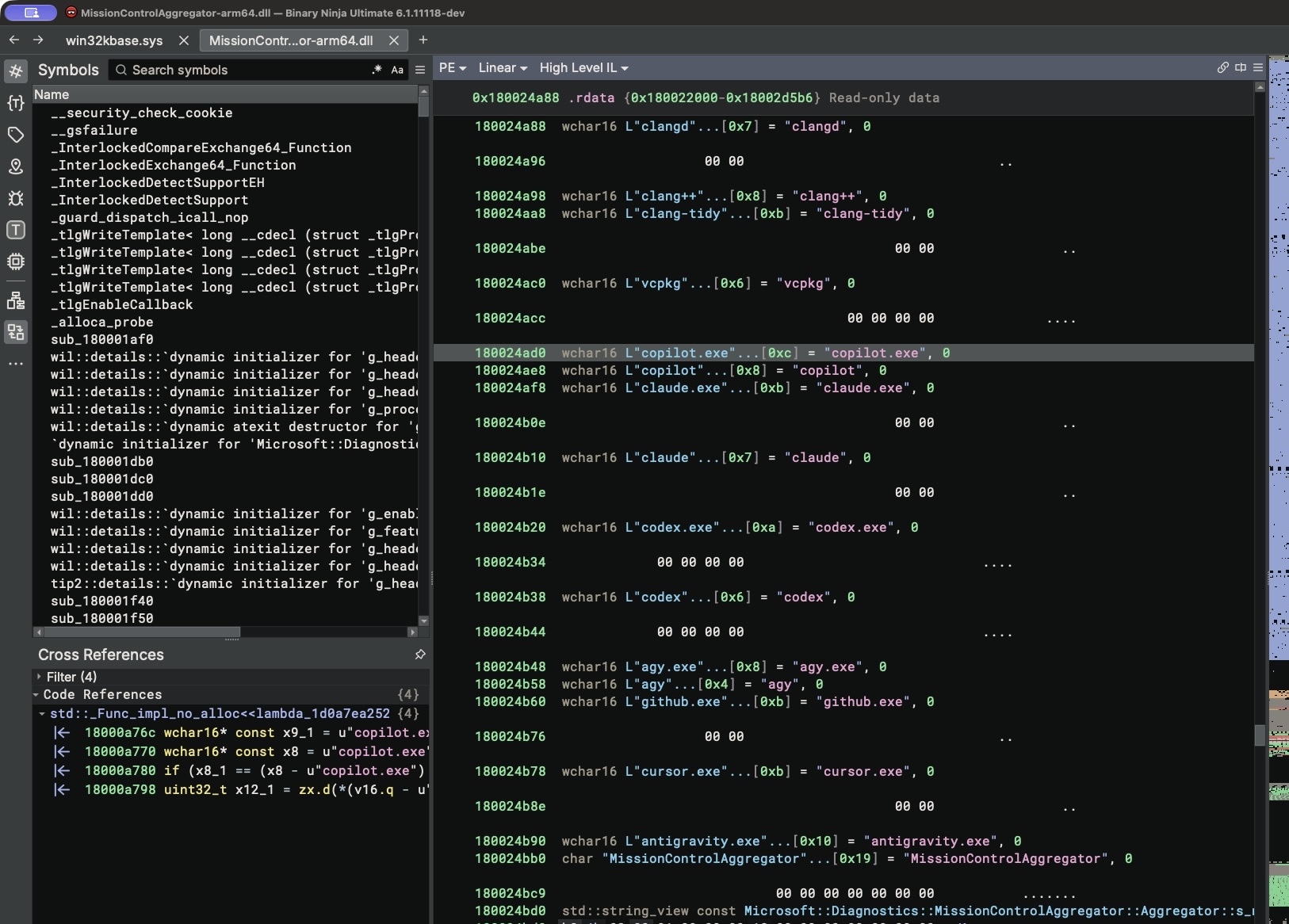
Reverse engineering of Windows 11’s MissionControlAggregator shows that a diagnostic ETW report includes usage bits for coding agents and developer tools. The finding indicates Windows 11 can collect data on which development tools and AI coding agents are in use.
CommentsParcel is a new desktop mail client for Linux built with Zig. Its repository is hosted by rockorager.dev on Tangled.
Comments
Simple 8085 Computer
2026-11-16A Hackster.io project showcases a simple 8-bit computer built around the 8085 processor, running at 4.9 MHz with 8 KB each of ROM and RAM. It includes an onboard monitor program and tiny BASIC, plus one I/O port for interfacing.
Comments
A job seeker who posted in a “Who wants to be hired?” thread was targeted by a fake recruiter with a RAT and infostealer. The attack used a VS Code extension that showed one script while running another, and the malware looked up its server via Ethereum transactions. The report analyzes the malware without executing any of it.
CommentsI Can't Believe It Can Sort
2026-11-16A reader discussion revisits the counterintuitive “I Can’t Believe It Can Sort” algorithm, which appears flawed but is proven to sort correctly despite unnecessary pairwise comparisons and Θ(n²) runtime in all cases. Commenters note it is impractical, unstable, and offers little beyond simplicity, while linking formal proofs and SPARK verification efforts. The thread also touches on toy algorithms like sleep sort as fun but unusable curiosities.
Comments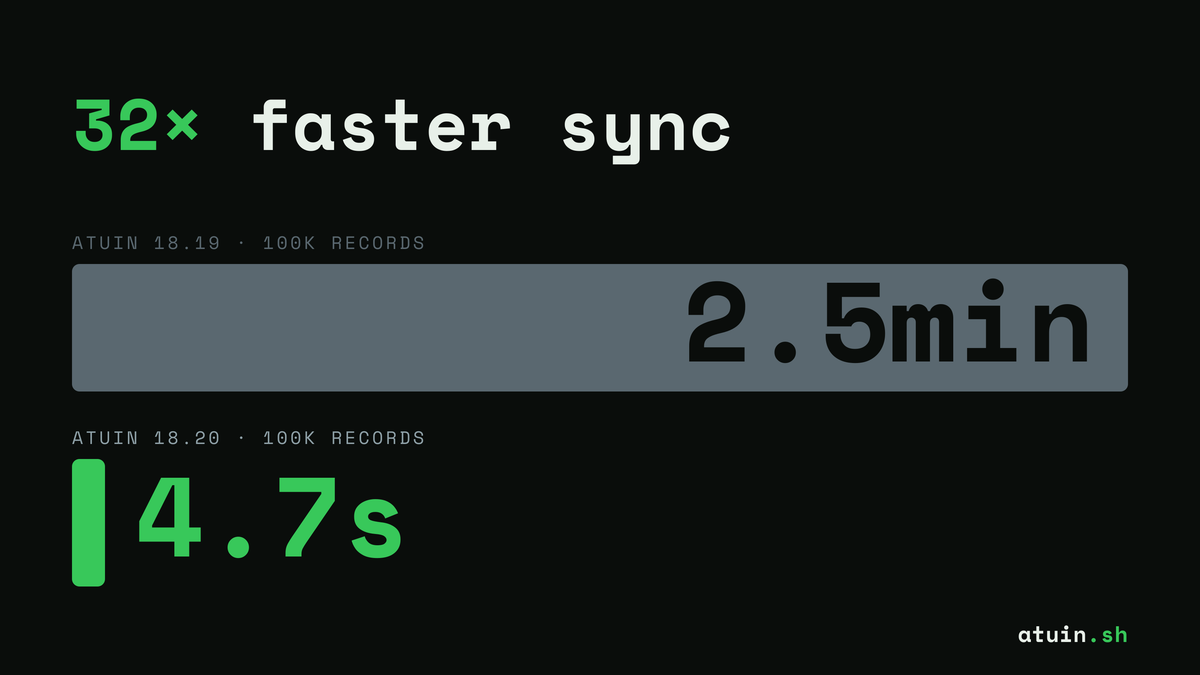
Atuin has made its sync process 32x faster by introducing packfiles. The update allows many thousands of records to sync in single-digit seconds.
CommentsJiff 1.0: A datetime library for Rust
2026-11-16Jiff 1.0 has launched as a new datetime library for Rust. Readers praised it as another high-quality release from burntsushi and expressed hope that the wider ecosystem will adopt it over chrono and similar libraries. Some predict Jiff will become the default datetime library for many Rust developers and LLMs in the coming years.
CommentsArtificial Intelligence for the Z80
2026-11-16A new guide aims to teach artificial intelligence from scratch using BASIC on 8-bit Z80 computers. It offers a practical walkthrough of algorithms, data, and neural networks, showing how AI concepts can be implemented on retro hardware.
Comments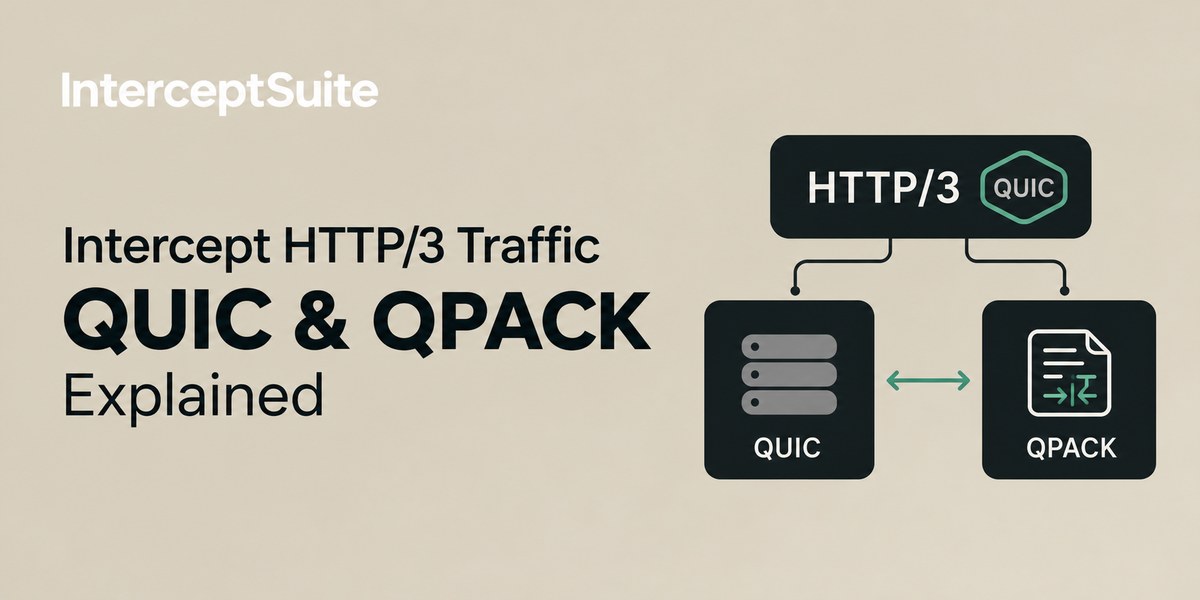
A new guide explains how to intercept and edit HTTP/3 traffic, covering what a proxy can see in QUIC streams and how QPACK obscures headers. It also walks through editing and replaying requests, with techniques tested in a real lab.
CommentsA new GitHub project provides reproducible proofs for the Septopert, described as the smallest possible nopert polyhedron. The tom7/noperts repository invites contributions and aims to make these proofs reproducible.
Comments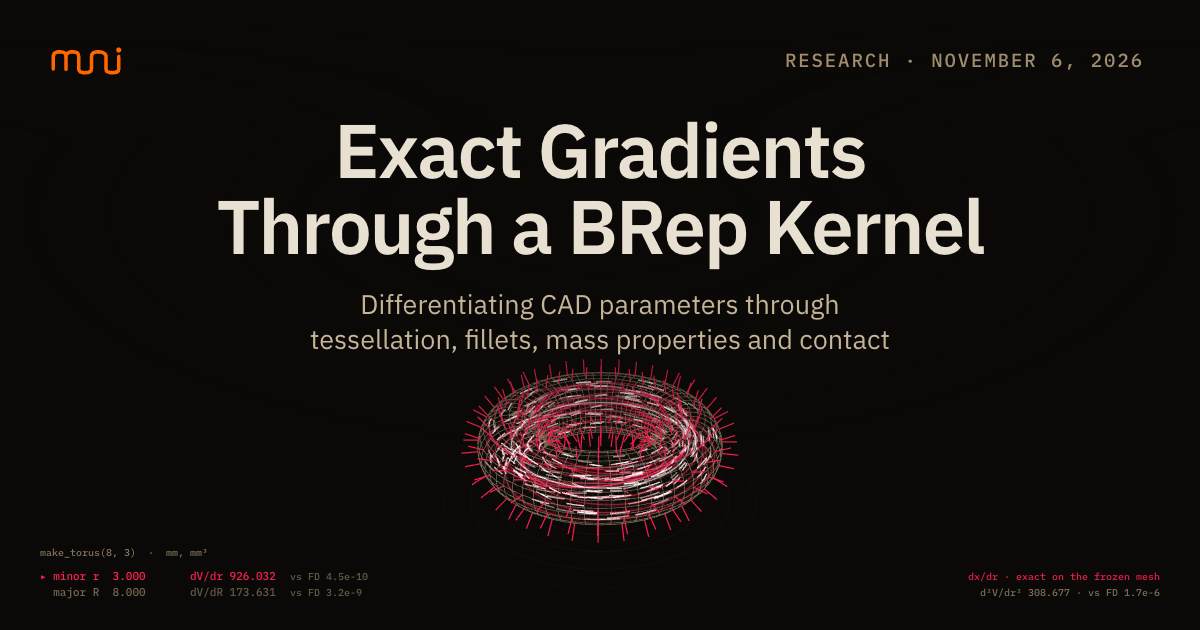
Exact Gradients Through a BRep Kernel
2026-11-16vcad has demonstrated exact gradients of CAD parameters, including fillet radii, through its BRep kernel by freezing the tessellation topology and differentiating node positions. The approach supports second-order derivatives, a transposed pass, and a rigid-body adjoint with contact, and was validated against finite differences of fresh rebuilds. The checks also measured the polygonization gap and uncovered two seam errors.
Comments
ParadeDB is demonstrating how Postgres users can keep normalized schemas while still accelerating search and aggregate joins, using DataFusion, Rank Joins, co-partitioning, and tuple tagging. The approach aims to remove the need to denormalize data just to support fast search workloads.
CommentsFormal Verification Is Not Verifiable
2026-11-16The article questions the promise of formal verification, arguing that verification claims are themselves difficult to verify and often depend on human assumptions, specifications, and tools. A reader discussion invoked Dijkstra’s call to replace “bug” with “error,” emphasizing programmer accountability over the idea that defects sneak in maliciously. The exchange highlights that rigorous software correctness requires clear language and human responsibility as much as formal methods.
CommentsA 2014 experiment implemented a TCP stack in Python to explore the protocol’s internals and the challenges of low-level networking in a high-level language. The takeaway was that Python makes TCP concepts more approachable for learning and prototyping, but its performance overhead makes it impractical for production networking.
CommentsSutra-OS is a new open-source, self-hosted ontology platform featured on Show HN. It organizes data around scarce, typed, related, and actionable units, with the project available in the 0nelight/sutra-os repository.
Comments
Artem Legotin explores Golden Board, a 512 KiB binary message designed to teach chess without a shared language. The illustrated piece traces how raw binary cells become a reader, visual chess lessons, and 64 games.
Comments
Psychic is a new fuzzy finder similar to fzf that learns from your past actions to predict which file you want to open next. It aims to make file selection faster by adapting to your behavior.
Comments