Programming Tech News
2026-09-22
What Sun got wrong
2026-09-22Reader discussions on Sun Microsystems' decline contrast its frustrating enterprise purchasing experience and highly controlled, vertically integrated ecosystem with the streamlined, commoditized hardware market. Although some debate the technical openness of the SPARC architecture, the consensus is that the company's closed platform ultimately failed to compete against the cheaper, interchangeable x86 and Linux stack.
Comments
As AI coding tools accelerate development, Continuous Integration pipelines have become costly bottlenecks that delay pull requests. To overcome this, an engineering team rearchitected their CI system by optimizing infrastructure, work scheduling, and test parallelization, successfully reducing both wait times and operational costs.
Comments
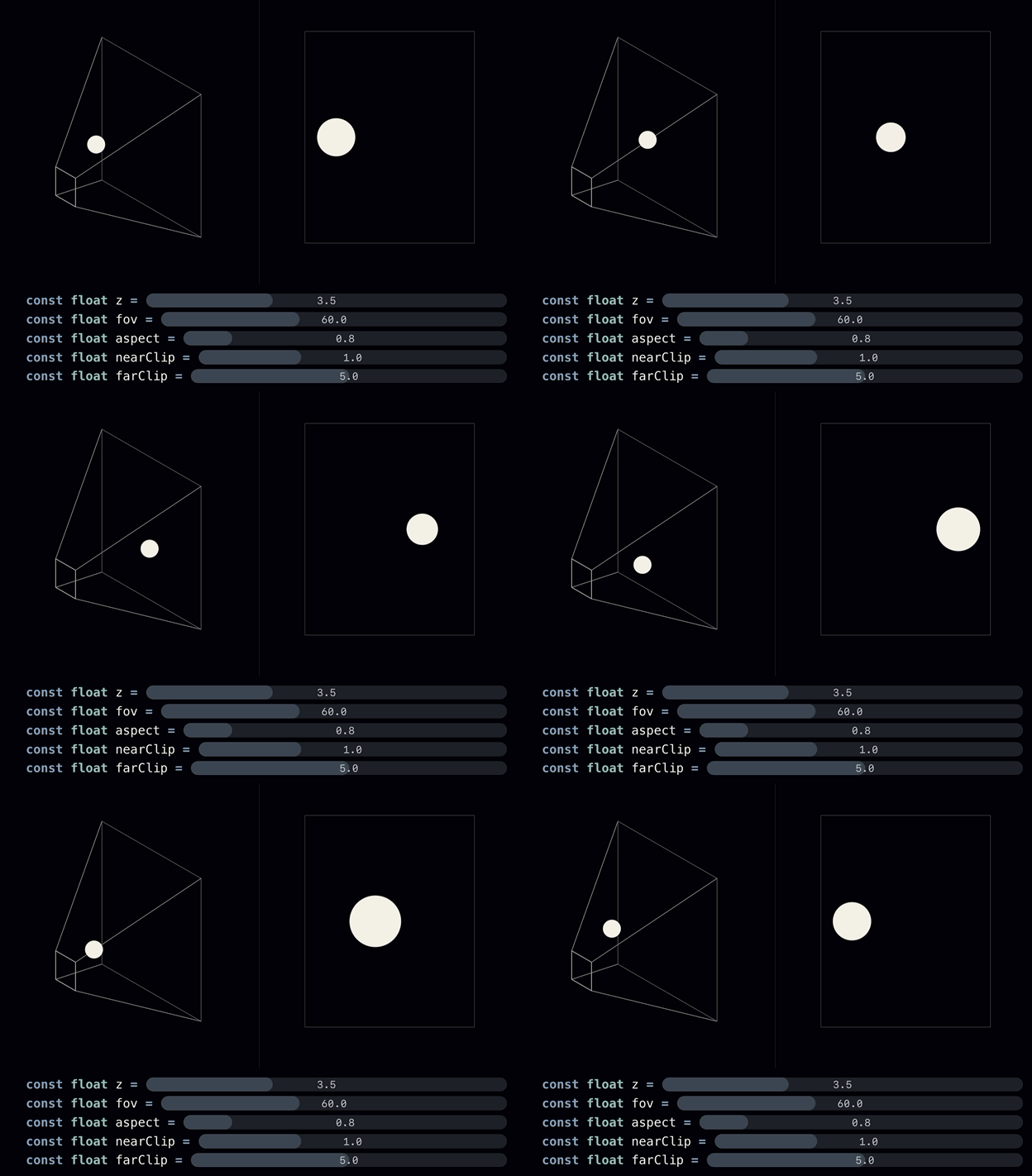
Divide by depth for instant 3D
2026-09-22A new technical tutorial explores the transition from relying on high-level game frameworks to understanding the underlying math of 3D rendering. It specifically breaks down the divide by depth technique used in computer graphics. By mastering this concept, developers can implement custom camera projections to achieve instant 3D effects without relying on pre-built engine tools.
CommentsLooking forward to Git 2.56 – and 3.0
2026-09-22The Git version control system is preparing for its upcoming 2.56 release, introducing new updates to the workflows that power global software development. Meanwhile, the open-source community is already looking ahead to a major 3.0 release to modernize the widely used platform.
Comments
More Floating Point Alternatives
2026-09-22Reader discussions on floating-point alternatives suggest that developers who truly understand their algorithms can simply fix their standard float code rather than seeking replacements, as many proposed options like symbolic computation are fundamentally different paradigms. Instead, commenters argue that practical solutions like fixed-point numbers, unums, and logarithmic storage are the true alternatives frequently overlooked in these debates.
Comments
Copper-Rs version 1.2 enables the live-cloning of running robots over unreliable networks to create deterministic digital twins for remote telemetry and state reconstruction. The system streams minimal state data to accurately reproduce task states, messages, and logs as if running onboard. Additionally, the release introduces smaller log sizes, new stereo depth reconstruction, and improved ROS 2 compatibility.
Comments
First Shader from Zero in Godot 4
2026-09-22A new Godot 4 tutorial teaches developers how to build their first shader from scratch. The guide covers fundamental techniques such as texture sampling, UV coordinate shifting, and region masking. It concludes by demonstrating how to use noise to generate random shapes for a dynamic portal effect.
Comments

Cloudflare has made Python Workers generally available, enabling developers to run Python web frameworks and AI orchestration libraries natively within the Workers runtime. This release allows seamless integration with Cloudflare services like D1, R2, and Workers AI without requiring any JavaScript glue code.
CommentsDespite its title claiming it is a new programming language for data munging, TXR is actually a mature Lisp-based language first released in 2009. Community discussions note that the project appears unmaintained, with no code changes in over a year. Consequently, developers remain highly skeptical about its chances of gaining mainstream popularity anytime soon.
Comments2026-09-21

AX – Google’s Open Agentic Orchestrator
2026-09-21Google has released AX, an open agentic orchestrator that enables developers to declare AI tasks using YAML. The tool automatically sandboxes tasks, provisions workspaces, isolates network access, and manages scaling for large-scale deployments.
CommentsThe open-source recompilation project for the Nintendo 64 classic Ogre Battle 64: Person of Lordly Caliber has reached 99.05% completion under the guidance of developer lfarroco. By reverse-engineering the original code, the initiative aims to deliver a fully playable, native port of the beloved retro strategy RPG to modern systems.
CommentsWhy back propagation goes backward
2026-09-21Quantitative researcher Gregory Gundersen explores the mathematical foundations of backpropagation to explain why the algorithm must compute gradients in reverse order. By breaking down the underlying chain rule, he demonstrates how calculating derivatives from the output layer back to the inputs enables the efficient weight updates required for training neural networks.
CommentsI turned Jev into a (lousy) chatbot
2026-09-21Developer Kyle Pena has released an open-source GitHub project that turns Jev into a conversational AI. Although the creator self-deprecatingly describes the initial model as lousy, the repository is now live and inviting community contributions to improve its performance.
CommentsA reverse engineering project has successfully achieved a complete, byte-identical decompilation of the GameCube version of Resident Evil 4 into C and C++ source code. Focusing on the game's debug build, this effort perfectly recreates the original executable from the newly written code. This milestone provides unprecedented access to the classic survival horror game's underlying mechanics, paving the way for advanced mods and preservation efforts.
CommentsA recent article exploring the architectural concept of a deterministic core surrounded by a non-deterministic shell has received widespread acclaim. Readers are highly praising the work as a great achievement. The community consensus emphasizes that the tech industry needs more contributions of this caliber.
Comments
A new online competition features a ranked ladder for small neural networks competing in strategy games across weight classes starting at 8 KiB. Developers can train a model, write an adapter, and upload their files to test their AI's efficiency and strategic gameplay.
CommentsVoluntary funding models have failed to adequately compensate FOSS maintainers, despite the significant revenue generated at the software registry layer. To fix this, the author suggests that registries should automatically route a portion of the fees they already charge corporate clients directly to the developers who create the underlying code.
Comments
Laya on Mac M4 CoreML Offline
2026-09-21A new open-source project enables the Laya application to run completely offline on Apple's latest M4 Macs by leveraging the CoreML framework. This local integration allows users to perform machine learning tasks directly on their devices without relying on an internet connection. The implementation is currently available for download and testing via its official GitHub repository.
Comments2026-09-20

This article explores the underlying mechanics of the Hacker News ranking algorithm, addressing long-standing questions about its true scoring formula. It delves into how the system handles controversy and applies penalties, revealing whether the published code matches the actual ranking process.
Comments
Players have discovered that the challenging Dream Devourer optional boss in Chrono Trigger can be defeated by exploiting an integer overflow. This technical glitch allows gamers to bypass the complex mechanics of the DS and later versions of the classic game.
Comments
Convai Innovations has developed a highly efficient non-autoregressive decision model capable of processing over 100 languages in a single forward pass on a GPU. The system completes this task in just 33 milliseconds by leveraging reinforcement learning techniques. Specifically, the model was built using RLCD and proper scoring rules to optimize its rapid performance.
Comments
A newly published arXiv paper introduces compiler-style optimizations for 2D rasterization within the Skia graphics engine. The research establishes formal semantics for drawing operations to provide a rigorous foundation for these rendering processes. Ultimately, this compiler-inspired approach aims to significantly enhance the efficiency and performance of visual processing in applications that rely on Skia.
Comments
Faster NumPy in the Browser
2026-09-20NumPy running in the browser via WebAssembly has received a major performance boost by linking OpenBLAS through Emscripten-forge. This update delivers significant speedups for matrix multiplication and other linear algebra operations directly within web environments.
Comments
This article provides a comparative analysis of the reflection capabilities in C++, Zig, and C3. It examines how each language implements compile-time and runtime introspection, outlining the unique advantages and limitations of their respective approaches.
CommentsA new open-source roguelike dungeon crawler is receiving praise from the community for its nostalgic BBS-style aesthetic. Fans of classic games like NetHack are highly recommending the project to fellow retro gaming enthusiasts. Readers are celebrating the developer's dedication to keeping this traditional genre alive.
Comments
Tin: full-text search for Postgres
2026-09-20A new tool named TIN has been introduced to provide fast and full-featured full-text search indexing for PostgreSQL databases. This release aims to significantly enhance search performance and query capabilities for developers working with Postgres.
Comments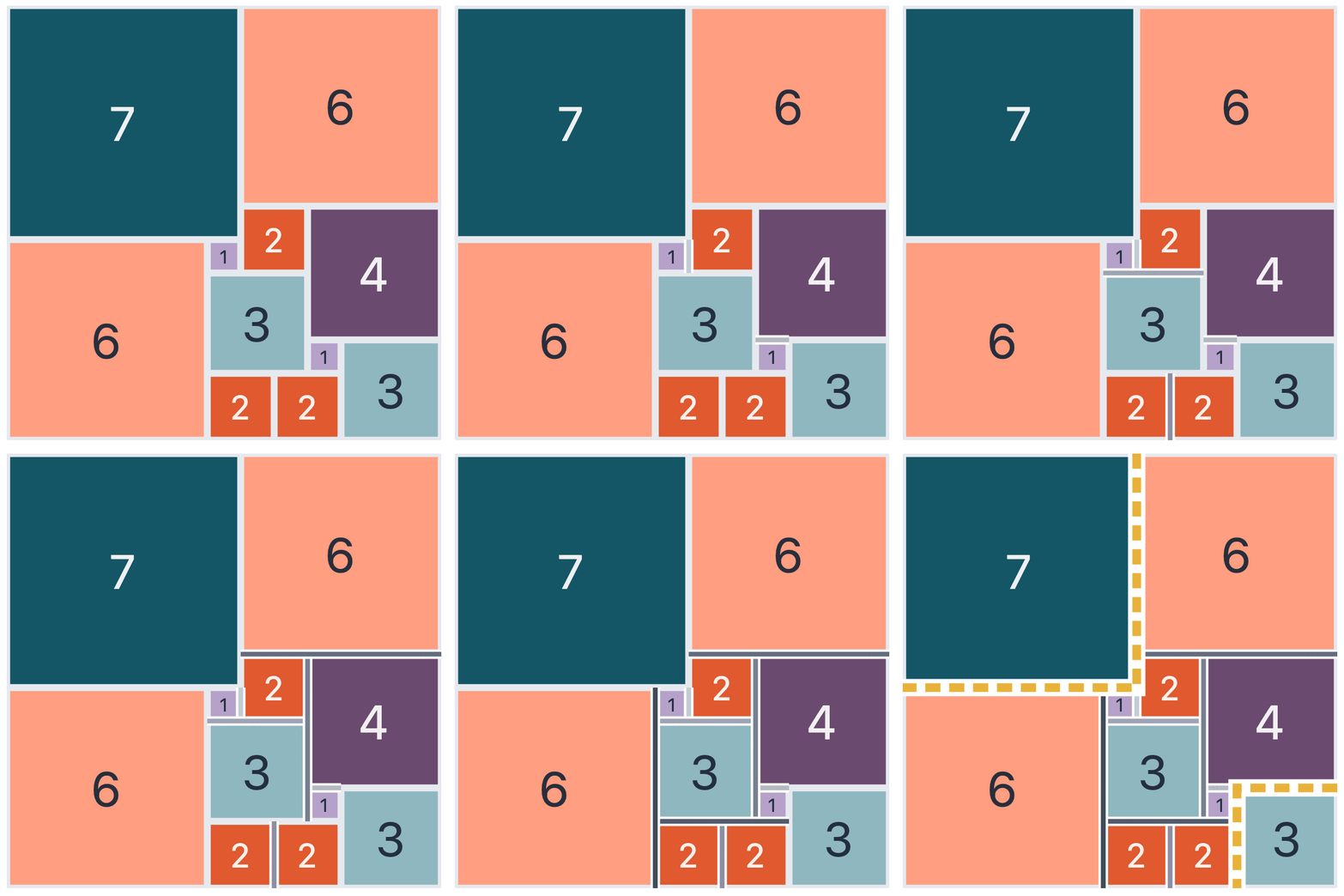
Rabbit Hole: Minimum L-seams
2026-09-20While attempting to write about the mathematical art of squarable numbers, the author explored a classic geometric tiling puzzle. This initial idea led to an extensive research rabbit hole, resulting in a deep dive into the complex calculations required to determine minimum L-seams.
CommentsCUA-S1 is a new open-source System One model designed to scale autonomous computer-use capabilities across multiple operating systems. The project provides developers with open-source drivers, cross-OS fleet management, and comprehensive benchmarks for training, evaluation, and data generation.
CommentsThe HellGates challenge postmortem provides a detailed breakdown of a complex custom CPU gate-level hacking competition and the strategies used to solve it. The write-up explores the intricate logic gate architectures participants had to navigate, offering valuable insights for security researchers and hardware enthusiasts interested in low-level CPU design.
Comments