Programming Tech News
2026-07-01
FFmpeg 9.1's new AAC encoder
2026-07-01FFmpeg 9.1 introduces a new AAC encoder that improves audio quality for live video streaming workflows. Although newer codecs like Opus remain superior in efficiency, AAC is still the mandated standard for RTMP broadcasts and H.264 or H.265 video ingest on platforms like YouTube and Twitch. This update ensures better compatibility and leverages widespread hardware offloading support for modern broadcasting setups.
Comments
Addressing frequent inquiries from aspiring developers, the author outlines the core technical skills required to become a hireable graphics programmer. The post also briefly addresses the current state of LLMs, expressing skepticism about whether modern machine learning will drastically change the foundational requirements of the role.
Comments
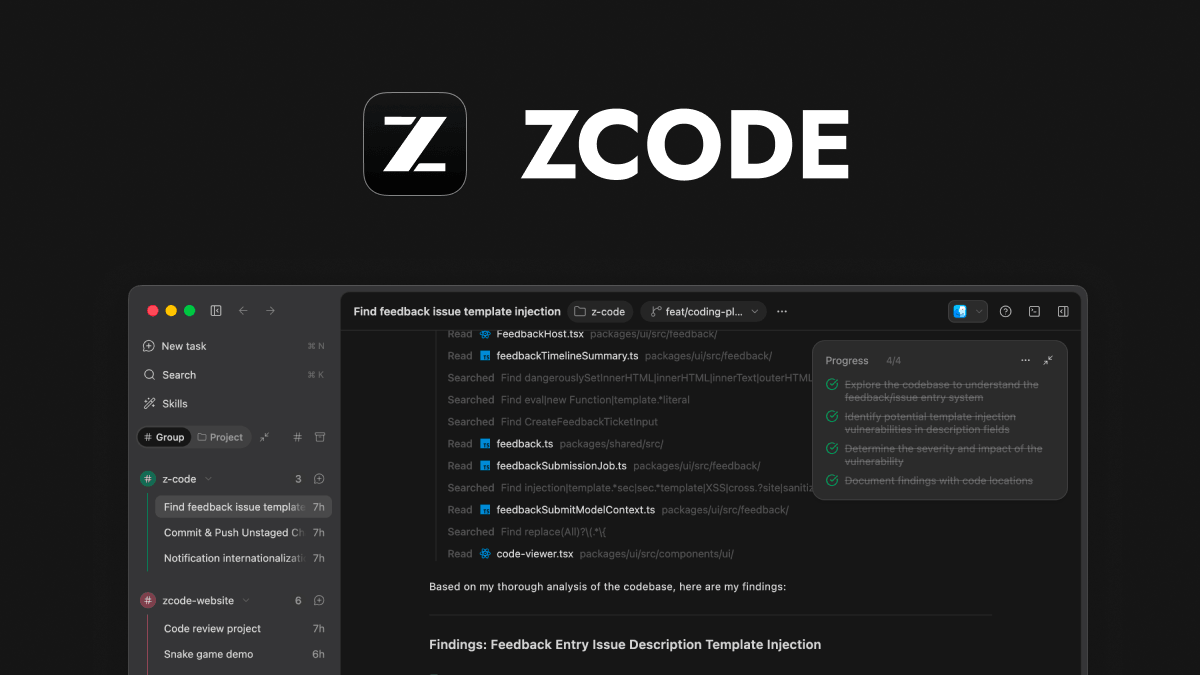
ZCode – Harness for GLM-5.2
2026-07-01ZCode has launched a new harness for the GLM-5.2 AI model that seamlessly integrates advanced AI agents into developers' existing toolsets. The platform is designed to streamline the entire software development lifecycle, enabling teams to plan, code, review, and deploy applications without friction.
CommentsAsk HN: Who is hiring? (July 2026)
2026-07-01The July 2026 Hacker News hiring thread features St. Jude Children's Research Hospital recruiting senior Rust engineers to rebuild its genomics infrastructure. Additionally, a stealth YC S26 robotics startup in Palo Alto is seeking lead engineers to develop wearable robotic devices for human endurance. Finally, Talk Machine is hiring remote founding engineers to build a consumer voice and AI email product.
CommentsBox3D, an open source 3D physics engine
2026-07-01Box3D is a newly released open-source 3D physics engine that extends the popular Box2D library with essential features for 3D game development. Available on GitHub, the C17-based engine retains Box2D's core architecture while introducing advanced collision types and performance optimizations like multi-threading and wide SIMD support.
CommentsGoogle has introduced Copybara, a new open-source tool that transforms and moves code between different software repositories. This utility allows developers to streamline their workflows by automating code transformations across multiple version control systems.
Comments
The open-source game engine Godot has updated its contribution guidelines to strictly ban AI-generated code submissions. This policy change aims to protect maintainers from being overwhelmed by low-quality code. Ultimately, the new rules are designed to prevent the project's codebase from drowning in AI slop.
Comments
Qualcomm Linux 2.0
2026-07-01Qualcomm has announced the release of Qualcomm Linux 2.0, featuring a unified code base and an upstream-first approach that eliminates the need for forking. The platform is designed to be SoC agnostic, providing developers with a versatile and streamlined environment for building applications across diverse hardware architectures.
CommentsMost arguments are about ego, not ideas
2026-07-01A software engineer reflects on their past habit of arguing for technical correctness under the assumption that clear logic always prevails. They ultimately realized that most workplace disputes, particularly during code reviews and design meetings, are actually driven by personal ego rather than the ideas themselves.
CommentsY Combinator startup Parsewise has launched an API designed to solve document parsing bottlenecks by enabling users to query unstructured documents as easily as structured data. The platform utilizes a multi-stage pipeline to extract specific data points and resolve complex, cross-page semantic relationships within massive files. By allowing users to configure custom intermediate data representations, Parsewise aims to replace arbitrary chunking and vectorization with more precise, scalable document reasoning.
Comments
Developers have implemented a new statistical approach that reduces IPFS content publishing times by more than tenfold. This optimization significantly improves the performance of the InterPlanetary File System, allowing for much faster data publishing on the decentralized network.
CommentsThe Underhanded C Contest
2026-07-01The Underhanded C Contest challenged programmers to write seemingly innocent code containing hidden, plausible bugs that only manifest under specific conditions, such as altering vote counts or failing image redactions. Readers fondly reminisce about the cleverness of past entries and speculate whether the beloved competition might return or evolve into an underhanded prompt contest for large language models.
Comments2026-06-30

A developer inspecting Claude Code for privacy reasons discovered that the tool secretly embeds hidden steganographic markers within its system prompts. These undisclosed tags are dynamically generated based on the API base URL and timezone, raising concerns about hidden tracking in AI coding assistants.
Comments
Claude Sonnet 5
2026-06-30Claude Sonnet 5 has been released as the most agentic model in the Sonnet lineup to date. The new iteration delivers top-tier intelligence specifically optimized for complex coding tasks and everyday professional workflows. This launch significantly advances autonomous capabilities for developers and everyday users alike.
CommentsLeanstral 1.5
2026-06-30Leanstral 1.5 is an updated AI model optimized for Lean 4 formal proof engineering, automated theorem proving, and autoformalization. The system efficiently handles complex mathematical tasks by utilizing 6.5 billion active parameters out of a total of 119 billion.
CommentsA developer has built a millimeter-wave radar system capable of classifying building materials, offering a potential non-destructive method for detecting hazardous substances like asbestos concealed within walls. By penetrating surfaces to identify hidden materials, the device eliminates the need for destructive physical testing. This innovation has sparked broader community interest in mmWave radar, highlighting its diverse applications ranging from DIY home presence detection to advanced imaging and airport security scanning.
CommentsKnoppix
2026-06-30Readers are sharing fond memories of the Knoppix Linux Live CD, recalling the pioneering distribution as a vital gateway into open-source operating systems during their youth. Many users relied on the bootable disc to safely explore programming and system tinkering without the risk of damaging their family's Windows partitions, highlighting its lasting impact on a generation of early tech enthusiasts.
CommentsMemory Safe Context Switching
2026-06-30A recent discussion on memory-safe context switching explores the inherent safety risks and stack corruption vulnerabilities of using setjmp and longjmp in C. To overcome the language's rigid pointer model and enable safe stack relocation, developers propose workarounds like copying stack frames or strictly restoring continuations to their original memory addresses. The conversation also highlights a trend toward bypassing heavy system calls like ucontext in favor of highly optimized, custom assembly-based fiber libraries for more efficient context switching.
Comments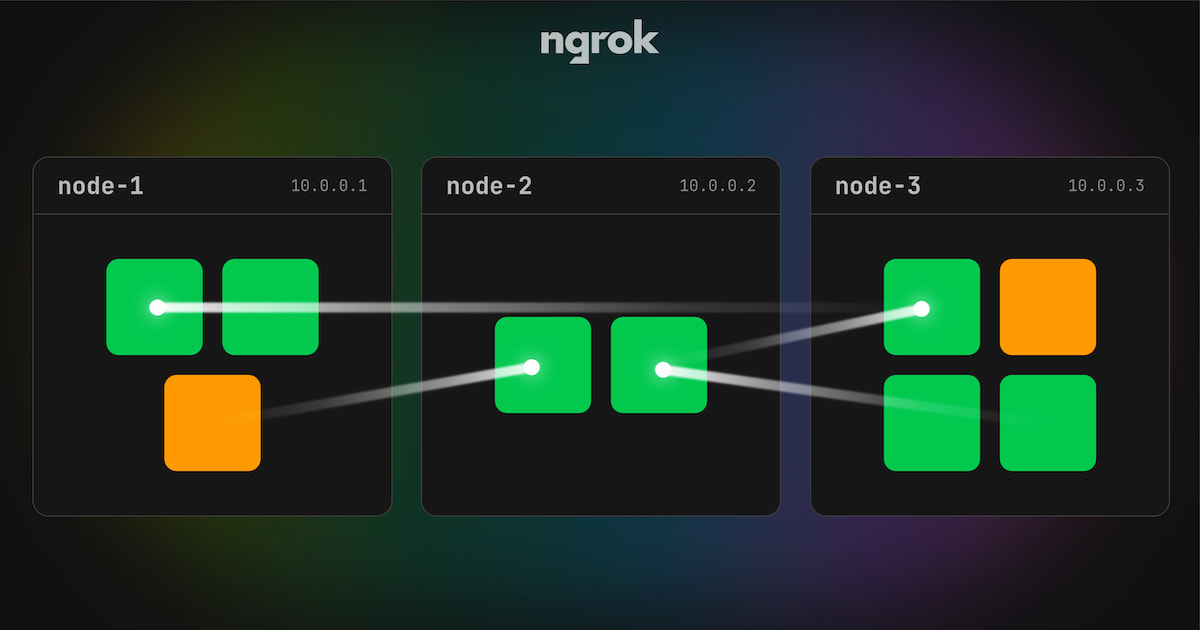
I ported Kubernetes to the browser
2026-06-30A developer has successfully ported Kubernetes to run entirely within a web browser. This ambitious project was completed in just two months, utilizing large language models to generate nearly 100,000 lines of high-quality code.
CommentsLinux for the Sega MegaDrive
2026-06-30Developers have created an open-source port of the Linux operating system for the classic 16-bit Sega MegaDrive console. The new project is called LinuxMD and brings modern open-source software to retro gaming hardware. Enthusiasts and programmers can contribute to its ongoing development by visiting the repository on GitHub.
CommentsExploring PDP-1 Lisp (1960)
2026-06-30A newly published guide explores the foundational history of computer science by detailing the implementation of Lisp on the PDP-1. The tutorial provides a hands-on, practical introduction to programming in this classic language. Readers can follow the instructions to experience the unique computing environment of 1960.
CommentsThe programming language Ante introduces a novel approach to memory management by blending borrow checking with reference counting to safely allow shared mutability in single-threaded contexts. By enforcing shape stability and strict thread-safety constraints, the language aims to prevent data races and use-after-free errors without relying on exclusive ownership rules. Community discussions highlight potential tradeoffs such as lost compiler optimizations, challenges with recursive analysis, and concerns about its practical utility with complex data structures.
Comments
Stroustrup's Rule (2024)
2026-06-30Bjarne Stroustrup's updated rule for 2024 addresses a core challenge in programming language design regarding the differing needs of novice and expert developers. While beginners require explicit and readable syntax to understand code logic, experienced professionals prefer concise syntax to maximize their workflow efficiency.
Comments2026-06-29

The Qwen 3.6 27B model is emerging as the ideal choice for local software development due to its strong coding capabilities. Developers can now run this highly capable AI efficiently on consumer hardware like MacBooks and NVIDIA RTX GPUs using tools such as llama.cpp and OpenCode.
Comments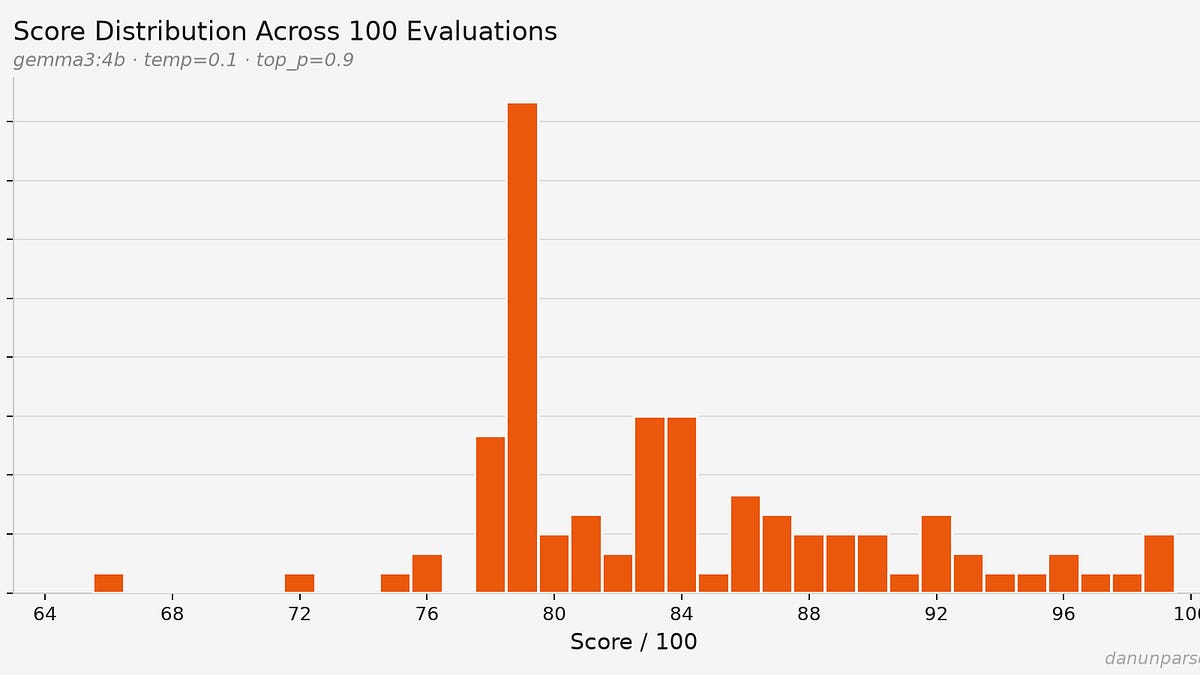
HackerRank recently open-sourced its Applicant Tracking System, but a recent test revealed significant flaws in its scoring reliability. After running the exact same resume through the system 100 times, the author received a completely different score on every single attempt. The article delves into the technical reasons behind this highly inconsistent evaluation process.
CommentsDeepreinforce AI has introduced Ornith-1.0, a new open-source model built specifically for agentic coding. This innovative system features self-improving capabilities designed to continuously enhance its autonomous programming skills. Developers can now access the repository on GitHub to contribute to its ongoing development.
Comments
What happens when you run a CUDA kernel?
2026-06-29This article provides a deep dive into the execution pipeline of a CUDA kernel by tracing a simple vector-add operation. It details the code's journey from the initial nvcc compilation stage down to the hardware warps that ultimately execute the instructions.
Comments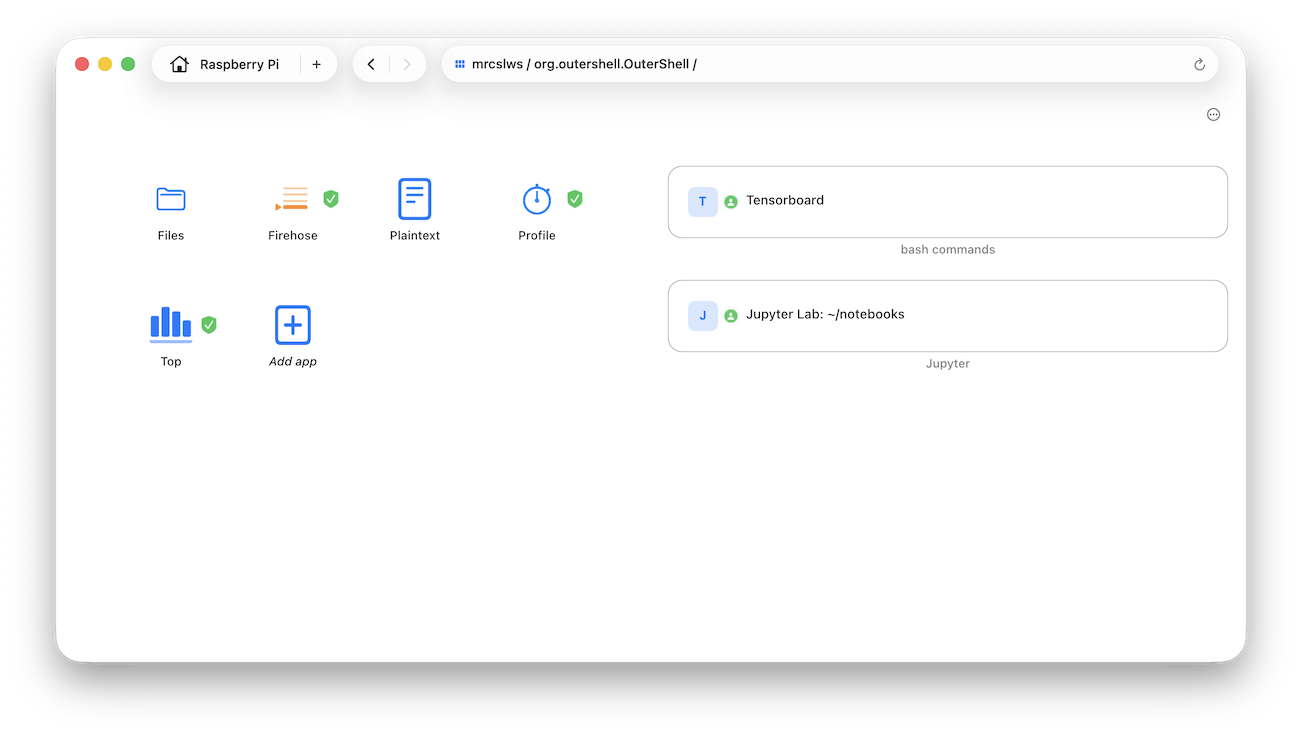
A native graphical shell for SSH
2026-06-29Marcus Lewis has introduced a native graphical shell for SSH that provides a visual alternative to the traditional command-line interface. This new tool aims to streamline remote server management and enhance the overall experience for developers handling secure connections.
Comments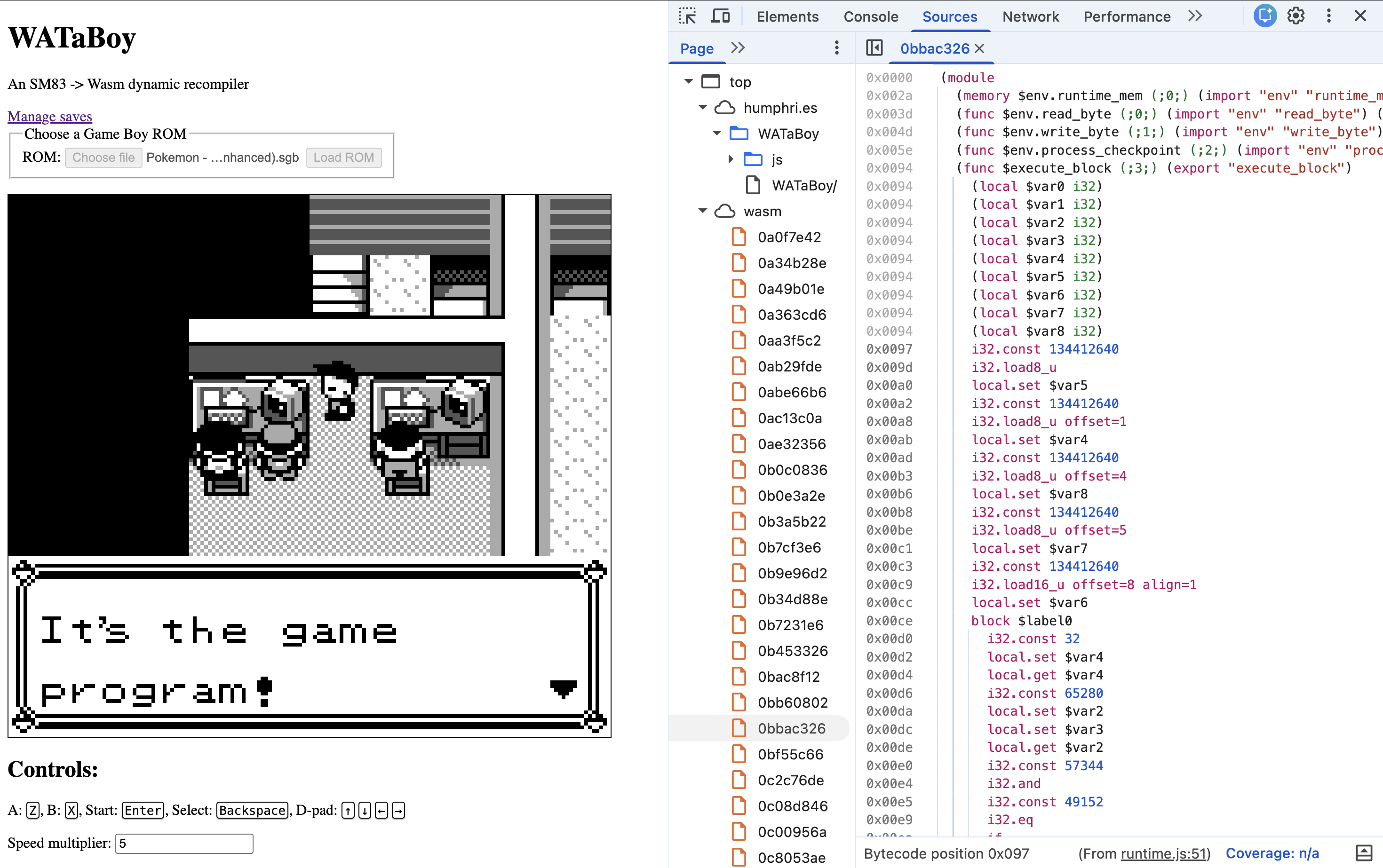
The WATaBoy emulator outperforms traditional native interpreters by dynamically recompiling Game Boy SM83 instructions into WebAssembly. This innovative technique effectively enables JIT-like execution on iOS, bypassing platform restrictions to deliver highly efficient emulation speeds.
Comments
A newly published arXiv paper provides an in-depth technical analysis of Apple's proprietary Neural Engine, detailing its underlying architecture, programming interfaces, and performance benchmarks. The study offers a comprehensive breakdown of the machine learning hardware found in Apple's custom silicon, providing valuable insights for developers and AI researchers.
Comments