Programming Tech News
2026-05-27
Mini Micro Fantasy Computer
2026-05-27Community discussions surrounding the Mini Micro Fantasy Computer highlight a strong interest in building cheap, bare-metal micro-PCs using microcontrollers like the ESP32 and Raspberry Pi RP2350. Enthusiasts favor these DIY retro-computing projects over full Linux systems to regain fundamental hardware control and learn computing from the ground up. The conversation also explores various existing open-source hardware boards and lightweight operating systems that provide a complete, built-in development environment.
CommentsGo: Support for Generic Methods
2026-05-27A new proposal seeks to introduce support for generic methods in the Go programming language. The design document outlines a revised approach that clarifies the handling of concrete and interface methods to accommodate this new functionality.
Comments
Cloudflare Flagship
2026-05-27Cloudflare has launched Flagship, a new feature flagging service that enables developers to safely control the visibility of new software updates without redeploying code. This tool streamlines deployment workflows by allowing teams to seamlessly manage releases and minimize the risks associated with shipping new functionality.
CommentsRust (and Slint) on a Jailbroken Kindle
2026-05-27A recent project demonstrates running the Rust programming language and Slint GUI toolkit on jailbroken Kindles, prompting community discussions on repurposing e-ink devices for custom applications. Enthusiasts shared strategies for maintaining jailbreaks by blocking over-the-air updates and compared the experience to alternative Linux-based e-readers like Kobo and the PineNote. The conversation highlights a growing interest in lightweight, privacy-focused, and ad-free custom firmware for older e-ink hardware.
Comments
A comprehensive guide explores how to maximize Claude Code for everyday use by detailing essential configurations like the hidden Claude directory and core instruction files. The article breaks down advanced features including custom skills, subagents, plugins, and Model Context Protocols to streamline development tasks. Additionally, it shares practical workflow patterns and underutilized commands directly utilized by the Anthropic engineering team.
Comments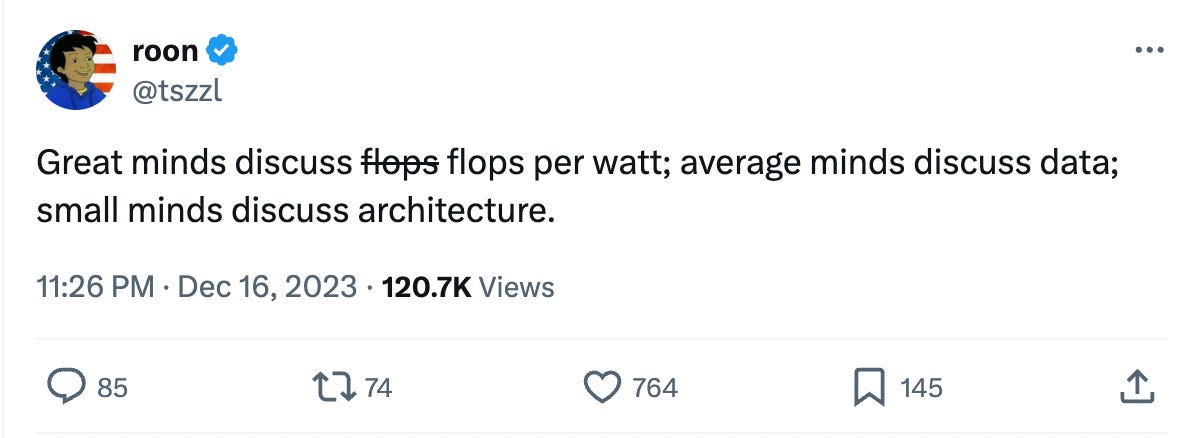
Recent findings indicate that GPU matrix multiplications, the core operation for AI workloads, execute significantly faster when processing data with predictable access patterns. This optimization minimizes memory bottlenecks and maximizes compute efficiency, ultimately delivering substantial improvements in flops per watt for large-scale machine learning models.
Comments
Alternative internet protocols such as Finger, Gopher, and Gemini are experiencing a renaissance as users seek decentralized, terminal-based alternatives to the modern HTTPS web. Driven by the solarpunk philosophy of intentional technology, these lightweight networks provide an accessible escape from browser monocultures while remaining fully functional on decades-old hardware.
CommentsInterleaved Deltas
2026-05-27Developers and historians are revisiting interleaved deltas, the foundational data structure that powered the very first version control system. Understanding this early method of storing file revisions provides valuable context for how modern code management and collaboration tools evolved.
CommentsRaft Consensus with a Minority of Nodes
2026-05-27A recent article explores how distributed systems can achieve Raft consensus using only a minority of nodes by leveraging mathematical structures like finite projective planes for quorum intersection. The piece challenges the traditional assumption that a standard majority is strictly required, demonstrating instead that preventing split-brain scenarios relies on carefully designed selection criteria to guarantee overlapping node participation. This approach effectively balances fault tolerance and system continuity by ensuring that no two conflicting network partitions can independently authorize state changes.
CommentsA developer shares technical insights from building Migo Games, a social arcade app featuring online mini games for iOS and Mac. The article explores the specific lessons learned during the project's development using the Elixir and Swift programming languages.
Comments2026-05-26

Contrary to the popular trend of using AI to rapidly churn out unvetted, low-quality code, developers can leverage large language models for a more deliberate approach. By prioritizing quality over raw speed, engineers can actually use these flexible tools to write significantly better software.
Comments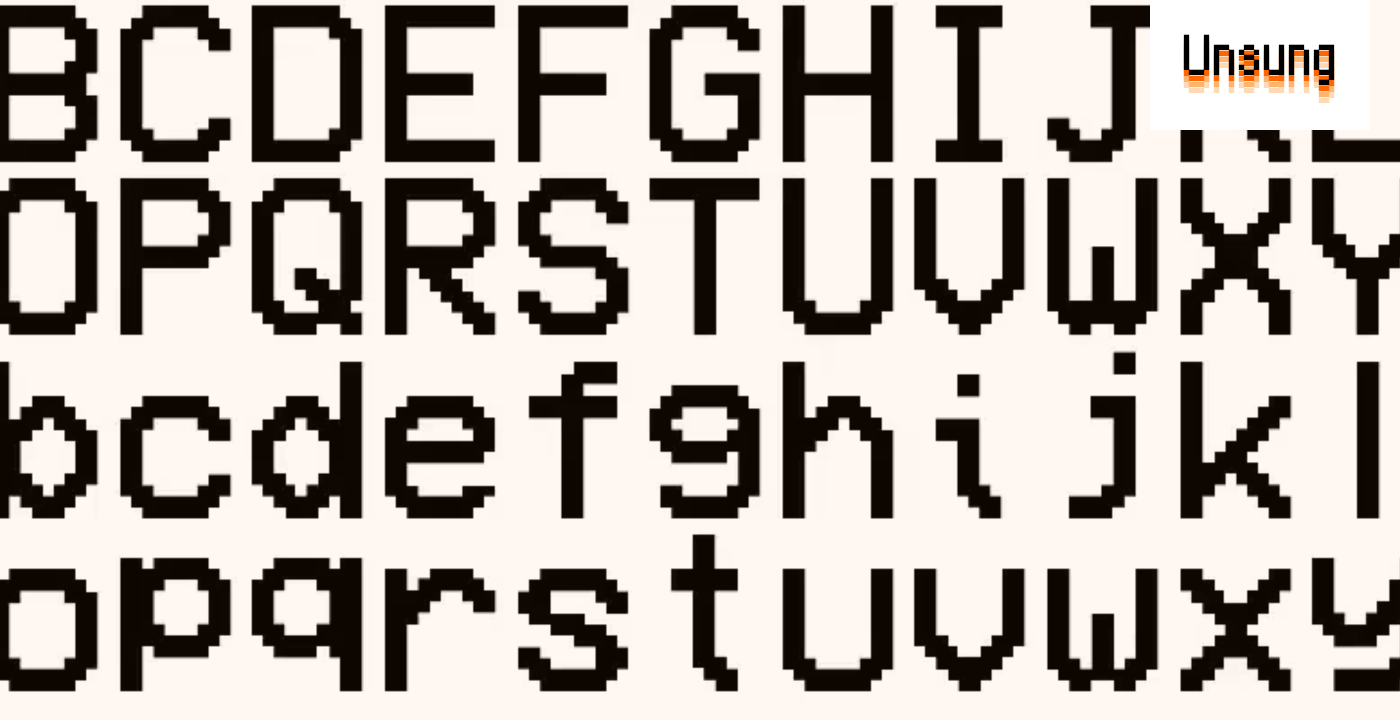
A few interesting modern pixel fonts
2026-05-26A recent blog post focusing on software craft highlights a curated selection of interesting modern pixel fonts for digital design. The article explores how developers and designers can utilize these contemporary typefaces to elevate the visual quality of their software projects with a unique, retro-inspired aesthetic.
Comments
A software developer bypassed proprietary publishing silos by building a sustainable, Git-tracked book production pipeline. The workflow leverages LibreOffice, Standard Ebooks, and LaTeX to streamline the creation, formatting, and version control of digital books.
CommentsThe worst job interview I ever had
2026-05-26An author recounts their most disastrous job interview experience to highlight the common pitfalls and red flags associated with culture fit assessments in the tech industry. The article serves as a cautionary tale for both candidates and hiring managers, demonstrating how poorly structured evaluations can alienate top talent and expose underlying company toxicity.
CommentsRosalind is a new open-source genomics toolkit written in Rust that enables users to run complete whole-genome analysis pipelines directly on a standard laptop. It ensures highly reproducible and resource-governed results by utilizing transactional artifacts, reproducible sharding, and Arrow integration. This lightweight approach significantly lowers the hardware barrier for complex genomic research.
Comments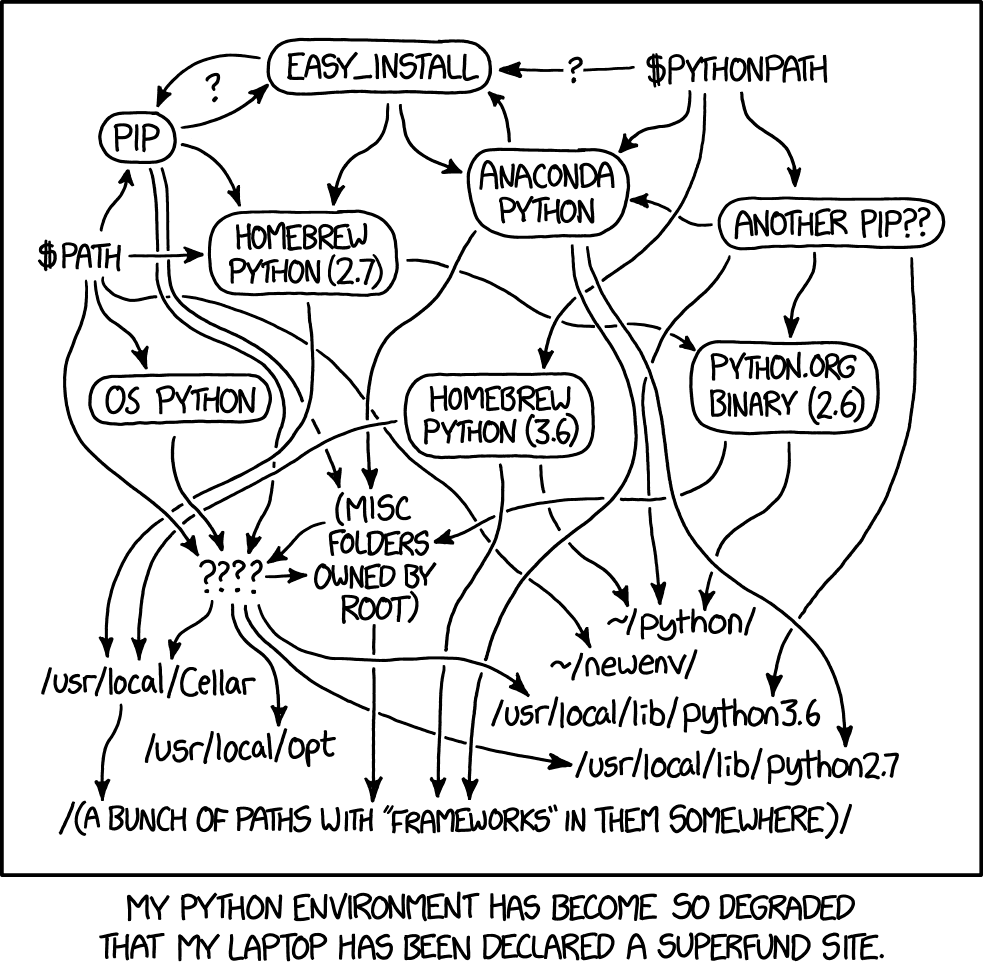
Use boring languages with LLMs
2026-05-26Coding agents powered by large language models achieve better results when using simpler, standardized programming languages like Go rather than highly fragmented ones like JavaScript or Python. The cohesive design of these boring languages provides the consistency needed to maximize AI coding efficiency.
CommentsPerformance of Rust Language [pdf]
2026-05-26A recently shared presentation hosted on GitHub explores the performance capabilities of the Rust programming language. The accompanying slides detail various benchmarks and profiling techniques used to evaluate the language. These resources provide developers with valuable insights to help maximize execution speed and efficiency in their applications.
CommentsWhat color is your function? (2015)
2026-05-26Readers discussing a classic 2015 article on function coloring argue that the concept extends beyond asynchronous programming to encompass exceptions, fallibility, and other paradigms. The discussion highlights that the primary friction caused by colored functions stems from a language's inability to abstract over different function types rather than the separation itself. Ultimately, commenters note that while the term has become an overused buzzword, resolving the underlying abstraction problem often requires implementing complex type system features like higher-kinded types.
CommentsThe user is visibly frustrated
2026-05-26A recent article explores why coding agents often infuriate users, attributing the issue to their conversational user experience. Because these tools mimic helpful colleagues without actually learning or taking responsibility for their mistakes, their repeated errors trigger social instincts that make the frustration feel exceptionally aggravating.
Comments
A recent programming guide details how to create an overhead, Ultima-style game map view using Commodore 64 BASIC. What starts as a simple map implementation unexpectedly evolves into a deep dive into C64 BASIC code optimization. This provides retro computing enthusiasts with valuable techniques for maximizing the performance of the classic 8-bit system.
CommentsGitHub Actions was down
2026-05-26GitHub Actions experienced a service outage, disrupting automation and continuous integration workflows for developers. The incident was documented on GitHub's official system status page, which provides real-time performance data and updates regarding the disruption.
CommentsC array types are weird
2026-05-26This article examines the peculiar design quirks and historical limitations of array types in the C programming language. The author breaks down what makes these constructs confusing and proposes alternative approaches for how they could have been implemented differently. The discussion also explores related programming concepts to provide broader context for these language design choices.
CommentsOpaque Types in Python
2026-05-26In a post on his blog Deciphering Glyph, Glyph Lefkowitz examines the use of opaque types in Python to improve API design. He discusses strategies for hiding implementation details from users, ensuring that public interfaces remain clean and maintainable. The article offers practical guidance for Python developers seeking to enforce better encapsulation in their codebases.
Comments2026-05-25
A recent article explores the surprising longevity of the Gnutella peer-to-peer protocol, which continues to operate decades after its launch. The piece provides a technical explanation of how the decentralized network functions in the modern internet landscape. It ultimately highlights how this pioneering technology has managed to outlive the original era of file sharing that created it.
CommentsDiscussions around C portability and alternative compilers reveal significant challenges in parsing non-standard, platform-specific code within header files. Developers continue to debate the trade-offs between strict POSIX compliance and leveraging OS-specific features like systemd, which frequently breaks compatibility for Windows and FreeBSD users. Ultimately, the discourse highlights that achieving true cross-platform compatibility in C remains difficult due to prevalent Linux-centric assumptions and inconsistent compiler support.
Comments
Firefox now supports the Web Serial API, allowing users to build and manage Adafruit hardware projects directly from their web browser. This integration enables developers to seamlessly connect, write code, and control compatible devices without relying on external native applications.
CommentsA new open-source tool named gobee enables developers to write BPF programs in Go rather than C by transpiling a subset of Go code into BPF C. The project also automatically generates typed cilium/ebpf bindings to streamline the development process for the Go community.
CommentsTraditional programming books are rapidly losing relevance as developers increasingly rely on digital documentation and online tutorials. This decline marks a melancholic shift in tech education, signaling the end of an era where programmers regularly cracked open physical coding manuals. Ultimately, the industry is moving away from static printed literature in favor of faster, dynamically updated online resources.
CommentsJira Is Turing-Complete
2026-05-25Reacting to an article about Jira's Turing-completeness, readers criticize the project management tool for its notorious complexity, sluggish interface, and alienating bureaucratic rules. Many express frustration that rival platforms like GitHub Issues are increasingly mimicking this feature bloat to secure corporate buy-in, despite heavy developer pushback. Ultimately, critics argue that Jira's underlying architecture is a poorly engineered accumulation of design cruft rather than a cohesive, well-architected system.
CommentsJensen–Shannon Divergence
2026-05-25Recent reader discussions highlight Jensen-Shannon Divergence as a valuable mathematical tool that offers a symmetric distance metric compared to traditional Kullback-Leibler divergence. In machine learning, it is praised for balancing diversity and fidelity in generative AI models and for effectively detecting dataset drift. Commenters also emphasized its versatile applications beyond AI, including dimensionality reduction, data clustering, and physics research.
Comments