Programming Tech News
2026-04-19

What are skiplists good for?
2026-04-19This article explores the practical applications of skiplists, an unconventional data structure known for its efficient sorting and searching capabilities. It also examines how this exotic structure can be leveraged to optimize the performance of complex JOIN operations.
Comments
Video game developers recently shared insights into the technical tricks and design challenges required to implement a seamless pause feature. They explained the complex engineering processes involved in accurately halting and resuming game states when a player presses a button.
Comments
A recent discussion on the seven fundamental programming ur-languages highlights academic initiatives like a Tufts university course that builds practical mini versions of core language paradigms. Readers also debate language taxonomy, specifically arguing that Ruby is deeply rooted in Smalltalk's object-oriented model rather than the traditional Algol lineage. Additionally, the conversation explores the fuzzy boundaries and varying definitions of object-oriented programming across modern languages like Python, Rust, and Common Lisp.
CommentsReader discussions surrounding the Nanopass Framework debate the merits of using numerous small compiler passes versus fewer, larger ones. While some developers praise the framework's domain-specific language for simplifying transformations and pass reordering, others warn of significant performance overhead, redundancy, and debugging difficulties. The conversation highlights that the ideal pass architecture ultimately depends on specific language design choices and the careful balance between separation of concerns and complex inter-pass interactions.
CommentsModern Common Lisp with FSet
2026-04-19This article explores the modernization of Common Lisp development by introducing contemporary libraries and functional paradigms such as FSet. It highlights how adopting these updated tools and techniques can significantly improve code reliability and developer efficiency in modern projects.
CommentsA new browser demo generates Excalidraw diagrams from text prompts by running the 3.1GB Gemma 4 E2B AI model entirely in desktop Chrome via WebGPU. The application optimizes performance using custom WGSL compute shaders to compress the KV cache by 2.4 times, but it currently requires desktop Chrome 134 or higher and lacks Safari and iOS support.
Comments
A former Unity employee details the process of updating the Gun Rocket project across ten years of engine iterations. The walkthrough provides developers with practical tips, tricks, and firsthand insights into the technical evolution of the platform.
Comments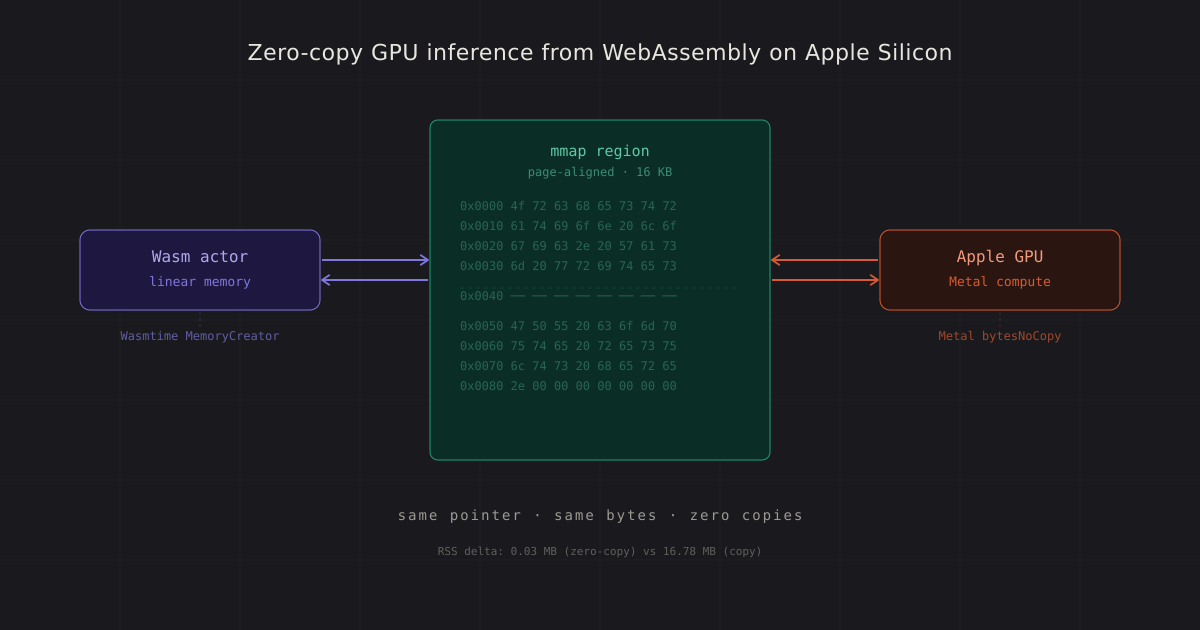
A new zero-copy chain allows WebAssembly modules to share linear memory directly with Apple Silicon GPUs without data copying or serialization. This direct memory sharing significantly reduces processing overhead and enables highly efficient stateful AI inference.
Comments
Six Levels of Dark Mode (2024)
2026-04-19This guide explores six distinct levels of dark mode implementation for modern web projects, ranging from simple HTML-only attributes to complex JavaScript-driven solutions. By examining the various CSS techniques in between, it helps developers choose the most effective dark mode strategy for their applications.
CommentsA developer has built a CHIP-8 emulator entirely in a custom programming language they designed from scratch. The open-source project is now available on GitHub under the navid-m/chip8emu repository for the community to explore and contribute to.
CommentsA recent Hacker News discussion reveals that independent engineers and consultants typically land their first projects by actively providing value and building authority within niche online communities. Contributors strongly advise against general consulting, recommending instead that professionals specialize in a specific technical or industry niche to stand out in a crowded market. Ultimately, combining deep single-subject expertise with a transparent personal brand and consistent lead follow-up is the most effective strategy for attracting long-term clients.
Comments
Shader Lab is a new toolkit launched on Hacker News that provides a visual, Photoshop-like interface for shader development. The platform allows users to easily create, stack, and animate complex shaders without relying solely on manual coding.
Comments
I learned Unity the wrong way
2026-04-19A developer shares a cautionary tale about spending three years building Unity games by blindly copying tutorials and forum scripts. Their lack of foundational programming knowledge was exposed during a technical interview when they failed to explain basic data structures. The story highlights the long-term pitfalls of prioritizing quick results over understanding core computer science concepts.
Comments2026-04-18
An anonymous analysis compares how Anthropic's Opus 4.6 and Opus 4.7 models calculate request tokens when processing identical transcripts. The evaluation highlights the differences in token counting between the two versions, providing developers with crucial data for optimizing API usage. These insights can help users better predict costs and manage resources when transitioning between the models.
Comments
Michael Rabin has died
2026-04-18Renowned computer scientist Michael Rabin has passed away, prompting widespread tributes from developers and former students. The tech community is mourning his loss while celebrating his foundational contributions, particularly the Rabin fingerprinting algorithm used in data deduplication and the Rabin-Karp method used in threat scanning. Alongside his technical legacy, former students fondly remember him as a masterful and engaging lecturer at universities like Harvard and Columbia.
CommentsCategory Theory Illustrated – Orders
2026-04-18Readers discussing an illustrated guide to category theory recommend more rigorous mathematical textbooks, noting the subject's steep learning curve for those without advanced backgrounds. Commenters also critique the original article's mathematical accuracy, specifically highlighting flawed logic in its sorting code examples. Furthermore, users debate the author's confusing definitions regarding strict versus non-strict linear orders and the handling of equality in mathematical comparisons.
Comments
A developer has introduced Brunost, a new programming language that uses the Nynorsk written standard of Norwegian for its syntax. The creator humorously apologized to the tech community for adding yet another language to the already crowded programming landscape.
CommentsA developer has showcased a novel calculator that utilizes interval and union arithmetic to overcome floating-point precision issues and compute true inverses of mathematical functions. Originally built to test a custom TypeScript library for handling disjoint sets of intervals, the project has sparked community discussions regarding interval math standards, notation, and related graphical applications.
CommentsA new tool called MDV acts as a Markdown superset for creating data-rich documents, dashboards, and slides. It enables users to embed data and visualizations directly into their files. Additional features include live preview capabilities, HTML and PDF export options, and a dedicated VS Code extension.
CommentsOptimizing Ruby Path Methods
2026-04-18An Intercom engineer explains how optimizing Ruby path methods improved the continuous integration pipeline for their monolithic application. The optimization effort was one of the author's first major projects after joining the company.
Comments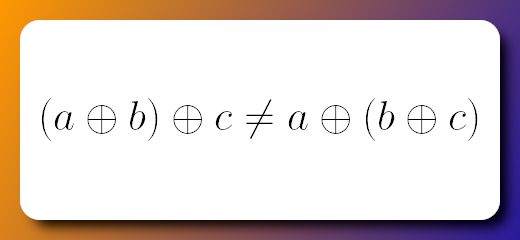
A recent article suggests that comparing floating-point numbers for equality is sometimes acceptable, but industry experts argue this view is overly reductive for computational geometry. Because geometric inputs are inherently inexact, exact floating-point comparisons are fundamentally unworkable for boundary representations, requiring geometry kernels to rely on fuzzy tolerances instead. While field-based representations can bypass these floating-point precision issues, developers note they introduce severe new complexities, such as the difficulty of implementing user-requested fillets in CAD software.
CommentsUnderstanding the FFT Algorithm (2013)
2026-04-18Reader discussions surrounding an article on the Fast Fourier Transform algorithm debate the level of mathematical complexity required to truly understand such concepts. Beyond theory, participants highlight practical applications ranging from removing visual artifacts on color e-ink displays to analyzing network traffic. The conversation also explores using frequency domain techniques like the Lomb-Scargle periodogram to process unevenly sampled packet capture data.
CommentsFuzix OS
2026-04-18FUZIX is a micro-Unix operating system designed for retrocomputing on old and resource-constrained hardware like 8-bit microcontrollers and the Raspberry Pi Pico. Although the project supports standard Unix-style processes and is making steady progress, poor documentation remains a notable issue for hobbyists. The development team is currently working on a portable C compiler to help alleviate the steep learning curve associated with the cross-compilation toolchain.
Comments
A presentation at the Onward! 2025 conference explores the concept of treating Unix executables as native Smalltalk methods to bridge the gap between the operating system and the programming environment. Joel Jakubovic from Charles University details this technical approach and discusses the broader implications for unifying Unix and Smalltalk.
Comments2026-04-17
Measuring Claude 4.7's tokenizer costs
2026-04-17Independent testing of Claude 4.7 reveals its new tokenizer consumes more tokens than officially documented on real-world content. The measured 1.47x increase in token usage exceeds the documentation's projected range of 1.0 to 1.35x. This discrepancy indicates developers may face higher-than-expected tokenization costs.
CommentsA newly announced project called Smol Machines has introduced a lightweight, self-contained virtual machine that boasts ultra-fast subsecond coldstart times. This highly portable tool provides developers with an efficient solution for rapidly spinning up isolated computing environments.
Comments
I’m spending months coding the old way
2026-04-17Despite the widespread integration of artificial intelligence in software development, one developer is deliberately spending the next three months coding without any AI assistance. This self-imposed return to traditional programming aims to reinforce fundamental skills and establish a baseline for evaluating the true impact of AI tools on the industry.
CommentsCadQuery is an open-source Python library that allows developers to build parametric 3D CAD models entirely through code. This scripting approach replaces traditional graphical interfaces to enable highly automated, customizable, and version-controlled design workflows.
CommentsA simplified model of Fil-C
2026-04-17A recent community discussion highlights Fil-C as an underrated project that brings memory safety to C without requiring a rewrite in Rust. However, critics emphasize that the project currently suffers from data race vulnerabilities due to non-atomic pointer updates and incurs noticeable performance overheads compared to compile-time safe alternatives. Despite these limitations, developers continue to experiment with the language, recently introducing a Bazel template to facilitate hermetic builds and invisible capability system variations.
Comments
Stage is a new AI tool that streamlines the code review process by organizing pull requests into logical chapters. This structured approach allows human reviewers to comprehend code changes much faster, ultimately putting developers back in control of their workflows.
Comments