Hardware Tech News
2026-06-24

OpenAI has unveiled Jalapeño, its first custom-designed processor built in collaboration with Broadcom. The new chip is specifically engineered to optimize the unique computational demands of the company's artificial intelligence inference systems.
Comments
The Xteink X4 E-Ink Reader
2026-06-24The Xteink X4 is an affordable e-ink reader priced at £40 that is compact enough to attach to the back of a smartphone. After two months of use, the device proves to be a highly practical and convenient option for on-the-go reading.
Comments
Qualcomm to Acquire Modular
2026-06-24Qualcomm is acquiring Modular, the AI compute company founded by Chris Lattner that is developing the Mojo programming language. While some in the developer community worry about the future of Mojo under Qualcomm and question its design choices, the company has confirmed that the language remains on track to be open-sourced later this year.
Comments
Raspberry Pi Pico W as USB Wi-Fi Adapter
2026-06-24A new open-source project demonstrates how to repurpose the Raspberry Pi Pico W as a fully functional USB Wi-Fi adapter for other devices. By leveraging the microcontroller's built-in wireless chip and USB interface, users can easily add network connectivity to older computers or embedded systems as a highly cost-effective alternative to dedicated dongles.
CommentsUsbliter8: an A12/A13 SecureROM Exploit
2026-06-24Security researchers have published a detailed write-up on Usbliter8, a novel SecureROM vulnerability discovered and exploited in Apple's A12 and A13 chips. The report covers the underlying bug, the specific exploitation techniques utilized by the team, and the necessary post-exploitation steps. This deep-level hardware flaw provides critical insights into the low-level security of affected iPhone models.
Comments
Users experiencing cursor lag on the MacBook Neo have discovered an unconventional workaround that involves recording a single pixel of the screen every ten seconds. This quirky software fix, which has been shared publicly via a GitHub Gist, keeps the display refreshed in the background to eliminate frustrating input delays.
CommentsA discussion surrounding the use of Wine to run Windows games on a custom hobby operating system highlights the ongoing debate over whether new OS projects must implement legacy interfaces to remain useful. While some developers argue that adopting standards like POSIX defeats the purpose of creating a novel ecosystem, others contend that compatibility layers are essential for making hobbyist projects practically functional. Ultimately, the conversation underscores the immense challenge of building a truly unique operating system without simply cloning existing architectures like Linux or Windows.
Comments2026-06-23
FUTO Swipe – A new swipe typing model
2026-06-23FUTO Swipe now supports the ClearFlow keyboard layout, a specialized design meant to minimize word overlap and maximize accuracy for gesture typing. Early adopters transitioning from standard QWERTY report significantly fewer mistakes and corrections, despite an initial learning curve and minor ergonomic adjustments. The layout is currently available for US English on Gboard and the FUTO app, offering a highly precise alternative for dedicated swipers.
CommentsPrinting Gaussian Splats
2026-06-23A newly highlighted industrial 3D printing technology utilizes UV inkjet CMYK resin to achieve unprecedented photorealistic fidelity that far exceeds standard hobbyist machines. These advanced commercial systems can produce incredibly lifelike objects, but they currently cost around $200,000 and remain largely restricted by corporate patents. However, more affordable prosumer alternatives from companies like HeyGears and EufyMake are beginning to emerge for early adopters.
Comments
The Coming Loop
2026-06-23This piece examines the growing ecosystem of wearable tech accessories, with a specific focus on the design and utility of modern loops and harnesses. It explores how these innovative strap systems are becoming increasingly practical, ultimately proving versatile enough to win over even the most skeptical potential buyers.
Comments
Quaise Energy has successfully drilled 100 meters into solid granite using its millimeter wave technology. This major milestone advances the development of superhot geothermal energy systems by demonstrating a viable alternative to traditional mechanical drilling.
CommentsFive monitors on a Commodore 128 [video]
2026-06-23A newly shared video demonstrates a custom multi-monitor setup featuring five displays connected to a vintage Commodore 128. This nostalgic tech project highlights the unique hardware capabilities of the classic 8-bit computer when pushed far beyond its original design limitations.
CommentsA new command-line tool named ffs enables rapid file searches by reading SSDs directly and completely bypassing the operating system kernel. This direct-access approach circumvents traditional system overhead to provide a highly efficient method for locating files.
Comments
A growing movement of users is rejecting corporate-controlled devices in favor of building their own custom cyberdecks, a DIY trend increasingly driven by women. This push toward convivial technology draws historical parallels to medieval guilds, the Luddites, and the Arts and Crafts movement, reflecting a broader desire for meaningful, self-directed interactions with our tools.
Comments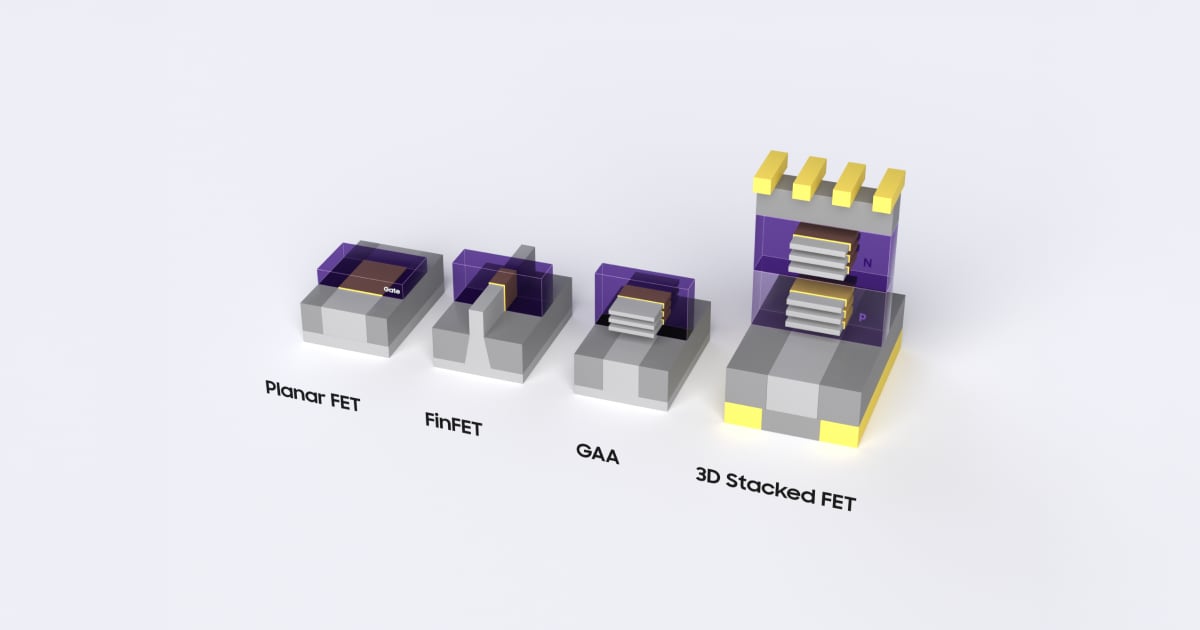
Samsung Electronics presented 3D stacked FETs featuring triple nanosheet channels at a 42nm gate pitch for advanced logic applications. The technology was unveiled at the 2026 VLSI Symposium, highlighting the company's progress in next-generation semiconductor design.
Comments2026-06-22

Steam Machine launches today
2026-06-22The Steam Machine officially launches today, marking a highly anticipated release for the platform. This update provides all the necessary details on how to sign up to get started. It also explores the development journey and background that led to this major milestone.
CommentsHelp I accidentally a wigglegram
2026-06-22A recent tech discussion explores the evolution of wigglegrams and stereograms, highlighting techniques that range from dedicated multi-lens hardware to synthetic depth mapping on modern smartphones. While the original poster's accidental attempts lack the precise parallax of professional 3D rigs, commenters note that mobile features and generative AI are making pseudo-3D creation more accessible. In response, enthusiasts are sharing custom software libraries, DIY camera builds, and stereoscopic apps to revive these underrated visualization methods.
Comments
GLM-5.2 – How to Run Locally
2026-06-22Z.ai has released instructions for running its new GLM-5.2 model entirely on local hardware. This development allows users to deploy the advanced AI on their own machines without relying on cloud infrastructure. The guide provides detailed instructions for setting up and optimizing the model for offline use.
CommentsThe Optocam Zero is a compact digital camera project built around the Raspberry Pi Zero using entirely off-the-shelf components. This accessible DIY design provides makers with a straightforward blueprint to assemble their own custom digital photography gear.
CommentsA personal account of gaming with spinal muscular atrophy has prompted community discussions highlighting the vital role of open-source assistive hardware and adaptable controllers like the Xbox Adaptive Controller. Commenters praised nonprofits like GOAT for providing life-changing accessibility equipment, while also recognizing major tech companies like Microsoft and Valve for their extensive gaming accessibility tools. The conversation underscores the remarkable progress in assistive technology and the ongoing push for more cohesive, integrated control systems for disabled gamers.
Comments2026-06-21
Epoll vs. io_uring in Linux
2026-06-21A community discussion surrounding a student-built proxy's transition from epoll to io_uring highlights that CPU pinning and avoiding cross-core communication are critical for maximizing network performance. Readers advise that alongside selecting the right I/O model, developers must align threads to specific CPU cores and utilize advanced memory allocators to rival industry standards like nginx. Ultimately, the exchange underscores that deep hardware-level tuning is just as essential as the underlying I/O architecture for achieving maximum throughput.
CommentsA community discussion surrounding Proxmox VE microVMs highlights that recent orchestration improvements make this lightweight virtualization method more viable than past evaluations suggested. While users appreciate the rapid boot times and improved security isolation compared to LXC containers, challenges such as CUDA GPU passthrough and userspace initialization speeds remain. Consequently, the community is eagerly anticipating native, first-class microVM support directly within the Proxmox platform.
Comments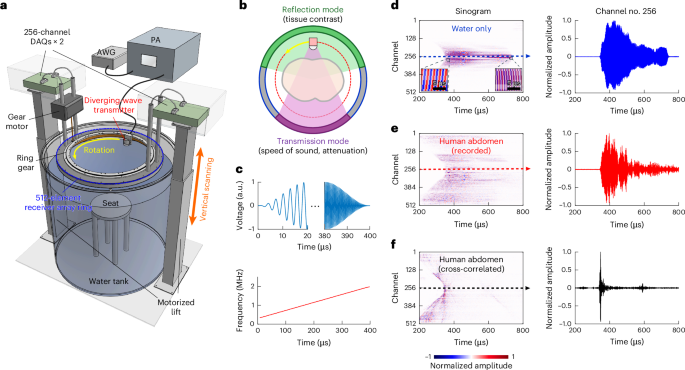
Researchers have developed a novel ultrasound tomography system that uses a 512-element circular receiver array and a rotating transmitter to capture complete cross-sectional images of the human body, overcoming the limited field of view of traditional handheld ultrasounds. The new technology closely matches MRI results and offers practical clinical applications, including radiation-free fat assessment and real-time biopsy needle localization.
CommentsReader discussions highlight the enduring appeal of Proportional-Integral-Derivative controllers among programmers due to their intuitive balance of conceptual cleverness and ease of implementation in robotics projects. Although PID remains a staple for educational applications like line-following robots, practitioners note that tuning it for complex real-world motor control is highly challenging, leading some developers to adopt advanced alternatives like Active Disturbance Rejection Control.
Comments
Zigzag Decoding with AVX-512
2026-06-21The creator of the meshoptimizer library recently explored methods to accelerate AVX-512 vertex decoding. During this process, the developer discovered two interesting optimization techniques that were ultimately not used in the final implementation. This article explores these unused methods while teasing a future deep dive into the specific optimizations that actually made it into the codebase.
Comments
Guide to the TD4 4-bit DIY CPU
2026-06-21A new guide details the experience of building and programming the TD4, a compact 4-bit DIY CPU kit sourced from Aliexpress. The hardware is quite limited, featuring just two registers, some indicator LEDs, and 16 bytes of program ROM. However, it remains a highly rewarding project that effectively teaches the fundamental principles of computer architecture.
CommentsProject Fetch: Phase Two
2026-06-21Anthropic's latest Project Fetch results reveal that the Claude Opus 4.7 model can independently perform sophisticated robotics tasks. Operating without human assistance, the AI completed the work approximately 20 times faster than the fastest human teams managed less than a year ago.
Comments2026-06-20
UHF X11 is a new native X11 server designed specifically for the Apple Vision Pro and visionOS. It enables users to run classic Unix and traditional workstation software seamlessly within spatial windows. This integration brings legacy computing environments directly into Apple's mixed-reality ecosystem.
Comments
A comprehensive atlas maps the vibrant colors of the natural world that standard digital screens are physically incapable of reproducing. By cataloging this vast spectrum of natural hues, the project highlights the limitations of current display technology and the persistent gap between digital reproduction and physical vibrance.
Comments
An experimental satellite has successfully mapped the unprecedented scale of GPS signal jamming across Europe and the Middle East from space. This first-of-its-kind orbital observation highlights the immense and previously unquantified extent of GPS signal tampering in these regions.
Comments