Hardware Tech News
2026-06-04
Retro-Tech Parenting
2026-06-04A growing trend of parents is introducing their children to retro technology, such as flip phones and vintage electronics, as a deliberate countermeasure to modern digital overwhelm. This movement aims to reduce screen time and foster hands-on creativity by replacing today's hyper-connected smart devices with simpler, older alternatives.
Comments
The U.S. government is launching an expensive operation to dismantle and retrieve a deep-ocean monitoring system tracking Atlantic currents, a move critics argue is driven by ideological posturing rather than budget constraints. Commenters suggest the administration is intentionally destroying this hardware to suppress climate data and appease fossil fuel donors as part of a broader anti-science agenda. Despite this governmental hostility toward basic science, readers note that everyday conservative voters are increasingly recognizing the real-world impacts of a changing climate through extreme weather and agricultural disruptions.
Comments
Gaussian Point Splatting
2026-06-04Gaussian splatting is an advanced 3D rendering technique that leverages modern GPUs to create highly detailed visual representations, though experts caution its lack of physical surfaces and high processing costs currently limit its use in real-time AAA gaming. Consequently, the technology is primarily being adopted for visual-only applications, such as generating realistic digital environments to train computer vision models for autonomous vehicles and drones.
Comments
U.S. Army Corps of Engineers Bay Model
2026-06-04The United States Army Corps of Engineers Bay Model is a massive mid-century hydraulic structure located in a Sausalito warehouse that simulates the complex current flows of the San Francisco Bay. Originally built to study regional hydrology and later utilized by television shows like Mythbusters, the colossal physical scale model remains a celebrated engineering relic. The unique facility also features a museum dedicated to Marinship, the World War II shipyard that previously occupied the historic building.
CommentsAn analysis of the Stella companion app reveals that Meta has shipped a complete on-device facial recognition stack for its smart glasses. The recent software build includes embedded face models, a local database schema, and a vector index to process facial data directly on the device. This indicates that Meta's wearables are now fully equipped to identify faces locally without relying on cloud processing.
Comments
JLink JTAG Access on the Pinecil
2026-06-04Building on previous hardware modifications, a developer has established JLink JTAG access on the Pinecil smart soldering iron for advanced debugging. This renewed exploration of the device was prompted by the recent addition of upstream support for its Bouffalo Lab BL706 microcontroller in the Zephyr operating system.
CommentsPatching my guitar amp's firmware
2026-06-04A recent write-up on reverse engineering and patching the firmware of a guitar amp sparked a detailed community discussion about the complexities of hardware hacking. Readers shared their own experiences and practical advice on mastering embedded engineering skills, such as deciphering datasheets, using logic analyzers, and brute-forcing hardware interfaces. The conversation highlighted the steep learning curve of the field, emphasizing that persistence and comprehensive beginner tutorials are essential for demystifying hardware modification.
CommentsCastor: CERN Advanced STORage Manager
2026-06-04CERN's legacy CASTOR storage system was officially replaced in 2020 by the CERN Tape Array after its automated disk-to-tape abstraction caused unpredictable performance issues. The shift to the new tape array, along with their in-house EOS disk storage solution, resolved operational bottlenecks and eliminated random staging delays. Additionally, the organization continues to engage the public by selling retired LHC data tapes as souvenirs and hosting petabytes of open-access physics data.
Comments2026-06-03

Gemma 4 12B is a newly introduced unified and encoder-free multimodal model designed for local hardware. It aims to deliver high-performance multimodal intelligence directly to standard laptops, enabling advanced on-device AI processing.
CommentsESP32-S31
2026-06-03The ESP32-S31 is a high-performance, dual-core 32-bit RISC-V microcontroller capable of operating at speeds up to 320 MHz. This new chip is specifically engineered for advanced Internet of Things applications that require robust multi-protocol connectivity and sophisticated human-machine interfaces.
Comments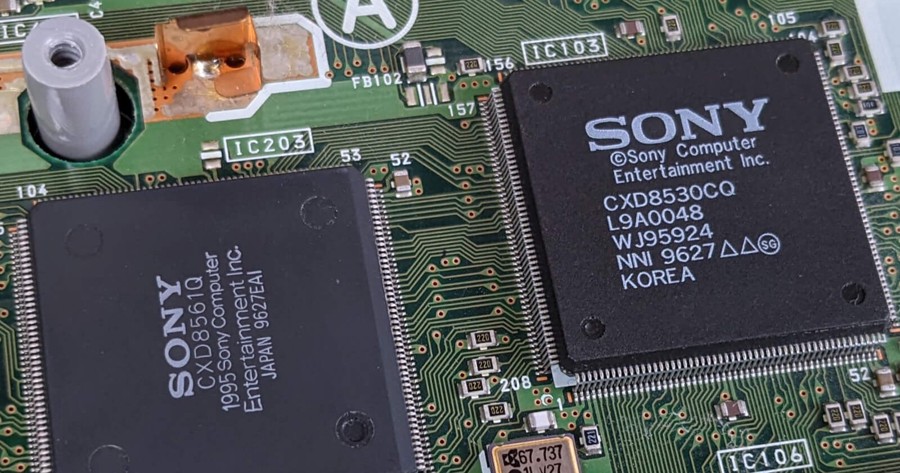
PlayStation Architecture
2026-06-03A recent in-depth technical analysis breaks down the internal architecture of the PlayStation console to explain how its complex hardware functions. This comprehensive overview explores the custom components and system design that drive the device's performance, offering valuable insights for hardware enthusiasts and developers.
Comments
A newly discovered exploit called Pwnd Blaster allows attackers to compromise a PC remotely through its built-in speaker. The vulnerability abuses an unauthenticated Bluetooth protocol to turn the audio hardware into a malicious input device. This enables hackers to silently inject harmful keystrokes into the system without ever physically touching the computer.
CommentsGooey is a new hybrid immediate and retained mode UI framework for the Zig programming language designed to build fast, GPU-rendered applications. It supports cross-platform development by leveraging graphics APIs such as Metal, WebGPU, and Vulkan across macOS, WebAssembly, and Wayland environments.
Comments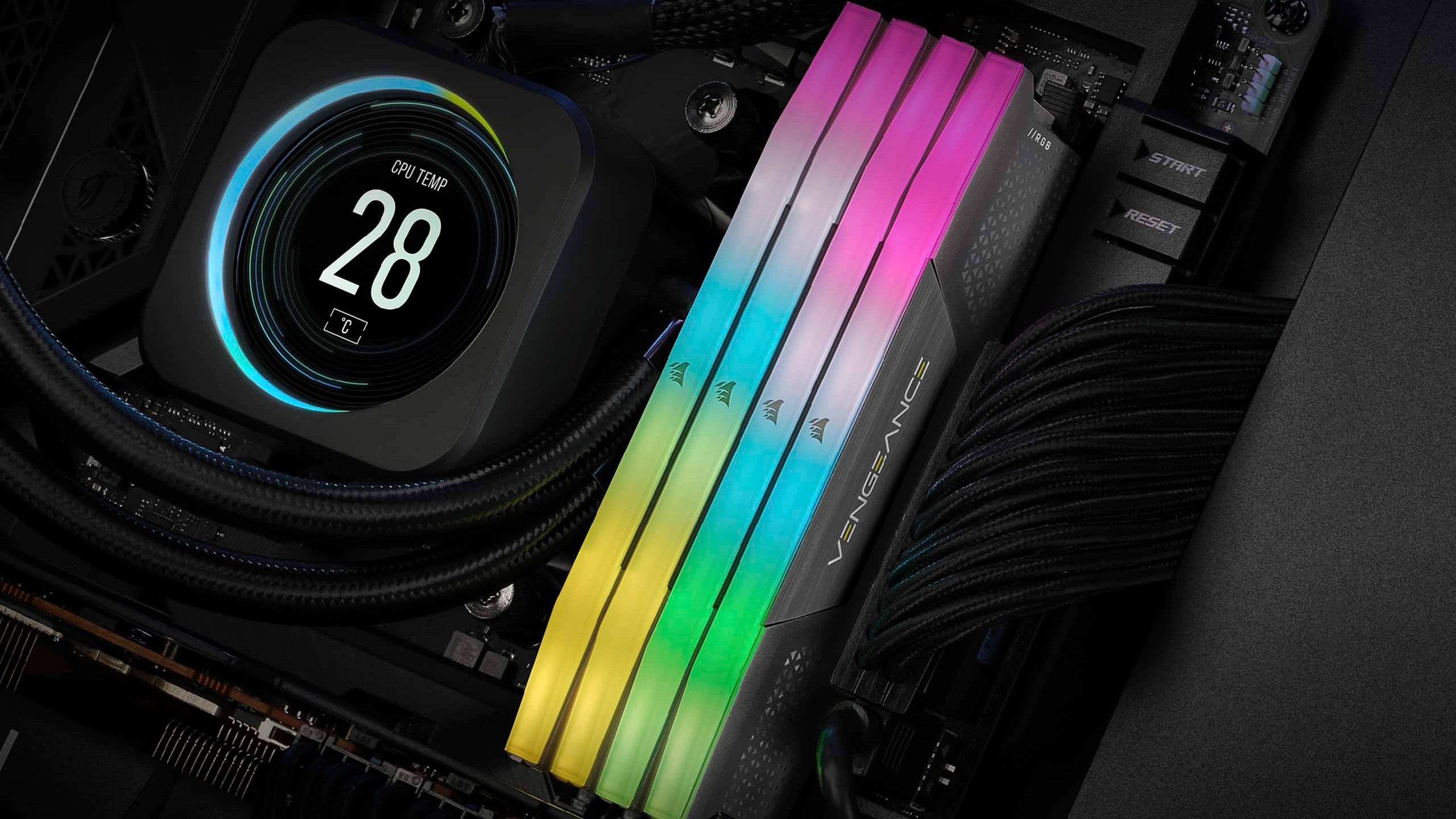
An ongoing memory shortage driven by artificial intelligence demand is squeezing PC builders by rapidly driving up DDR5 prices. A standard 32GB kit now costs $375, and affordable options are quickly disappearing from the market.
Comments
Roku has released the operating system for its Roku LT devices as an open source distribution. The platform is widely recognized for providing simple access to thousands of streaming entertainment channels directly to your television. This new release gives developers the ability to modify and adapt the underlying software for custom applications.
Comments
Apple's newly released MacBook Neo has experienced overwhelming customer demand, prompting the company to significantly boost its manufacturing output. Supply chain analyst Ming-Chi Kuo reports that Apple has doubled its production target for the laptop to 10 million units for 2026 to keep up with the unprecedented popularity.
Comments
Edsger is a newly launched handwritten Clojure REPL designed specifically for the reMarkable 2 e-ink tablet, allowing developers to write and execute functional code by hand. To demonstrate the tool's capabilities, the creator also published a companion blog post written entirely by hand.
CommentsCapstone is a multi-platform and multi-architecture disassembly framework designed for comprehensive binary analysis. Dubbed the ultimate disassembler, the tool offers versatile capabilities for developers and security researchers. It serves as a highly adaptable solution for reverse engineering across diverse hardware and software environments.
Comments2026-06-02
A new Linux tool called nbd-vram allows users to utilize their Nvidia GPU's unused VRAM as system swap space to prevent slow SSD swapping. This provides a clever performance workaround for laptop owners with soldered RAM and no physical memory upgrade path.
Comments
Open-source electronics company Adafruit has received a formal legal demand letter from Flux.ai, represented by the law firm Fenwick. This legal action highlights emerging tensions within the open-source hardware and maker community. Adafruit is currently reviewing the demands and is expected to share further updates with its community of hackers and electronics enthusiasts.
Comments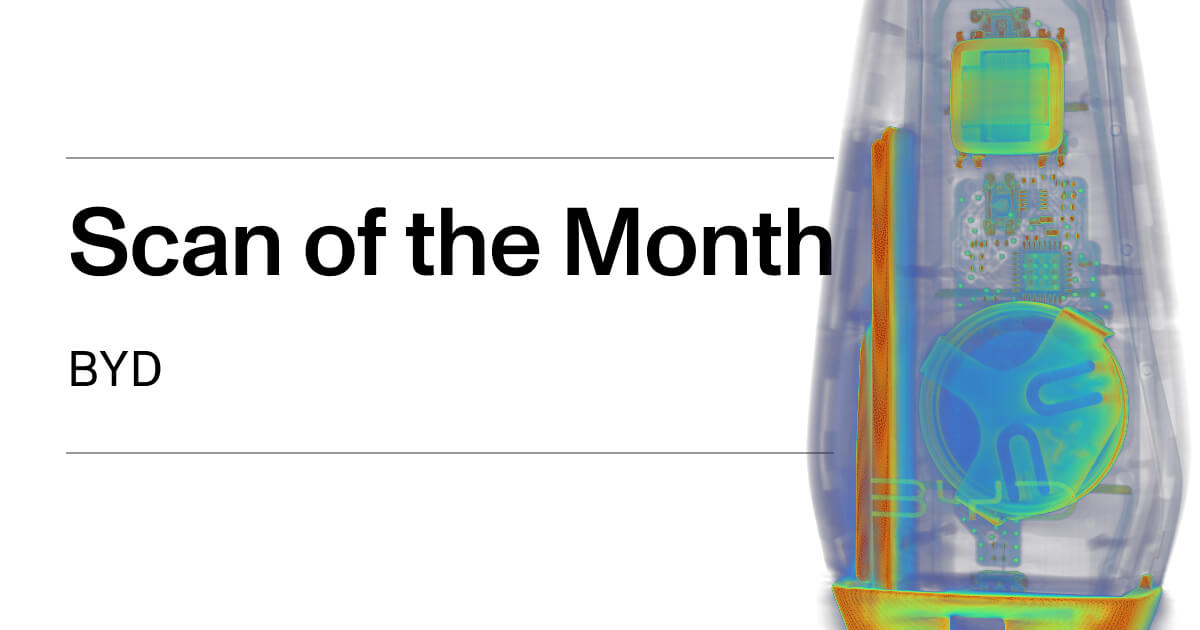
CT scans of BYD car parts
2026-06-02Researchers recently CT scanned four BYD components to reveal the inner workings of the world's best-selling EV. The analyzed parts included a battery cell, window switch, EV charger, and key fob, providing a rare look inside the technology of the popular automaker whose cars are banned in the United States.
Comments
HP is re-releasing its iconic HP-16C programmer calculator as a new Collector's Edition. The updated device merges the beloved classic design of the original with modern programming functions for today's computer scientists.
Comments
OpenFOV is a new software tool that allows iRacing players to use their standard webcams for real-time head tracking. By dynamically adjusting the in-game field of view to match physical head movements, it unlocks an immersive VR-style experience on standard monitors.
Comments
Open Repair Data Standard
2026-06-02The Open Repair Data Standard (ORDS) introduces a unified framework for collecting and sharing repair data to improve product reliability tracking across the electronics industry. By standardizing how repair metrics are recorded, the initiative aims to empower consumers with transparent insights into device longevity and support the broader right-to-repair movement.
CommentsA new 2024 DOS demo called Pits has achieved native multicore processing and Full HD graphics in pure DOS without relying on external drivers. Since the legacy operating system lacks built-in multithreading, developers accomplished this by running standard DOS on one CPU core while executing custom code on additional cores. This workaround coordinates the cores via shared memory and requires programmers to manually implement synchronization, effectively writing a micro-kernel to manage the complex cross-core execution.
Comments
How is Groq raising more money?
2026-06-02AI chip startup Groq is reportedly looking to raise more venture capital funding to support its business operations. The company is seeking to expand its footprint in the competitive artificial intelligence hardware market. Curiously, the article's description jokes that the company is achieving this financial feat by somehow bringing back Star Wars villain Emperor Palpatine.
CommentsMuxcard, a DIY credit card size computer
2026-06-02The Muxcard is a DIY project that packs a fully functional computer into the dimensions of a standard credit card, featuring an ESP32 microcontroller, an E-Paper display, and NFC capabilities. This ultra-compact open-source design provides makers with a highly portable and customizable platform for their hardware projects.
CommentsResearchers led by Qing Cao have developed a scalable method for sequentially stacking high-performance silicon circuits to create advanced three-dimensional chips. This breakthrough overcomes the physical limitations of traditional manufacturing and provides a promising pathway to extend Moore's Law.
Comments2026-06-01

A 10 year old Xeon is all you need
2026-06-01Software engineer and NixOS Steering Committee member Christina Sørensen explains why a decade-old Intel Xeon processor remains perfectly adequate for modern development and server workloads. She highlights the practical benefits of utilizing older enterprise hardware, emphasizing that continuous upgrades to the latest processors are often unnecessary.
CommentsThe debate over normalizing 8-bit RGB values by 255 or 256 is visually inconsequential for standard digital displays but causes noticeable color tinting when generating low-bit analog VGA signals. Readers discuss hardware-level workarounds like temporal dithering and reflect on historical CRT quirks caused by similar voltage mismatches. Ultimately, the community concludes that dividing by 255 is the mathematically correct approach to properly account for quantization ranges and avoid fence post errors.
Comments