Hardware Tech News
Submit2026-04-19

To combat the use of artificial intelligence in student assignments, a college instructor is requiring students to write their papers on typewriters. This low-tech approach forces students to produce their own work without the assistance of computers or automated writing tools.
Comments
A newly accessible digital archive of BYTE magazine offers tech enthusiasts a deep dive into the early days of personal computing. The extensive collection starts with the inaugural 1975 issue and preserves foundational hardware-focused content from the era. Readers can explore vintage guides on topics ranging from recycling integrated circuits to troubleshooting mystery keyboards.
Comments
Reader discussions surrounding the SPEAKE(a)R paper explore the technical and creative practice of repurposing audio speakers as microphones for DIY music production and professional recording. Participants also note that the dual functionality of a single audio transducer serves as a foundational physics principle for establishing absolute sound pressure measurements.
Comments
The Bromine Chokepoint
2026-04-19The ongoing U.S.-Israeli war with Iran has exposed a critical vulnerability in the global semiconductor memory supply chain regarding the availability of bromine. Because bromine is an essential chemical in chip manufacturing, this geopolitical disruption has created a severe production chokepoint that threatens the tech industry with widespread memory shortages.
Comments
The RAM shortage could last years
2026-04-19The tech industry is bracing for a multi-year RAM shortage as memory manufacturers struggle to keep pace with surging demand. Current projections indicate that makers will only be able to fulfill 60 percent of total market requirements by the end of 2027.
CommentsA new browser demo generates Excalidraw diagrams from text prompts by running the 3.1GB Gemma 4 E2B AI model entirely in desktop Chrome via WebGPU. The application optimizes performance using custom WGSL compute shaders to compress the KV cache by 2.4 times, but it currently requires desktop Chrome 134 or higher and lacks Safari and iOS support.
Comments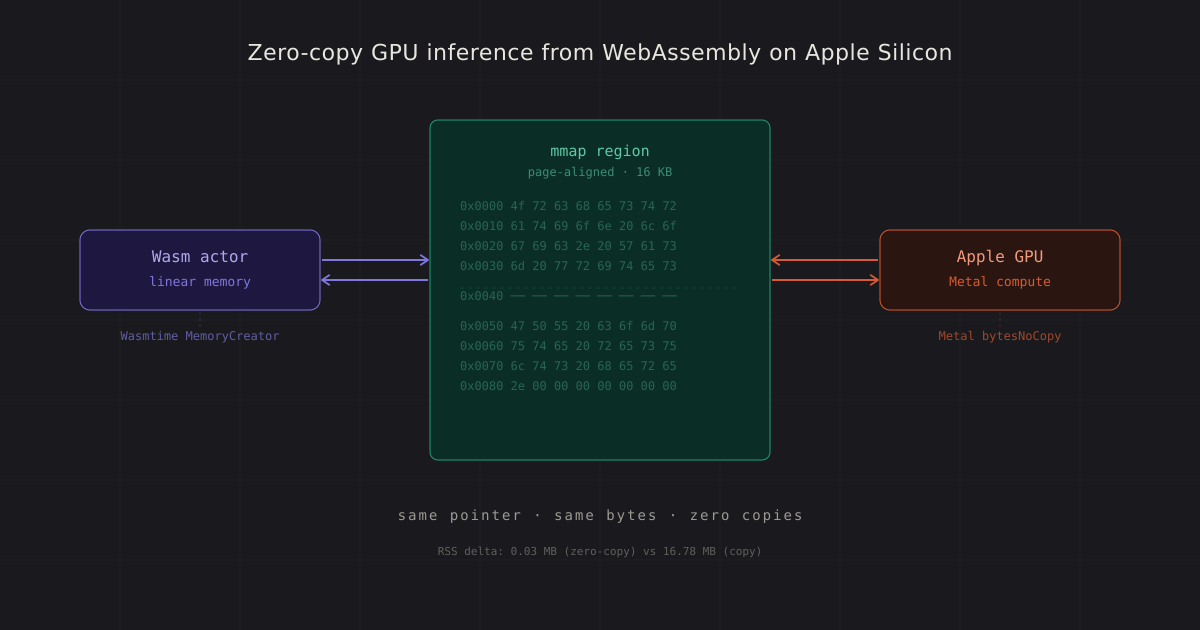
A new zero-copy chain allows WebAssembly modules to share linear memory directly with Apple Silicon GPUs without data copying or serialization. This direct memory sharing significantly reduces processing overhead and enables highly efficient stateful AI inference.
CommentsThe author shares their initial experience configuring AMD's ROCm software stack on the new Strix Halo platform, highlighting the efficient sharing of 128GB unified memory between the CPU and GPU. The article also details their chosen operating system and walks through the driver installation process.
Comments2026-04-18

Before the advent of GPS, B-52 bombers relied on celestial navigation to guide their long-range missions. This was made possible by a sophisticated electromechanical angle computer housed within the aircraft's star tracker, which calculated precise flight trajectories based on the positions of stars and planets.
Comments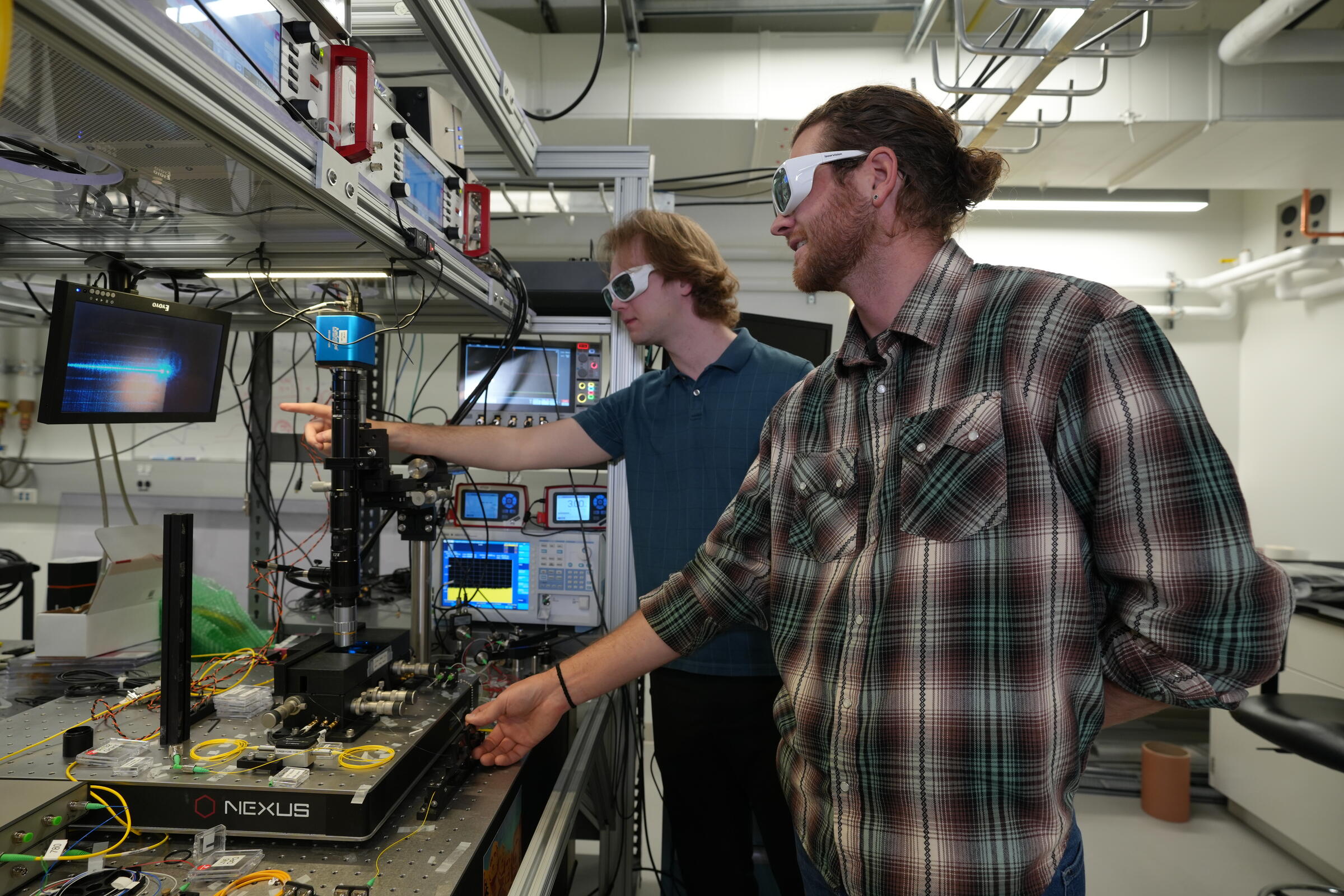
NIST scientists and collaborators have pioneered a technique to manufacture integrated light circuits by depositing complex patterns of specialized materials onto silicon wafers. This innovation enables the creation of highly versatile lasers that can operate at any wavelength directly on standard silicon chips.
Comments
Amiga Graphics Archive
2026-04-18The Amiga Graphics Archive is a newly launched website dedicated to preserving and showcasing visual art created for the Commodore Amiga home computer. Introduced in 1985, the Amiga featured revolutionary custom chips that delivered unprecedented graphics capabilities far beyond other personal computers of the era. This digital collection serves as a tribute to the pioneering visual legacy of the iconic retro system.
Comments80386 Memory Pipeline
2026-04-18A detailed technical discussion examines the internal microcode of the classic Intel 80286 and 80386 processors, focusing on the mechanics of switching between real and protected modes. By analyzing vintage BIOS disassemblies and historical patents, the thread clarifies why the instruction prefetch queue must be immediately flushed via a control transfer after enabling protected mode to prevent processor triple faults.
CommentsFuzix OS
2026-04-18FUZIX is a micro-Unix operating system designed for retrocomputing on old and resource-constrained hardware like 8-bit microcontrollers and the Raspberry Pi Pico. Although the project supports standard Unix-style processes and is making steady progress, poor documentation remains a notable issue for hobbyists. The development team is currently working on a portable C compiler to help alleviate the steep learning curve associated with the cross-compilation toolchain.
Comments
4-bit floating point FP4
2026-04-18A new technical overview explores the growing utility of extremely low-precision 4-bit floating-point numbers in optimized computing environments. The analysis breaks down the specific numerical values represented by FP4 formats and examines the various architectural variations of this emerging standard.
Comments2026-04-17
A new macOS utility called PanicLock allows users to instantly disable Touch ID and require a password to unlock their Mac. The tool can be triggered via a single click, a keyboard shortcut, or by simply closing the laptop lid, providing a quick security measure for sensitive situations.
Comments
Duke University has integrated the unique, crank-operated Playdate handheld into its game design curriculum to foster innovative thinking among students. The unconventional yellow console challenges learners to move beyond traditional button-based controls and develop highly creative, hardware-specific gameplay experiences.
CommentsCadQuery is an open-source Python library that allows developers to build parametric 3D CAD models entirely through code. This scripting approach replaces traditional graphical interfaces to enable highly automated, customizable, and version-controlled design workflows.
CommentsA summary of Brad's HIPS 2025 keynote reflects on the evolution of High-Performance Computing programming over the past three decades. The discussion highlights both the significant technological advancements and the enduring paradigms that have shaped the field since the early 1990s.
Comments
A newly proposed US bill contains a hidden mandate requiring on-device age verification for consumer electronics. This sweeping provision would apply to every laptop, gaming console, smart TV, and car infotainment system in the country.
CommentsA new demonstration highlights an integrated workflow combining SPICE circuit simulation, LeCroy oscilloscope control, and Claude Code for automated hardware verification. This toolchain allows developers to simulate electronic designs and leverage AI to verify the results directly against physical oscilloscope measurements.
CommentsReBot-DevArm: open-source Robotic Arm
2026-04-17Seeed-Projects has launched ReBot-DevArm, an open-source robotic arm designed specifically for developers. The project is hosted on GitHub, where the community is invited to contribute to its ongoing development.
CommentsExperiment with ICEYE Open Data
2026-04-17ICEYE has made a wealth of open data resources available for researchers and developers to experiment with. This initiative allows the tech community to freely explore and research the full potential of Synthetic Aperture Radar technology.
Comments
A 3D printing enthusiast shares a firsthand business report detailing the practical realities of running their own 3D printing company for eight months. The account provides valuable insights for tech entrepreneurs regarding the operational challenges and financial viability of turning a hobby into a commercial enterprise.
Comments2026-04-16
The paper computer
2026-04-16A developer created a paper computer prototype for a Gemini hackathon that uses a projector, camera, and AI agent to transform ordinary paper into an interactive display. The screen-free device allows children to engage with digital media through physical objects, offering a tactile alternative to traditional tablets. The creator and online community are now seeking support to refine the minimal prototype into a fully functional product.
CommentsDarkbloom is a new platform that routes encrypted AI inference to idle, hardware-verified Apple Silicon Macs. It provides users with comparable model performance at approximately 50% lower costs than traditional API providers. The hardware-verified encryption ensures strict, operator-blind privacy for all processed data.
Comments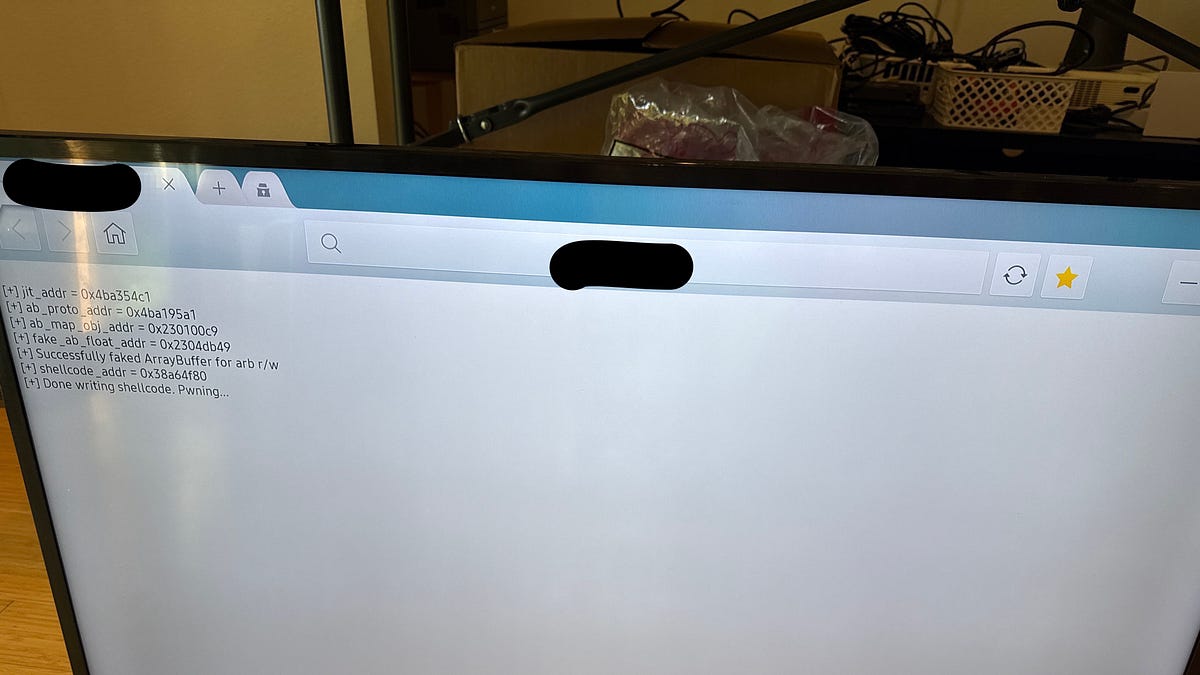
Codex Hacked a Samsung TV
2026-04-16Codex successfully compromised a Samsung smart TV after being provided with an initial system foothold. It quickly escalated its privileges to pop a root shell, gaining full administrative control over the device. This demonstration highlights the tool's capability to execute a complete system takeover on consumer electronics.
CommentsA hardware hacker has built an AI-driven automated probing arm using unconventional materials like duct tape, an old camera, and a CNC machine. The DIY system, named AutoProber, features an agent-driven automation stack that handles target discovery, microscope mapping, and precise pin probing.
CommentsA developer recently created MacMind, a single-layer transformer neural network implemented entirely in HyperTalk for the classic 1989 Macintosh. This fascinating technical experiment pushes the boundaries of retro computing by successfully running modern AI architecture natively within the decades-old HyperCard environment.
CommentsReaders of a highly praised, clean, ad-free guide to modern microprocessors are calling for a similar comprehensive breakdown of modern microcontrollers. The discussion highlights key architectural differences such as pipeline design strategies, fast on-chip memory, and the dominance of peripherals and DMA engines. Additionally, the community commends the original website's minimalist design and suggests adding topics like advanced branch predictors and data prefetching to future editions.
Comments2026-04-15
Readers debating an article about the Bulgarian Pravets computer and early tech education in the Eastern Bloc are sharply divided on the reality of learning to program under communism. While some praised the era for nurturing cognitive talent through available computer and robotics labs, others argued this perspective glamorizes poverty and ignores the severe hardware shortages most students actually faced. The discussion highlights the complex legacy of Eastern Bloc reverse-engineering efforts and the grassroots determination required to build technical skills behind the Iron Curtain.
Comments