AI Tech News
Submit2026-11-10

AlphaProof Code
2026-11-10AlphaProof Code agents generated over three million lines of machine-checked Lean proofs to verify Signal’s core cryptographic protections down to the machine-instruction level. The effort aims to provide formal assurance for critical cryptographic code.
Comments
Gemini 4 Carbon is now available
2026-11-10Gemini 4 Carbon is now available to developers, enterprises, scientists, and consumers. The release expands access to the new model across both professional and consumer use cases.
Comments
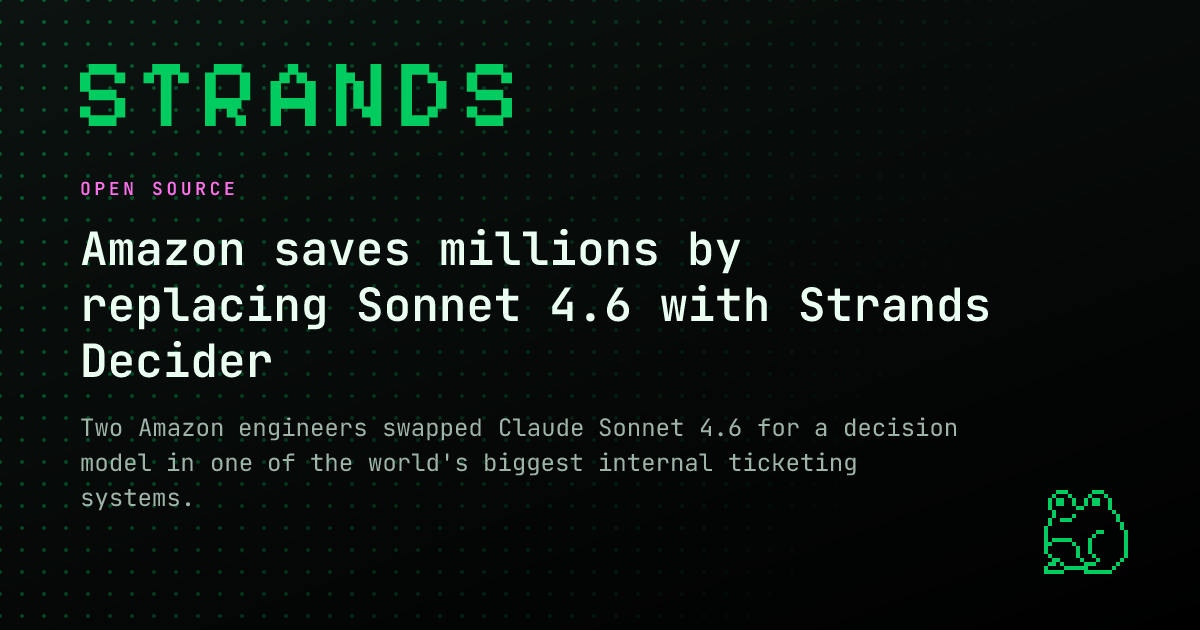
Two Amazon engineers replaced Claude Sonnet 4.6 with the Strands Decider decision model in one of the company’s largest internal ticketing systems. The swap is reportedly saving Amazon millions of dollars.
Comments
Fable 5.2 reportedly generated a complete, multi-level game in a single attempt, bringing a user’s nephew’s dream game to life. The result suggests LLMs can now produce full playable games that are genuinely fun.
CommentsGoogle Chrome has released modern-web-guidance, a resource designed to keep coding agents aligned with current web best practices instead of outdated ~2019 JavaScript. The Show HN project aims to steer AI coding assistants toward modern web primitives so generated code follows up-to-date standards.
CommentsClaude now offers Whiteboards for shared brainstorming, Sheets for building spreadsheets, and Data for sharing team dashboards. All three features are available today on every paid Claude plan.
Comments
Apple is reportedly developing a new Mac app designed to make running local AI models easy. Evidence of the app was discovered by leaker Aaron Perris, suggesting Apple may simplify local AI model use on macOS.
Comments
Seven months into Project Glasswing, VulnCheck has tracked 442 Anthropic-attributable CVEs—about 0.5% of all CVEs published this year—with only two exploited in the wild. Of 37,966 reported findings, just 7,349 (19.4%) are public and only 217 have been marked fixed.
Comments
CoreWeave’s bond yield has climbed above 16%, highlighting rising stress in AI debt markets as investors grow concerned about a potential data center slowdown. The steep yields reflect broader worries about AI-related credit risk and what may come next for heavily indebted infrastructure players.
Comments
Meet the Sad Wives of AI
2026-11-10A new piece profiles the “sad wives of AI,” women married to men whose obsession with artificial intelligence strains their relationships. It frames the phenomenon with dark humor, asking readers if they’re married to an AI-obsessed man and offering mock sympathy.
Comments
The Death Knell of Digital Search
2026-11-10Kyle Chayka argues that AI chatbots like Gemini, Claude, and ChatGPT are replacing Google Search, signaling the decline of traditional digital search. The piece examines how this shift could reshape how people find information and interact with the web.
CommentsA new open field guide examines inference engineering for platform engineers, covering core concepts, production operations, and tooling. It also offers guidance on career development for engineers working on inference platforms.
Comments
Saltline is a first-person shooter built with Fable 5.2 and showcased as an Artifact created by Claude users. The project highlights how users are using Claude Artifacts to build and share interactive game experiences.
Comments
What objective is reasoning solving?
2026-11-10The piece frames reasoning in language models as pathfinding through token space, asking what objective this search ultimately serves. It examines whether reasoning is best understood as solving an explicit problem, optimizing a latent objective, or navigating toward a useful conclusion.
Comments
Life on Claude Nine
2026-11-10A personal experiment that began with automating emails grew into a broader test of living with Anthropic’s Claude as a daily AI assistant. The piece explores how handing off small tasks to Claude can reshape productivity and everyday routines—and where the limits of that reliance begin.
Comments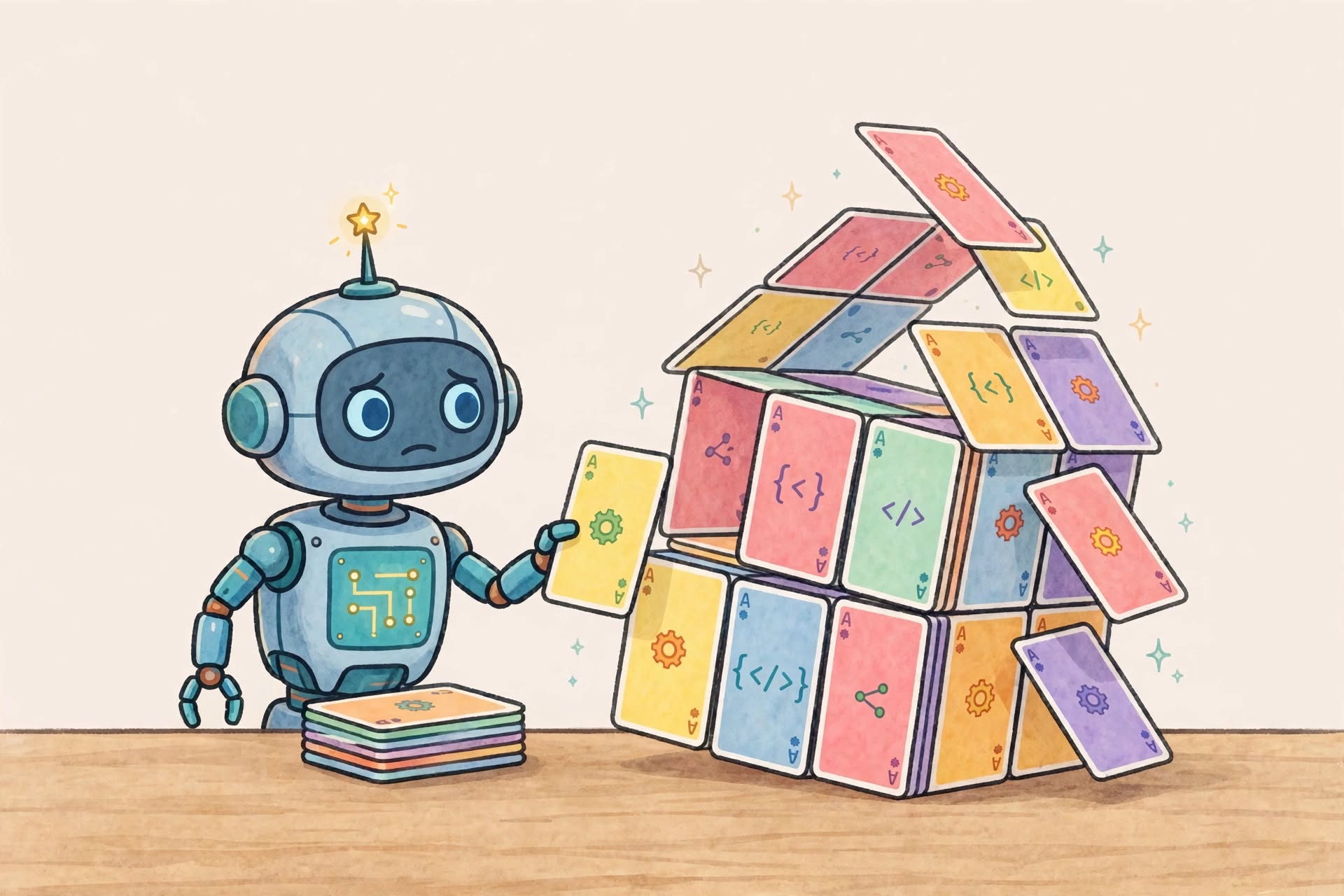
AI usage generates a fragile codebase
2026-11-10Readers discussed the article’s warning that AI-generated code can become fragile when developers rely on it without human oversight, though some argued AI can support robust code if guided by strong patterns and tests. Many expect brittle codebases to persist unless employers incentivize more thoughtful AI use.
Comments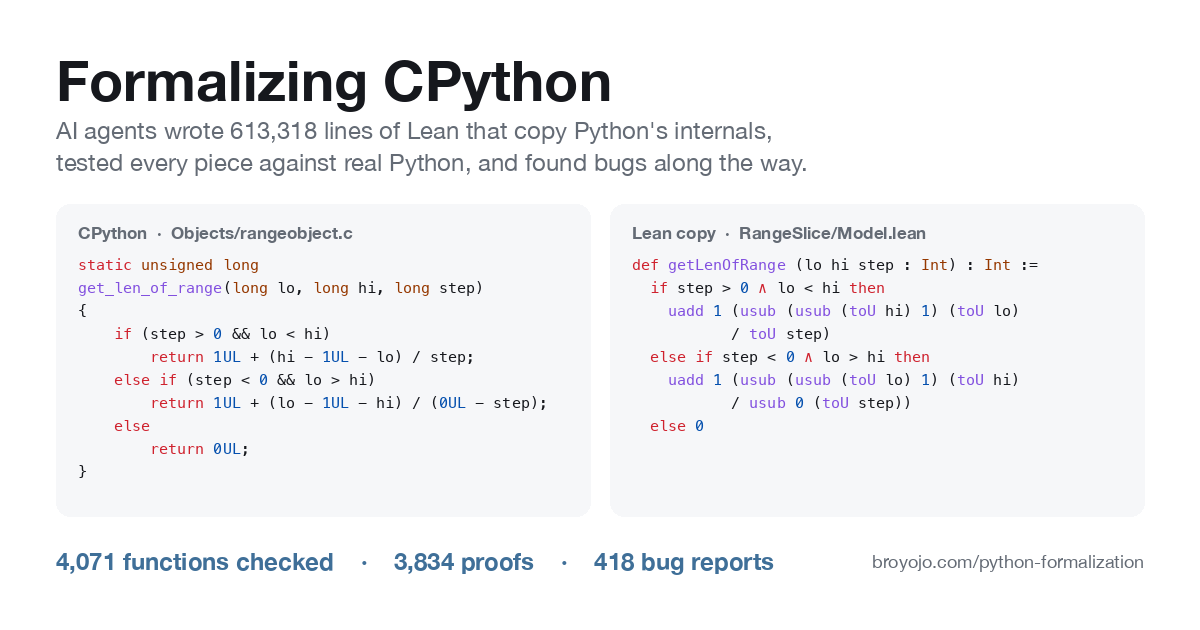
Formalizing CPython
2026-11-10AI agents formalized CPython’s internals in 613,318 lines of Lean, validating each component against real Python behavior. The effort surfaced 418 bug reports along the way.
Comments
A security breach at Fireworks AI has impacted Notion and its customers, highlighting risks in third-party AI integrations used in workplace tools. Notion offers AI-powered search, writing, and note-taking within its all-in-one workspace. Details of the breach and its scope were not included in the provided information.
Comments2026-11-09
Claude Fable 5.2 and Mythos 5.2
2026-11-09Claude has introduced Fable 5.2 and Mythos 5.2, new models aimed at the hardest technical challenges. Fable 5.2 sets a new benchmark in coding, finance, and the sciences.
CommentsAnthropic's Claude Fable 5.2 (Max, Default Fallback) has scored 65 on the Artificial Analysis Intelligence Index, the highest score recorded so far. The analysis compares it with other AI models across quality, price, performance, time to first answer token, and context window.
Comments
Muse Ember is the company’s smallest and most efficient model yet, built for complex reasoning execution. It is designed to handle the repetitive work that agents perform throughout the day.
Comments

DeepX claims its DX-M2 edge AI chip, built with Samsung PIM memory, can run 100-billion-parameter LLMs at under 5 W. Samples are due in March 2027.
CommentsA new analysis finds the same Nvidia H100 GPU rents for anywhere from $2.69 to $12.29 per hour depending on the provider. The wide price gap highlights how much cloud rental costs vary for the in-demand AI accelerator.
Comments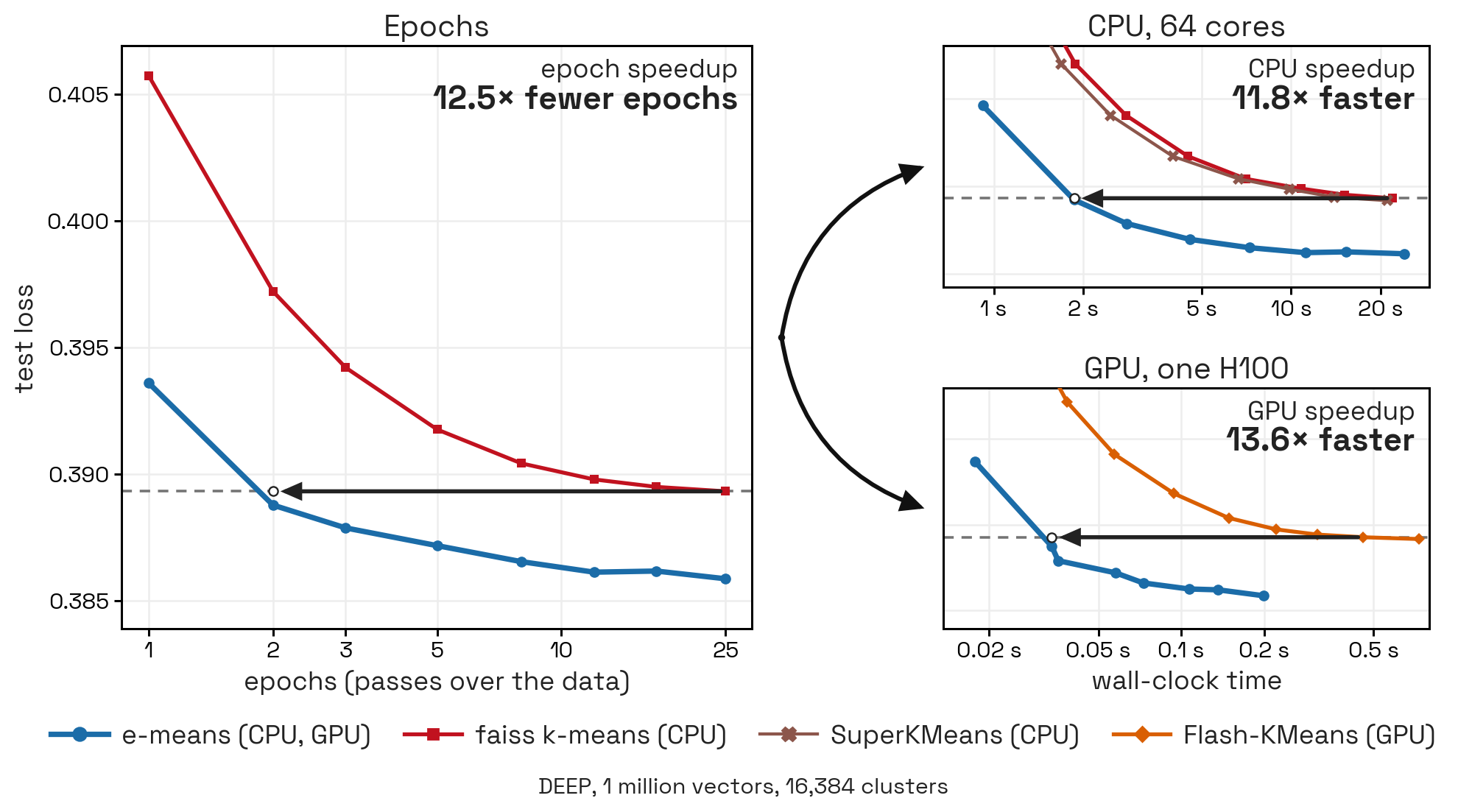
Researchers introduced E-means, a new k-means clustering method that achieves equal loss while running 10x faster. The approach applies modern optimization techniques and scaling laws to improve clustering efficiency.
CommentsA new GitHub project offers a small LLM inference engine built from scratch, accompanied by more than six hours of YouTube tutorials and 85+ pages of handwritten notes. The resource aims to help developers learn LLM inference fundamentals through hands-on implementation and detailed study materials.
CommentsChatGPT Desktop is reportedly forwarding users' SSH agents to remote machines as a convenience feature, prompting criticism that it removes important security friction. Commenters argue auto-forwarding should require per-request approval or filtering, and recommend hardware-backed keys such as Secure Enclave or YubiKey with fingerprint or touch confirmation. The discussion also highlights broader concerns that local agent guardrails rely on leaky blacklists and broad permissions.
CommentsThe STE80 Humanizer is a new Show HN agent skill designed to remove AI tells from text by rewriting it 80% of the way toward ASD-STE100 Simplified Technical English. It follows a method shared by Andrej Karpathy for making generated writing sound less AI-like.
Comments
I'm Not Convinced the AI Bubble Exists
2026-11-09The piece examines the claim that AI is an overvalued bubble, noting that a true collapse would devastate the economy given the trillion-dollar valuations of major AI companies. The author remains skeptical that the AI bubble actually exists, pushing back on the speculative narrative.
Comments
A new analysis of 1,400 Claude Code sessions claims Opus 5.5’s reasoning behavior changed sharply on November 3, even though the model name stayed the same. The findings have reignited questions over whether Opus 5.5 was quietly nerfed.
Comments