Tech News

Muse – Meta’s personal AI agent
2026-09-09Meta has introduced Muse, a new personal AI agent designed to assist users with a variety of everyday tasks. The tool aims to streamline daily workflows and boost overall productivity by seamlessly managing routine activities.
Comments
How to build a printer
2026-09-09A new DIY project details the process of building a custom printer using electronic paper. The creator demonstrates how to leverage e-ink technology to construct a fully functional e-printer from the ground up.
Comments

Researchers have discovered that trees can correct stem curvature by generating a specialized tension wood that functions like a biological muscle. Even when deprived of sensory cues from light and gravity, young trees successfully realigned their bent stems within weeks by relying solely on their perception of their own physical curvature. This finding reveals a remarkable self-correcting mechanism in plant biology driven entirely by internal structural awareness.
CommentsA recent study reveals that large language models develop emergent social biases and stratify fictional demographic groups during sequential hiring tasks by over-exploiting initial random successes rather than exploring alternatives. However, critics argue these biases are largely an artifact of the experimental prompts, which implicitly instruct the models to treat arbitrary demographic labels as meaningful selection criteria.
Comments
AlphaGenome Atlas is a newly introduced high-resolution database that provides a comprehensive map of human DNA. The platform predicts the functional effects of every possible single nucleotide variant within the human genome. This tool offers researchers a powerful new resource for analyzing genetic variations and their biological impacts.
Comments
An Accidental Blackboard
2026-09-09Thoughtworks colleagues share practical insights and lessons learned from integrating AI into their software delivery workflows. The article highlights how teams are organically collaborating and experimenting with these tools, creating an accidental blackboard for continuous innovation and shared knowledge.
CommentsA new experimental syntax highlighter powered by WebGPU has been introduced to provide fast, language-agnostic code highlighting. Weighing in at just 27.5KB, this lightweight tool offers developers a highly efficient and versatile solution for working across multiple programming languages.
CommentsDaVinci Resolve 21.1
2026-09-09DaVinci Resolve 21.1 introduces new agent integration designed to streamline workflows and lower the learning curve for complex tasks like color grading and asset management. Blackmagic Design continues its consumer-friendly licensing model by offering the powerful, cross-platform editing suite for a one-time $295 fee with free lifetime upgrades instead of a subscription. Users appreciate the update's balance of automated assistance and professional creative control, further solidifying Resolve as a strong, cost-effective alternative to subscription-based competitors.
Comments
An AI-generated solution to the Navier-Stokes Millennium Prize Problem has been shared, accompanied by a detailed writeup. The submission also features a formal mathematical proof written in the Lean theorem proving language.
CommentsMathematician Terence Tao warns that artificial intelligence is rapidly depleting the finite supply of highly fruitful open math problems. Although the total number of mathematical questions is theoretically infinite, the vast majority lack the insight necessary to advance the field. This non-renewable mining by AI threatens to make truly valuable mathematical problems scarce.
Comments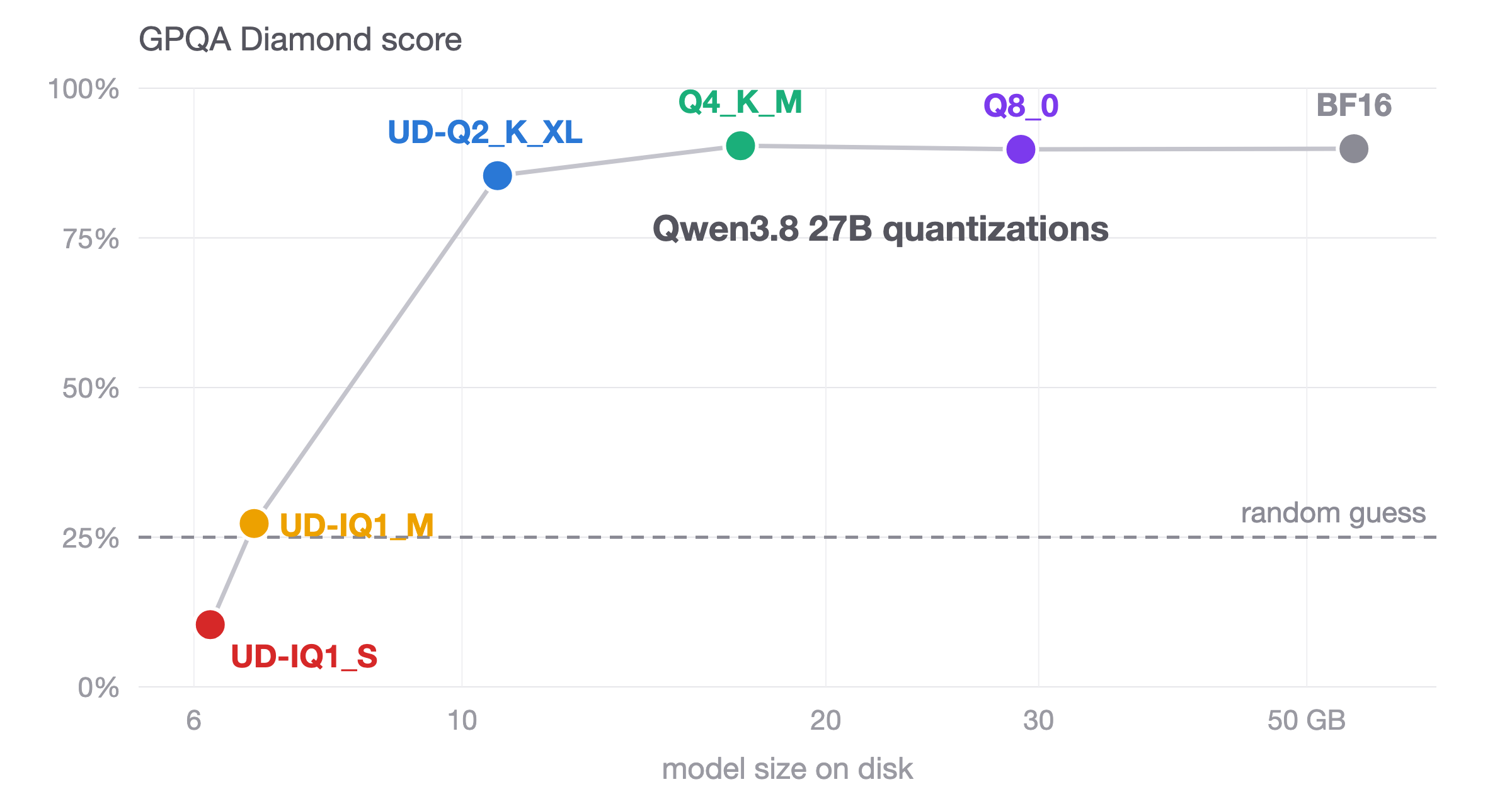
A recent benchmark evaluated Unsloth GGUF quantizations of the Qwen3.8 27B model using llama.cpp across multiple rigorous tests. The results show that the 4-bit version matches full BF16 precision while fitting on a single RTX 4090. However, extreme compression to 1-bit causes the model's performance to completely collapse.
CommentsA new GitHub repository called i-have-adhd introduces a specialized skill for AI coding agents to prevent them from burying the final answer in verbose explanations. The tool is specifically designed to provide an ADHD-friendly output by keeping responses direct and concise. This helps developers quickly locate and use the generated code without getting lost in unnecessary text.
Comments
AI Responsibility – OpenAI and Anthropic
2026-09-09A former pretraining researcher has resigned from Anthropic after spending three years working at both OpenAI and Anthropic. The departing employee accused both AI companies of acting irresponsibly by recklessly racing toward self-improving superintelligence and gambling with human lives.
CommentsDiscussions surrounding an article on the microeconomics of artificial intelligence center on the true nature of large language models, contrasting reductionist views of them as mere statistical autocorrect with the reality of their complex emergent properties. Participants debate whether the static, frozen weights of these models limit their adaptability, despite their ability to generate non-deterministic outputs and perform advanced reasoning. Ultimately, the conversation questions how economists are practically applying these sophisticated AI systems to improve predictive modeling.
Comments
A new Harvard study led by researcher Matthew Nock demonstrates that smartphone technology can predict 75 percent of suicide attempts a week in advance. The team achieved this by using mobile devices to survey high-risk adults and adolescents in real time. This breakthrough highlights the potential of mobile technology to proactively identify and prevent mental health crises.
CommentsNavier-Stokes – Tristan Buckmaster [pdf]
2026-09-09Mathematician Tristan Buckmaster accuses OpenAI of training its models on his private chat data after the company claimed to independently solve a complex Navier-Stokes math problem using an approach strikingly similar to his own. The dispute escalated when OpenAI offered Buckmaster partial credit for the breakthrough on the condition that he remove his co-author, an Anthropic employee, from the publication. Refusing to drop his colleague, Buckmaster rushed to publish their work independently, raising significant concerns about AI companies potentially exploiting user data for model training.
CommentsDevelopers can now run the massive 2.8 trillion parameter Kimi K3 AI model locally on a MacBook Pro at a speed of one token per second. This achievement is powered by the ARGODRIVE Deltafin project, which streams the model across four SSDs on Apple Silicon hardware.
Comments
Getting phpBB 1.4.4 working in Docker
2026-09-09The final 2001 release of the phpBB forum software has been successfully containerized to run in a modern Docker environment using a legacy stack of PHP5, Apache, and MySQL 4. The project gets version 1.4.4 up and running and includes screenshots of the retro application in action.
CommentsA Topological Picture Book, Rendered
2026-09-09A new interactive web project beautifully renders topological illustrations originally hand-drawn by a former professor, earning praise from former students for capturing his classic aesthetic. While the visualizations have inspired developers to explore similar rendering techniques for arbitrary 3D models, users suggest UI improvements for better touchscreen rotation and mobile viewing.
CommentsShow HN: LLM Attention Visualization
2026-09-09A new tool shared on Hacker News provides an interactive visualization of the attention mechanisms within large language models. This project allows developers and researchers to visually track how models process and weigh input tokens, offering deeper insights into their underlying behavior.
CommentsA recent Hacker News discussion highlights the ongoing challenges of recovering data from degraded 3.5-inch floppy disks, as magnetic media naturally deteriorates and drive hardware compatibility varies wildly. To combat read errors, users recommend trying cleaned period-correct drives, specialized raw data recovery tools like KryoFlux, or modern alternatives such as Gotek flash emulators. For commercial software, many suggest bypassing the fragile physical media entirely by downloading preserved copies directly from the Internet Archive.
CommentsAnimation in Bevy: The Big Picture
2026-09-09Discussions surrounding the article highlight community interest in Bevy's animation capabilities, specifically regarding automated movement plugins and seamless animation blending. Developers also shared learning resources and expressed enthusiasm for the engine's code-first approach alongside the ongoing development of a visual editor called Jackdaw. This excitement is further reflected in the open-source game engine recently reaching the front page of Hacker News.
Comments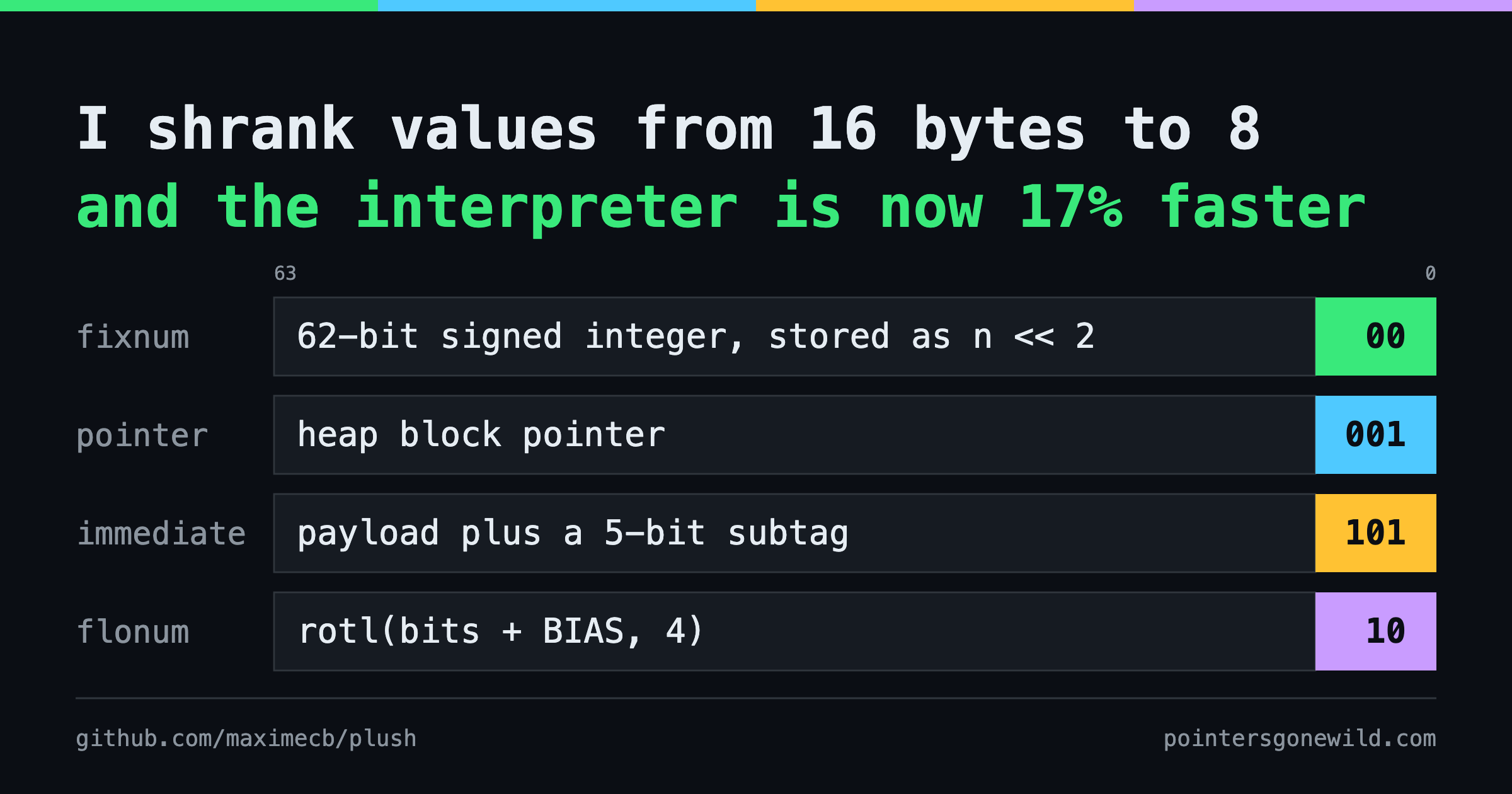
A developer optimized a Rust-based interpreter by replacing a standard enum with a compact 64-bit word representation. This low-level structural change reduced memory overhead and improved data locality during execution. Consequently, the interpreter achieved a 17% overall increase in processing speed.
Comments
A custom home specifically optimized for hosting LAN parties has been completed in 2024. The project features specialized infrastructure and spatial layouts designed to support large-scale multiplayer gaming setups.
Comments
The Helicopter with Radioactive Blades
2026-09-09A newly surfaced video highlights an unexpected historical detail about the CH-53 Sea Stallion, a massive helicopter introduced in 1966. The footage reveals that the historic aircraft was built with radioactive blades.
Comments
Mercury 2.5
2026-09-09Mercury 2.5 is the market's most capable diffusion LLM, operating at an impressive 1,107 tokens per second. It delivers a 40% increase in intelligence over Mercury 2, offering performance comparable to cost-optimized frontier models.
CommentsDiscussions surrounding an article comparing GCC's nested functions and C++ lambdas highlight significant implementation complexities, particularly the need for trampolines to cast nested functions to bare function pointers. Critics argue the original author overlooks these semantic differences and the resulting compiler optimization challenges, suggesting that modern closure models remain more practical than adding nested functions to the C standard.
CommentsTracing np.add, all the way down
2026-09-09A new blog post provides a deep technical dive into the NumPy codebase by tracing the execution path of the np.add function. Drawing on recent contributions to the library, the author explains how this core operation is implemented all the way down to the lowest levels of the framework.
Comments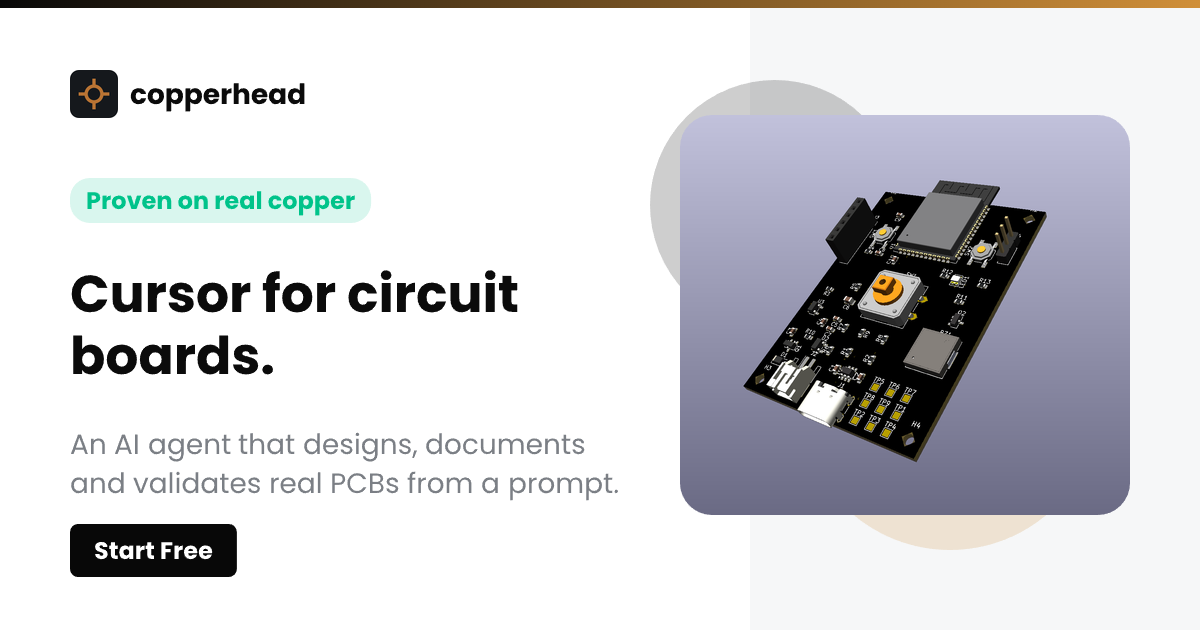
Copperhead is a new open-source AI agent that designs, documents, and validates real printed circuit boards directly from text prompts. Billed as the Cursor for circuit boards, the tool aims to significantly streamline the hardware design process by translating natural language into fully functional PCB layouts.
CommentsReverse Engineering an ASIC
2026-09-09A new article details the reverse engineering of an ASIC by deriving a netlist from the physical silicon to uncover its underlying logic and hidden outputs. Readers highly praise the project for its beautifully designed, educational website and its insightful explanation of how a netlist serves as a crucial intermediate step between conceptual hardware design and physical manifestation.
Comments