YC Updates News
SubmitKeep up with the steady stream of news surrounding Y Combinator. This section collects articles on portfolio company milestones, program announcements, notable partner commentary, and the wider conversation about how accelerators influence the direction of the startup world.
On any given week the feed might include a portfolio company raising a large round, an essay from a well-known partner sparking debate, or reporting on how the accelerator adapts its program to new technology waves. Smaller items, like notable hires and product launches, round out the picture.
A steady stream of small updates often tells the story before any single headline does. Founders, investors, and journalists watch this flow to catch shifts early, whether that is a new sector gaining favor inside the program or a change in how early-stage deals get done.
2026-11-04

Mars’ giant canyon is still tectonically active, suggesting the planet is not completely geologically dead. The finding adds to interest in Martian subsurface exploration, including deep basins that could offer clues about the atmosphere and potential underground life.
CommentsEvergreen is a new systems programming language designed to be provably safe by making invariants part of the code. Its real compiler can be tried directly in the browser via WebAssembly.
Comments

Pierre Computer has announced that OpenAI is acquiring the company. The announcement confirms the acquisition but did not include further details about the deal.
CommentsThe Internals of PostgreSQL
2026-11-04A reader discussion around The Internals of PostgreSQL notes renewed interest in PostgreSQL’s SSI implementation following the latest Jepsen report on ParticleDB. For readers skimming the document, the HOT update path is recommended as the key section, with zHeap implementation notes and TOAST material providing a useful mental model of what PostgreSQL does and does not do.
CommentsKino AI, a YC S23 startup, is building an AI media manager and video editor that combines agentic editing with Google Docs-like multiplayer collaboration, integrated review, local media support, and workflows for indexing footage and generating quick stringouts. Readers praised the team’s industry experience and requested reusable templates for recurring formats like podcasts, while users described wanting agents to organize and edit large volumes of dance and travel footage. The team says exports render locally and can often beat real-time on lighter timelines, with proxies mainly for teammates viewing cloud-side.
Comments
Ripple-65B Preview is being positioned as a U.S. open-weight state-of-the-art model for agentic coding. It comes from a team developing frontier AI methods to reinvent chip development, shorten design timelines, and accelerate custom silicon.
Comments
Researchers studying the neurology of tame foxes identified changes in a brain region previously associated with aggression. The findings offer insight into how domestication may alter neural mechanisms related to behavior.
Comments
Have I Befriended a Murderer?
2026-11-04A journalist recounts five years of investigating a man convicted of bludgeoning his wife to death, during which the boundary between professional journalism and personal friendship became blurred. The piece examines the ethical and emotional tensions that arose as the reporting relationship deepened.
CommentsReaders describe the monthly Ask HN “Who wants to be hired?” thread as a mixed bag: some report spam, stalking, recruiter pyramid schemes, fake extortion threats, and few real recruiter contacts, while others say they landed full-time roles or freelance work through it. Some see it as a high-signal hiring route, but discussion also flags that posts to the thread are skyrocketing while “Who is hiring?” posts have flatlined, suggesting a tough software job market.
Comments
There is no posttraining data commons
2026-11-04The LLM boom relied on a pretraining data commons built for other reasons, but posttraining consumes tasks rather than documents, and no equivalent commons exists. This gap leaves the open models community without a shared foundation for posttraining data.
CommentsResearchers from Dana-Farber, Mass General Brigham, and the Broad Institute have identified distinct cellular and genetic differences that may explain why colorectal cancer behaves more aggressively in younger patients. The largest study of its kind, published in Nature Medicine, provides a foundation for understanding age-associated differences and developing future treatments.
CommentsMilkman is a request/response workbench positioned as a better alternative to Postman for API testing and development. It offers a streamlined way to compose, send, and inspect HTTP requests and responses.
CommentsKairos is an open-source platform for real-time event intelligence and fraud and risk decisioning focused on financial behavior. It aims to help teams make faster risk and fraud decisions from streaming financial events.
Comments
Pratt parsing is a black box
2026-11-04A new article argues that most Pratt parsing tutorials spend nearly all their time on the algorithm while neglecting the underlying properties that actually matter. It contends that this leaves Pratt parsing treated as a black box, with little explanation of the principles that make it useful.
CommentsReaders in an Ask HN thread recommended cryptography books for a 10-year-old, including a youth edition of The Code Book, Real-World Cryptography by David Wong, and Introduction to Modern Cryptography by Katz and Lindell, alongside kid-friendly entry points like Artemis Fowl’s glyph ciphers and the archived NSA CryptoKids site. Parents emphasized that children can handle difficult material with adult guidance and individual attention, especially when encouraged to explore their own cipher-making interests.
Comments
The third part of the Xbox 360 hypervisor hacking series details improvements to the Bad Update exploit, making it trigger nearly instantaneously. The updated method reportedly achieves a near 100% success rate.
CommentsA Hacker News discussion claims Gemini trains on chat history even for paid subscribers with personal accounts, though the linked article was unavailable. Commenters advise assuming anything typed into AI chatbots may be stored indefinitely and used for training if terms change, regardless of subscription status, and express broader skepticism about providers.
CommentsCodemap is a new Show HN project that generates a one-page interactive map of any Go module or repository. The HTML-based tool visualizes packages, dependencies, files, and functions, offering a quick overview of a Go codebase’s structure.
Comments
This video traces how clip art became ubiquitous in 1990s computing through early desktop publishing, Microsoft’s ClipArt gallery, and CD-ROM collections, then faded as higher-quality stock imagery and online design tools took over. It explains the cultural and technological forces behind clip art’s rise and eventual disappearance from everyday tech.
Comments
Curiosity Traps
2026-11-04The article examines reverse honeypots—curiosity traps that reward close attention and help attract the right people. It suggests designing for curiosity can filter for engaged audiences and foster community rather than passive traffic.
Comments
Adding Window Functions to a Spreadsheet
2026-11-04Running totals are easy in Excel and Google Sheets, but they can get messy when spreadsheets require more than basic edits. Window functions offer a cleaner way to handle running totals and similar calculations.
Comments
Nobel laureate Geoffrey Hinton warned that AI may be close to triggering a major incident, such as a power or banking shutdown. He suggested it might turn out humanity would have been better off without AI. His remarks add to growing warnings about the technology’s systemic risks.
Comments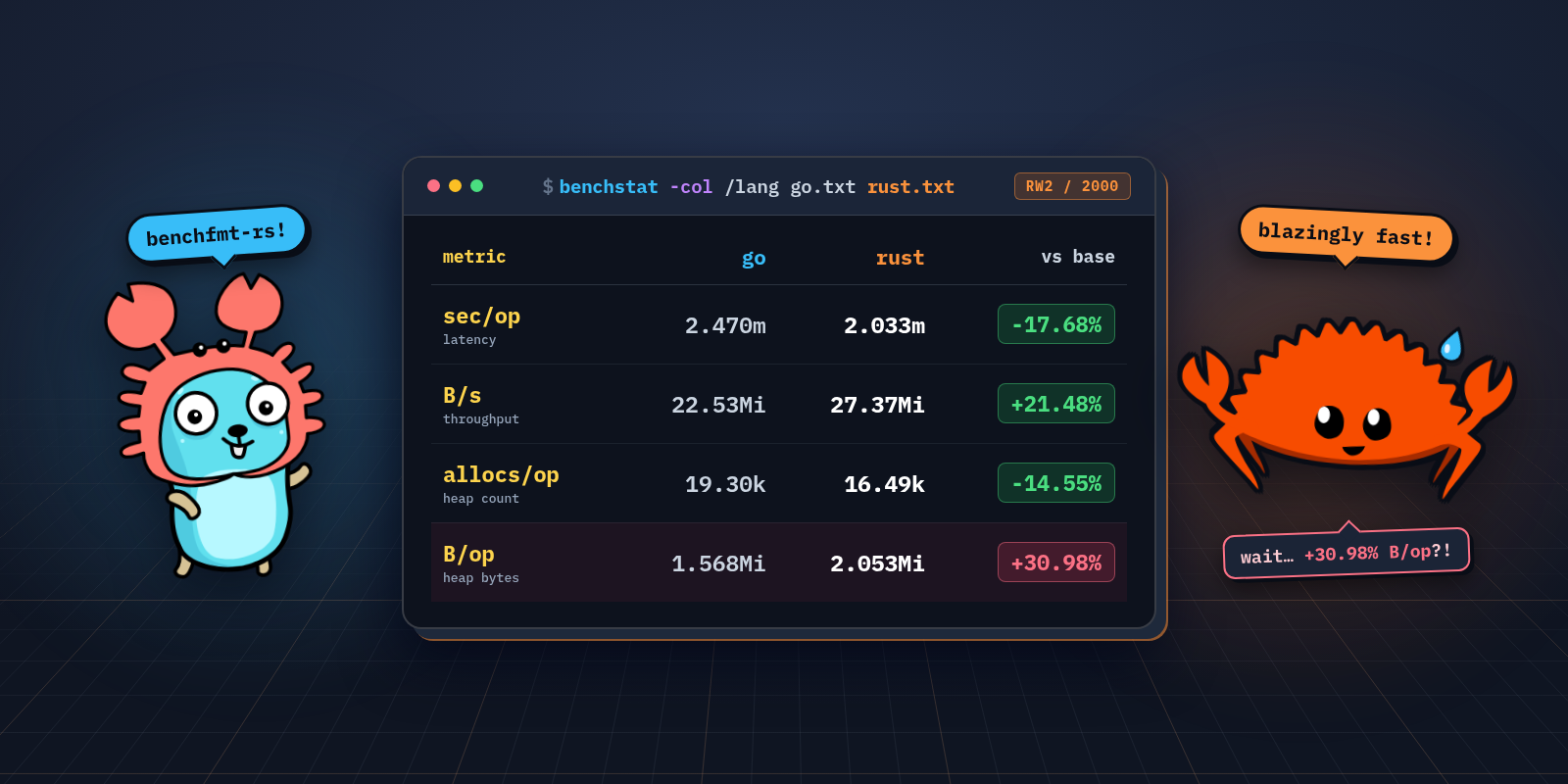
A developer has released benchfmt.rs, a zero-dependency Rust benchmark runner and Criterion converter that brings Go’s benchstat-style workflow to Rust, adding /key=value projections, per-op heap allocation tracking, and pprof profiling. The accompanying post benchmarks varint and Prometheus Remote Write 2.0 decoding across Go and Rust to show the workflow’s benefits, with Rust coming out faster.
Comments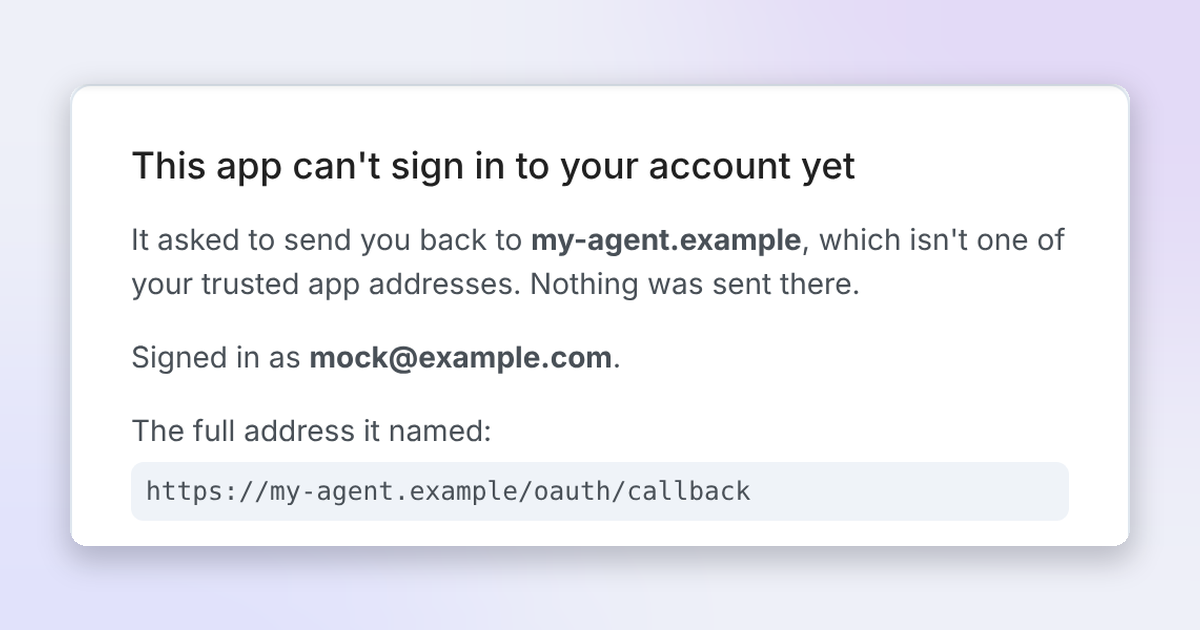
MCP servers currently face a tradeoff between refusing custom clients and opening a phishing hole. The piece explains how per-user trusted redirect URIs, decided at sign-in, let users use their own MCP clients while preserving security.
CommentsThe 2025 article examines a conceptual shift from arrows to arrows and categories to queries, suggesting a move toward query-based approaches in technical abstraction. It considers how this reframing changes the way systems are modeled and accessed.
CommentsA new Show HN tool lets users price a prebuilt PC by breaking it down part by part, aiming to make computer price checks quick and easy. It uses AI to read listings and a custom pricing engine to determine a grade, and is live now with free US checks and no account required.
CommentsMocktastic: A Meshtastic Node on Arduino
2026-11-04Mocktastic is a custom C++ implementation of a Meshtastic client for Arduino IDE and ESP32, specifically targeting the Lilygo T3 v1.6.1 board. The project is available on GitHub for users interested in building their own Meshtastic node.
Comments
Conductor Is Joining Meta
2026-11-04Conductor is joining Meta, drawing congratulations for the team alongside disappointment from users who say they’re losing a favorite IDE and face an aggressive timeline to migrate off Conductor Cloud. Community discussion is already pointing to alternatives such as Orca, Herdr, and T3 Code.
CommentsJelly Sheet
2026-11-04A news item titled “Jelly Sheet” has appeared without accompanying details. Based on the title alone, it may refer to a sheet-form or jelly-like material or product, but no further information is available yet.
Comments
Disaster is still better than AI
2026-11-04A new piece argues that even a disaster scenario may be preferable to AI, while suggesting the supposed disaster might not be as bad as it sounds. The takeaway is that the risks or costs of AI could outweigh even severe alternatives.
Comments