YC Startup News Today
SubmitIndividual startup stories from the Y Combinator world are collected here. Whether a young company is announcing its first product, raising a new round, or being acquired, this section brings together articles that follow YC-affiliated founders and their businesses.
Expect launch announcements, funding coverage, acquisition reports, and profiles that dig into how a particular team found its market. Some stories follow companies that became household names, while others capture scrappy early-stage teams at the moment their idea first meets the public.
Following single companies over time reveals things that batch-level summaries miss, such as how a pivot unfolds or how long a product really takes to find customers. That makes this section useful for founders looking for realistic comparisons and for anyone tracking specific startups they believe in.
2026-11-18
AI is killing All About Berlin
2026-11-18All About Berlin says AI companies trained their models on its work and are now using those models to compete with the site and threaten its livelihood. Its operator argues this pattern lets AI systems profit from creators’ content while driving those creators out of business.
CommentsCodeberg.org Not Reachable
2026-11-18Codeberg.org is entirely unreachable after its domain, registered with NameSilo, disappeared from the organization’s account. Codeberg says this is not a renewal issue and that there are no suspicious logins or domain-history entries, and it is waiting for NameSilo support to investigate. A workaround via the codeberg.eu domain is being set up as soon as possible.
Comments

Quad9 will stop serving users in France on November 24, 2026, choosing to exit rather than comply with a beIN Sports domain-blocking order. The case highlights why public DNS resolvers are the wrong tool for enforcing piracy blocks, since forcing them to censor domains can break more than it fixes.
Comments
ID.me terms required for IRS sign-in
2026-11-18The IRS now requires ID.me for sign-in, and ID.me’s terms include mandatory arbitration unless users opt out within 30 days. Government verification data is excluded from Shop marketing, with some exceptions.
CommentsA randomized experiment found that Google’s AI Overviews cut clicks to outside websites by about 40%, and the feature now appears on more than half of US keywords tracked, up from 6% two years ago. The industry’s proposed fix, generative engine optimization, has yet to offset the loss, while AI assistants sent websites just 0.3% of their traffic in March.
CommentsStarSling, a YC P25 launch, targets CI bottlenecks in repos flooded with agent-generated PRs by using git trailers to record checks agents already ran, letting intermediate PR builds skip redundant lint, typecheck, and unit-test steps while still running full checks on merge to main. Early results cited in discussion show builds dropping from about 10 minutes to 1.5 minutes, with gains compounding through lower contention and warmer caches. Users say the approach helps teams cope with high PR volume, though questions remain about verification, repo-size payoff, and inference costs versus CI savings.
Comments
Harvard researchers found that AI coding agents increased code output by 30% but did not measurably raise finished work, instead shifting the bottleneck to code review. Getting AI-generated code through review took 49% longer.
Comments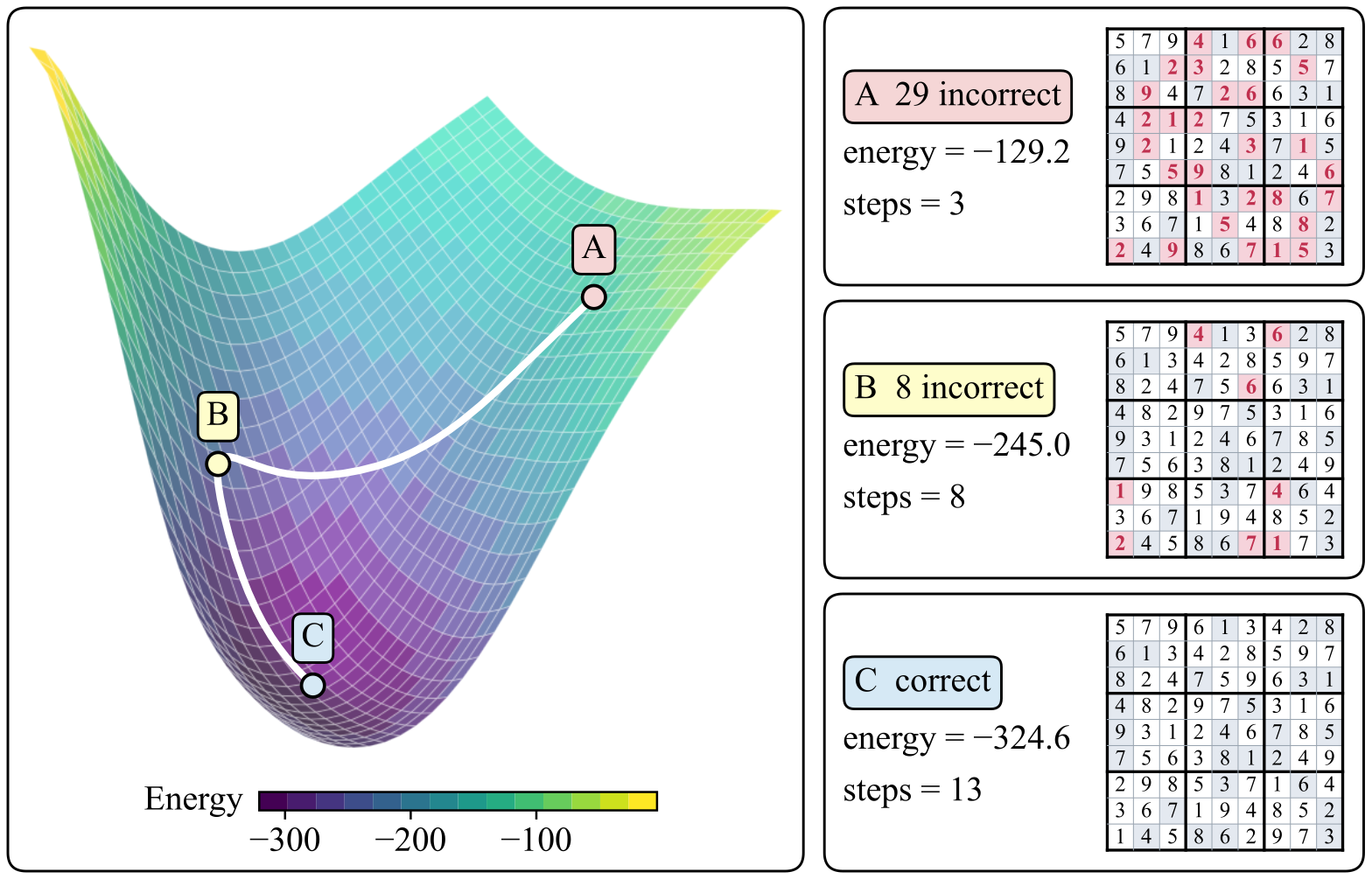
Energy-Based Reasoners achieve 385x more efficient inference by replacing a learned recurrent transition with gradient descent on a single learned energy function. That same energy also determines when to stop and which candidate answer to keep.
Comments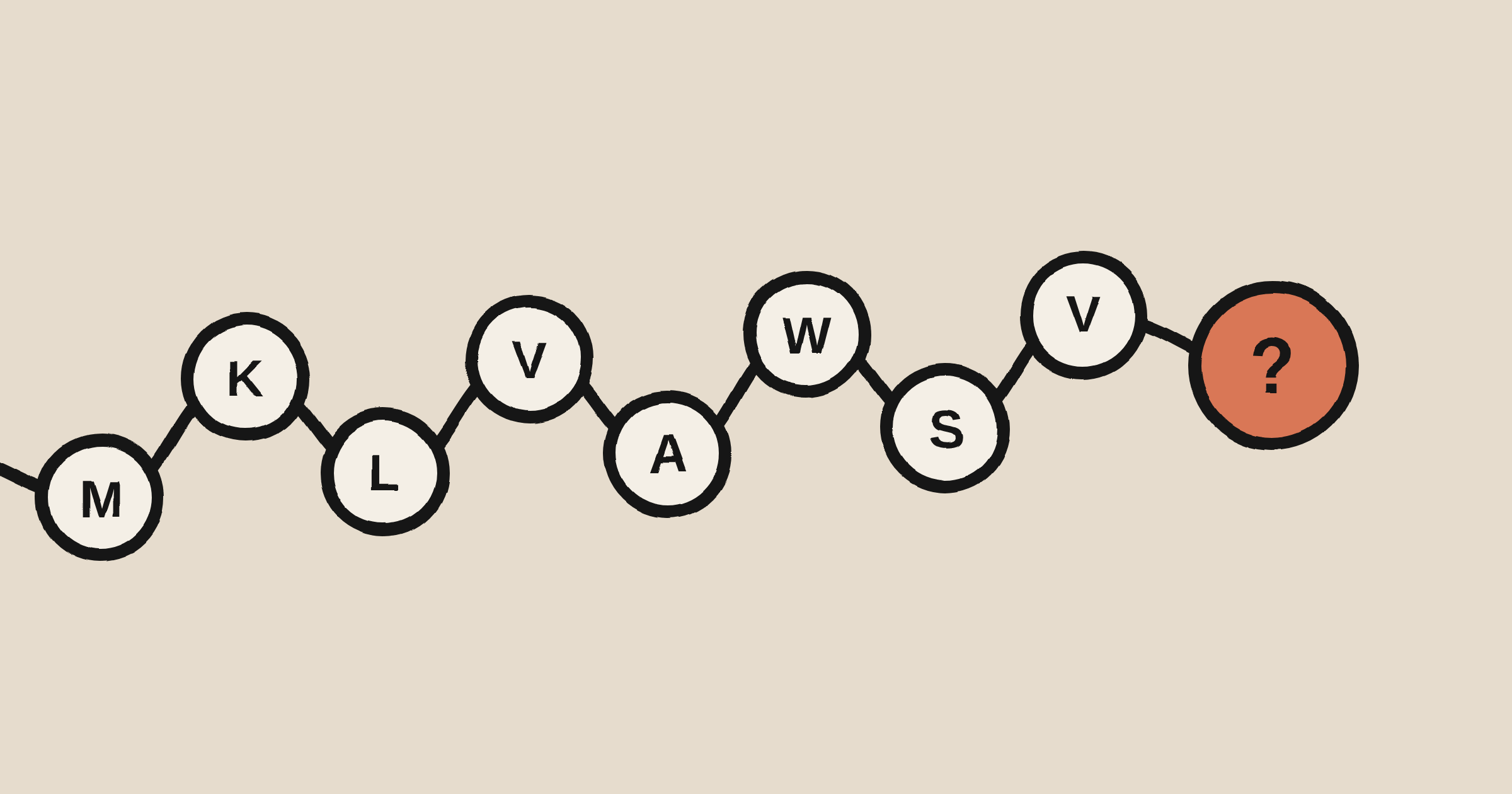
A next-amino-acid prediction test on little-studied proteins indicates that the latest Claude models were trained on protein sequences at scale. Other frontier models showed no sign of such training.
CommentsA new paper warns that AI-generated papers and referee reports could cause peer review to collapse and proposes making AI detectors standard, flagging suspicious reports for closer scrutiny, and treating AI-written reviews like plagiarism. Readers push back that detectors are unreliable and risk witch hunts, while some suggest machine-native output standards or fees to curb AI spam.
CommentsShow HN: Type Fighter 2
2026-11-18Type Fighter 2 is a browser-based typing game that turns keyboard practice into a fight, drawing praise for its concept and UI. Discussion focuses on skipping early levels, better letter sequencing using real words, and support for non-QWERTY layouts or customizable keys.
CommentsA job candidate interviewing at a YC startup reportedly discovered the company had used their LinkedIn without permission, sparking reader discussion about how common such incidents seem in the YC ecosystem. Commenters advised changing passwords and never sharing login credentials, while noting the episode doesn’t reflect well on the startup despite the attention it may bring.
Comments
A user recounts how any reconfiguration of their WAN connection caused IPv6 to break across the home network, tracing the issue through Router Advertisement daemons. The journey ended with odhcpd, a daemon designed for home networking behind unreliable ISPs, as the fix for this subtle IPv6 delegation failure mode.
Comments
My Emacs 31 contributions
2026-11-18A developer reflects on finally landing changes in upstream Emacs 31 after long postponing contributions because the process felt out of reach. The post recounts the hurdles they overcame to make those patches happen.
CommentsWhen AI Knows More Than It Can Offer
2026-11-18A new experiment across ten well-known AI systems suggests that training can turn capable assistants into generators of stock answers even when they possess more relevant knowledge. The finding highlights a gap between what AI models know and what they actually offer users, raising concerns about how such systems are optimized.
Comments
Why Fibonacci?
2026-11-18A new interactive explainer explores why Fibonacci patterns appear in nature, using animations to show how a Fermat spiral outperforms grids and rings. It also explains the significance of the 137.508° angle and traces where Fibonacci numbers come from.
Comments
Cerebras Disaggregated Inference
2026-11-18Cerebras has introduced a disaggregated inference approach that pairs AMD GPUs for prefill with wafer-scale decode. The company says this delivers 5× more tokens per megawatt without reducing token generation speed.
Comments
Why is Gemini 4 Carbon taking so long?
2026-11-18Gemini 4 Carbon took nearly an hour to complete tasks that Opus and Astra finished in minutes, prompting an investigation into its performance gap. The analysis traced every step of its runs to determine why it is so much slower.
Comments
Fun with Constrained Programming
2026-11-18RAR archives can contain bytecode for RarVM, a simple x86-like virtual machine used to implement archive filters. The article explores the fun and constraints of programming for this unusual embedded environment.
CommentsUnref is a new open-source tool that finds unreferenced Python code to help developers clean up dead code. It is built on Ruff’s parser and is available on GitHub under Apakottur/unref.
CommentsH-1B Executive Actions in 2026 [pdf]
2026-11-18Readers discussing the 2026 H-1B executive actions debated executive overreach and the uncertainty caused by abrupt measures like the $100,000 fee, while noting sharp registration drops from major outsourcing firms such as Cognizant, Infosys, and Tata. They also highlighted collateral damage to university hiring of foreign academics and argued that Congress should set H-1B policy and ban body-shop sponsorships rather than leave major changes to executive action.
Comments
Geoscience Australia has completed the nationwide release of its AUSTopo 1:250,000 digital topographic map series. The release provides authoritative, up-to-date topographic coverage of all of Australia, accessible online.
Comments
Volunteers have discovered more than 43,000 new periodic solutions to the three-body problem by using their browsers to trace fresh starting conditions with the exact equations of motion and attempt to close paths that nearly return. Promising returns are then verified by a server before being counted.
CommentsA new paper explores the duality of quadrilaterals through quaternion methods, proposing an algebraic framework for relating their geometric properties. Based on the title alone, the PDF appears to examine how quaternions can unify or reveal dual structures in quadrilateral geometry.
CommentsNozzle is a text streaming library that emits data when possible and buffers only where necessary. From Robert-Cunningham/nozzle, it aims to balance responsive streaming with reliable handling of partial text.
Comments
Cambridge Dictionary has named “human” its Word of the Year 2026, reflecting global debates over what distinguishes people from machines as AI blurs those boundaries. The dictionary defines “human” as having the qualities, faults, and feelings of people, as opposed to gods, animals, or machines.
Comments
Talos Linux
2026-11-18Talos Linux is an immutable, secure, declarative Linux distribution built specifically for Kubernetes. It is managed entirely through APIs and can run anywhere Kubernetes runs, aiming to make deployments easy and secure.
Comments
A new Technology Connections video argues that alkaline batteries are obsolete not for the usual reasons—waste or leakage—but because the devices they helped enable have evolved past them. It traces how innovation in portable electronics made disposable alkalines a victim of their own success.
CommentsA new GitHub repository collects information about the Zoom R8 hardware and firmware, aimed at people interested in developing firmware for the device. The repo, aturley/zoom-r8-hardware-and-firmware, gathers hardware and firmware details in one place for developers and tinkerers.
CommentsA Perfect SimCity
2026-11-18A software engineer examines what it would take to build a perfect SimCity, focusing on the design and technical challenges behind an ideal city simulation. The piece blends software engineering perspectives with the complexities of modeling a fully realized simulated city.
Comments