YC News Updates
SubmitThis section pulls together recent articles connected to Y Combinator. Coverage ranges from official program news and batch milestones to reporting on the accelerator's most successful graduates, giving a broad view of one of the most influential institutions in startups.
Recent stories in this vein tend to include Demo Day coverage, funding rounds for portfolio companies at every stage, and commentary on how the accelerator's advice and standard deal terms ripple through the wider industry. Occasional deep dives profile the people and decisions behind the program.
Few organizations touch as many corners of technology as a major accelerator does, from fresh graduates to companies now worth billions. Keeping up with this feed is a shortcut to understanding where early-stage tech has been and where its next chapter is likely heading.
2026-11-09

MeowDisplay is a free, open-source tool that reverses iPhone mirroring by letting you use your Mac on an iPhone, iPad, or another display. It supports arranging windows into panes, switching via Stage Peek, touch and keyboard controls, and file access.
Comments
A new Show HN Mac app captures a photo of anyone who uses your computer while you're away and sends it to your phone. It recognizes your face so it stays silent when you're the one using the Mac.
Comments
The STE80 Humanizer is a new Show HN agent skill designed to remove AI tells from text by rewriting it 80% of the way toward ASD-STE100 Simplified Technical English. It follows a method shared by Andrej Karpathy for making generated writing sound less AI-like.
Comments
I'm Not Convinced the AI Bubble Exists
2026-11-09The piece examines the claim that AI is an overvalued bubble, noting that a true collapse would devastate the economy given the trillion-dollar valuations of major AI companies. The author remains skeptical that the AI bubble actually exists, pushing back on the speculative narrative.
CommentsA Critique of GPUI
2026-11-09A personal-notes piece offers a critique of GPUI, examining the framework's shortcomings from the author's perspective. It is framed as informal observations rather than a formal review, with no broader news context supplied.
Comments
A new report finds that about nine out of every ten time capsules go missing. Despite those poor odds, the piece says people shouldn’t be discouraged from creating them.
Comments
Psalm 7 has been released, bringing a large set of new features and bug fixes to the PHP security and static analysis tool. The update is detailed in Daniil Gentili’s announcement blog post.
CommentsIsn't It Time for AVIF Everywhere?
2026-11-09As storage prices for HDDs, SSDs, and NVMe drives continue to rise, the case for adopting AVIF image compression everywhere is becoming stronger. The article argues that broader AVIF support could significantly cut storage and bandwidth demands.
Comments
A new analysis of 1,400 Claude Code sessions claims Opus 5.5’s reasoning behavior changed sharply on November 3, even though the model name stayed the same. The findings have reignited questions over whether Opus 5.5 was quietly nerfed.
Comments
France has accused Iran of carrying out last month’s cyberattacks on French supermarket freezers, calling the hacks “unprecedented.” The French foreign minister said Paris will push for European sanctions against Tehran in response.
CommentsReaders discussing how to manage AI-agent context across clients and projects largely recommend building custom lightweight harnesses and workflows rather than relying on one tool. Suggested practices include gatekeeper scripts that force wiki/documentation updates, semantic search over project knowledge, commit-linked chats, issue trackers and write-only ledgers for coordination, plus sandboxing agents and keeping granular usage data. Commenters also stress managing one's own attention and mental load, and staying ready to ditch tools as the fast-changing ecosystem evolves.
Comments
A primer on GPUs and kernel optimization
2026-11-09This primer covers GPU fundamentals, profiling tools, distributed computation, and kernel optimization for readers seeking a foundation in accelerated computing. It explains the basics needed to understand and improve performance across GPU workloads.
Comments
Researchers have turned silicon wafers into flat ultraviolet focusing mirrors by patterning them with air holes, using metasurface-style phase control. The approach could enable compact UV imaging, spectroscopy, and sensing systems while addressing the strong UV absorption that limits many metasurface materials.
CommentsA new guide highlights playful projects for VM/370 Community Edition, the classic IBM mainframe operating system running in emulation. It explores hands-on ways to experiment with big-computer concepts and have fun with a vintage VM/370 system.
CommentsActive Benchmarking
2026-11-09Readers argue that benchmarks should run long enough to reach steady state and be actively monitored during execution, since observing a workload in progress often reveals anomalies that invalidate isolated results and can even produce useful production observability tooling. They note that real fleet workloads offer the most realistic insights but are hard to replicate, especially as cache behavior and cloud workload patterns shift over time.
CommentsUSPS is now offering official ZIP Code boundary polygons, with pricing reportedly starting at $10k, prompting discussion about whether the data should be public and whether it can help the cash-strapped agency. Commenters noted that open alternatives are outdated, while geospatial experts cautioned that ZIP codes are delivery routes rather than true geographic boundaries. The offering may add revenue, but it is unlikely to solve USPS’s broader financial problems.
CommentsA mouse study suggests castration can extend lifespan, with the largest gain—about 33%—seen in males neutered as adults, compared with smaller increases for those fixed before or after puberty. The findings complicate simple assumptions that male hormones uniformly accelerate aging and come amid growing interest in testosterone therapy and its long-term effects.
Comments
On Being an Engineer in 2026
2026-11-09The piece explores what it will mean to be an engineer in 2026, focusing on how AI-assisted tools, automation, and rapidly changing technical stacks are reshaping day-to-day work. It argues that future engineers will need stronger systems thinking, cross-disciplinary collaboration, and continuous learning as routine tasks are increasingly automated.
CommentsThe article explores liveness analysis over block-local SSA IR and how a lightweight register allocator can translate that representation into register assignments. It applies the approach to both a virtual machine and an x86 JIT, showing how SSA-to-register conversion works in practice.
CommentsReaders discussing whether they still enjoy C++ report mixed feelings: many still value its power, performance, control, and RAII, while others cite decades of cruft, missing features like pattern matching, and slow committee progress. Some longtime C++ developers have migrated to Rust, praising its traits, tooling, and ecosystem, and say returning to C++ is difficult except for maintaining old projects.
Comments
The arXiv paper “Next-Concept Modeling” introduces a coarse-to-fine text generation method designed to be fast and parallel. It aims to speed up generation by modeling concepts rather than relying solely on sequential token-by-token output. The work is presented as a new approach for efficient text generation.
Comments
South African author Coral Hart has published more than 370 books since February 2025 with the help of artificial intelligence. She passionately defends her AI-assisted process despite facing criticism and threats.
CommentsFlide launched as an inference engine for Jev-like decision models, claiming up to 9.5x faster performance. It is pitched as the fastest inference engine for OmniJev/Flide decision models.
CommentsA Show HN project demonstrates JavaScript web apps using WASM layout and GPU rendering in just 280 KB. Commenters warn that bypassing the DOM discards browser/OS features like password-manager autofill, user dictionaries, IME support, and selectable content, creating inconsistent UX, while others are excited about the approach despite demo performance and WebGPU compatibility concerns.
CommentsA security researcher has documented how a Microsoft-signed shim can be borrowed to abuse Secure Boot protections on corporate hardware, potentially enabling boot-level attacks. The write-up details the technique and its implications for organizations relying on Secure Boot to lock down devices.
CommentsA headline about a Jensen Huang scandal is fueling speculation, including the claim that his wife could get half. Reader discussion focuses on how someone could fall for a honey trap, an intelligence tactic described as ancient and possibly older than civilization.
CommentsA Bit about Email
2026-11-09A discussion around a piece on email spun into a broader reflection on the internet as a collection of human edge cases. Readers expressed anxiety that undisclosed AI-generated text is converging online writing toward an average of pre-2023 thought and style, diminishing the idiosyncratic voice that makes personal sites feel magical.
Comments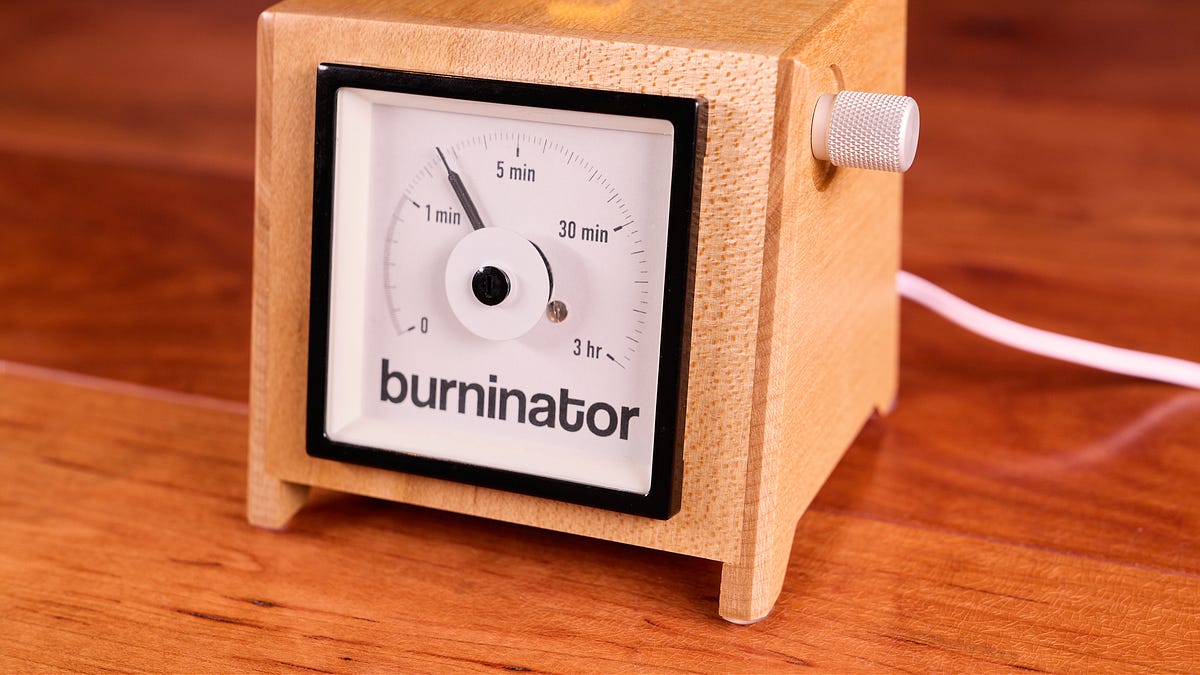
Quasi-Logarithmic Kitchen Timer
2026-11-09A DIY quasi-logarithmic kitchen timer aims to simplify cooking timing for households that already own several appliances with built-in digital timers. The project focuses on a dedicated timer with a non-linear control scheme for quickly selecting common cooking intervals.
Comments
Forrest Welborn spent three decades as a suspect in the infamous Austin Yogurt Shop murders and was finally exonerated this year, yet he says he still doesn’t feel free. The article explores the lasting toll of living under suspicion and how exoneration has not erased the trauma.
CommentsDocumentation published on GitHub alleges that Google Gemini routes personal Drive files and emails to human annotators, flagging a “Gemini File Leaking Behavior.” The repository is collecting evidence of the alleged data exposure.
Comments