YC Demo Day News
SubmitDemo Day is the moment each Y Combinator batch presents its startups to investors, and this section gathers reporting around it. Expect stories on notable pitches, standout companies, funding momentum, and the trends that emerge when a new cohort of founders steps on stage.
Typical coverage includes batch recaps, lists of the most talked-about companies, and interviews with founders fresh off their presentations. You will also find pieces examining which sectors dominated a given batch, from AI infrastructure to healthcare, and how those choices reflect where early-stage attention is flowing.
Investors, founders, and industry watchers follow Demo Day because it works as an early signal of what the next wave of technology companies will look like. Ideas that debut on that stage often reappear months later as funded, growing businesses, which makes each batch worth studying closely.
2026-11-16
“…and the proof is checked in Lean”
2026-11-16The post explains how to interpret claims that a theorem is correct because it was checked in Lean, noting that Lean code provides an important signal. However, if the code is AI-generated, additional tests are needed to validate the claim.
Comments
The Tor Project has released a rapid-response update, version 0.4.9.17, with DoS defenses as it contends with a sustained distributed denial-of-service attack. The stable release is available via tarballs and the GitLab repository, with detailed release notes and a bug report linked.
Comments
Mini.nvim Is Now on Tangled
2026-11-16Mini.nvim, a collection of more than 45 independent Lua modules that enhance the Neovim experience with minimal effort, is now available on Tangled. The project continues to offer lightweight, modular improvements for Neovim users.
Comments
The United States is set to reject a global ban on autonomous “killer robots,” even as the U.N. warns that such weapons pose growing risks to civilians and challenge compliance with international humanitarian law. The stance highlights Washington’s resistance to binding limits on AI-enabled military systems.
Comments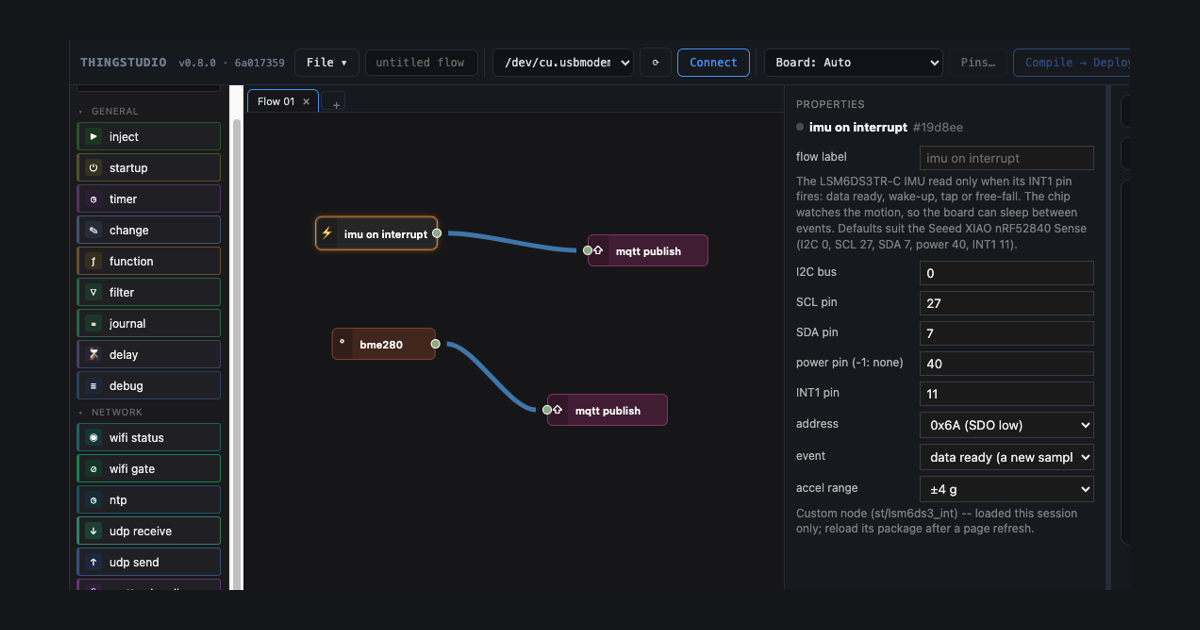
ThingStudio is a new open-source, Apache 2.0 beta tool that brings Node-RED-style flow programming to microcontrollers including ESP32, Raspberry Pi Pico, nRF52840, and STM32 boards. It compiles visual flows to MicroPython so the board runs them independently.
Comments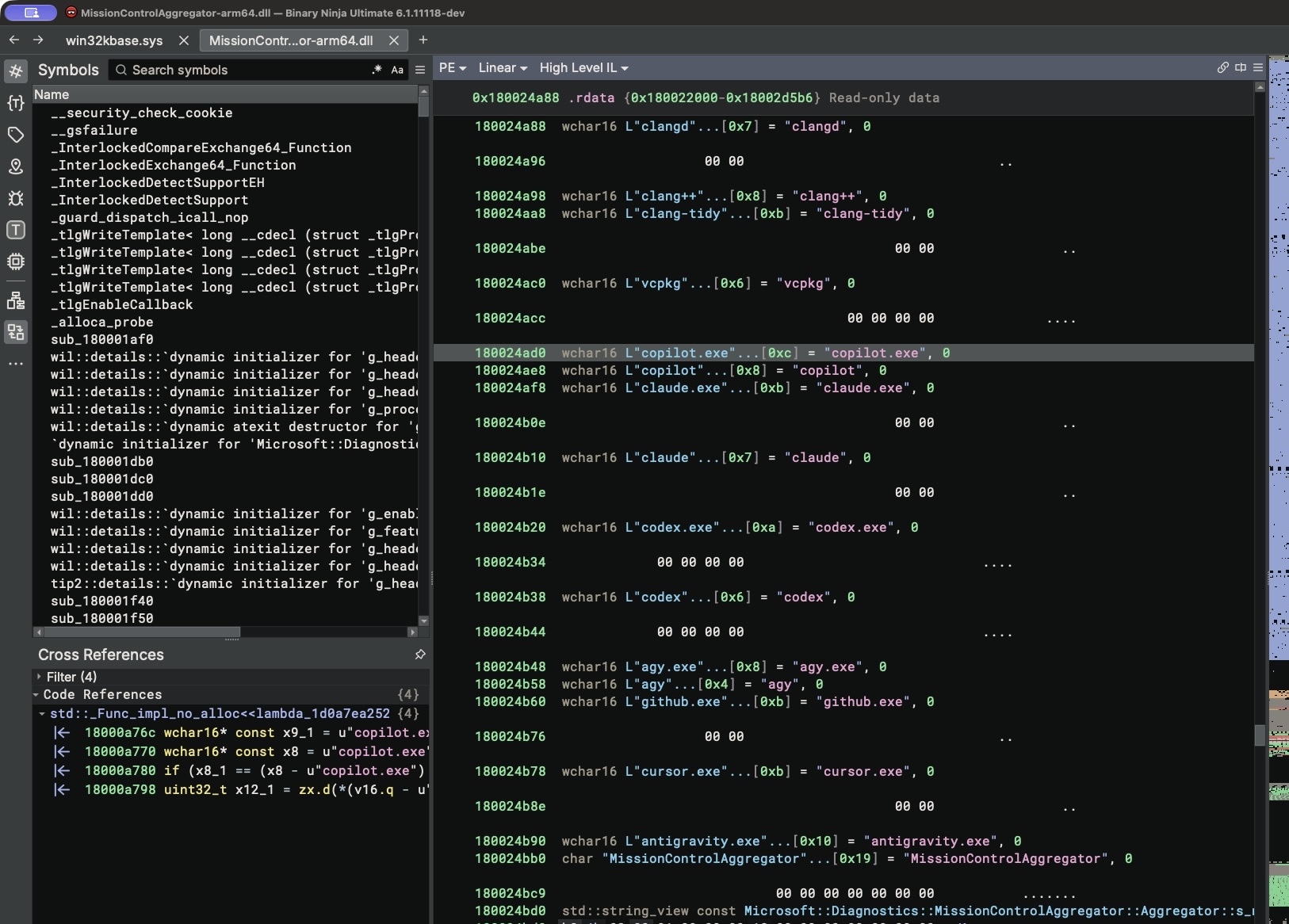
Reverse engineering of Windows 11’s MissionControlAggregator shows that a diagnostic ETW report includes usage bits for coding agents and developer tools. The finding indicates Windows 11 can collect data on which development tools and AI coding agents are in use.
CommentsParcel is a new desktop mail client for Linux built with Zig. Its repository is hosted by rockorager.dev on Tangled.
Comments
A universal XSS vulnerability in uBlock Origin on Firefox can be triggered through the extension’s element picker, potentially enabling cross-origin script execution after a single click. The issue is described as a one-click UXSS driven by website interaction with the picker.
Comments
The piece revisits laetrile, an apricot-pit cancer remedy that doctors rejected but that became a public sensation in 1977 amid hype, desperation, and distrust of the medical establishment. It traces the aftermath as a cautionary tale about miracle cures, media amplification, and health misinformation.
Comments
Simple 8085 Computer
2026-11-16A Hackster.io project showcases a simple 8-bit computer built around the 8085 processor, running at 4.9 MHz with 8 KB each of ROM and RAM. It includes an onboard monitor program and tiny BASIC, plus one I/O port for interfacing.
Comments
The U.S. is expected to lose its measles elimination status Tuesday as the death toll reaches 10, international authorities will announce. The outbreak has intensified criticism that officials are now “comfortable” with children dying of measles.
Comments
A job seeker who posted in a “Who wants to be hired?” thread was targeted by a fake recruiter with a RAT and infostealer. The attack used a VS Code extension that showed one script while running another, and the malware looked up its server via Ethereum transactions. The report analyzes the malware without executing any of it.
CommentsI Can't Believe It Can Sort
2026-11-16A reader discussion revisits the counterintuitive “I Can’t Believe It Can Sort” algorithm, which appears flawed but is proven to sort correctly despite unnecessary pairwise comparisons and Θ(n²) runtime in all cases. Commenters note it is impractical, unstable, and offers little beyond simplicity, while linking formal proofs and SPARK verification efforts. The thread also touches on toy algorithms like sleep sort as fun but unusable curiosities.
CommentsThis piece examines how coffeehouses served as informal social hubs where ideas could be shared and debated, helping foster the culture that supported the rise of science. It suggests these gathering spaces played a role in encouraging collaboration and intellectual exchange behind scientific advancement.
Comments
Giant roadside attractions have helped put hundreds of communities on the map, but many now face mounting costs and an uncertain future. As their novelty fades, towns must decide whether the landmarks are worth maintaining.
Comments
1900s How do you Wash a Kimono?
2026-11-16A historical clip from the 1900s shows three Japanese women in kimono doing laundry, with one washing clothes in a wooden tub while the other two spread separated kimono pieces on wooden boards. The scene illustrates the traditional method for washing a kimono.
Comments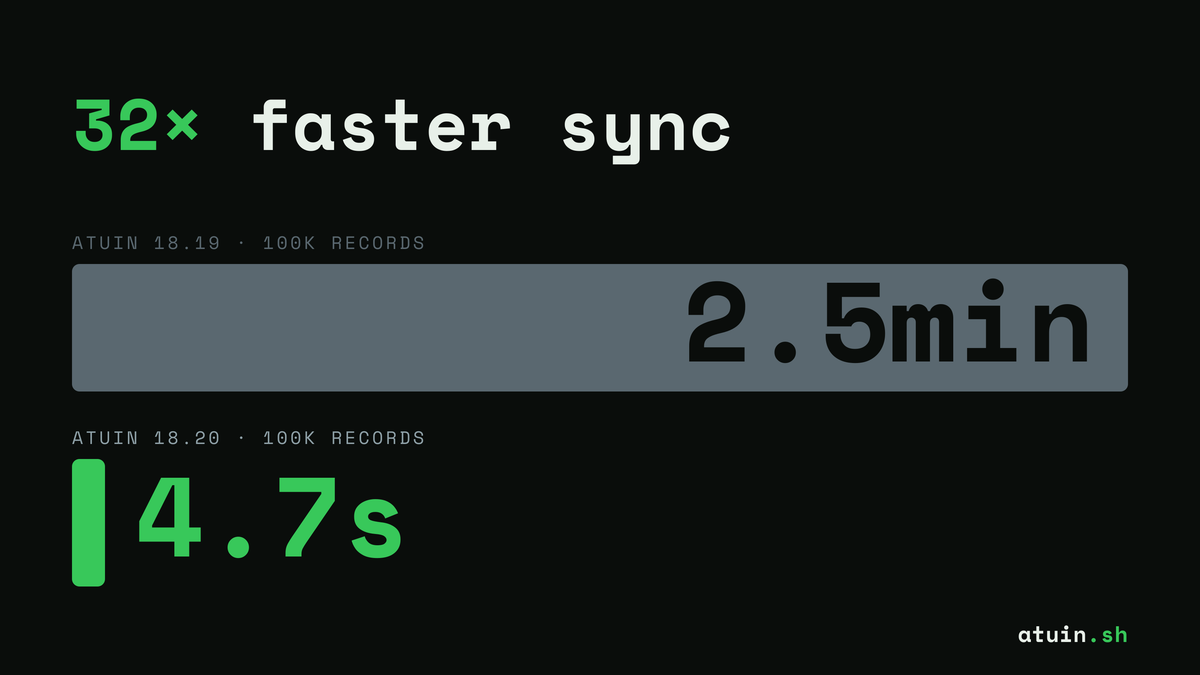
Atuin has made its sync process 32x faster by introducing packfiles. The update allows many thousands of records to sync in single-digit seconds.
Comments
OpenAI has begun the first phase of embedded assessments with Apollo Research, METR, Transluce, and Goodfire. The outside partners will independently evaluate model alignment, safeguards, and monitoring systems.
Comments
Solar grazing is expanding nationwide, and new research aims to help sheep farmers improve profitability. The work also examines how sheep density in solar array fields affects beneficial insects.
CommentsJiff 1.0: A datetime library for Rust
2026-11-16Jiff 1.0 has launched as a new datetime library for Rust. Readers praised it as another high-quality release from burntsushi and expressed hope that the wider ecosystem will adopt it over chrono and similar libraries. Some predict Jiff will become the default datetime library for many Rust developers and LLMs in the coming years.
CommentsArtificial Intelligence for the Z80
2026-11-16A new guide aims to teach artificial intelligence from scratch using BASIC on 8-bit Z80 computers. It offers a practical walkthrough of algorithms, data, and neural networks, showing how AI concepts can be implemented on retro hardware.
Comments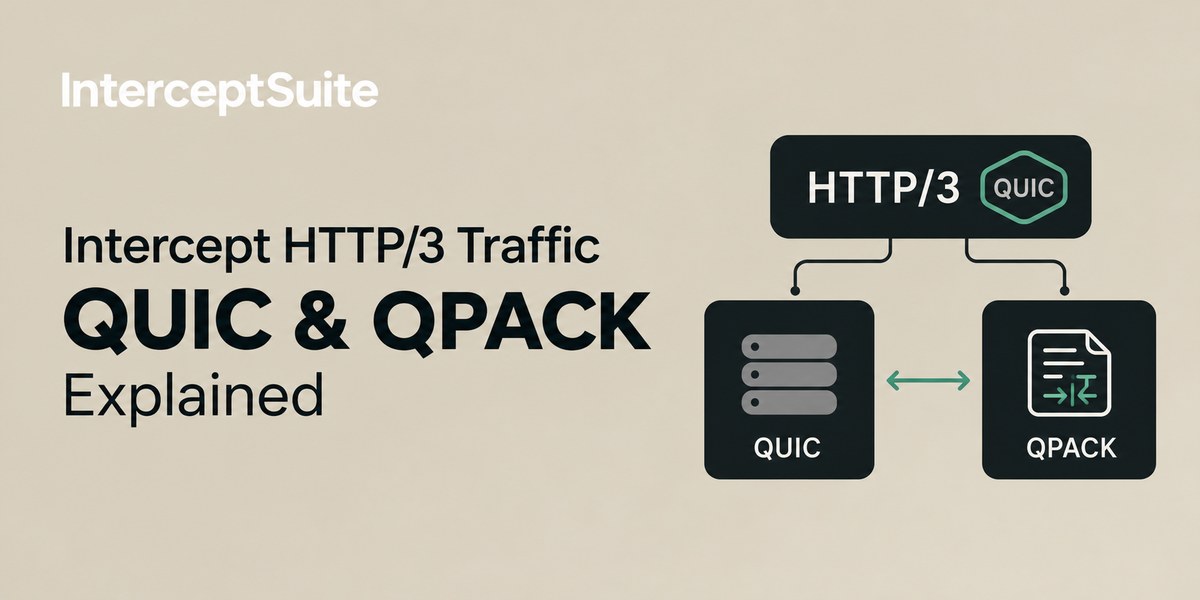
A new guide explains how to intercept and edit HTTP/3 traffic, covering what a proxy can see in QUIC streams and how QPACK obscures headers. It also walks through editing and replaying requests, with techniques tested in a real lab.
CommentsA new GitHub project provides reproducible proofs for the Septopert, described as the smallest possible nopert polyhedron. The tom7/noperts repository invites contributions and aims to make these proofs reproducible.
Comments
Exact Gradients Through a BRep Kernel
2026-11-16vcad has demonstrated exact gradients of CAD parameters, including fillet radii, through its BRep kernel by freezing the tessellation topology and differentiating node positions. The approach supports second-order derivatives, a transposed pass, and a rigid-body adjoint with contact, and was validated against finite differences of fresh rebuilds. The checks also measured the polygonization gap and uncovered two seam errors.
Comments
ParadeDB is demonstrating how Postgres users can keep normalized schemas while still accelerating search and aggregate joins, using DataFusion, Rank Joins, co-partitioning, and tuple tagging. The approach aims to remove the need to denormalize data just to support fast search workloads.
CommentsFormal Verification Is Not Verifiable
2026-11-16The article questions the promise of formal verification, arguing that verification claims are themselves difficult to verify and often depend on human assumptions, specifications, and tools. A reader discussion invoked Dijkstra’s call to replace “bug” with “error,” emphasizing programmer accountability over the idea that defects sneak in maliciously. The exchange highlights that rigorous software correctness requires clear language and human responsibility as much as formal methods.
CommentsA 2014 experiment implemented a TCP stack in Python to explore the protocol’s internals and the challenges of low-level networking in a high-level language. The takeaway was that Python makes TCP concepts more approachable for learning and prototyping, but its performance overhead makes it impractical for production networking.
Comments
The Lasting Influence of John Berger
2026-11-16Merve Emre reviews Tom Overton’s biography John Berger: From Life, surveying the life and wide-ranging output of the Marxist art critic and novelist best known for Ways of Seeing. The piece examines Berger’s eclectic career and his lasting influence on art criticism and fiction.
Comments
Microsoft attributed a major email outage to a software defect introduced by a July fix. Engineers ultimately had to patch the patch rather than roll back the change to restore service.
Comments