YC Demo Day News
SubmitDemo Day is the moment each Y Combinator batch presents its startups to investors, and this section gathers reporting around it. Expect stories on notable pitches, standout companies, funding momentum, and the trends that emerge when a new cohort of founders steps on stage.
Typical coverage includes batch recaps, lists of the most talked-about companies, and interviews with founders fresh off their presentations. You will also find pieces examining which sectors dominated a given batch, from AI infrastructure to healthcare, and how those choices reflect where early-stage attention is flowing.
Investors, founders, and industry watchers follow Demo Day because it works as an early signal of what the next wave of technology companies will look like. Ideas that debut on that stage often reappear months later as funded, growing businesses, which makes each batch worth studying closely.
2026-11-08

A developer spent two school nights wrestling with bootloops and a homemade ROM to port Android 16 to their blind mother’s keypad phone. The project ultimately left the phone still e-waste—just faster.
CommentsThe Show HN post “Vegetable Gardening for Engineers” sparked discussion of gardening as a chaotic, complex hobby that can be a refreshing escape from technical work but is often expensive and low-ROI compared with store-bought produce. Commenters highlighted yearly battles with snails, aphids, mold, and birds, while some noted plants are hardier and more self-sufficient than novices assume. Hydroponics was called a different beast, and homegrown organic produce still offers taste and experiential benefits.
Comments
Top Astrophysicist Leaves U.S.
2026-11-08A top U.S. astrophysicist has left the country, a move reader discussion says Dutch media reported back in July. Commenters link the departure to a hostile environment and note a broader trend of American physical-science undergraduates going abroad for PhDs.
CommentsiSponsorBlockTV is an open-source SponsorBlock client designed for all YouTube TV clients. The GitHub project by dmunozv04 aims to bring sponsor-segment skipping to TV-based YouTube apps. It is open for development and contributions on GitHub.
CommentsPlaying with the STM32MP2
2026-11-08The discussion around STM32MP2 focuses on ST’s STM32MP257 application processors, which pair dual Cortex-A35 cores with Cortex-M33 and target Linux despite carrying the STM32 name. Readers debate the confusing product-line positioning and high $425 EV board cost, while noting interest in small MMU-equipped application processors and alternatives like PocketBeagle 2. The thread also touches on frustration with ARM’s continued dominance of older small-core designs.
CommentsHow I Fight AI Brain Fry
2026-11-08A new piece explores the “AI brain fry” that developers experience when working with terminal-based assistants like Claude Code and Codex. It shares the author’s personal tactics for managing cognitive overload and staying productive while using AI coding tools.
Comments
The Commodore PET, often regarded as the world’s first personal computer, is highlighted for its groundbreaking role in shaping modern technology. The piece explores its history and features, showing how it helped pave the way for personal computing.
CommentsWaveDudeNext 2D Wave Simulator
2026-11-08WaveDudeNext is a 2D wave simulator that commenters call really cool and useful for anyone getting into photonics, with ties to the Huygens Optics YouTube channel. Discussion also included a question about a possible 3D version, while the page itself returned a 504 Gateway Time-out.
CommentsChimera Vocal Synth
2026-11-08CHIMERA is a new physically modelled voice synthesizer that generates every sound from a simulated airway. Rather than relying on samples, it builds vocal output by directly modeling the mechanics of vocal production.
CommentsA new study has solved a 150-year-old mystery surrounding the identity of an extinct giant crane. The research clarifies the classification of this oversized bird.
CommentsAmsterdam School
2026-11-08The piece explores 20th-century architecture, from Bauhaus and Brutalism to Wright and Foster, highlighting modernist buildings and influential architects. It also traces key styles within the broader modernist movement.
CommentsThe article explores how researchers might train transformer models at quadrillion-parameter scale, focusing on the infrastructure and algorithmic challenges involved. It draws on a paper (arXiv:2610.37842) that outlines approaches for making such extreme-scale training more feasible.
CommentsA new article explains how to prove equations using diagrams, and a reader found the piece interesting while nitpicking its terminology. For a J-shaped diagram D, the reader says J is more precisely an “index category” or “scheme” than a “shape,” though such terminology is not universal.
CommentsClj.rs is a Clojure dialect implemented in Rust. The project appears to bring Clojure-style language features to a Rust-based implementation.
CommentsA developer claims to be rewriting IBM SPSS Statistics alone in 100% safe Rust, but commenters are skeptical that the project is AI-assisted and lacks a clear use case for actual SPSS users. Critics argue it risks fragmenting academic statistical tooling, conflates Rust memory safety with correctness, and raises concerns about AI-generated “slop” with no users or validation.
Comments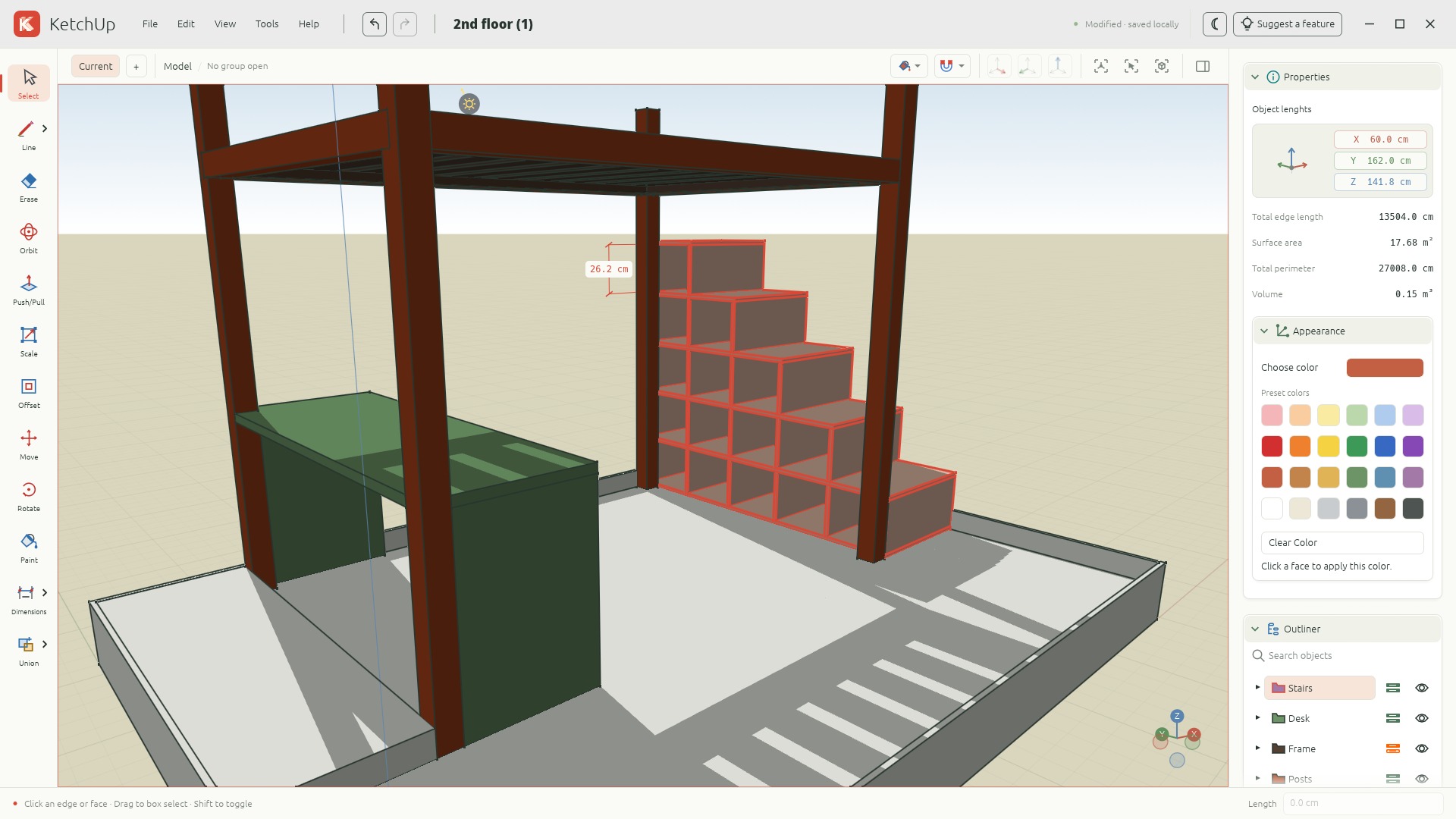
KetchUp is a free, open-source SketchUp alternative built with Rust and WebGPU for 3D modeling in woodworking and furniture design. It lets users plan shelves, tables, and cabinets with precise dimensions on Windows, macOS, Linux, or in the browser.
CommentsCancer at Sea
2026-11-08The news piece “Cancer at Sea” focuses on cancer-related issues in maritime settings, though no further description was provided. It likely examines risks, cases, or responses affecting seafarers and ocean-going operations.
Comments
A theatre has partnered with Typeland to create a custom season typeface marking the 400th anniversary of Shakespeare’s First Folio. The new typeface incorporates intricate designs drawn from the renowned collection of works.
Comments
The article revisits the Peter Principle, arguing that the real impostors aren’t high-achievers who doubt themselves but people promoted beyond their competence. It suggests organizations misdiagnose the problem by focusing on individual self-doubt instead of flawed promotion systems.
Comments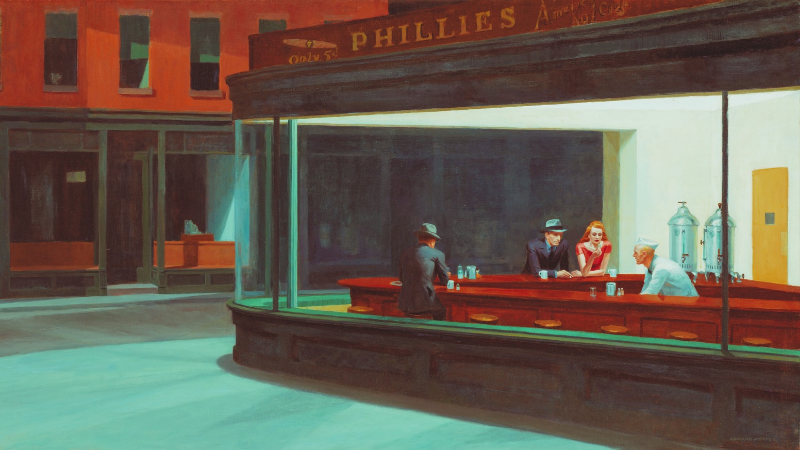
The news piece focuses on Edward Hopper’s iconic 1942 painting Nighthawks, an oil on canvas held by the Art Institute of Chicago. It highlights the work’s enduring place in American art and notes that the museum acquired it through its Friends of American Art fund.
CommentsA recent revival of interest in 1970s and 1980s 8-bit microcomputers has brought attention back to Z80-based systems and CP/M. This article explains how to get started with CP/M using an emulator on Linux and play Zork 1.
CommentsThe author advocates “development-driven specs” over spec-driven development, treating specifications as artifacts that evolve alongside implementation. The piece is tied to waywardgeek/ensemble, where an AI coding agent builds a book and then helps produce the next edition.
CommentsConsumer brain-wave headsets are raising privacy concerns as companies compete to collect and use neural data. The article, originally titled “The scramble for your brain data,” examines how this emerging market could threaten users’ privacy. It highlights the need for safeguards around sensitive brain data.
CommentsThis piece explores Kirlian photography and how enthusiasts can build their own equipment to capture the technique’s distinctive images. It likely covers the necessary components and practical steps for setting up a DIY system.
Comments
Archaeologists have uncovered the earliest known evidence of cannabis use for psychoactive purposes, dating back nearly 3,000 years, in a tomb in Siberia. The finding, based on a new study, pushes back the timeline for intentional cannabis consumption.
CommentsWriting as a Thinking Tool
2026-11-08A personal essay examines writing as a tool for thinking and comprehension. The author reflects on struggling to read long passages in middle school and finding that entire pages failed to register, suggesting writing can help readers engage with and retain information.
CommentsThe nexus-q project presents a post-quantum cryptographic security engine for protecting data, keys, and identities, with Rust APIs designed around KEM, AEAD, and key derivation workflows. Its focus is on structuring cryptographic interfaces that support secure post-quantum operations.
CommentsSafeScript is a new Show HN project offering a safe subset of JavaScript for executing untrusted code. It is designed to be embedded in many environments while providing safety guarantees.
CommentsMAPLE (Manifold-Activated Pruning of Latent Experts) is a new pruning technique for sub-2-BPW MoE LLMs. Its demo claims it can run Gemma 4 26B at 45 tokens per second on a 6GB GPU.
Comments
Here Be Monsters
2026-11-08The piece reflects on the spread of “monster” rhetoric in 2025 politics, especially President Trump’s use of the term against immigrants and opponents’ retaliatory use of it. It examines how such dehumanizing language shapes public discourse and political conflict.
Comments