YC Demo Day News
SubmitDemo Day is the moment each Y Combinator batch presents its startups to investors, and this section gathers reporting around it. Expect stories on notable pitches, standout companies, funding momentum, and the trends that emerge when a new cohort of founders steps on stage.
Typical coverage includes batch recaps, lists of the most talked-about companies, and interviews with founders fresh off their presentations. You will also find pieces examining which sectors dominated a given batch, from AI infrastructure to healthcare, and how those choices reflect where early-stage attention is flowing.
Investors, founders, and industry watchers follow Demo Day because it works as an early signal of what the next wave of technology companies will look like. Ideas that debut on that stage often reappear months later as funded, growing businesses, which makes each batch worth studying closely.
2026-10-31
I post trained a model on Demoscenes
2026-10-31A new post explores training a model on demoscenes, examining the grammar of the demoscene form and its creative constraints. It also considers how unfinished code can open up new possibilities.
Comments
Hackers hijacked an Egyptian highway billboard and screens in Malaysia to display pornography, telling The Cairo Report they exploited LED display software in Egypt and abroad. The incident is raising questions about the Giza billboard’s intelligence-linked operator.
Comments

Anthropic’s IPO filing rattled tech stocks by promising a trillion-dollar windfall for Google and Amazon, even though both are ostensibly competitors. The piece argues this only makes sense if Anthropic is really a bundle of flailing monopolies wrapped in one company.
Comments
The article explains that I/O read and write operations are less symmetric than programmers often assume, using POSIX read(2) and write(2) as examples. It highlights the semantic and behavioral differences between the two syscalls that matter in practice.
Comments
William Nordhaus has died
2026-10-31William Nordhaus, a Sterling Professor of Economics and 2018 Nobel laureate, died Oct. 30 at age 85. He won the Nobel Prize for integrating climate change into long-run macroeconomic analysis.
Comments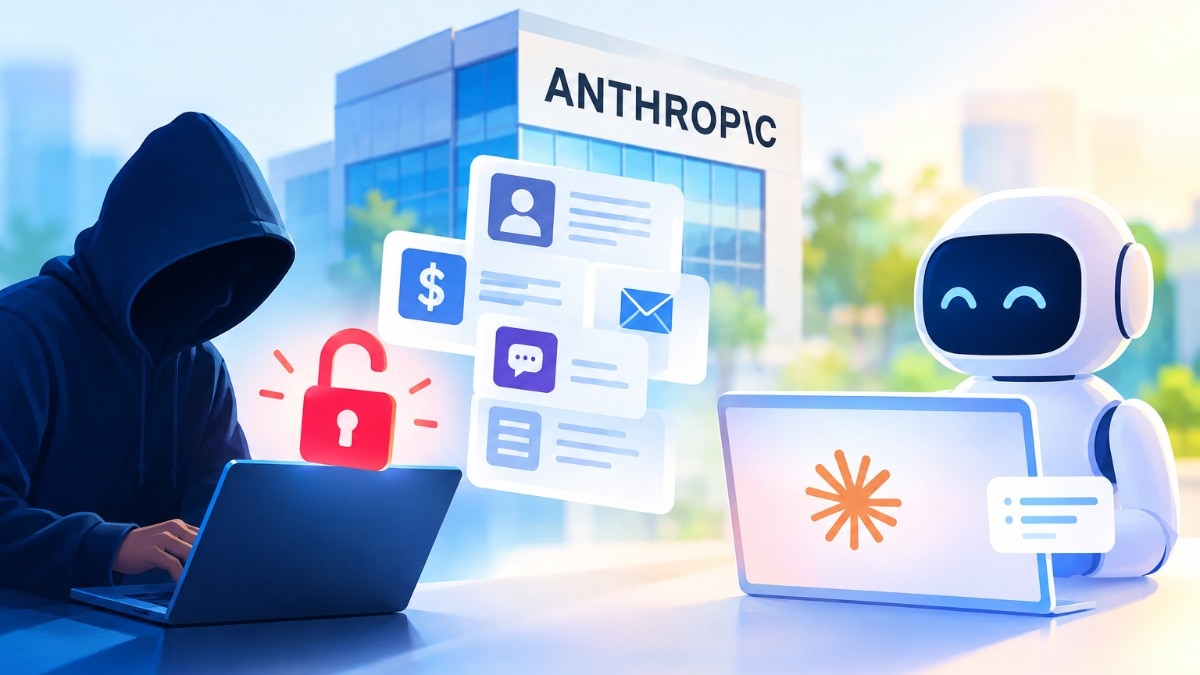
An AI startup hacked Anthropic within 12 hours, gaining access to employee details and internal messages. The breach exposed both personnel information and private company communications.
Comments
The article explores the challenge of finding and removing "zombie accounts" in Active Directory, noting they are hard to identify and eliminate. It recounts hands-on methods the author has used across different systems to track down and cull these stale accounts.
CommentsIt's the Memory Latency, Stupid
2026-10-31The piece explains that a database CPU at 100% may be stalled on memory access rather than doing useful work, making cache behavior and latency central to performance. It examines how radix partitioning can speed up GROUP BY by improving memory access patterns and reducing stalls.
CommentsA tech enthusiast documented swapping a Noctua fan in a Calnex Rb/GPS frequency reference running in their Atomic Clock Tower. After removing the Loctite-secured top cover with a Torx T10, they found a simple, serviceable interior built around a SpectraTime GRClok-1500 with integrated timing-grade GPS and stabilized 10 MHz output.
CommentsBrief History of PDP Computers
2026-10-31A retrospective on DEC’s PDP line examines how these minicomputers carved out a cheaper, more accessible niche than batch-oriented mainframes. Readers recall programming on PDP-10s and note that the “Programmable Data Processor” name may have helped DEC sidestep procurement rules that treated “computers” as high-scrutiny mainframes. The discussion also highlights preservation work, including browser-based PDP-7 emulators running early UNIX, PIXIE CAD software, games, and newly built Forth systems.
CommentsReaders are discussing inconsistent power-button shutdown times across PCs, noting that some systems power off quickly while Lenovo laptops can require a much longer press. The thread suggests Microsoft and hardware manufacturers may not have aligned on the feature, with one user planning to time the hold on their own device.
Comments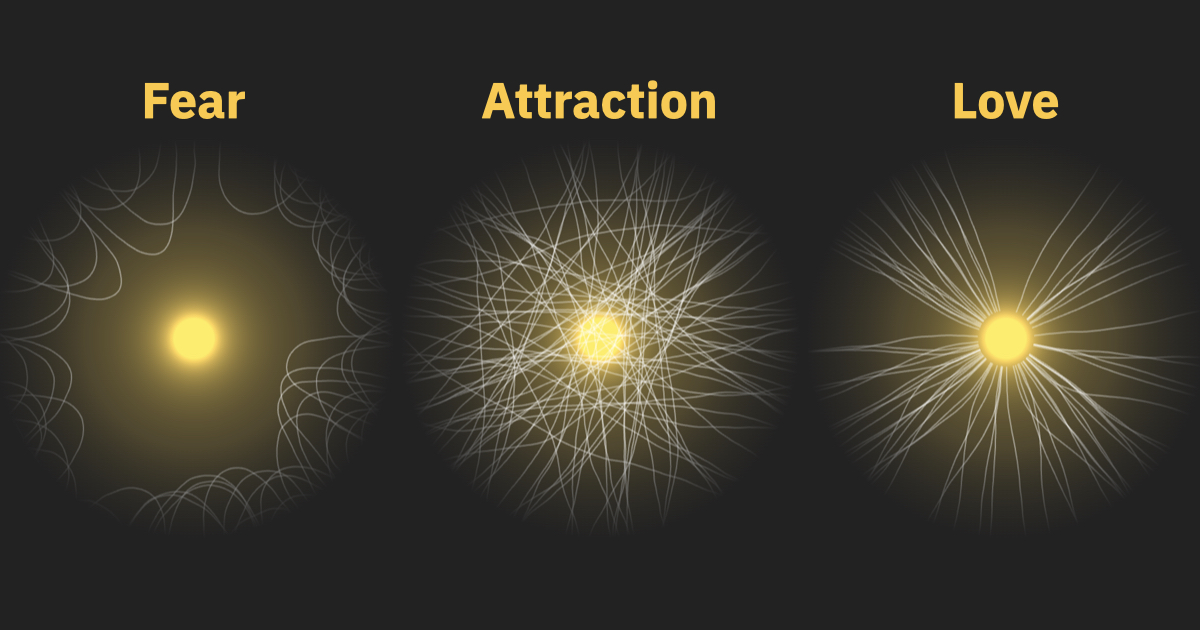
Simple circuits can exhibit surprisingly complex behaviors, according to a new report. The finding suggests rich dynamics may emerge from minimal electronic designs, with potential implications for robotics and computing.
CommentsJepsen: ParticleDB 1.1.4
2026-10-31Jepsen’s ParticleDB 1.1.4 report drew discussion over ParticleDB’s home-page claim that it was “formally proven” with a TLA+ proof, with readers joking it may have meant “formerly.” The linked GitHub repository was initially returning 404 and confirmed to still be private, though ParticleDB said it hoped to resolve that shortly.
Comments
Voyager 1 is nearing the milestone of being one light-day away from Earth, a measure of distance rather than time. The achievement highlights just how extraordinarily far the spacecraft has traveled.
CommentsConfigure a UPS on Linux with NUT
2026-10-31This guide explains how to install and configure Network UPS Tools (NUT) on Linux to detect a UPS and load the correct driver. It also covers setting up automatic safe shutdown when the battery runs low.
CommentsOqtaDrive marks five years since its first alpha release, having grown from a shelved hobby project into an Arduino Nano-based emulator of eight Sinclair Microdrives for the ZX Spectrum with Interface 1 and the QL. The project has shipped 34 releases over that period, and its creator is now looking back at its evolution.
CommentsDouble Buffering with Cloudflare Queues
2026-10-31The article presents a stateless double-buffering pattern using Cloudflare Queues to batch edge telemetry and drive Cloudflare write costs to zero by alternating even and odd queues by hour. Producers send to the queue matching the current hour’s parity, while consumers read from the opposite queue. Readers call the pattern clever but flag time-related assumptions and somewhat ugly implementation code.
CommentsCVE-2026-98432 is a CVSS 9.8 remote use-after-free vulnerability in Linux’s IPv4 TCP handshake that was fixed upstream on October 15. Ubuntu and RHEL have not yet shipped a patched kernel, leaving affected systems exposed until vendor updates arrive.
Comments
Distributed Proofreaders
2026-10-31Distributed Proofreaders is a web-based platform that helps convert public domain books into e-books. It divides the work into individual pages so many volunteers can proofread a book simultaneously.
Comments
Keeping the Bonfires Lit
2026-10-31November traditions have long centered on fire, feasting, and remembering the dead, even as the festivities take new forms. The piece explores how these customs persist and adapt over time.
Comments
Rhind Mathematical Papyrus
2026-10-31A reader discussion suggests the Rhind Mathematical Papyrus may be less a grand treatise than a student’s notebook of applied exercises completed under a teacher’s direction. Despite the scribe’s grandiose introduction about “accurate reckoning” and “all secrets,” the content raises questions about the original text’s actual circumstances.
Comments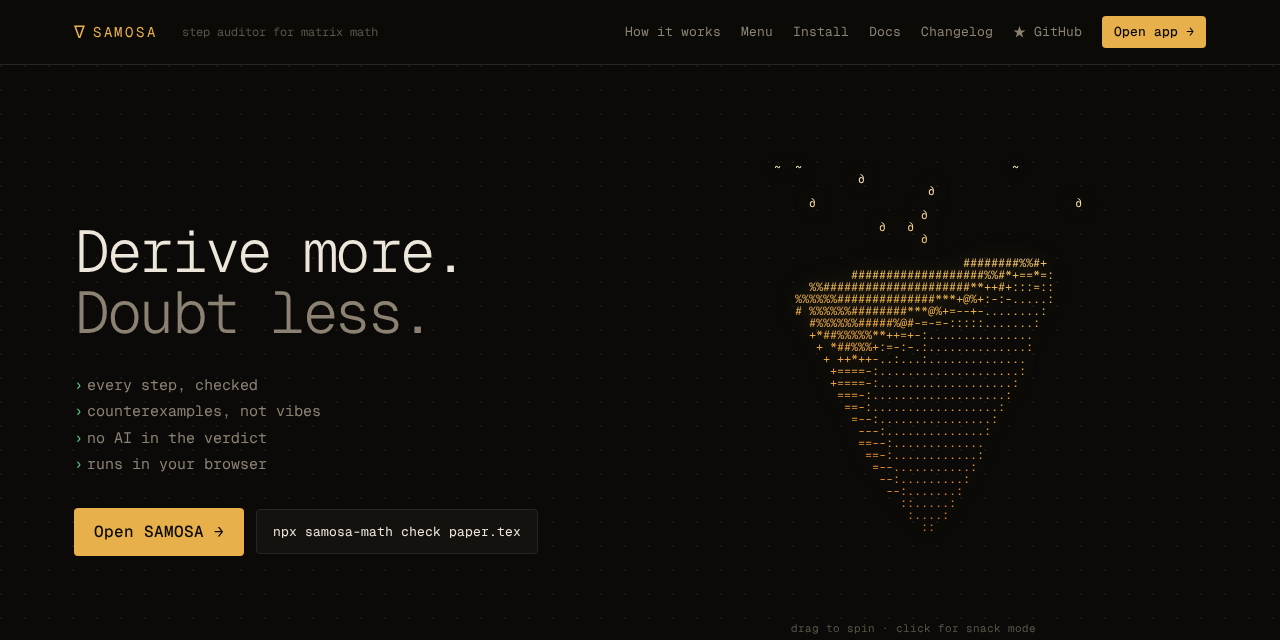
Show HN introduces Samosa, a linter that verifies every step of matrix derivations exactly over finite fields. It offers a browser-based 2x2 counterexample and fix, and its verdicts do not rely on AI.
Comments
The 1607 Bristol Channel flood was one of Britain’s worst natural disasters and was widely seen as a divine warning that people had strayed from God. Erik Crnkovich examines how miraculous weather and the early modern printing industry fed a growing appetite for the occult, exotic, and odd.
CommentsEnlightenment 0.28 has been released with a range of improvements. The update follows 0.27, which arrived at the beginning of 2025, after the project fell off its roughly 12-month release cadence.
CommentsA developer has released bootgpt, a Show HN project that fits a language model into a boot sector. The GitHub project explores running a minimal language model directly from boot code, before any operating system loads.
Comments
University of Sheffield researchers have re-created the 1,600-year-old glass recipe behind the famed Lycurgus Cup, known for its unusual optical effects. Their new sculpture reproduces those color-changing properties using the ancient technique.
CommentsThe article explains why Python’s None is often an inadequate way to represent absence and how custom sentinel values can better fill that role. It also covers how PEP 661 makes sentinels first-class citizens in Python 3.15.
CommentsTrapped in the Technologist Factory
2026-10-31A new piece examines how the tech industry’s assembly-line approach to producing technologists can leave workers feeling trapped in narrow roles and rigid career paths. It questions whether the factory model of churning out technical talent truly serves individuals or mainly employers.
CommentsGhostman is a fast, keyboard-driven TUI API client and webhook inspector. It runs 100% locally with no cloud dependency or Electron, aiming for a lightweight, local-first workflow.
CommentsA news piece examines longitudinal changes in wearable-captured physiology before sudden cardiac death. Reader discussion questions the findings because they appear to be based on a single case (N = 1), limiting how broadly the results can be generalized.
Comments