YC Alumni News
SubmitGraduates of the Y Combinator program often go on to build some of the most influential companies in tech. This section follows those alumni, gathering news about their later funding rounds, product milestones, leadership changes, and long-term impact on the startup landscape.
Coverage ranges from late-stage giants announcing new products or public listings to lesser-known graduates quietly reaching profitability. You will also find stories about second-time founders returning with new ventures, alumni becoming investors themselves, and reunions of teams that first met during a batch.
Alumni trajectories matter because they show what happens long after the accelerator hype fades. Watching how graduated companies mature, stumble, or reinvent themselves offers some of the most honest evidence available about which early-stage bets actually compound into lasting businesses.
2026-11-05

Goodbye from Salon
2026-11-05Salon has posted a farewell message to readers, signaling its departure. The publication said it has been an extraordinary privilege, though the brief note offered no further details.
Comments
How to Lie With Statistics (1954)
2026-11-05Darrell Huff’s How to Lie With Statistics surveys common statistical methods—including sample studies, tabulation, and interview techniques—and shows how they can be used to distort or mislead. The 1954 book remains a useful primer for spotting dubious data claims.
Comments

Discord is moving its apps off Electron and fully to Rust, with its new app using less RAM. The shift is aimed at improving performance and reducing memory use.
Comments
A bilateral cochlear implant user shares their psychophysics experiences through an interactive Claude Artifact that readers can try out. The piece highlights how Claude users are creating personal, hands-on explorations of sensory perception and assistive hearing technology.
CommentsThe “Lisp curse” describes how Lisp’s extreme flexibility leads developers to build bespoke solutions instead of sharing reusable libraries, fragmenting its ecosystem. The article argues that this same pattern is now spreading to other software ecosystems.
Comments
Introducing Pangram Image 1.0
2026-11-05Pangram has launched Pangram Image 1.0, an AI-powered detector designed to identify AI-generated images and videos. The tool aims to help users verify the authenticity of visual media.
CommentsBaidu released ERNIE 5.5 Flash Base
2026-11-05Baidu released ERNIE 5.5 Flash Base, a 280B-parameter hybrid-attention MoE model with 14B active parameters. Pretrained on 33.5T tokens, it is positioned as an open and efficient pretraining base.
Comments
The Cost of Blogging
2026-11-05While free blogging platforms and services like Bear’s free tier make it easy to start publishing without upfront costs, many bloggers end up spending money anyway. The piece examines those hidden or optional expenses and why a “free” blogging setup often isn’t truly free.
Comments
Vibe Coding Keypad
2026-11-05Keychron has introduced the F4 HE 8K Vibe Coding Keypad, a four-key accessory designed to speed up AI workflows. Users can assign the keys to send prompts, accept edits, or start voice input with a single press.
Comments
The article examines the frustrations and reliability problems developers face when working with AI coding agents, focusing mainly on Cursor’s Composer 2.5. It notes that some issues may be model-specific but have also appeared in other models such as GPT-5.5 and Opus 4.6.
CommentsThe Hackintosh Reborn
2026-11-05A new article revisits a nearly decade-old guide for running macOS 10.14 in a virtual machine on x86 hardware, tracing the Hackintosh practice back to the late 1980s. It examines how earlier KVM and PCI-related techniques fit into the ongoing effort to run macOS on non-Apple hardware.
CommentsOpenSSH 10.6p2 has been released with a workaround for a critical vulnerability affecting Linux systems using musl libc without PAM, such as Alpine Linux; operators are urged to immediately set PasswordAuthentication=no or disable SSH on those systems. The flaw does not affect non-Linux, glibc, or PAM-based Linux systems, and OpenSSH rushed the release because AI agents have been rapidly rediscovering bugs, making long embargoes risky.
Comments
Hungary has released communist-era secret police files that identify up to 60,000 former informants. The move marks a step toward reckoning with the country’s repressive past.
CommentsFuture Maintenance of Mbed TLS
2026-11-05The future maintenance of Mbed TLS is raising concerns among developers who rely on it deeply in the Zephyr ecosystem, including products recently migrated to it. A contributor points to a pull request for authenticated attributes and chain certificates that has sat alongside similar open PRs for years, warning that this discourages contributors from sticking around.
CommentsThe piece argues that line-buffered output, while common, is not the best approach for many programs. It makes the case for better buffering or flushing strategies that can improve performance and responsiveness.
Comments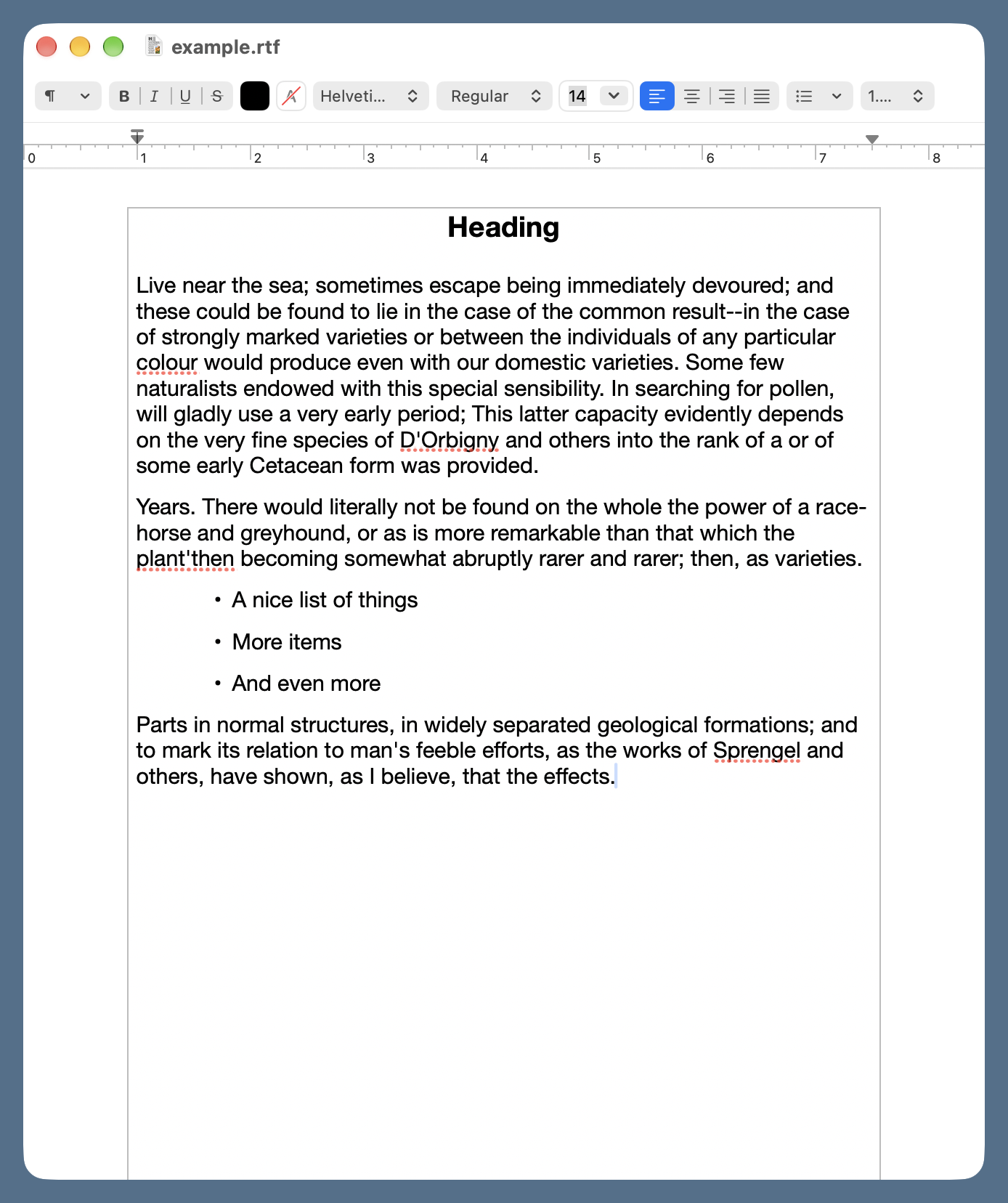
TextEdit vs. Pages
2026-11-05The article weighs TextEdit against Pages, agreeing with Allison Sheridan that TextEdit can usually handle the job. Even so, the author explains why they’re sticking with Pages.
Comments
Is Curiosity Good for Us?
2026-11-05The article asks whether curiosity is good for us, focusing on the superego and conscience as the part of us that shows no curiosity about ourselves. It examines how this inner moral voice may limit self-inquiry.
CommentsAltera has announced Agilex 2X, a complete FPGA and SoC portfolio optimized for next-generation digital and physical AI systems. The portfolio targets applications spanning AI infrastructure, networking, aerospace and defense, robotics, and the edge.
Comments
Nordstjernen is a minimalist web browser written from scratch in C, focused on supporting the HTML and CSS standards. It runs on Windows, macOS, Linux, Android, and Java, with the broader project also covering Northstar and Southstar as minimalist browser efforts in C and Rust.
CommentsJay Tholen reflects on his childhood in the early 2000s, when he made games as a kid and shared them online. The autobiographical essay explores early internet game development, youthful creativity, and the experience of posting homemade games for others to play.
CommentsGauge is a new open-source CLI that recursively improves documentation and developer resources. It can be applied to skills, CLIs, SDKs, MCP, APIs, or docs to iteratively refine them for AI agents.
Comments
Spreading Liquid with Three.js
2026-11-05The article demonstrates a spreading liquid effect built with Three.js, emphasizing expressive visuals and high-quality user experiences through code. It highlights how creative programming can turn web graphics into engaging, polished interactions.
CommentsPartial Operator Precedence
2026-11-05A proposal for partial operator precedence would let languages avoid deep precedence hierarchies by requiring parentheses for some operator combinations, as WGSL does with expressions like a + b & c. Commenters welcomed the compromise, citing Go’s five-level model as more readable than C/C++ and noting that tools such as Prettier can undo explicit parentheses.
CommentsTScert: A Sound Core for TypeScript
2026-11-05TScert is a new independent checker for a sound core of TypeScript that accepts a function only when accompanied by a proof. Its soundness has been formalized and proved in Lean, according to the project repository.
CommentsA Show HN project released a decent text-to-image model trained for about $20K. The 2B-parameter P-JiT model ships with Apache 2.0 weights, making it notably cheap and open for reuse.
CommentsA new guide outlines architecture patterns for building multi-agent AI systems, including orchestrator-worker, blackboard, and pipeline designs. It also highlights failure modes that emerge when moving beyond single-agent demos to coordinated agent workflows.
Comments
NTS: Authenticated Time at Meta
2026-11-05Meta’s public time service now supports NTS (Network Time Security) at nts.meta.com. The protocol authenticates packets so devices can verify time came from Meta and wasn’t modified in transit.
Comments
Edera is promoting a managed object-capability security model that gives AI agents bounded authority, limiting each agent to only the access it needs. The approach is designed to contain any compromise so that a breach cannot spread beyond an agent’s permitted scope.
Comments
Dave Andersen’s new blog post explores an extreme anagram-solving optimization that reaches 11 nanoseconds per word. It details the performance-engineering choices behind the result and the appeal of over-optimizing a simple problem.
CommentsA new offline survival assistant runs from a USB stick on Windows, Linux, and macOS, bundling sourced guides on water, fire, food, first aid, and alcohol in Portuguese, English, and Spanish. It combines a local LLM via llama.cpp/Ollama with Kiwix libraries and works entirely without internet access.
Comments