Tech Policy News
SubmitGovernment decisions increasingly determine what technology companies can build and how they operate. This section brings together news on legislation, regulatory actions, privacy rules, AI governance, and the ongoing debates between policymakers and the tech industry.
Typical coverage includes new bills targeting online platforms, agency enforcement actions, court rulings that redraw the rules for digital markets, and international negotiations over data flows and AI standards. Lobbying battles and industry responses to proposed rules are part of the story too.
Policy now moves markets as reliably as product launches do, and a single ruling can reshape an entire business model. Executives, lawyers, investors, and engaged citizens read this section to understand where governments are steering the digital economy next.
2026-10-30

A new “Sleep” framework proposes letting LLMs accumulate short-term memories in a buffer/cache during use, then rank and consolidate the useful bits into model weights during a sleep cycle using low-rank structures and mixture-of-experts, followed by “dreaming” via synthetic routing and RL refinement. The approach is described as on-policy distillation, where an expanded student learns token-specific feedback from teacher distributions on self-sampled sequences, with discussion highlighting both its technical promise and audit/lineage challenges for tracking how and when model knowledge changes.
Comments
The piece argues that dismantling the open web will not stop malicious bots, and that policymakers should not treat anonymity as inherently wrong. It urges targeted action against bad actors rather than broad restrictions on anonymity and open internet principles.
Comments
2026-10-29

Google outlined how it determines the names of bodies of water in Google Earth, a service used by hundreds of millions of people worldwide. The post from its global public policy director explained the company’s approach to geographic naming in the mapping product.
CommentsMicroZig, a toolbox for building embedded applications in Zig, has adopted a strict no-LLM/no-AI policy. The policy is outlined in the project’s code of conduct and applies to its community and contributions.
Comments
TLP Is Not a Suggestion
2026-10-29Rushing to publish zero-day details first can leave everyone exposed, the piece argues. It stresses that vulnerability embargoes and Traffic Light Protocol (TLP) rules are essential safeguards, not optional suggestions. Respecting coordinated disclosure matters more than breaking news.
Comments2026-10-26
Reader discussions surrounding the displacement of human workers by AI highlight concerns over the loss of economic leverage and political power, rather than just wages. While some fear dystopian suppression of displaced populations, others argue that policies like universal basic income could actually foster greater civic engagement. Ultimately, the debate centers on whether AI is the true culprit behind these socioeconomic shifts or if broader policy failures and historical automation trends are to blame.
Comments2026-10-24

Google has updated its privacy policy to allow the potential use of personal data from Gmail and Google Photos for targeted advertising. This change specifically applies to users who opt into the company's personalized AI features.
Comments2026-10-23

A new arXiv paper examines how the rise of artificial intelligence is driving the privatization of open scientific knowledge and data. Researchers warn that this enclosure of the scientific commons threatens global collaboration by locking essential resources behind corporate paywalls and proprietary systems. The study highlights the urgent need for policy interventions to protect open science from AI-driven monopolization.
Comments2026-10-17

eBay is implementing new restrictions on the sale of various radio equipment across its marketplace, but has carved out a specific exemption for amateur radio gear. This policy change allows hobbyists to continue trading dedicated ham-band equipment while complying with the platform's new broader guidelines.
Comments2026-10-16

Libreboot 26.10 "Ominous Olive" has been released with major hardware compatibility improvements, including new UEFI integration and Chromebook support. Alongside these technical advancements, the project has implemented a strict anti-AI policy, with developers actively working to identify and remove AI-generated code from upstream dependencies.
CommentsWithings has introduced a new policy requiring new users to pay a $99 annual fee to sync their health data with Apple Health. Customers are criticizing the silent update as an anti-consumer move that restricts access to basic device functionality.
Comments2026-10-11

Microsoft has released version 1.0.0 of its Execution Containers to address the security risks posed by AI agents requiring broad system access. Previously, organizations faced a difficult choice between maximizing agent productivity and maintaining strict security controls. This new tool resolves the dilemma by providing a secure, isolated environment for autonomous tasks.
Comments2026-10-07

Paramount Skydance has officially completed its $111 billion merger with Warner Bros. Discovery after a last-ditch effort to block the deal failed. As a result of the massive consolidation, Paramount now fully owns Warner Bros.
CommentsResearchers have introduced UniEvo-VL, an on-policy self-distillation training recipe designed to enable multimodal models to continuously self-improve. This novel methodology allows artificial intelligence systems to autonomously refine their capabilities and enhance overall performance by learning from their own generated outputs.
Comments2026-10-06

A Texas city is demanding $2 million to release public records detailing police use of Flock surveillance technology. This exorbitant fee highlights a growing trend of municipalities inflating the cost of accessing law enforcement tracking data amid swelling public backlash.
Comments2026-10-02

ArXiv's Updated Rate Limit Policy
2026-10-02ArXiv has implemented an updated rate limit policy to manage server traffic and ensure platform stability amid rapid changes in scholarly publishing. This adjustment aims to protect the repository from excessive automated requests, safeguarding reliable access for the broader scientific community during this critical transitional period.
Comments2026-09-27
HomeBody is a new humanoid robot that integrates advanced vision-language models to autonomously explore, remember, and interact with its physical environment. By leveraging persistent spatial memory and composable skills, the system can perform tasks and adapt to new spaces without requiring environment-specific training or additional policy learning.
Comments2026-09-25
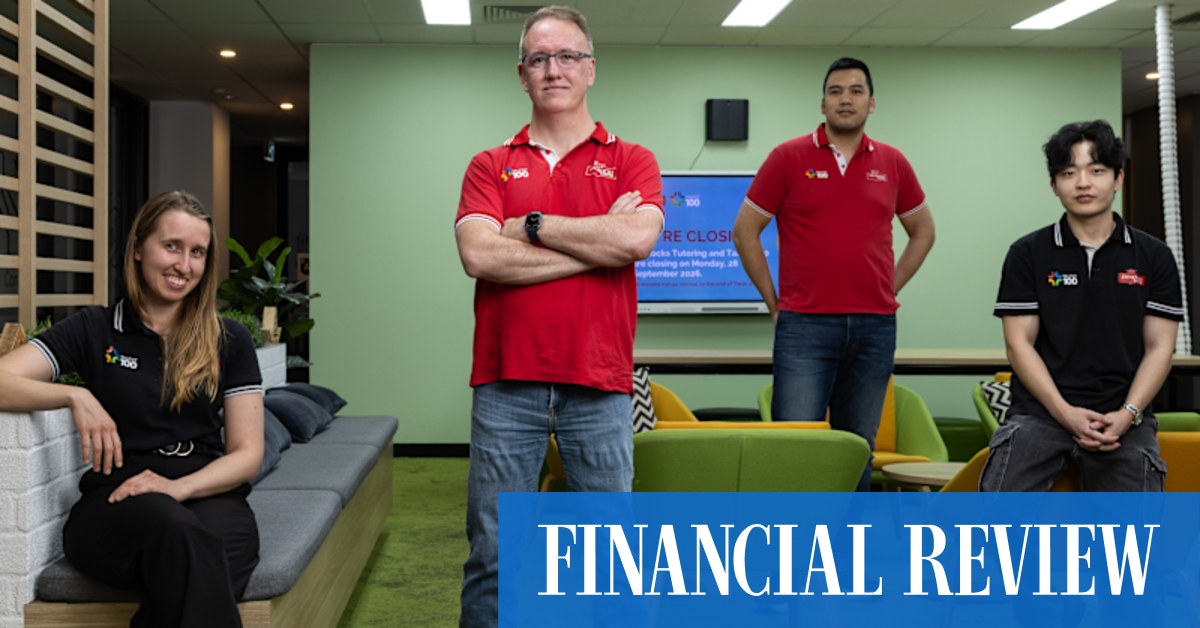
A Sydney tutoring company is shutting down at the end of the week, advising parents to save their money and use artificial intelligence instead. The business claims that AI tools have rendered traditional tutoring services effectively obsolete. This closure highlights the immediate and disruptive impact of artificial intelligence on the education sector.
Comments2026-09-23

Expanding upon recent congressional testimony, this article examines the shifting power dynamics and competitive landscape within the open-source model ecosystem. It highlights the growing influence of open models and their strategic implications for the broader technology industry and future regulatory policy.
Comments2026-09-18

CCC invites all model citizens to 40C3
2026-09-18Discussions surrounding the CCC's invitation to the 40C3 event reveal mixed experiences with attendee culture, ranging from rewarding community building to frustrating interpersonal conflicts. A major focal point of the debate is the event's strict photography policy, which has sparked a heated argument among readers regarding public photography rights, privacy expectations, and cultural attitudes toward being recorded. Ultimately, the thread highlights the ongoing friction within the hacker community as it navigates diverse social norms and expectations at large gatherings.
Comments2026-09-15
Developers reduced the CPU overhead of an eBPF security agent by approximately 90% by implementing memoization after profiling revealed that policy evaluation was the primary bottleneck. By caching the results of file open policy checks rather than just enforcing them, the team dramatically accelerated the system's overall performance.
Comments2026-09-14
A recent arXiv paper explores the potential for artificial intelligence to be exploited for malicious purposes across digital, physical, and political domains. The researchers analyze these emerging threats and propose comprehensive strategies for forecasting, preventing, and mitigating AI-driven risks. The study highlights the critical need for proactive security measures and policy interventions to address the weaponization of advanced technologies.
Comments2026-09-13
Recurrent Looped Transformer
2026-09-13Researchers have unveiled the Recurrent Looped Transformer, a novel architecture designed to enable latent reasoning with unbounded temporal depth. The system utilizes innovative model-hardware co-design and consistent current-policy reinforcement learning replay to optimize performance. This advancement offers a promising new framework for scaling the temporal capabilities of advanced AI models.
Comments2026-09-12

Anthropic is restricting access to its AI platform, Claude, exclusively to users aged 18 and older. Community discussions suggest this new age limit is a strategic maneuver to implement mandatory government ID verification under the guise of age compliance. Ultimately, the policy shift aims to significantly improve user analytics and identity tracking without directly asking for identification upfront.
Comments2026-09-04

Google's Antigravity terms of service warn that suspected third-party usage, such as utilizing OpenClaw, can result in the suspension of a user's Google account. Due to this strict policy, some users are actively advising others to avoid the service to prevent the risk of losing their account access.
Comments2026-08-27

The U.S. State Department has temporarily paused immigrant visa applications while officers undergo training on updated vetting guidelines. The exact duration of this suspension remains unknown as the agency implements the new screening procedures.
Comments2026-08-23
A retracted study modeling the economic impacts of climate change was severely skewed by flawed data showing an unrealistic 90% GDP drop across Uzbekistan. The authors cropped their charts to hide these extreme outliers, which biased their models and distorted their economic projections through the year 2100. This incident has prompted calls for stricter data integrity standards and automated anomaly detection to prevent flawed datasets from cascading into future scientific literature and policy.
Comments2026-08-22
A recent environmental analysis reveals that human industrial activities, rather than natural factors like tree emissions, are the primary drivers of current atmospheric ozone issues. The findings highlight the urgent need for advanced technological solutions and policy reforms to reduce anthropogenic emissions and mitigate further atmospheric damage.
Comments
An analysis of the recent GitHub outage reveals that a misconfigured autoscaling policy caused an Istio sidecar pod to hit its concurrency limits and fail to scale. This incident highlights the component substitution fallacy, demonstrating how swapping infrastructure components without properly adjusting underlying scaling policies can lead to severe system failures.
Comments2026-08-21

Artificial Intelligence Policy
2026-08-21Starting in Summer 2026, a new artificial intelligence policy will mandate that future lawyers use AI fluently in their legal practice. Despite this push for technological adoption, the policy requires that AI usage remain coupled with human cognitive oversight to mitigate the current limitations of the technology.
Comments