Tech Policy News Today
Policy decisions made today shape tomorrow's technology. This section follows current developments in tech policy, including proposed legislation, agency rulemaking, international agreements, and how companies and advocacy groups are responding to governments' growing role in the digital world.
On a given day the coverage might include a new AI bill introduced in a major legislature, an agency opening or closing an investigation, a court ruling on platform liability, or a trade decision affecting chips and data flows between countries.
The pace matters because policy windows open and close quickly, and companies often have only weeks to respond to consultations or comply with new rules. Government affairs teams, lawyers, journalists, and engaged readers use daily coverage to stay ahead of the calendar.
2026-09-27
HomeBody is a new humanoid robot that integrates advanced vision-language models to autonomously explore, remember, and interact with its physical environment. By leveraging persistent spatial memory and composable skills, the system can perform tasks and adapt to new spaces without requiring environment-specific training or additional policy learning.
Comments2026-09-25

A Sydney tutoring company is shutting down at the end of the week, advising parents to save their money and use artificial intelligence instead. The business claims that AI tools have rendered traditional tutoring services effectively obsolete. This closure highlights the immediate and disruptive impact of artificial intelligence on the education sector.
Comments
2026-09-23

Expanding upon recent congressional testimony, this article examines the shifting power dynamics and competitive landscape within the open-source model ecosystem. It highlights the growing influence of open models and their strategic implications for the broader technology industry and future regulatory policy.
Comments2026-09-18

CCC invites all model citizens to 40C3
2026-09-18Discussions surrounding the CCC's invitation to the 40C3 event reveal mixed experiences with attendee culture, ranging from rewarding community building to frustrating interpersonal conflicts. A major focal point of the debate is the event's strict photography policy, which has sparked a heated argument among readers regarding public photography rights, privacy expectations, and cultural attitudes toward being recorded. Ultimately, the thread highlights the ongoing friction within the hacker community as it navigates diverse social norms and expectations at large gatherings.
Comments2026-09-15
Developers reduced the CPU overhead of an eBPF security agent by approximately 90% by implementing memoization after profiling revealed that policy evaluation was the primary bottleneck. By caching the results of file open policy checks rather than just enforcing them, the team dramatically accelerated the system's overall performance.
Comments2026-09-14

A recent arXiv paper explores the potential for artificial intelligence to be exploited for malicious purposes across digital, physical, and political domains. The researchers analyze these emerging threats and propose comprehensive strategies for forecasting, preventing, and mitigating AI-driven risks. The study highlights the critical need for proactive security measures and policy interventions to address the weaponization of advanced technologies.
Comments2026-09-13
Recurrent Looped Transformer
2026-09-13Researchers have unveiled the Recurrent Looped Transformer, a novel architecture designed to enable latent reasoning with unbounded temporal depth. The system utilizes innovative model-hardware co-design and consistent current-policy reinforcement learning replay to optimize performance. This advancement offers a promising new framework for scaling the temporal capabilities of advanced AI models.
Comments2026-09-12

Anthropic is restricting access to its AI platform, Claude, exclusively to users aged 18 and older. Community discussions suggest this new age limit is a strategic maneuver to implement mandatory government ID verification under the guise of age compliance. Ultimately, the policy shift aims to significantly improve user analytics and identity tracking without directly asking for identification upfront.
Comments2026-09-04

Google's Antigravity terms of service warn that suspected third-party usage, such as utilizing OpenClaw, can result in the suspension of a user's Google account. Due to this strict policy, some users are actively advising others to avoid the service to prevent the risk of losing their account access.
Comments2026-08-27

The U.S. State Department has temporarily paused immigrant visa applications while officers undergo training on updated vetting guidelines. The exact duration of this suspension remains unknown as the agency implements the new screening procedures.
Comments2026-08-23
A retracted study modeling the economic impacts of climate change was severely skewed by flawed data showing an unrealistic 90% GDP drop across Uzbekistan. The authors cropped their charts to hide these extreme outliers, which biased their models and distorted their economic projections through the year 2100. This incident has prompted calls for stricter data integrity standards and automated anomaly detection to prevent flawed datasets from cascading into future scientific literature and policy.
Comments2026-08-22
A recent environmental analysis reveals that human industrial activities, rather than natural factors like tree emissions, are the primary drivers of current atmospheric ozone issues. The findings highlight the urgent need for advanced technological solutions and policy reforms to reduce anthropogenic emissions and mitigate further atmospheric damage.
Comments
An analysis of the recent GitHub outage reveals that a misconfigured autoscaling policy caused an Istio sidecar pod to hit its concurrency limits and fail to scale. This incident highlights the component substitution fallacy, demonstrating how swapping infrastructure components without properly adjusting underlying scaling policies can lead to severe system failures.
Comments2026-08-21

Artificial Intelligence Policy
2026-08-21Starting in Summer 2026, a new artificial intelligence policy will mandate that future lawyers use AI fluently in their legal practice. Despite this push for technological adoption, the policy requires that AI usage remain coupled with human cognitive oversight to mitigate the current limitations of the technology.
Comments2026-08-17
Federal keyword bans are forcing researchers to remove common scientific terms like "inequalities" and "diversity" from grant proposals to avoid rejection. This controversial policy has already jeopardized billions of dollars in research funding across various scientific disciplines. Critics are condemning the administration for these chaotic cuts, highlighting the irony of restricting grants while national deficit spending reaches record highs.
CommentsCloudflare is facing backlash for silently injecting its Real User Measurement analytics script into websites using its free nameserver and caching plans. Although the company states the feature provides free performance data and can be easily disabled, users argue that a proxy provider should not be modifying their site's response body. Critics also warn that Cloudflare's man-in-the-middle access to web traffic could potentially bypass security measures like Content Security Policy headers.
Comments2026-08-09

Danish high school students will now be required to orally defend their written assignments to ensure academic integrity amid the rise of AI tools. The policy takes effect immediately, though educators acknowledge that their strategies must continually evolve as artificial intelligence technology advances.
Comments2026-07-31
The GCC steering committee has officially accepted a new policy recommendation regarding AI contributions to the project. This decision establishes formal guidelines for the use of artificial intelligence tools and generated code within the development process.
Comments2026-07-30
Researchers have introduced a new benchmark to evaluate how well AI agents follow instructions within lengthy policy documents. Their findings reveal that extensive, long-context guidelines do not reliably govern agent behavior, highlighting a major challenge in controlling autonomous AI systems.
Comments2026-07-28

A single missing underscore in a computer system resulted in an innocent man being wrongfully imprisoned for 18 months. This devastating incident highlights how a minor initial typo in code or data can cascade into severe real-world consequences.
Comments2026-07-25

Nvidia, Microsoft, and Meta are urging policymakers against overregulating open-weight AI models, warning that excessive restrictions could give Chinese competitors a significant advantage. The companies argue that maintaining open development is crucial for preserving American innovation and global competitiveness. Notably, prominent AI developers OpenAI and Anthropic declined to sign the joint letter.
Comments2026-07-24
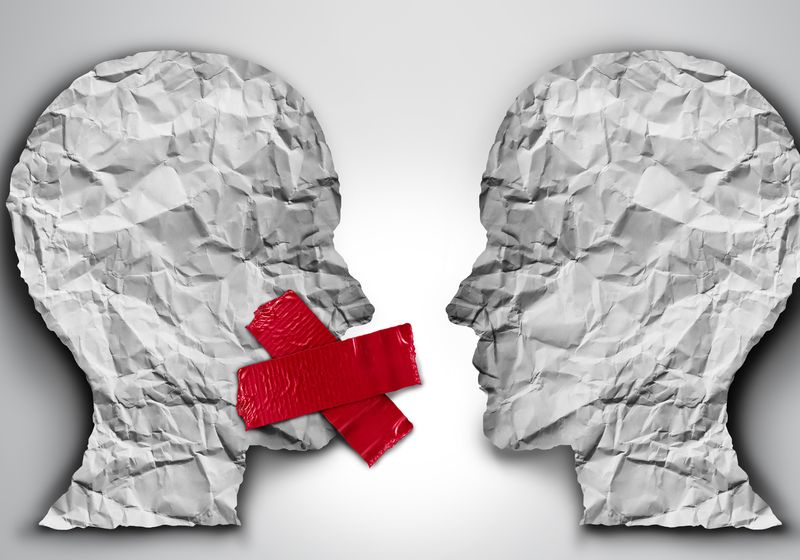
Police removed several prominent researchers from the American Diabetes Association meeting after they distributed an editorial criticizing recent policy changes to research funding. The ejection has sparked widespread concern and strong pushback from the broader scientific community regarding the suppression of academic discourse.
Comments2026-07-18

A new European Union ban on the destruction of unsold clothing and footwear has officially taken effect. Under these regulations, businesses are required to prioritize sustainability by selling excess inventory or preparing items for reuse. This policy aims to significantly reduce textile waste and promote circular practices across member states.
Comments2026-07-15

Tailscale has disclosed a security vulnerability in its SSH service where insecure argument handling permitted unauthorized root access. The security notification affects both the Tailscale client and service, and the company is directly contacting affected users in accordance with its disclosure policy.
Comments2026-07-10

A new report from the Cambridge Programme on AI Science and Policy examines how the terrorist group Boko Haram is leveraging frontier artificial intelligence. The research highlights an emerging security threat as extremist organizations increasingly gain access to advanced AI tools to enhance their operations.
Comments2026-07-01

The open-source game engine Godot has updated its contribution guidelines to strictly ban AI-generated code submissions. This policy change aims to protect maintainers from being overwhelmed by low-quality code. Ultimately, the new rules are designed to prevent the project's codebase from drowning in AI slop.
Comments
Why jet engines aren't made in China
2026-07-01China's ongoing struggles to develop advanced jet engines highlight the inherent limitations of state-directed industrial policy in highly complex technological sectors. Despite massive government investments, the extreme metallurgical precision and engineering expertise required for aerospace cannot be easily mandated. This demonstrates that cutting-edge manufacturing relies on deep, organic industrial ecosystems rather than just heavy state funding.
Comments2026-06-28
The European Union is advancing chat control legislation behind closed doors, prompting widespread concern that the policy will compromise end-to-end encryption for everyday citizens. Critics argue that forcing major messaging providers to implement message scanning will result in mass surveillance and privacy violations without effectively stopping criminals. Furthermore, users fear that upcoming EU interoperability mandates could ultimately be leveraged to enforce these surveillance backdoors across both centralized and decentralized communication platforms.
Comments2026-06-23
Researchers have unveiled VibeThinker-3B, a three-billion parameter small language model that outperforms Opus 4.5 in complex reasoning tasks. The model achieves this frontier-level performance through a novel training approach combining supervised fine-tuning with group relative policy optimization. This breakthrough highlights the growing capability of compact models to execute verifiable reasoning without relying on massive parameter counts.
Comments2026-06-19
Norway has implemented a near ban on generative AI for elementary school students aged 6 to 13, restricting its use for older teenagers to supervised settings in an effort to combat declining education scores. This policy follows a recent smartphone ban and has prompted widespread discussion about overhauling educational assessments, with many suggesting a necessary shift toward invigilated exams and project-based learning to verify true student comprehension.
Comments