Tech News Updates
The tech industry changes daily, and keeping up requires a steady stream of updates. This section gathers technology news as it develops, from early reports to the follow-ups that show how stories evolve.
Typical stories include product updates and new features, company announcements, security patches and incidents, research news, and analysis that adds context to fast-moving events.
Regular updates help readers stay current without missing important changes. Professionals, students, and technology fans follow this coverage to keep their knowledge of the industry up to date.
2026-09-09

How to build a printer
2026-09-09A new DIY project details the process of building a custom printer using electronic paper. The creator demonstrates how to leverage e-ink technology to construct a fully functional e-printer from the ground up.
Comments
A new Harvard study led by researcher Matthew Nock demonstrates that smartphone technology can predict 75 percent of suicide attempts a week in advance. The team achieved this by using mobile devices to survey high-risk adults and adolescents in real time. This breakthrough highlights the potential of mobile technology to proactively identify and prevent mental health crises.
Comments
A Topological Picture Book, Rendered
2026-09-09A new interactive web project beautifully renders topological illustrations originally hand-drawn by a former professor, earning praise from former students for capturing his classic aesthetic. While the visualizations have inspired developers to explore similar rendering techniques for arbitrary 3D models, users suggest UI improvements for better touchscreen rotation and mobile viewing.
CommentsTracing np.add, all the way down
2026-09-09A new blog post provides a deep technical dive into the NumPy codebase by tracing the execution path of the np.add function. Drawing on recent contributions to the library, the author explains how this core operation is implemented all the way down to the lowest levels of the framework.
Comments2026-09-08

A recent investigation reveals that LG Smart TVs utilize first-party automatic content recognition technology to track and collect viewing data across all inputs. This continuous data harvesting raises significant privacy concerns, potentially compromising the viewing habits of up to 216 million users worldwide.
CommentsA new interactive tool called NYC MapTap helps users learn New York City neighborhoods and subway routes. Shared on Hacker News, the project has been well received by the tech community, inspiring developers to build similar educational maps for other cities like Chicago.
CommentsOrganized by Caltech undergraduates, the Caltech Mathathon is the first hackathon dedicated to applying artificial intelligence to research-level mathematics. Participants receive $20,000 in AI credits and are evaluated on their mathematical intuition and ability to understand proofs, with chat logs required to verify that the core problem-solving work was completed during the event.
Comments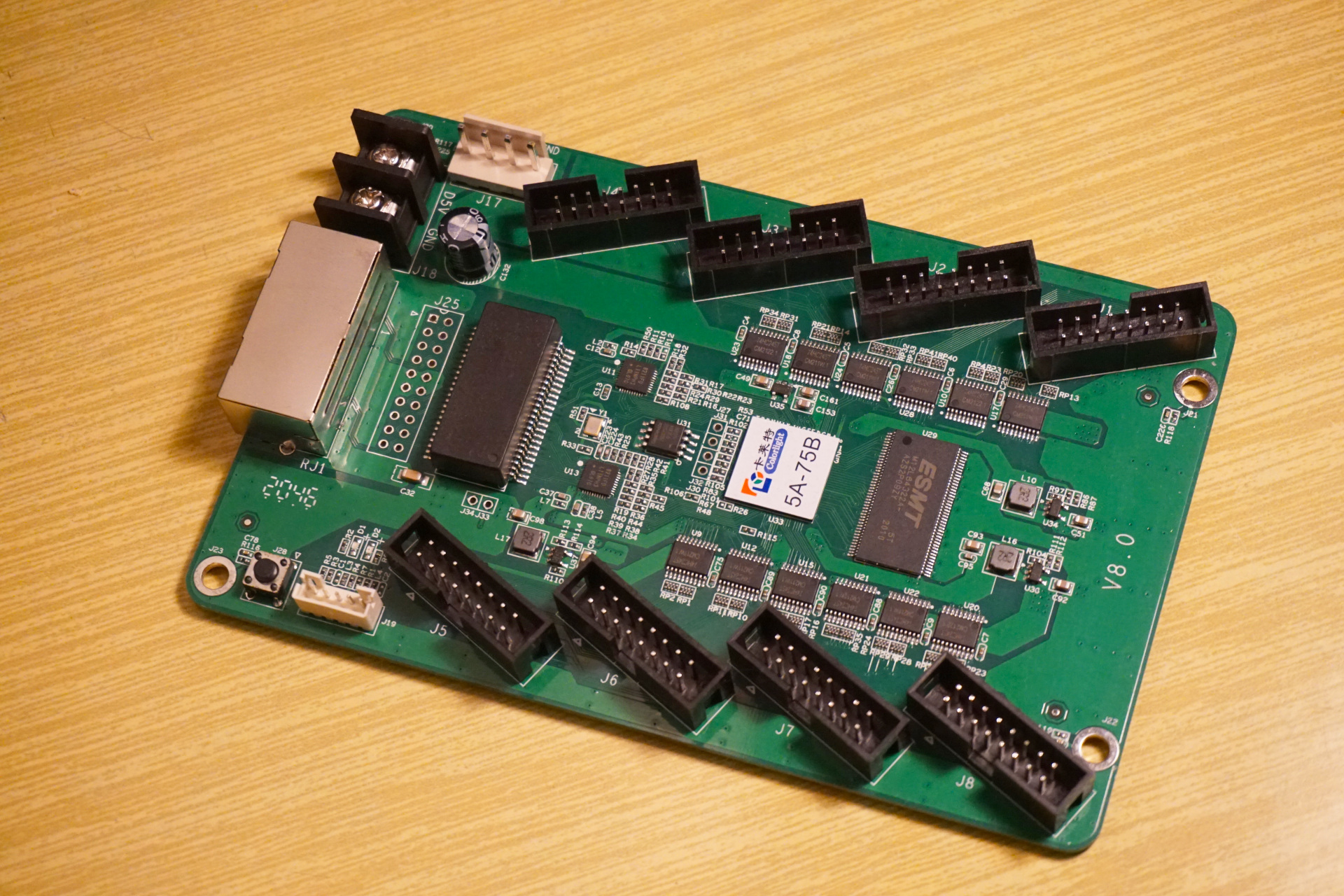
Chris Lasocki explores the Colorlight 5A-75B, a highly affordable ECP5 FPGA development board that has gained traction among hardware enthusiasts. This in-depth article examines the board's technical capabilities and highlights its potential for budget-friendly electronics projects.
CommentsSimple Is Not Small
2026-09-08A new tech article challenges the assumption that small software programs are inherently simple, arguing that compact codebases often conceal complex dependencies. Developers are urged to recognize that hidden coupling can exist in small projects and to focus on true architectural simplicity rather than just minimizing file size.
CommentsKeep Our Servers Running
2026-09-08The Internet Archive's Open Library is actively recruiting experienced technical volunteers to help optimize database performance, redesign the frontend, and migrate the backend to FastAPI. In the accompanying discussion, community members also debated the organization's controversial practices, weighing the legal risks of hosting pirated content and the pandemic-era Emergency Library against its broader archival mission.
Comments
Methods for Random Gradients (2024)
2026-09-08A newly updated 2024 guide explores various techniques and methods for generating random gradient images. The author provides a detailed overview of their personal workflows for creating these procedural graphics. This resource offers practical insights for developers looking to implement dynamic, algorithmic backgrounds in their projects.
Comments2026-09-07

After a year of overcoming technical hurdles and partially rewriting the project in Rust, the next version of Anubis will ship with WebAssembly-based proof of work checks. Administrators will be able to enable these new checks within their thresholds or bot rules to better manage system traffic.
CommentsTech community discussions highlight the cognitive risks of using large language models to author written content, emphasizing that the act of writing is crucial for structuring and refining one's own thoughts. While some see potential for AI to expand human-scaffolded outlines, critics warn that outsourcing writing exposes a lack of deep understanding and generates useless corporate documentation. Ultimately, the consensus suggests that delegating long-form writing to AI undermines the critical thinking process required to produce meaningful work.
Comments
A user recently encountered an annoying bug on YouTube and decided to use ChatGPT to investigate the issue. By leveraging the AI chatbot, they were able to successfully troubleshoot the problem and find actionable answers. This highlights the growing utility of generative AI for everyday technical troubleshooting.
Comments
An Alien Mind
2026-09-07Jakub Pachocki warns that the rapid advancement of artificial intelligence is creating an increasingly alien mind that presents significant challenges for keeping the technology aligned with human values. To address these emerging risks, he advocates for the implementation of stronger safety safeguards and enhanced international coordination.
Comments
A recent Glazer Technologies blog post details the technical process of reverse engineering the storage format for an undocumented database. This deep dive highlights how investigators can extract and analyze hidden data structures to uncover mission-critical intelligence for cybercrime cases and due-diligence workflows.
CommentsHacker News readers discussing the appeal of statistics textbooks note that traditional texts are often too dry and fail to build early intuition for complex concepts. The community suggests that a visually engaging, beginner-friendly book connected to modern technological breakthroughs would successfully make the subject accessible and interesting to a wider audience.
CommentsA Hacker News user is asking if they can publicly release reverse-engineered code used to hack a Fable smart piano. Commenters warn that publishing the software could violate the company's Terms of Service and invite DMCA takedowns or lawsuits. To mitigate these legal risks, the community suggests sharing technical details in a blog post rather than releasing the actual code.
Comments2026-09-06
The revolt of the reader
2026-09-06In his essay The revolt of the reader, author Bryan critiques the proliferation of AI-generated content and the flawed detection tools policing it. Sparked by an LLM-written guest post from the Rust Foundation, the piece argues that these technologies threaten both the decentralized nature of internet infrastructure and the human provenance of writing.
CommentsRecurseCenter.return()
2026-09-06Readers are expressing strong enthusiasm following news of the Recurse Center's return and its associated hub. The positive discussion highlights the tech community's ongoing appreciation for the initiative and its collaborative spaces.
CommentsGoogle Chrome is reportedly exempting its own websites from user site data clearing settings, sparking backlash over privacy and the company's monopolistic practices. While some users view this as a deliberate overreach by the tech giant, others point to technical reasons for the behavior. Specifically, the exception may be a design choice to prevent users from being logged out of their accounts, or a result of background processes retaining cached information.
CommentsThe latest OpenBSD Stories article explores unusual medieval devices and draws surprising parallels between historical mechanisms and modern computing hardware. This unique piece offers open-source enthusiasts a fascinating glimpse into the quirks of legacy technology and historical engineering.
Comments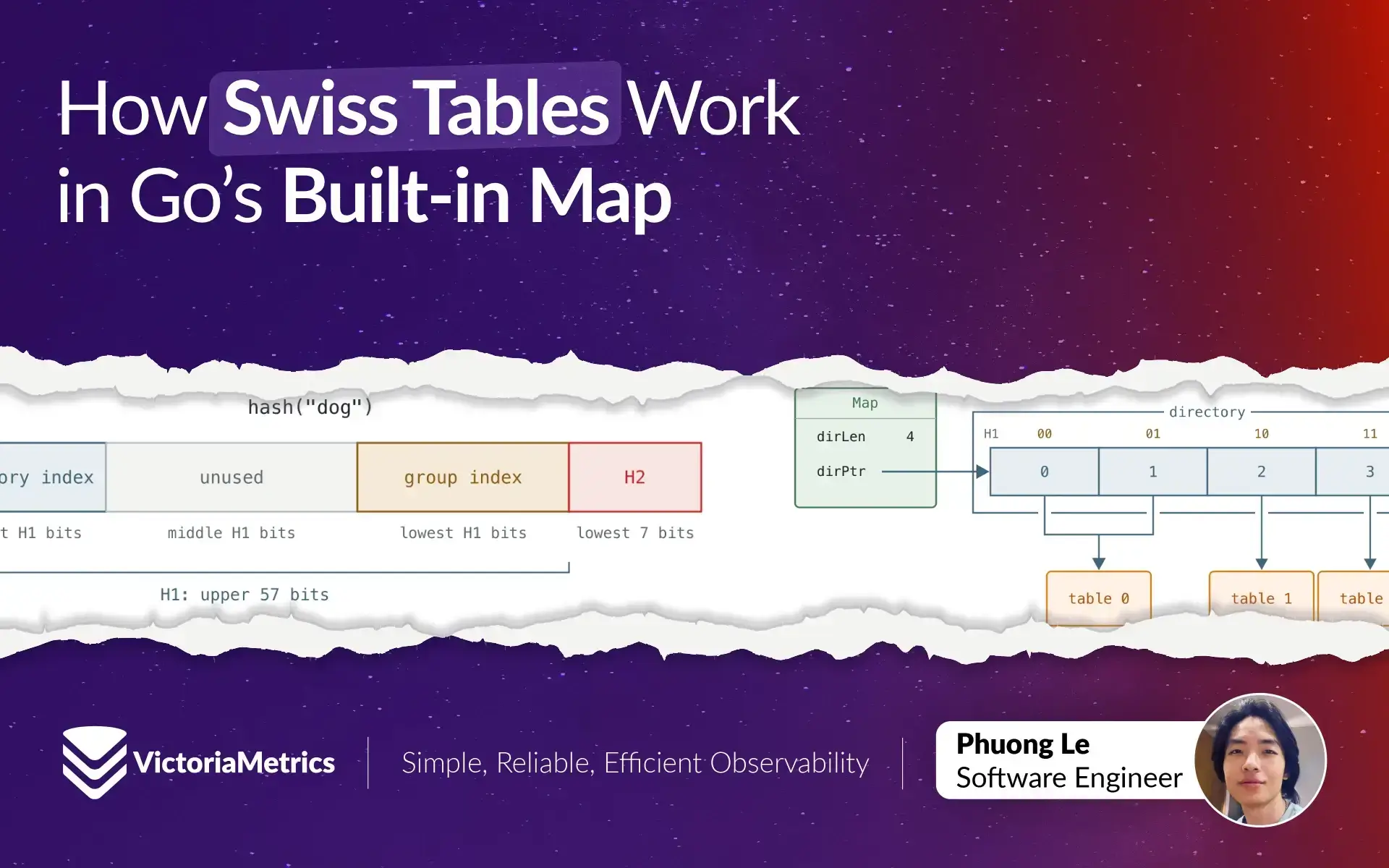
How Swiss tables work in Go built-in map
2026-09-06Go 1.24 upgrades its built-in map implementation by replacing the traditional bucket-based runtime with the highly efficient Swiss Tables algorithm. A new technical deep dive explores this architectural shift, breaking down core concepts like control bytes, hashing, probing, and table growth.
Comments
This technical deep dive visualizes how Rust's dynamic trait dispatch and virtual tables operate in memory. Through a series of hands-on coding experiments, the author explores the language's unique memory management peculiarities. Written from a C++ developer's perspective, the guide helps programmers understand the underlying mechanics of the dyn Trait syntax.
CommentsAn actively exploited remote code execution vulnerability affecting all Chromium versions has sparked debate among security researchers regarding the adequacy of Google's $1,000 bug bounty payout for critical, in-the-wild flaws. Although the vulnerability currently only escapes the JavaScript sandbox and requires chaining with a second flaw for full system compromise, critics argue that major tech companies significantly undervalue ethical disclosures compared to the lucrative exploit grey market.
Comments
Delidded Intel I9-14900KS CT Scan
2026-09-06Linus Tech Tips utilized a CT scanner to examine the internal components of a delidded Intel Core i9-14900KS processor. This non-destructive scan provides hardware enthusiasts with a rare, detailed look at the physical architecture and silicon die of Intel's flagship desktop CPU.
Comments
ISAR Aerospace is preparing for its upcoming orbital mission scheduled for September 5 to provide reliable commercial access to space. The company emphasizes that its launch services are designed to drive sustainable technological and economic progress for humanity.
Comments
The CHC5 open camera platform features a modular design that allows users to easily interchange various sensor PCBs. A recent overview compares the technical specifications of the multiple image sensors available for the system, highlighting the hardware flexibility developers have to customize their imaging setups.
Comments
Can AI design circuit boards yet?
2026-09-06OpenAI recently demonstrated its GPT-6 Astra model routing a printed circuit board. To determine if this technology is practically viable, researchers developed a new benchmark called EEBench. This framework will rigorously test whether AI-designed circuits actually function in real-world applications.
Comments
Mimic Systems spent two years promoting a bizarre Commodore 64 peripheral through a strange marketing campaign featuring a mime and poorly received advertisements. Consumers had to endure this prolonged period of nightmarish makeup and smiles before finally getting their hands on the actual product.
Comments