Tech News Today Big Tech
SubmitA handful of giant companies shape much of the technology people use every day. This section follows daily news about Big Tech, including Google, Apple, Microsoft, Amazon, Meta, and Nvidia.
Typical stories include product launches and redesigns, AI strategies, earnings, acquisitions, antitrust cases, privacy controversies, and decisions that affect developers and businesses building on their platforms.
When Big Tech changes direction, entire industries follow. Investors, developers, competitors, and everyday users follow this coverage to understand how these companies use their power.
2026-05-13

US residents can register free subdomains under their local city and state domains by coordinating with their delegated domain manager. The setup process requires using Amazon Lightsail for nameservers, submitting an interim template, and pointing DNS records to a webhost.
Comments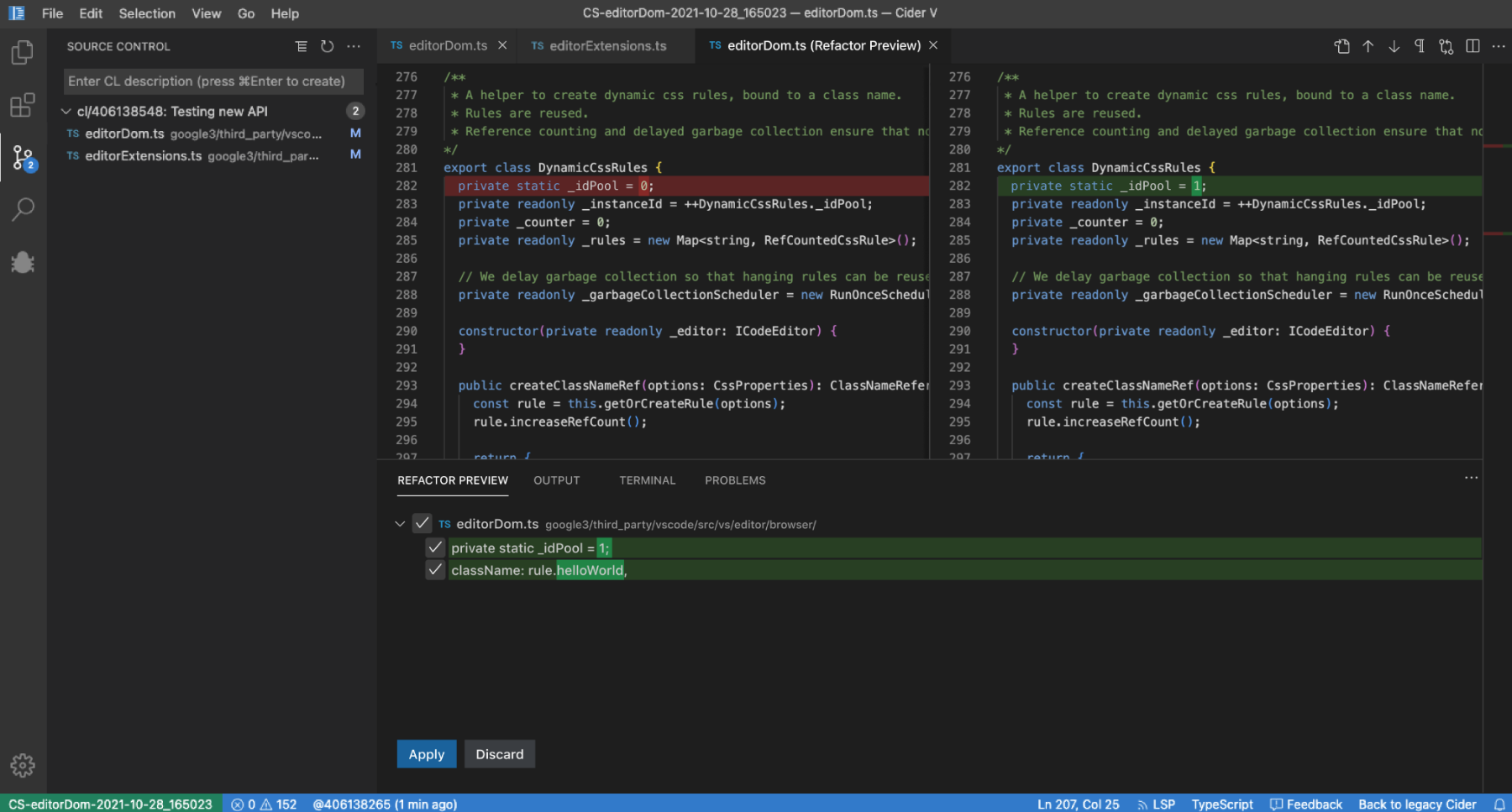
A History of IDEs at Google
2026-05-13Laurent Le Brun's blog post details the evolution of Google's internal development environments, tracing the company's shift from relying on third-party tools to building bespoke, cloud-based IDEs tailored for its massive monorepo. This overview highlights how the immense scale and complexity of Google's codebase forced the tech giant to engineer highly customized, scalable software ecosystems rather than relying on commercially available tools.
Comments
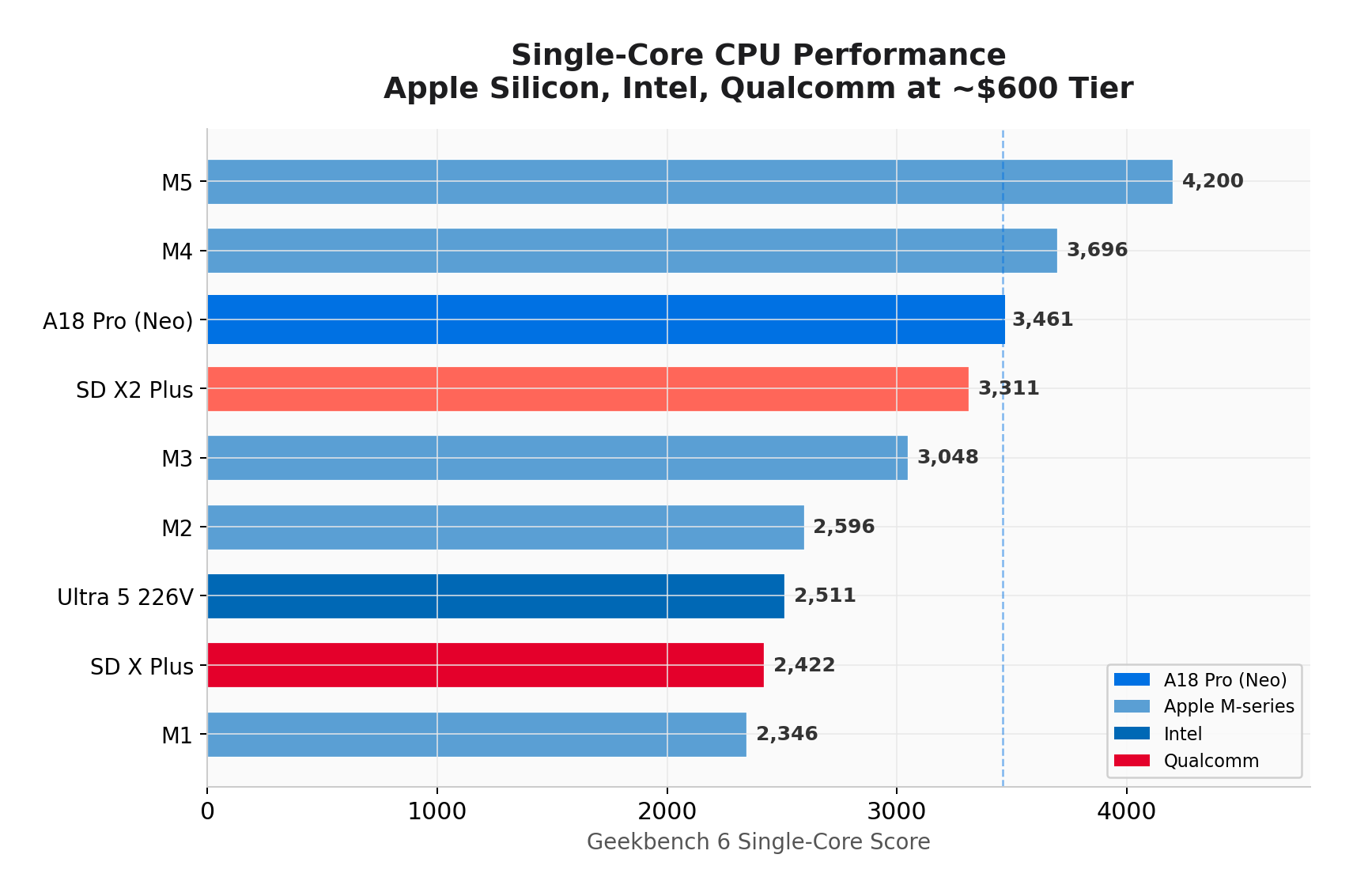
Apple's new $699 MacBook Neo utilizes the iPhone 16 Pro's A18 Pro chip to deliver CPU performance between the M3 and M4 with a single-core Geekbench 6 score of 3,569. A recent deep dive into the device examines its full benchmarks, thermal dynamics, and wafer economics, while scrutinizing the laptop's base 8GB RAM configuration.
Comments
Apple is facing a growing memory shortage that could drive memory costs to as much as 40% of a device's total bill of materials. The tech community has been closely monitoring the situation since January as the company strategizes how to manage these skyrocketing component prices.
Comments2026-05-12

Googlebook
2026-05-12The newly introduced Googlebook is a high-performance laptop built to harness Gemini Intelligence. The device delivers heavyweight computing power and features seamless integration with Android smartphones.
CommentsCactus Compute has released Needle, a lightweight foundation model that distills Google Gemini's tool-calling capabilities into just 26 million parameters. Weighing only 14MB, the model can process up to 6,000 tokens per second on resource-constrained hardware. This enables advanced, local AI functionalities on tiny devices like mobile phones, wearables, smart home systems, and robots.
Comments
Google DeepMind is transforming the traditional mouse cursor into a context-aware AI partner to streamline digital interactions. This innovation, starting with the Chrome browser, aims to replace the friction of standard text prompting with seamless, intuitive AI collaboration.
Comments2026-05-11

Google has introduced a new verification step for Gmail registration that requires users to send a text message. To create an account, users must now scan a QR code with their smartphone, which automatically triggers an SMS to Google to verify their phone number.
Comments
A new technical guide demonstrates how to optimize large language model training in Swift by drastically accelerating matrix multiplication. By exploring ten handwritten implementations ranging from plain C and Swift to Apple's Metal API, the tutorial shows how developers can push performance from gigaflops per second up to teraflops per second.
CommentsGoogle's threat intelligence group reported that criminal hackers likely used an AI model to discover and weaponize a major software vulnerability, citing the exploit script's textbook formatting and hallucinated details as evidence. However, readers note that while these markers strongly indicate the code was generated by an AI, they do not definitively prove the model was used to find the underlying bug.
CommentsNvidia has introduced cuda-oxide, an official compiler that enables developers to write and compile GPU device code directly in Rust. Rather than replacing host-side libraries like cudarc, the new tool complements them by generating embedded PTX code from Rust source files for execution via existing CUDA APIs. Additionally, cuda-oxide leverages Rust's strict memory and type safety models to provide robust guardrails against common undefined behaviors in GPU kernel programming.
Comments2026-05-10
Hardware Attestation as Monopoly Enabler
2026-05-10Apple and Google are increasingly pushing third-party services to adopt hardware-based attestation to verify device integrity across mobile apps and the web through similar frameworks like their respective Integrity APIs. This coordinated expansion of hardware verification standards could ultimately serve as a powerful tool to further entrench the tech giants' market dominance.
Comments
What's a mathematician to do? (2010)
2026-05-10A 2010 post on the MathOverflow forum features an undergraduate student seeking unconventional academic guidance from the online community. The user apologized for deviating from standard mathematics topics, highlighting the platform's history of helping students navigate similar career inquiries.
Comments
Gemini API File Search is now multimodal
2026-05-10Google has updated the Gemini API File Search tool to support multimodal data processing. This enhancement makes it significantly easier for developers to build efficient file retrieval systems. These new capabilities allow applications to seamlessly handle and search through diverse file types.
Comments
The first chapter of a new six-part history of Visual Basic has been published on the EvilGeniusLabs website, highlighting lesser-known aspects of the programming language's origins. This installment explores Microsoft's early BASIC dynasty, the acquisition of a California developer to front the project, and Bill Gates' strategic marketing pitch prior to the software's release.
Comments
A new Hacker News project introduces a maintained meta-index dedicated to cataloging indie web and small blog directories. The collection currently highlights 38 different index sites organized across six distinct categories to help users navigate independent online communities.
Comments
While the Apple I and Altair 8800 are commonly cited as the first microcomputers, the actual pioneer was the transfluxor-powered Arma Micro Computer built in 1962. This obscure device predates the widely recognized founders of the personal computing industry by more than a decade.
Comments2026-05-09
A discussion regarding the frustrations of distributing Mac software has sparked debate over Apple's strict security features like Gatekeeper and System Integrity Protection. While some readers defend these restrictive defaults as necessary safeguards for average consumers, critics argue that the all-or-nothing approach creates false dichotomies that strip power users of fine-grained control. The thread highlights the ongoing tension between Apple's walled-garden security model and user autonomy, with some suggesting that frustrated developers should simply switch to Linux for better flexibility.
CommentsMeta's aggressive push into artificial intelligence is reportedly causing significant dissatisfaction and burnout among its workforce. Employees are struggling to cope with the intense pressure and rapid cultural shifts associated with the company's new AI-centric strategy.
Comments
Meta is shutting down end-to-end encryption for Instagram direct messages due to low user adoption. The company revealed that very few people were actually opting in to use the secure messaging feature.
Comments
GrapheneOS has released an update to patch an Android VPN bypass flaw capable of leaking a user's real IP address. This fix addresses a vulnerability that Google previously declined to patch, ensuring users of the privacy-focused operating system are now protected.
Comments2026-05-08

Google's reCAPTCHA system now requires users to run the company's proprietary software to prove they are human. Consequently, privacy-focused individuals using de-googled versions of Android are being incorrectly flagged as bots and blocked from accessing websites.
Comments
Amazon Web Services has resolved a data center outage in Northern Virginia that was caused by an overheating issue. The cloud provider successfully mitigated the problem and restored normal operations to the affected region.
CommentsGoogle has introduced Google Cloud Fraud Defense as the next evolution of reCAPTCHA, featuring a new QR code scanning challenge for user verification. Despite the updated branding, the new tool is essentially just a repackaged version of the existing WEI technology.
Comments2026-05-07
A new local inference engine for DeepSeek 4 Flash and PRO models has been introduced via the antirez/ds4 project. It allows users to run these advanced AI models locally across multiple hardware platforms by providing native support for Apple's Metal, Nvidia's CUDA, and AMD's ROCm.
Comments
AlphaEvolve is a coding agent powered by Gemini that optimizes algorithms to accelerate scientific progress across multiple disciplines. By applying this technology to complex challenges in genomics, quantum physics, and global infrastructure, the tool aims to solve critical real-world problems at scale.
CommentsGoogle has removed a privacy statement from the Chrome browser assuring users that its on-device AI features do not send data to company servers. This retraction has prompted immediate privacy concerns regarding how local AI interactions might still be transmitting user information to the cloud.
Comments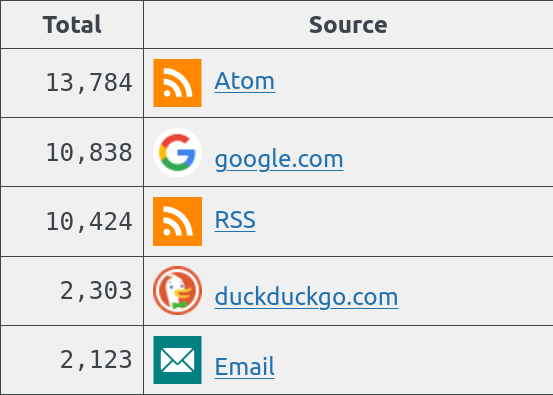
After analyzing their website traffic, a blogger discovered that RSS feeds generate more visitors than Google search. The author attributes this trend to focusing on semantic HTML and metadata rather than pursuing aggressive search engine optimization.
Comments2026-05-06

At Google Cloud Next '26, the company introduced Google Cloud Fraud Defense, a new trust platform built specifically for the agentic web. This launch serves as the next evolution of reCAPTCHA, aiming to deliver enhanced security for modern digital interactions.
Comments2026-05-05

Google Chrome is silently downloading a 4 GB Gemini Nano AI model onto users' devices without consent, automatically re-downloading the file if it is manually deleted. A new article examines the legal and environmental implications of this practice, noting its massive scale and complete lack of user opt-out mechanisms.
Comments