Tech News Last 24 Hours
When you just want to catch up quickly, this section collects the freshest technology stories from across the industry. Coverage spans artificial intelligence, software, hardware, startups, and big-company news. It is built for readers who want a fast, current snapshot of what is happening in tech.
On any given day the mix might include an overnight AI announcement, a security incident still unfolding, earnings released before the market opened, and a startup emerging from stealth. Because the emphasis is on recency, the section captures the industry's rhythm of launches, deals, and surprises as they land.
A quick-catch-up format suits people with limited time who still need to stay informed: professionals preparing for morning meetings, writers and analysts scanning for developments, or anyone returning from a day offline. It answers the simple question of what changed in tech since you last looked.
2026-06-25
IBM has announced a major semiconductor breakthrough with the world’s first sub-1 nanometer chip technology, utilizing a revolutionary transistor architecture at the 0.7 nm node. This achievement overcomes the physical limitations of traditional chip scaling and promises to enhance performance across computing, communications, and critical infrastructure.
CommentsThe Zig programming language community is enthusiastically praising a comprehensive devlog detailing new bitCast semantics and LLVM back end improvements. Readers expressed strong appreciation for the rigorous technical depth and ongoing language refinements, contrasting the high-quality post favorably against the low-effort and AI-generated content often found on tech forums.
Comments
Blogging can just be stating the obvious
2026-06-25A new piece reflects on the nature of blogging about web development, suggesting that sharing technical insights often just involves stating the obvious. The author explores the big beautiful mess of creating things for the world wide web. The article serves as a reminder that even basic observations about this chaotic process hold value for the tech community.
CommentsThe Doorman's Fallacy in action
2026-06-25The Doorman's Fallacy highlights the danger of businesses cutting unmeasurable soft assets like hospitality, intuitive design, and quality customer support in pursuit of short-term cost savings. In the tech sector, this flawed metric-driven approach often results in frustrating user interfaces and degraded digital experiences that ultimately harm long-term customer retention.
CommentsFord is rehiring experienced human inspectors after its AI-driven quality control initiatives encountered significant issues, highlighting the limitations of relying solely on artificial intelligence. This costly misstep reflects a broader industry realization that blindly adopting AI to meet arbitrary usage metrics often compromises quality, proving that the technology is a supplementary tool rather than a magical replacement for human expertise.
Comments2026-06-24

OpenAI has unveiled Jalapeño, its first custom-designed processor built in collaboration with Broadcom. The new chip is specifically engineered to optimize the unique computational demands of the company's artificial intelligence inference systems.
Comments
A newly published guide offers a clear, visual explanation of SSH port forwarding covering both local and remote tunneling techniques. The tutorial details essential sshd configuration adjustments and provides helpful tips for memorizing the correct command flags.
Comments
Krea has released Krea 2, a state-of-the-art 12-billion parameter text-to-image model with open weights designed for creative exploration. This release provides developers with access to two distinct variants, K2 Raw and K2 Turbo, for advanced AI image generation.
Comments
The creator of Quake reflects on early development mistakes, noting that the game was overly ambitious technically. He believes the team could have achieved the same multiplayer and modding success using a more stable Doom-based engine to give designers a reliable foundation.
CommentsUsbliter8: an A12/A13 SecureROM Exploit
2026-06-24Security researchers have published a detailed write-up on Usbliter8, a novel SecureROM vulnerability discovered and exploited in Apple's A12 and A13 chips. The report covers the underlying bug, the specific exploitation techniques utilized by the team, and the necessary post-exploitation steps. This deep-level hardware flaw provides critical insights into the low-level security of affected iPhone models.
Comments
Elastic lays off 7% of employees
2026-06-24Elastic is laying off 7% of its workforce as part of a broader organizational restructuring to streamline operations. The tech company stated that the headcount reduction will help better align its resources with current business priorities.
Comments2026-06-23
Jerry's Map
2026-06-23Jerry's Map, an interactive web experience recently featured by People Make Games, has surged to the top of Hacker News and sparked discussions about the Baader-Meinhof phenomenon among readers encountering it across multiple platforms. The tech community is highly praising the project, with many hailing it as one of their favorite documentaries in recent memory.
CommentsFUTO Swipe – A new swipe typing model
2026-06-23FUTO Swipe now supports the ClearFlow keyboard layout, a specialized design meant to minimize word overlap and maximize accuracy for gesture typing. Early adopters transitioning from standard QWERTY report significantly fewer mistakes and corrections, despite an initial learning curve and minor ergonomic adjustments. The layout is currently available for US English on Gboard and the FUTO app, offering a highly precise alternative for dedicated swipers.
CommentsPrinting Gaussian Splats
2026-06-23A newly highlighted industrial 3D printing technology utilizes UV inkjet CMYK resin to achieve unprecedented photorealistic fidelity that far exceeds standard hobbyist machines. These advanced commercial systems can produce incredibly lifelike objects, but they currently cost around $200,000 and remain largely restricted by corporate patents. However, more affordable prosumer alternatives from companies like HeyGears and EufyMake are beginning to emerge for early adopters.
Comments
The Coming Loop
2026-06-23This piece examines the growing ecosystem of wearable tech accessories, with a specific focus on the design and utility of modern loops and harnesses. It explores how these innovative strap systems are becoming increasingly practical, ultimately proving versatile enough to win over even the most skeptical potential buyers.
CommentsIn praise of memcached
2026-06-23Prompted by an article praising Memcached, engineers are debating the merits of using simple, volatile caching versus feature-rich databases like Redis that often struggle when combining persistence with caching. While many developers favor Memcached for its straightforward approach to avoid complex Redis outages, others argue that growing teams inevitably require advanced data structures regardless of the initial choice. Ultimately, the discussion highlights that avoiding production issues like cache stampedes relies more on sound architectural design and abstraction than the specific caching technology employed.
CommentsThe Low-Tech AI of Elden Ring
2026-06-23Discussions surrounding the low-tech AI of Elden Ring reveal that the game's notoriously cryptic NPC questlines are built on primitive custom bytecode systems and early behavior tree implementations. These strict technical limitations result in janky design choices, such as requiring players to repeatedly exhaust dialogue to advance a quest. However, players and the market ultimately reward this abstruse approach, as it creates a deeply immersive world where NPCs feel driven by their own independent goals rather than serving as mere utilities.
Comments
Quaise Energy has successfully drilled 100 meters into solid granite using its millimeter wave technology. This major milestone advances the development of superhot geothermal energy systems by demonstrating a viable alternative to traditional mechanical drilling.
CommentsFive monitors on a Commodore 128 [video]
2026-06-23A newly shared video demonstrates a custom multi-monitor setup featuring five displays connected to a vintage Commodore 128. This nostalgic tech project highlights the unique hardware capabilities of the classic 8-bit computer when pushed far beyond its original design limitations.
Comments
Madison Square Garden compiled a document to track individuals who have publicly criticized its facial recognition program. The file logs specific comments and tweets from activists opposing the venue's use of the technology.
Comments
A growing movement of users is rejecting corporate-controlled devices in favor of building their own custom cyberdecks, a DIY trend increasingly driven by women. This push toward convivial technology draws historical parallels to medieval guilds, the Luddites, and the Arts and Crafts movement, reflecting a broader desire for meaningful, self-directed interactions with our tools.
Comments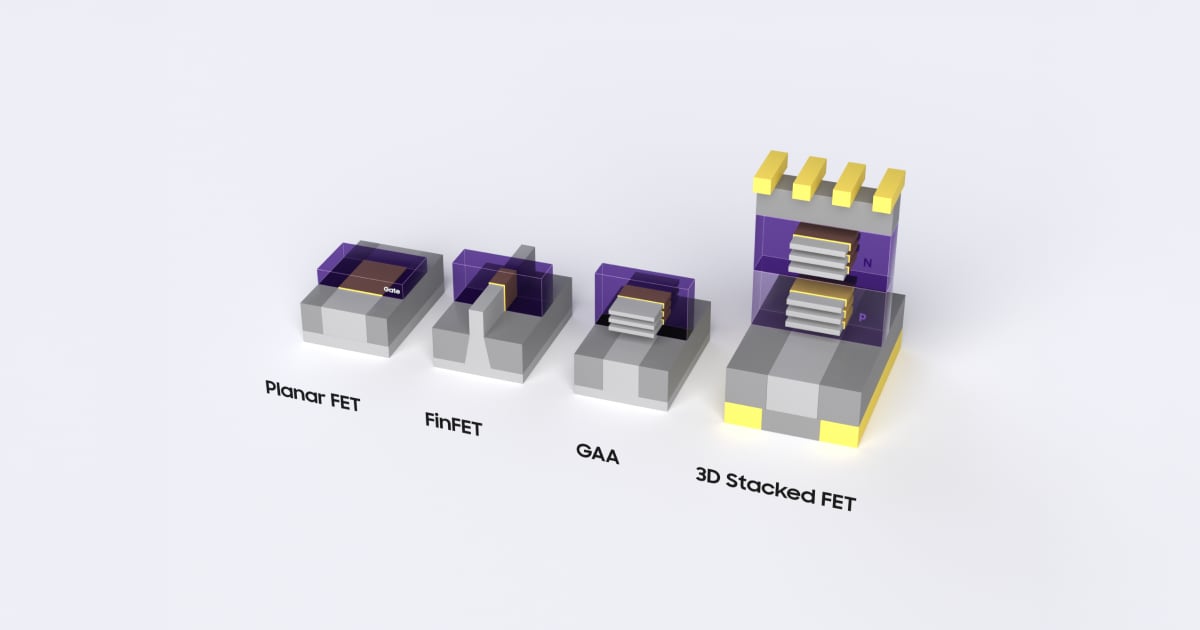
Samsung Electronics presented 3D stacked FETs featuring triple nanosheet channels at a 42nm gate pitch for advanced logic applications. The technology was unveiled at the 2026 VLSI Symposium, highlighting the company's progress in next-generation semiconductor design.
Comments
Software engineer Stephen Diehl warns that the cryptocurrency industry is on a trajectory to reach a bleak and unfavorable state by 2026. In his latest personal blog post, he draws on his technical background to critique the fundamental flaws and negative future outcomes of digital assets.
Comments2026-06-22
Help I accidentally a wigglegram
2026-06-22A recent tech discussion explores the evolution of wigglegrams and stereograms, highlighting techniques that range from dedicated multi-lens hardware to synthetic depth mapping on modern smartphones. While the original poster's accidental attempts lack the precise parallax of professional 3D rigs, commenters note that mobile features and generative AI are making pseudo-3D creation more accessible. In response, enthusiasts are sharing custom software libraries, DIY camera builds, and stereoscopic apps to revive these underrated visualization methods.
CommentsTech community discussions suggest there is minimal downside to switching to open-weight models, as they are only a few months behind their proprietary counterparts. Additionally, user suspicions regarding silent performance degradation in paid services make open-source and local inference alternatives increasingly appealing for developers.
Comments
Reports reveal that police chiefs have been misusing Flock surveillance technology to track and stalk women. This abuse of power highlights the urgent need for mandatory legal warrants to prevent law enforcement from exploiting mass tracking systems.
Comments
GLM 5.2 vs. Opus
2026-06-22A new real-world test pits the hyped GLM-5.2 model against Claude Opus by challenging both to build a 3D platformer game from scratch using raw WebGL. This head-to-head comparison aims to reveal whether the capabilities of GLM-5.2 are genuinely impressive or merely optimized to ace standard AI benchmarks.
Comments
Chevron has signed a 20-year power purchase agreement with Microsoft to supply dedicated electricity to a new data center in West Texas. The co-located power facility, developed through Project Kilby in collaboration with Engine Number 1, will provide reliable energy to support the tech giant's expanding infrastructure.
CommentsA personal account of gaming with spinal muscular atrophy has prompted community discussions highlighting the vital role of open-source assistive hardware and adaptable controllers like the Xbox Adaptive Controller. Commenters praised nonprofits like GOAT for providing life-changing accessibility equipment, while also recognizing major tech companies like Microsoft and Valve for their extensive gaming accessibility tools. The conversation underscores the remarkable progress in assistive technology and the ongoing push for more cohesive, integrated control systems for disabled gamers.
Comments2026-06-21
Apertus is a fully open foundation model designed to empower nations and organizations to build sovereign artificial intelligence systems. By providing complete transparency and unrestricted access, it allows users to develop localized AI technologies without relying on proprietary models. This initiative aims to democratize advanced machine learning and ensure long-term technological independence for its users.
Comments