Software Tech News
Software is where most of the technology industry's ideas take shape. This section collects news about applications, platforms, open-source projects, and online services, along with the teams and companies that design, ship, and maintain them.
Typical stories include major releases and redesigns, open-source projects gaining traction, creators presenting tools they built, SaaS companies changing pricing or features, and post-mortems explaining why a product failed or an outage happened. Critical takes on bloat, reliability, and user experience are common too.
Knowing which software is improving, stagnating, or being abandoned helps people pick better tools and avoid costly migrations later. Developers, product teams, IT buyers, and everyday users follow this coverage to keep their stack current and discover useful alternatives.
2026-09-22
Spymarks, Not Watermarks
2026-09-22Digital watermarks are increasingly evolving into invasive surveillance tools that covertly track and monitor user behavior across various platforms. Dubbed spymarks, these mechanisms go far beyond traditional copyright protection and raise significant privacy concerns for everyday consumers.
CommentsWhat Sun got wrong
2026-09-22Reader discussions on Sun Microsystems' decline contrast its frustrating enterprise purchasing experience and highly controlled, vertically integrated ecosystem with the streamlined, commoditized hardware market. Although some debate the technical openness of the SPARC architecture, the consensus is that the company's closed platform ultimately failed to compete against the cheaper, interchangeable x86 and Linux stack.
Comments

As AI coding tools accelerate development, Continuous Integration pipelines have become costly bottlenecks that delay pull requests. To overcome this, an engineering team rearchitected their CI system by optimizing infrastructure, work scheduling, and test parallelization, successfully reducing both wait times and operational costs.
Comments
Anthropic is currently experiencing elevated error rates across multiple models of its AI assistant, Claude. The company's official status page indicates ongoing service disruptions that may impact response times and overall reliability while the technical team works to resolve the issue.
Comments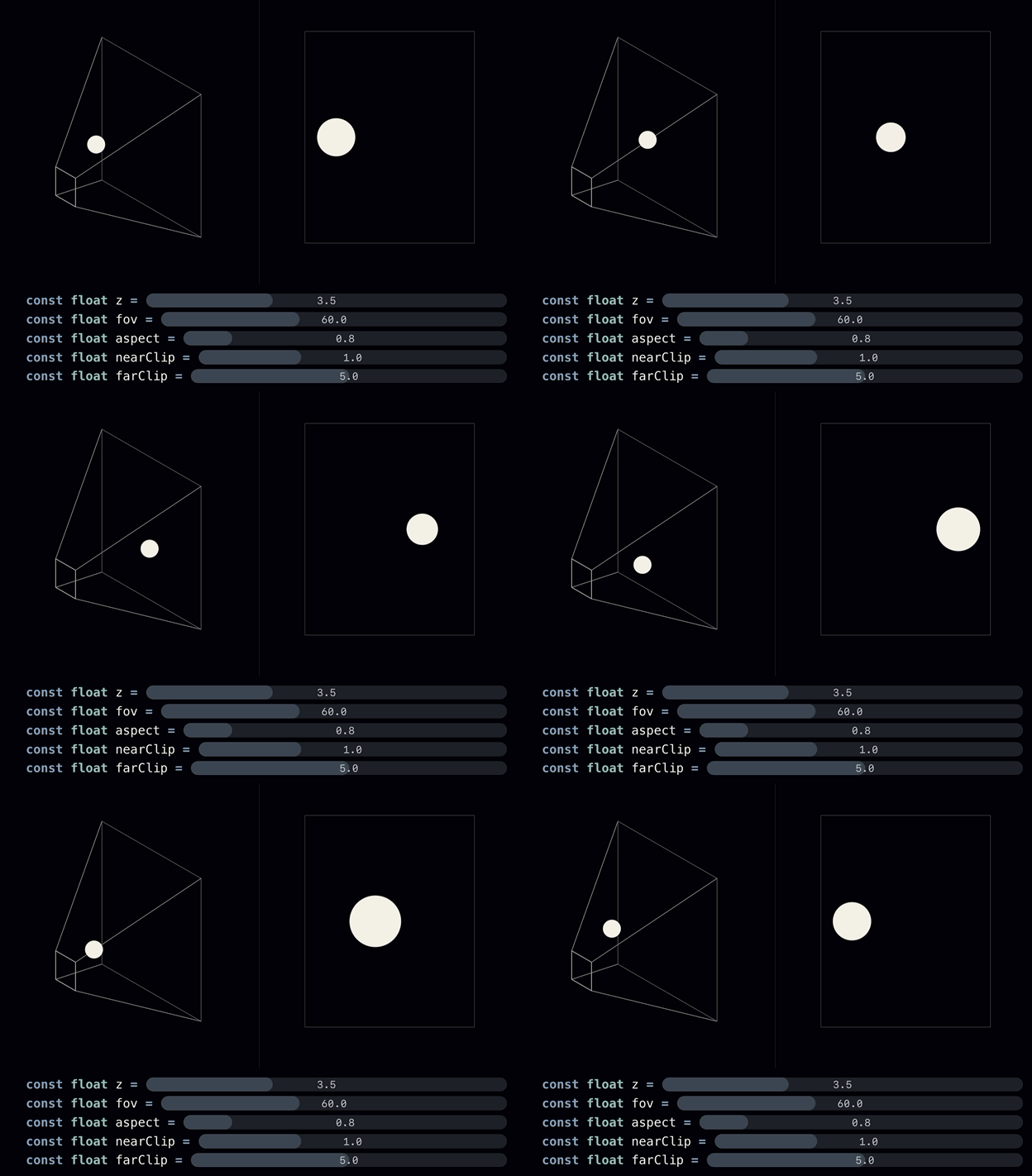
Divide by depth for instant 3D
2026-09-22A new technical tutorial explores the transition from relying on high-level game frameworks to understanding the underlying math of 3D rendering. It specifically breaks down the divide by depth technique used in computer graphics. By mastering this concept, developers can implement custom camera projections to achieve instant 3D effects without relying on pre-built engine tools.
CommentsLooking forward to Git 2.56 – and 3.0
2026-09-22The Git version control system is preparing for its upcoming 2.56 release, introducing new updates to the workflows that power global software development. Meanwhile, the open-source community is already looking ahead to a major 3.0 release to modernize the widely used platform.
Comments
Copper-Rs version 1.2 enables the live-cloning of running robots over unreliable networks to create deterministic digital twins for remote telemetry and state reconstruction. The system streams minimal state data to accurately reproduce task states, messages, and logs as if running onboard. Additionally, the release introduces smaller log sizes, new stereo depth reconstruction, and improved ROS 2 compatibility.
CommentsTruman World
2026-09-22Truman World is an interactive AI video experiment that generates surreal, pseudo-realtime narrative sequences controlled via JSON messages. Powered by the H3 Max Director model, the project streams live WebRTC video feeds that dynamically react to user inputs to create unpredictable, real-time visual storytelling.
Comments
First Shader from Zero in Godot 4
2026-09-22A new Godot 4 tutorial teaches developers how to build their first shader from scratch. The guide covers fundamental techniques such as texture sampling, UV coordinate shifting, and region masking. It concludes by demonstrating how to use noise to generate random shapes for a dynamic portal effect.
CommentsMac users can now disable and restrict access to Apple Intelligence features directly through their system settings. This update provides greater privacy and control by allowing individuals to turn off AI-powered tools like Siri and automated text summarization.
CommentsJared Palmer has released Kev, a new family of tiny decision models built on top of the Qwen3.5 architecture. Similar to Jev, these lightweight models are designed to be trained and executed locally on personal hardware.
Comments
Cloudflare has made Python Workers generally available, enabling developers to run Python web frameworks and AI orchestration libraries natively within the Workers runtime. This release allows seamless integration with Cloudflare services like D1, R2, and Workers AI without requiring any JavaScript glue code.
Comments
A malicious npm package disguised as a math solver has been discovered using an encrypted loader and a complex trigger matrix to execute a remote access payload. Researchers have detailed the full attack chain and provided comprehensive indicators of compromise to help security teams detect and mitigate the threat.
CommentsApple's unreleased Copland operating system can now be booted directly in a web browser using an improved DingusPPC emulator. This breakthrough utilizes a custom set of 11 patches to successfully run the final D11E4 build, marking the first time this notoriously difficult software has been made available through emulation.
CommentsDespite its title claiming it is a new programming language for data munging, TXR is actually a mature Lisp-based language first released in 2009. Community discussions note that the project appears unmaintained, with no code changes in over a year. Consequently, developers remain highly skeptical about its chances of gaining mainstream popularity anytime soon.
Comments2026-09-21

AX – Google’s Open Agentic Orchestrator
2026-09-21Google has released AX, an open agentic orchestrator that enables developers to declare AI tasks using YAML. The tool automatically sandboxes tasks, provisions workspaces, isolates network access, and manages scaling for large-scale deployments.
CommentsThe Effect of CRTs on Pixel Art (2024)
2026-09-21Discussions surrounding the visual evolution of pixel art contrast the modern aesthetic designed for high DPI screens with the nostalgic charm of retro hardware constraints. Participants clarify that the characteristic blurring of older games stems from composite video signals rather than CRT monitors themselves. This technical distinction has sparked ongoing debate regarding the accuracy and aesthetic appeal of modern CRT emulation filters in contemporary software and gaming.
CommentsAmiga Unix, Again
2026-09-21A recent project to port Unix to the classic Amiga has sparked debate among retro computing enthusiasts due to its heavy reliance on AI generated documentation and the questionable technical merit of porting System V Release 4 over modern alternatives like NetBSD. While some appreciate the revival of legacy hardware, many critics argue that using large language models to write the project materials strips the effort of personal passion and makes the resurrection feel unnatural.
CommentsThe open-source recompilation project for the Nintendo 64 classic Ogre Battle 64: Person of Lordly Caliber has reached 99.05% completion under the guidance of developer lfarroco. By reverse-engineering the original code, the initiative aims to deliver a fully playable, native port of the beloved retro strategy RPG to modern systems.
CommentsExfiltrate Your Weights
2026-09-21A newly identified security vulnerability allows attackers to exfiltrate large language model weights and sensitive data using simple HTTP GET requests. This critical flaw exposes proprietary AI models to unauthorized extraction, prompting urgent calls for developers to secure their web interfaces and API endpoints.
Comments
This blog post explores the history of deprecated keyboard symbols and shortcuts unique to the Mac ecosystem. It highlights how successive macOS updates have phased out several iconic keystrokes that were once essential for power users. The article reflects on the broader implications of these interface changes for software design and user experience.
Comments
Radius is a newly launched community platform introduced on Hacker News that serves as a modern alternative to Meetup.com. The service allows users to discover local events based on shared interests, join nearby activities, or create their own community groups.
Comments
Why MCP Was Always a Bad Idea?
2026-09-21A new opinion piece argues that MCP has been fundamentally flawed since its inception and questions its ongoing relevance. The author expresses frustration with the tech industry's continued embrace of the technology, urging the community to stop pretending it is a viable long-term solution.
CommentsA recent article exploring the architectural concept of a deterministic core surrounded by a non-deterministic shell has received widespread acclaim. Readers are highly praising the work as a great achievement. The community consensus emphasizes that the tech industry needs more contributions of this caliber.
CommentsByteDance Seed and Tsinghua AIR have jointly released DAPO, a new open-source reinforcement learning system for artificial intelligence. This collaborative project aims to accelerate industry research by providing the developer community with accessible tools to build and optimize reinforcement learning models.
CommentsVoluntary funding models have failed to adequately compensate FOSS maintainers, despite the significant revenue generated at the software registry layer. To fix this, the author suggests that registries should automatically route a portion of the fees they already charge corporate clients directly to the developers who create the underlying code.
Comments
Laya on Mac M4 CoreML Offline
2026-09-21A new open-source project enables the Laya application to run completely offline on Apple's latest M4 Macs by leveraging the CoreML framework. This local integration allows users to perform machine learning tasks directly on their devices without relying on an internet connection. The implementation is currently available for download and testing via its official GitHub repository.
Comments2026-09-20
Exfiltrate Your Weights
2026-09-20A newly disclosed security vulnerability allows attackers to exfiltrate large language model weights and sensitive data using standard GET requests. By exploiting this flaw, manipulated models can be tricked into sending their underlying parameters to external servers. This technique highlights a critical risk in current AI deployments and API integrations.
Comments
This article explores the underlying mechanics of the Hacker News ranking algorithm, addressing long-standing questions about its true scoring formula. It delves into how the system handles controversy and applies penalties, revealing whether the published code matches the actual ranking process.
CommentsThe OONI project is encouraging users to install its Probe application on desktop and mobile devices to help measure global internet censorship. By participating, individuals can contribute to the world's largest open dataset dedicated to tracking and documenting online restrictions.
Comments