Software Tech News
Software is where most of the technology industry's ideas take shape. This section collects news about applications, platforms, open-source projects, and online services, along with the teams and companies that design, ship, and maintain them.
Typical stories include major releases and redesigns, open-source projects gaining traction, creators presenting tools they built, SaaS companies changing pricing or features, and post-mortems explaining why a product failed or an outage happened. Critical takes on bloat, reliability, and user experience are common too.
Knowing which software is improving, stagnating, or being abandoned helps people pick better tools and avoid costly migrations later. Developers, product teams, IT buyers, and everyday users follow this coverage to keep their stack current and discover useful alternatives.
2026-09-05
An actively exploited sandbox remote code execution vulnerability affecting all Chromium versions has sparked debate after Google paid the ethical researcher a mere $1,000 bug bounty. Commentators argue this payout is drastically undervalued compared to black market rates and the immense internal costs Google saves by relying on external white-hat hackers. The discussion underscores broader frustrations regarding inadequate financial incentives for security researchers compared to the lucrative profits of state-sponsored cybercriminals.
Comments
Statichost.eu is a new static site hosting platform designed for frontend developers who prioritize data sovereignty. The service offers seamless git push deployments and custom domain support for easy website management. Additionally, it runs entirely on European-owned infrastructure to ensure complete control over where web projects are hosted.
Comments
GPT-6 Astra on OpenRouter
2026-09-05OpenRouter has launched OpenAI's flagship GPT-6 Astra model, designed for demanding end-to-end tasks. It features a massive 1.05 million token context window and is priced at $10 and $50 per million tokens for input and output, respectively. The release also ensures higher uptime through two providers and includes independent benchmarks from Artificial Analysis.
Comments
Shutting down our public encrypted DNS
2026-09-05Mullvad is discontinuing its public encrypted DNS servers that have been operational since 2022. The company explained that the service is unnecessary for its users because the VPN already encrypts traffic and handles DNS queries internally.
Comments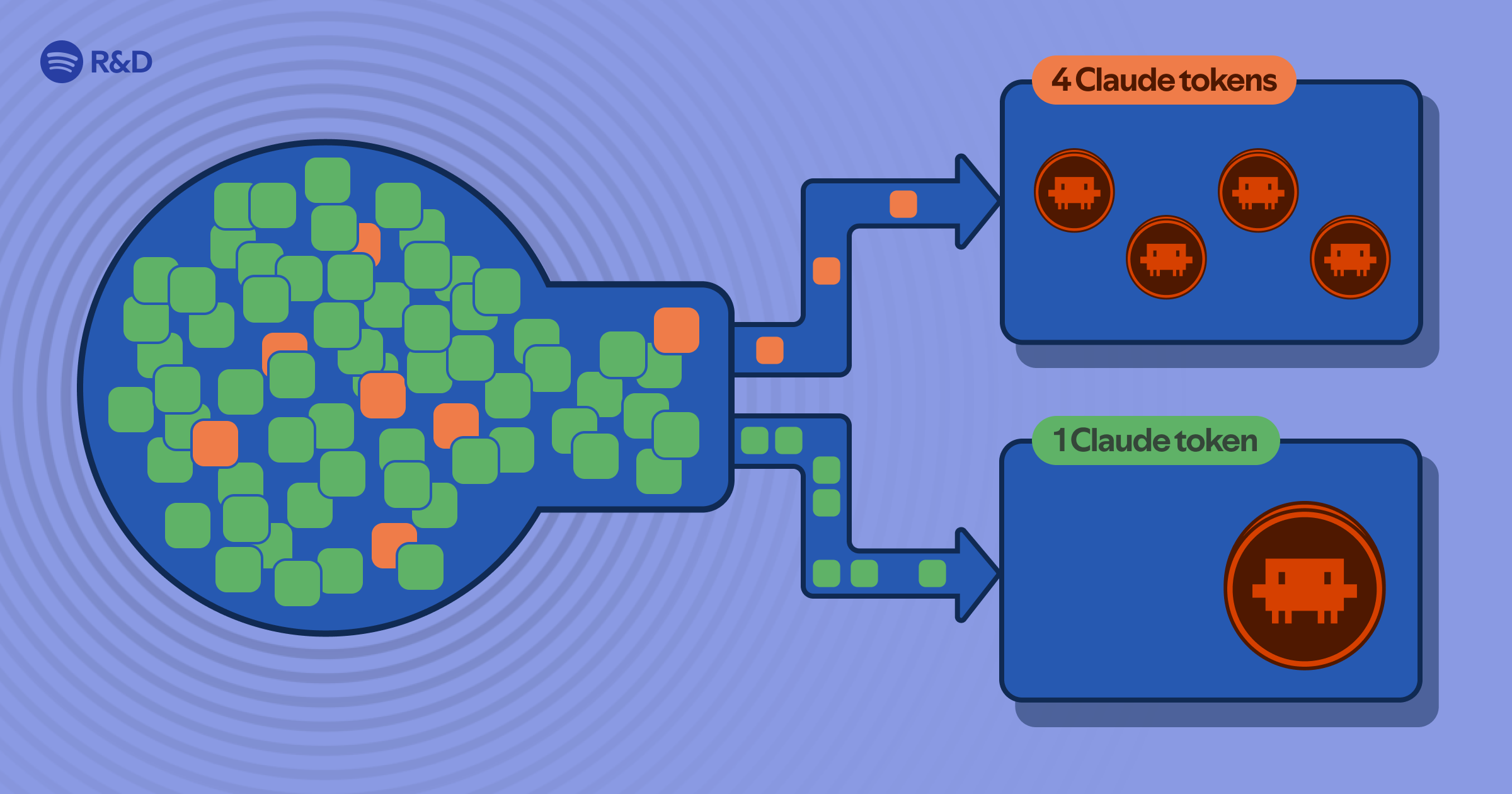
Spotify's new Portal tool has reduced token usage for the Claude Code AI agent by 90% by optimizing input and output operations. Because AI coding agents typically spend the majority of their resources on I/O rather than actual reasoning, this efficiency gain significantly lowers processing costs.
Comments
Git Submodules as a Package Manager
2026-09-05Git submodules can be utilized as a native package manager by treating the .gitmodules file as a package manifest and the gitlink as a lockfile entry. This setup allows developers to manage and pin project dependencies using built-in Git features. Ultimately, this method simplifies workflows by eliminating the need for external dependency management tools.
CommentsShow HN: Open-Source eInk Bike Computer
2026-09-05OpenTrailPaper is a new open-source firmware designed for the LilyGO T5S3 4.7-inch e-ink bike computer. It provides cyclists with essential navigation and tracking features, including offline maps, GPX routing, FIT recording, and Bluetooth sensor integration.
Comments
A newly available open DNS recursive service provides users with a free, public alternative designed to deliver enhanced online security and high privacy. This privacy-focused resolver allows individuals to safeguard their internet traffic and protect their personal data without incurring any costs.
CommentsFermat's Last Theorem in Lean 4
2026-09-05The Anthropic organization has launched a new GitHub repository dedicated to formalizing Fermat's Last Theorem using the Lean 4 interactive theorem prover. This collaborative open-source project invites developers and mathematicians to contribute to the effort of translating the famous mathematical proof into machine-verifiable code.
Comments
Cybersecurity firm Rietta patched a government Ruby on Rails website for a critical ActiveStorage vulnerability just hours after the 9.5 CVSS flaw was disclosed. Despite the rapid response, the site faced exploit attempts almost immediately, with attacks starting before regular business hours resumed.
Comments
Vite now natively integrates the Rust-based React Compiler, reducing build times from 14.3 seconds to just 0.81 seconds in large codebases like React Router. This update delivers massive performance gains while resolving previous limitations to ensure faster, more consistent build management across the toolchain.
CommentsMoadim.io is an open-source loop engine that enables developers to schedule and run AI agents such as Claude, Codex, Hermes, and Pi. The platform executes these automated tasks over MCP and REST protocols to seamlessly integrate autonomous AI workflows into existing systems.
CommentsExactTex is a gradually-typed superset of LaTeX that allows developers to add type annotations to existing source files without breaking them. This incremental approach provides checked references, safe renaming, and early error detection before the final PDF is even generated.
Comments
IBM Bob
2026-09-05IBM has introduced Bob, a new artificial intelligence partner designed to assist developers throughout the entire software development lifecycle. The tool aims to streamline various stages of software creation, from initial coding to final deployment. By integrating directly into the SDLC, IBM Bob seeks to significantly enhance developer productivity and accelerate project delivery.
CommentsA new terminal assistant named TERMy has been introduced as a fast, lightweight alternative to LLM-based command-line tools. It leverages NPC-Forge, a framework designed to build conversational agents that run entirely on the CPU without relying on machine learning.
CommentsConnecting every app to every other app
2026-09-05New technologies leveraging DCR and CIMD are solving the complex n-squared scaling problem inherent in traditional OAuth integrations. By streamlining authentication and eliminating massive integration overhead, these solutions pave the way for seamless connectivity between every application.
Comments
Decompiler Explorer
2026-09-05Decompiler Explorer is a new interactive online tool that allows developers to easily compare the C-like output generated by multiple popular decompilers. This browser-based platform provides a convenient way for programmers to analyze and reverse-engineer compiled programs directly online.
CommentsdeSEC – Free Secure DNS
2026-09-05deSEC is a free, EU-based DNS hosting service that prioritizes internet security by requiring users to enable DNSSEC for their domains. Community discussions highlight it as a highly recommended alternative to mainstream providers, praising its robust security features and tightly scoped API tokens for certificate validation. However, some users note minor friction regarding initial subdomain limits and past quirks with its web interface and API.
CommentsGoogle has published an update on HEIR, a homomorphic encryption compiler that transforms standard programs to operate directly on encrypted data. The official Google Security blog announcement is accompanied by a candid, highly technical companion article that explores the project's progress in depth.
CommentsHow to Create a Tor Exit Node (2015)
2026-09-05Readers are strongly discouraging individuals from following a 2015 guide on setting up a Tor exit node, citing severe legal, technical, and ISP-related risks. Commenters warn that exit node operators face constant law enforcement scrutiny, malware infections, and IP blacklisting. Instead of running exit nodes, they suggest that network supporters run safer middle relays or donate to established organizations.
Comments2026-09-04

Project Xanadu: Even More Hindsight
2026-09-04A new retrospective examines the successes and failures of Project Xanadu, arguing that a lack of design iteration and practical use-cases prevented its visionary goals from becoming a useful reality. The author highlights how these historical shortcomings stalled the project's development and contrasts these past missteps with a more practical, modern approach to technology design.
CommentsCerebras has made the Qwen 3.8 27B model available on its public endpoints, achieving an impressive inference speed of 1500 tokens per second. Developers can now access this model and browse other available options directly through the platform's public API.
Comments
Originally developed as an MIT research project, Julia has evolved into a widely used open-source programming language with over one million global users. The language has cultivated a dedicated following among scientists, engineers, and mathematicians at thousands of companies and universities worldwide.
Comments
A developer used a large language model to translate the 68000 assembly code of their 1993 Amiga game, Babylonian Twins, and port it to the Godot engine. The creator recently shared their findings after reviewing the AI-assisted porting process. Additionally, the original game disks have been released for free on itch.io.
Comments
IFM has launched K2 Horizon, an open-source fleet of six frontier AI models designed to handle reasoning, coding, and agentic workflows. This connected ecosystem also provides specialized solutions for edge devices and enterprise deployment, offering developers a comprehensive suite of advanced tools.
Comments
A new interactive platform called Any Human Ever allows users to randomly generate a detailed biographical profile from the estimated 100 billion humans who have ever lived. The project ensures historical accuracy by meticulously sourcing every detail of the selected individual's life.
Comments
This article argues that tech executives from Apple and Google have enabled the United States' slide into autocracy by completely abandoning their corporate ethics. The author condemns these leaders for eagerly accommodating authoritarianism and coddling fascist ideologies.
Comments
Xanadu was waiting for agents
2026-09-04Ted Nelson's sixty-year-old vision of a fully interconnected docuverse, originally outlined in Project Xanadu, is finally coming to fruition. The recent rise of AI agents has introduced the native users required to navigate this complex information space, bringing his long-awaited technological dream to life.
Comments
The Jactl scripting language introduces a custom continuation-based mechanism to simulate virtual threads in Java 8 without relying on Project Loom. The article details the underlying architectural design of this approach and provides benchmarks to evaluate its performance impact.
CommentsAsk HN: Who is using MCP in production?
2026-09-04Hacker News developers are sharing diverse production use cases for the Model Context Protocol, including customer-facing voice agents, government open data initiatives, and automated web scraping. While many praise the protocol for providing a standardized, agent-friendly interface that simplifies third-party integrations and tool discovery, others caution about challenges like context window bloat and inefficiencies when handling large data payloads compared to traditional command-line tools.
Comments