Software Tech News
Software is where most of the technology industry's ideas take shape. This section collects news about applications, platforms, open-source projects, and online services, along with the teams and companies that design, ship, and maintain them.
Typical stories include major releases and redesigns, open-source projects gaining traction, creators presenting tools they built, SaaS companies changing pricing or features, and post-mortems explaining why a product failed or an outage happened. Critical takes on bloat, reliability, and user experience are common too.
Knowing which software is improving, stagnating, or being abandoned helps people pick better tools and avoid costly migrations later. Developers, product teams, IT buyers, and everyday users follow this coverage to keep their stack current and discover useful alternatives.
2026-09-04

Project Xanadu: Even More Hindsight
2026-09-04A new retrospective examines the successes and failures of Project Xanadu, arguing that a lack of design iteration and practical use-cases prevented its visionary goals from becoming a useful reality. The author highlights how these historical shortcomings stalled the project's development and contrasts these past missteps with a more practical, modern approach to technology design.
CommentsCerebras has made the Qwen 3.8 27B model available on its public endpoints, achieving an impressive inference speed of 1500 tokens per second. Developers can now access this model and browse other available options directly through the platform's public API.
Comments

Originally developed as an MIT research project, Julia has evolved into a widely used open-source programming language with over one million global users. The language has cultivated a dedicated following among scientists, engineers, and mathematicians at thousands of companies and universities worldwide.
Comments
A developer used a large language model to translate the 68000 assembly code of their 1993 Amiga game, Babylonian Twins, and port it to the Godot engine. The creator recently shared their findings after reviewing the AI-assisted porting process. Additionally, the original game disks have been released for free on itch.io.
Comments
IFM has launched K2 Horizon, an open-source fleet of six frontier AI models designed to handle reasoning, coding, and agentic workflows. This connected ecosystem also provides specialized solutions for edge devices and enterprise deployment, offering developers a comprehensive suite of advanced tools.
Comments
A new interactive platform called Any Human Ever allows users to randomly generate a detailed biographical profile from the estimated 100 billion humans who have ever lived. The project ensures historical accuracy by meticulously sourcing every detail of the selected individual's life.
Comments
This article argues that tech executives from Apple and Google have enabled the United States' slide into autocracy by completely abandoning their corporate ethics. The author condemns these leaders for eagerly accommodating authoritarianism and coddling fascist ideologies.
Comments
Xanadu was waiting for agents
2026-09-04Ted Nelson's sixty-year-old vision of a fully interconnected docuverse, originally outlined in Project Xanadu, is finally coming to fruition. The recent rise of AI agents has introduced the native users required to navigate this complex information space, bringing his long-awaited technological dream to life.
Comments
The Jactl scripting language introduces a custom continuation-based mechanism to simulate virtual threads in Java 8 without relying on Project Loom. The article details the underlying architectural design of this approach and provides benchmarks to evaluate its performance impact.
CommentsAsk HN: Who is using MCP in production?
2026-09-04Hacker News developers are sharing diverse production use cases for the Model Context Protocol, including customer-facing voice agents, government open data initiatives, and automated web scraping. While many praise the protocol for providing a standardized, agent-friendly interface that simplifies third-party integrations and tool discovery, others caution about challenges like context window bloat and inefficiencies when handling large data payloads compared to traditional command-line tools.
Comments
Google's Antigravity terms of service warn that suspected third-party usage, such as utilizing OpenClaw, can result in the suspension of a user's Google account. Due to this strict policy, some users are actively advising others to avoid the service to prevent the risk of losing their account access.
CommentsGenerative AI is disrupting front-end web development by empowering non-technical users to independently build and update websites at a fraction of the traditional cost. Although this automation threatens basic web design roles, senior engineers anticipate their expertise will remain essential for developing the underlying frameworks and guardrails of these new tools.
Comments
How to get a free .arpa domain
2026-09-04A new guide demonstrates how to acquire a free .arpa domain by exploiting IPv6 reverse DNS delegations through Hurricane Electric. The tutorial walks users through configuring the deSEC DNS service and successfully hosting a live website on the custom address.
CommentsA simultaneous outage affecting OpenAI, Claude, and Grok led users to suspect a cascading failure across major cloud infrastructure providers. However, the community heavily debated the reliability of Downdetector's tracking data, arguing that self-reported spikes are often skewed by observer bias. Ultimately, the discussion highlighted widespread skepticism toward automated outage trackers and the unpredictable nature of shared digital infrastructure.
Comments2026-09-03

A recent analysis reveals that AI search engines like Perplexity are heavily citing obscure websites for software recommendations, with nearly 60 percent of sources falling outside the top 100,000 most-visited domains. Many of these highly cited sites, including three domains that generated over 215,000 best software pages, are specifically designed to be read by AI models rather than human users.
Comments
A newly published guide explores how to reverse engineer unknown file formats using the ImHex hex editor. The tutorial uses the save file format of the game FEZ as a practical example to introduce readers to both file structures and the tool's capabilities.
CommentsFable 5.1 World Modeling
2026-09-03PhiloLabs has released Fable 5.1, a world modeling update that enables the generation of virtual environments via code. The fable51-worlds project is now available on GitHub, where developers are encouraged to contribute to its ongoing development.
CommentsA new technical deep dive explores the engineering optimizations that make Wasmi 2.0 one of the fastest WebAssembly interpreters available today. The breakdown details the specific techniques used to achieve this high performance and compares execution speeds directly against competing solutions like Wasm3 and Stitch.
Comments
Exit the Cave
2026-09-03Tech companies are increasingly pivoting away from isolated virtual reality environments toward mixed and augmented reality that integrates seamlessly with physical surroundings. This industry shift, metaphorically described as exiting the cave, highlights a growing focus on hardware and applications designed to enhance rather than replace real-world interactions.
Comments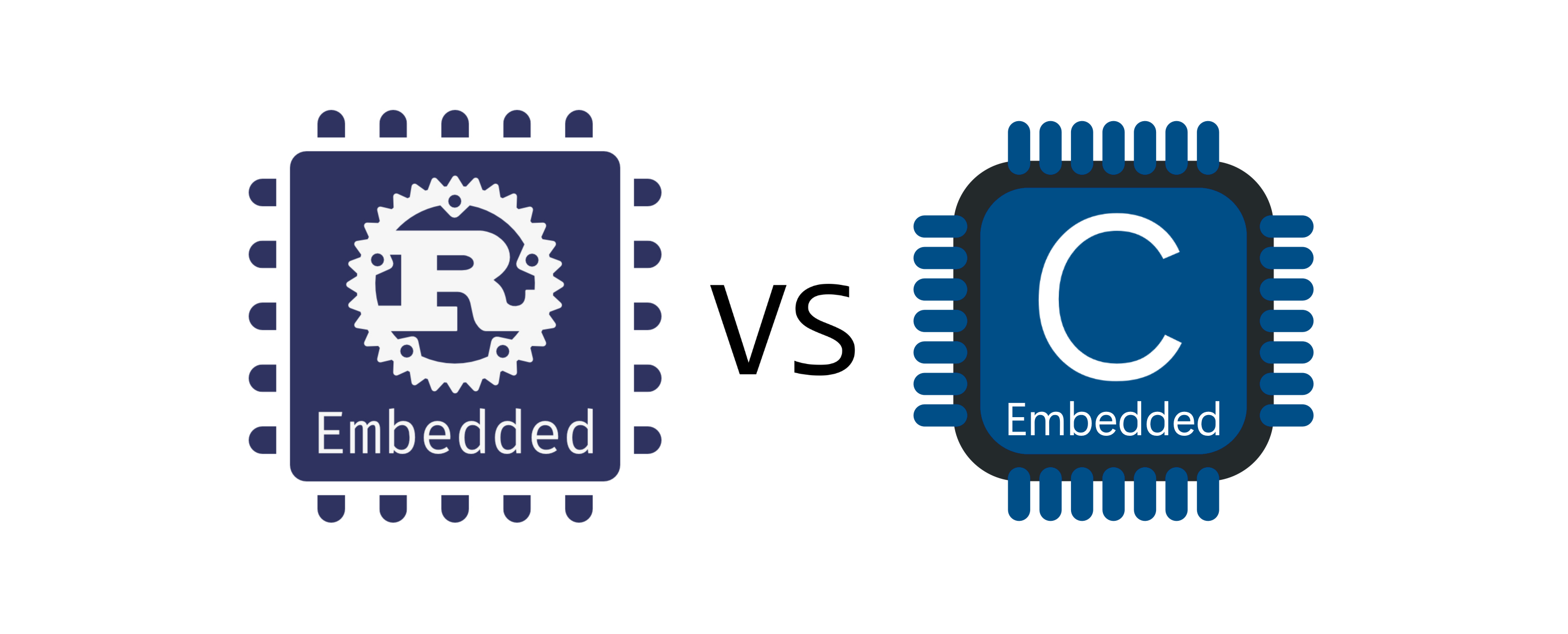
Embedded Rust RTOS vs. C RTOS
2026-09-03A new technical blog post compares the Embassy async Rust framework against the traditional C-based FreeRTOS. The evaluation is conducted on an STM32F446 microcontroller to assess the viability and performance of Rust for embedded real-time operating systems.
CommentsThe 1975 source code for the Altair BASIC interpreter reveals the early development of Microsoft's foundational software. Although Bill Gates and Paul Allen drew inspiration from DEC's BASIC, they built a completely different implementation that tokenized code at runtime. The highly detailed assembly code highlights the team's remarkable productivity in creating a fully functional interpreter with floating point support in just two months.
Comments
Cloudflare engineers have prototyped a new caching compression technique using Zstandard and Pingora to maximize existing hardware efficiency. By implementing this compression directly within their cache, the company estimates it could save petabytes of storage space without requiring additional physical servers.
CommentsMLC AI has introduced WebLLM, a high-performance inference engine that enables large language models to run directly inside web browsers. This open-source project allows developers to deploy advanced AI applications client-side, eliminating the need for backend server processing.
CommentsMaking the Internet Boring
2026-09-03After realizing willpower was insufficient to overcome internet distractions, the author implemented several technical strategies to make browsing intentionally dull. By combining app deletions, website blockers, grayscale mode, and a custom userscript, they successfully curbed their screen time and improved their digital habits.
Comments2026-09-02

The efficient frontier of LLM inference
2026-09-02New techniques in large language model inference are optimizing the critical trade-off between latency and throughput. These methods either shift a deployment's position along the existing efficiency frontier or expand the boundary entirely to unlock greater overall system performance.
Comments
A new Safari extension called Weedout automatically filters out YouTube videos labeled as "Made with AI." The tool provides users with a simple way to avoid AI-generated content while browsing the platform.
Comments
Firefox for iOS now includes an optional ad blocker designed to reduce screen clutter and minimize distractions. By blocking numerous third-party advertisements and trackers, the new feature provides a cleaner and more focused mobile browsing experience.
CommentsA user recently discovered that OpenAI's desktop application, which was rebranded from Codex to ChatGPT, bundles a complete copy of LibreOffice. This unexpected inclusion accounts for a massive 1.7GB of storage space within the application's cache directory.
Comments
A creator recently engineered a custom interactive instrument and art installation for a unique music and art festival. The project combines technical hardware and software to deliver a one-of-a-kind, hands-on experience for attendees. This build highlights the growing intersection of interactive technology and immersive live entertainment.
Comments