Software Tech News
Software is where most of the technology industry's ideas take shape. This section collects news about applications, platforms, open-source projects, and online services, along with the teams and companies that design, ship, and maintain them.
Typical stories include major releases and redesigns, open-source projects gaining traction, creators presenting tools they built, SaaS companies changing pricing or features, and post-mortems explaining why a product failed or an outage happened. Critical takes on bloat, reliability, and user experience are common too.
Knowing which software is improving, stagnating, or being abandoned helps people pick better tools and avoid costly migrations later. Developers, product teams, IT buyers, and everyday users follow this coverage to keep their stack current and discover useful alternatives.
2026-07-29
Codex Security
2026-07-29New SDKs and a command-line interface have been released for Codex Security to help developers integrate and manage security features. The open-source project is now available on GitHub, inviting community contributions to its ongoing development.
CommentsA new lightweight userscript called HNewhere allows users to view Hacker News discussions directly on article webpages without needing to open a second tab. The tool seamlessly embeds community comments alongside the original content to streamline the browsing experience.
Comments
Half-Life ported to Mac OS 9
2026-07-29The classic video game Half-Life has been ported to Mac OS 9, allowing players to experience the title on legacy Apple hardware. This achievement is highlighted by a community dedicated to keeping early Mac computers usable today through software downloads, guides, and preservation hacks.
Comments
Substack writers, you need a website
2026-07-29While Substack offers a convenient platform, writers should treat it primarily as a distribution tool rather than a permanent home for their content. By hosting their work on an independently owned website with a domain they control, creators can secure long-term visibility and maintain full command over their digital presence.
Comments
The new open-source notetaking application Hubble is designed for seamless collaboration between humans and AI agents. The platform allows automated agents to directly read, write, and organize notes alongside human users in a shared workspace. This integration bridges the gap between traditional productivity tools and automated machine workflows.
Comments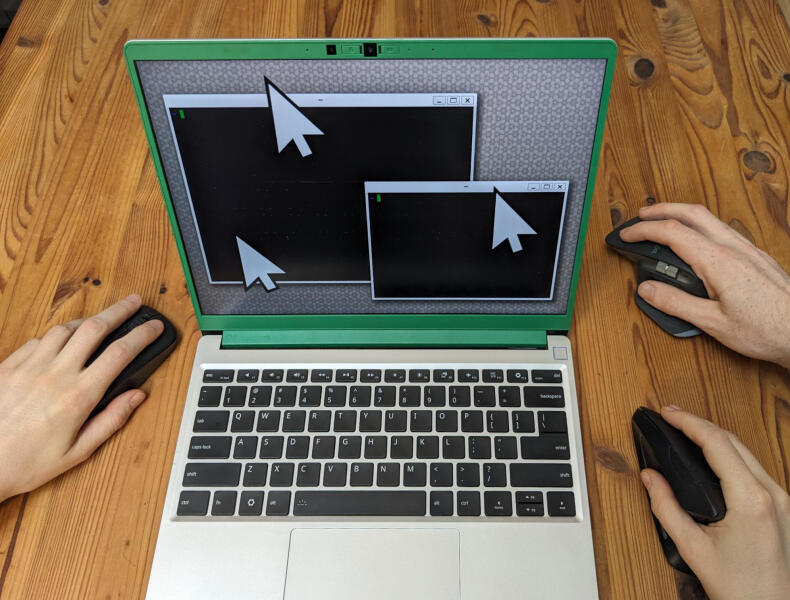
Multiple Mouse Cursors in Wayland
2026-07-29The Wayland display server is exploring support for multiple independent mouse cursors within a single desktop environment. This feature will allow users to connect several physical mice to one computer and control distinct pointers simultaneously.
CommentsSteel Bank Common Lisp version 2.6.7
2026-07-29Steel Bank Common Lisp has released version 2.6.7, updating the compiler famously used to power Hacker News. The latest version introduces expanded SIMD instruction support for ARM64 and AVX512 on X86-64 architectures. Although these new vectorization features require explicit implementation rather than auto-vectorization, they mark a significant performance enhancement for the platform.
Comments
Hooray for the Sockets Interface
2026-07-29Introduced in 1983 with BSD 4.2, the sockets interface revolutionized networking by treating network communication like standard file I/O. This simplification accelerated the UNIX adoption of shared protocols and services, serving as a crucial turning point in the evolution of modern networking.
Comments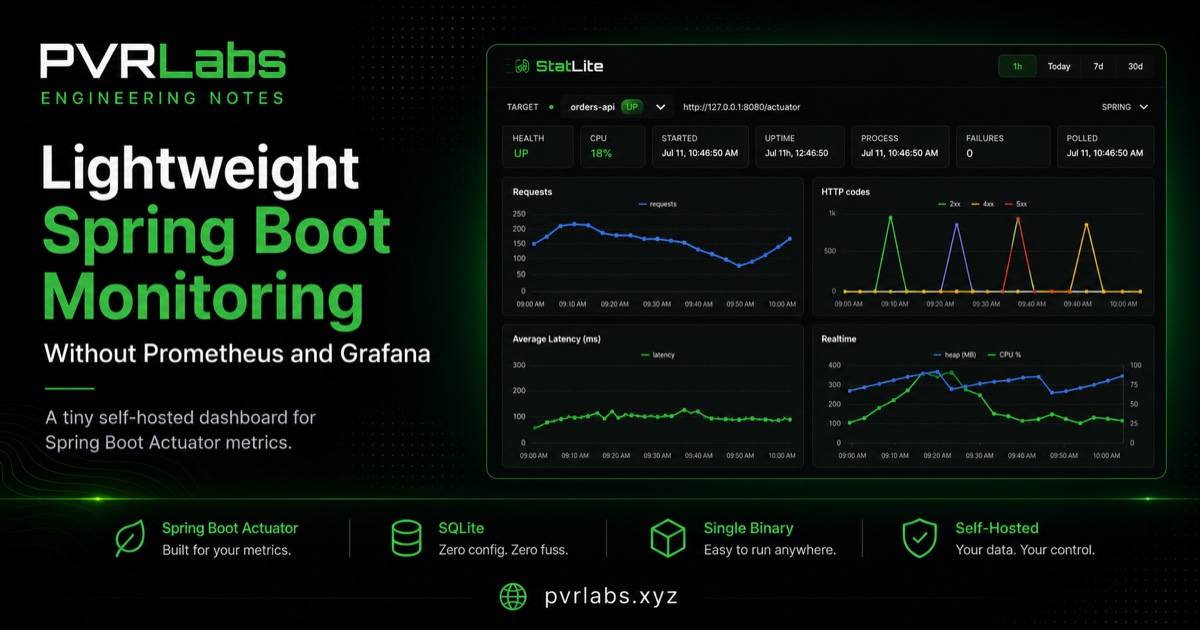
Developers can now monitor Spring Boot applications on small VPS environments without the heavy overhead of a full Prometheus and Grafana stack. By combining Spring Boot Actuator with the lightweight StatLite tool, teams can efficiently track essential server and application metrics. This streamlined approach provides a practical observability solution that minimizes resource consumption on constrained infrastructure.
CommentsA new open-source project named ZIL introduces a relational knowledge language and Datalog DSL designed specifically for AI applications. Implemented in Lean 4 and inspired by Google Zanzibar, the system features a Clojure runtime and toolchain to help developers structure complex data.
Comments
A new AI-native web application brings 3Blue1Brown's Manim mathematical animation engine to the browser via WebGPU. This tool enables users to seamlessly create, edit, and refine complex mathematical animations directly online without requiring local installations.
CommentsZig's Incremental Compilation Internals
2026-07-29A community discussion on Zig's incremental compilation internals praises the language's toolchain for specifically tweaking its design to enable fast semantic analysis, while comparing it to the architectural trade-offs made during Rust's development. The conversation also expands into broader debates regarding varying levels of memory safety and the ongoing performance compromises between manual memory management and garbage collection.
Comments2026-07-28
This piece highlights the unexpectedly positive experience of using open-source AI models, emphasizing their growing performance and developer accessibility. The author argues that these open alternatives now provide a highly satisfying and practical solution that effectively rivals closed proprietary systems.
Comments
Go 1.26 has introduced Green Tea as its default garbage collector, prompting an analysis of its cache-friendly performance and heap allocation patterns. The post uses profiling tools to visualize memory usage and examines a persistent sparse-page problem that continues to challenge non-moving garbage collectors.
CommentsYap is a free and open source macOS application that provides on-device voice dictation without requiring cloud services or user accounts. It utilizes Apple's native Speech framework for local transcription, eliminating the need to download large external models.
Comments
C/C++ projects packaged for Zig
2026-07-28A new packaging initiative is streamlining the integration of C and C++ projects directly into the Zig programming language ecosystem. This effort provides developers with prepackaged external codebases to seamlessly import existing libraries into their Zig build systems. Ultimately, this greatly expands the available dependency pool and improves interoperability for the growing language.
CommentsThe python-build-standalone project provides self-contained, highly portable Python distributions that eliminate the need for local source compilation on macOS and Linux. Now maintained by Astral and widely integrated into popular tools like uv and pipx, these pre-compiled binaries allow developers to easily bundle Python runtimes into applications and containers. The developer community highly praises the project for significantly reducing maintenance toil and streamlining the deployment of Python tooling.
Comments
Y Combinator-backed startup Rise Reforming is developing a modular, zero-capital technology to convert raw biogas into high-value green chemicals like methanol and dimethyl ether. The company automates the gas scrubbing and catalytic reforming processes to overcome traditional challenges like catalyst poisoning without relying on carbon credits for profitability. By deploying localized, fast-to-market units, Rise Reforming aims to undercut the transport and capital costs of large centralized chemical plants while providing a highly profitable alternative to renewable natural gas for smaller biogas producers.
CommentsA recent guide outlines practical strategies for improving application security by transitioning to rootless containers. By eliminating elevated privileges, developers can significantly reduce system vulnerabilities and protect containerized services from potential breakout attacks. This approach provides a straightforward framework for hardening modern deployment environments.
Comments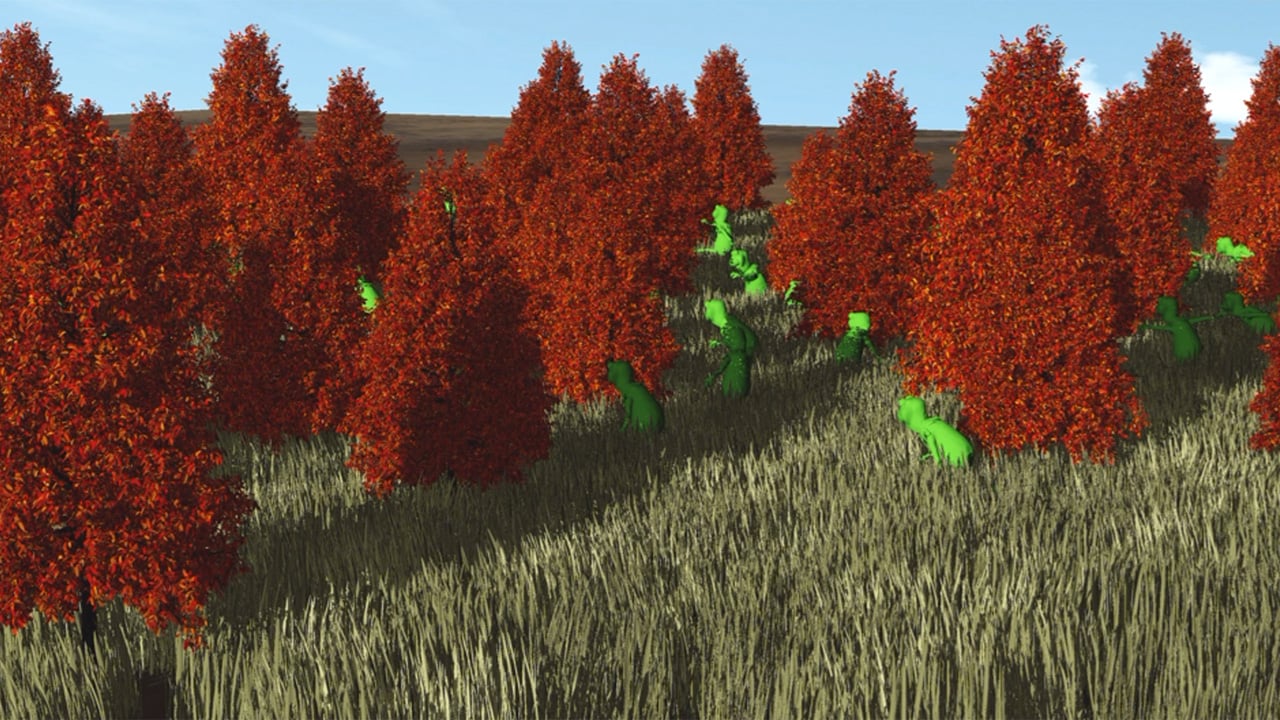
A new rendering technique enables real-time ray tracing of hundreds of millions of animated triangles by utilizing compact tetrahedral cages and reusing static acceleration structures. This approach drastically reduces memory costs and per-frame update times, making it highly effective for rendering complex, dense environments like large crowds and foliage.
Comments
A single missing underscore in a computer system resulted in an innocent man being wrongfully imprisoned for 18 months. This devastating incident highlights how a minor initial typo in code or data can cascade into severe real-world consequences.
CommentsPaged Out #9 [pdf]
2026-07-28The ninth issue of the Paged Out PDF magazine has been released, continuing the publication's focus on specialized computing and technical content. This latest edition is now available for readers to download in its standard document format.
Comments
A critical vulnerability in the My Eicher fleet management platform by VE Commercial Vehicles allowed attackers to hijack user accounts. By exploiting this security flaw, unauthorized individuals could gain full control over connected commercial vehicle fleets.
Comments
Trylle is a newly introduced Git platform designed to unify pull requests, code reviews, and issue tracking for modern development teams. To streamline workflows and help teams ship faster, it offers advanced features like stack-dependent pulls, real-line code reviews, and GitHub-compatible continuous integration.
Comments2026-07-27
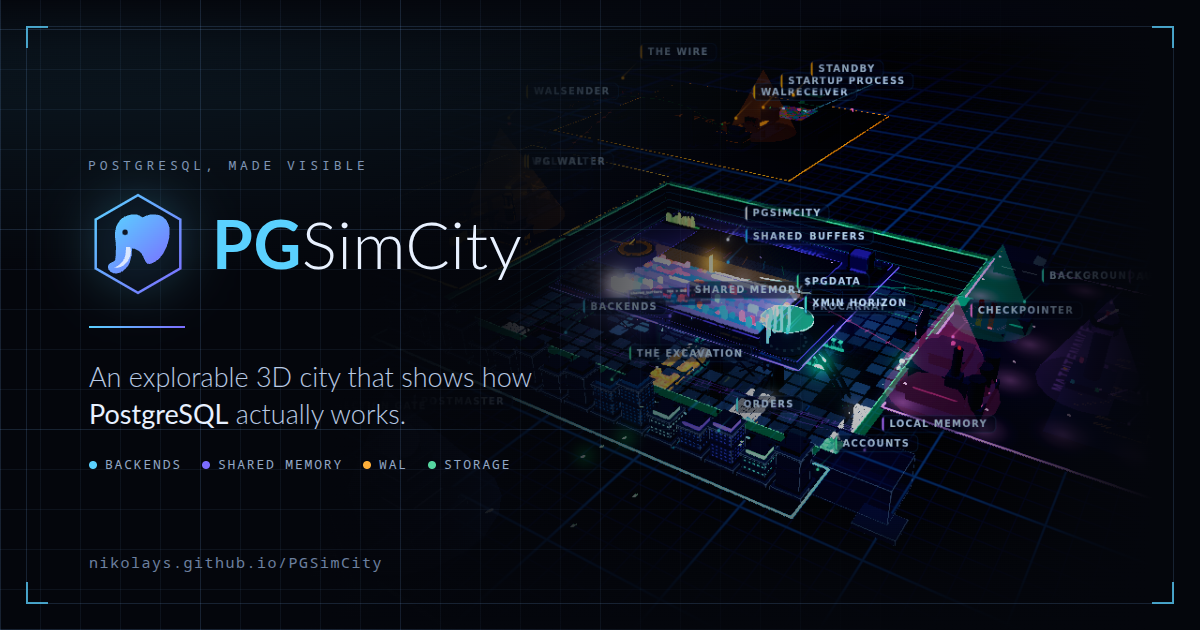
PGSimCity - How PostgreSQL Works
2026-07-27A new interactive project called PGSimCity visualizes the inner workings of PostgreSQL through an explorable 3D city. This unique tool translates complex database operations into a navigable virtual environment, helping developers better understand how the system functions under the hood.
CommentsA new augmented reality demo allows smartphone users to project a highly realistic, physically accurate black hole into their immediate physical surroundings. The app leverages standard mobile AR tracking to anchor the visualization in real space, offering scientifically faithful renderings of the accretion disk and event horizon. While the immersive experience has impressed space enthusiasts, its intimidating scale and realism have also triggered severe phobias of large objects in some users.
CommentsDecker is a new platform designed to revive the accessible, intuitive application-building experience of classic macOS and its iconic HyperCard software. Community discussions emphasize how such tools historically empowered non-programmers to easily create native-feeling, self-contained applications and games through creative constraints. By returning to this simpler component-based approach, Decker offers a nostalgic yet highly relevant alternative to the complex development ecosystems of today.
Comments
A US citizen named Tunick has been charged after their smartphone wiped its data during an airport search due to a privacy feature in GrapheneOS. The open-source operating system, which runs on Google Pixel devices, includes a mechanism that erases all information when a specific passcode is entered. Authorities are pursuing charges against the individual following the loss of digital evidence during the inspection.
CommentsWe have proof automation now
2026-07-27The integration of Large Language Models with formal theorem provers is emerging as a powerful approach to automate software verification and generate mathematically correct code. Proponents argue this synergy will make dependent-type systems highly practical and shift the core programming skill toward writing formal specifications. However, experts caution that while LLMs simplify proof engineering, human insight remains essential for defining correct abstractions and managing complex production edge cases.
CommentsVercel has introduced Scriptc, an open-source TypeScript-to-native compiler that generates standalone machine code without embedding a JavaScript engine. This allows developers to compile TypeScript directly into efficient, lightweight native binaries, and the project is currently available for community contribution on GitHub.
Comments