Software Tech News
Software is where most of the technology industry's ideas take shape. This section collects news about applications, platforms, open-source projects, and online services, along with the teams and companies that design, ship, and maintain them.
Typical stories include major releases and redesigns, open-source projects gaining traction, creators presenting tools they built, SaaS companies changing pricing or features, and post-mortems explaining why a product failed or an outage happened. Critical takes on bloat, reliability, and user experience are common too.
Knowing which software is improving, stagnating, or being abandoned helps people pick better tools and avoid costly migrations later. Developers, product teams, IT buyers, and everyday users follow this coverage to keep their stack current and discover useful alternatives.
2026-06-23
Jerry's Map
2026-06-23Jerry's Map, an interactive web experience recently featured by People Make Games, has surged to the top of Hacker News and sparked discussions about the Baader-Meinhof phenomenon among readers encountering it across multiple platforms. The tech community is highly praising the project, with many hailing it as one of their favorite documentaries in recent memory.
CommentsFUTO Swipe – A new swipe typing model
2026-06-23FUTO Swipe now supports the ClearFlow keyboard layout, a specialized design meant to minimize word overlap and maximize accuracy for gesture typing. Early adopters transitioning from standard QWERTY report significantly fewer mistakes and corrections, despite an initial learning curve and minor ergonomic adjustments. The layout is currently available for US English on Gboard and the FUTO app, offering a highly precise alternative for dedicated swipers.
Comments
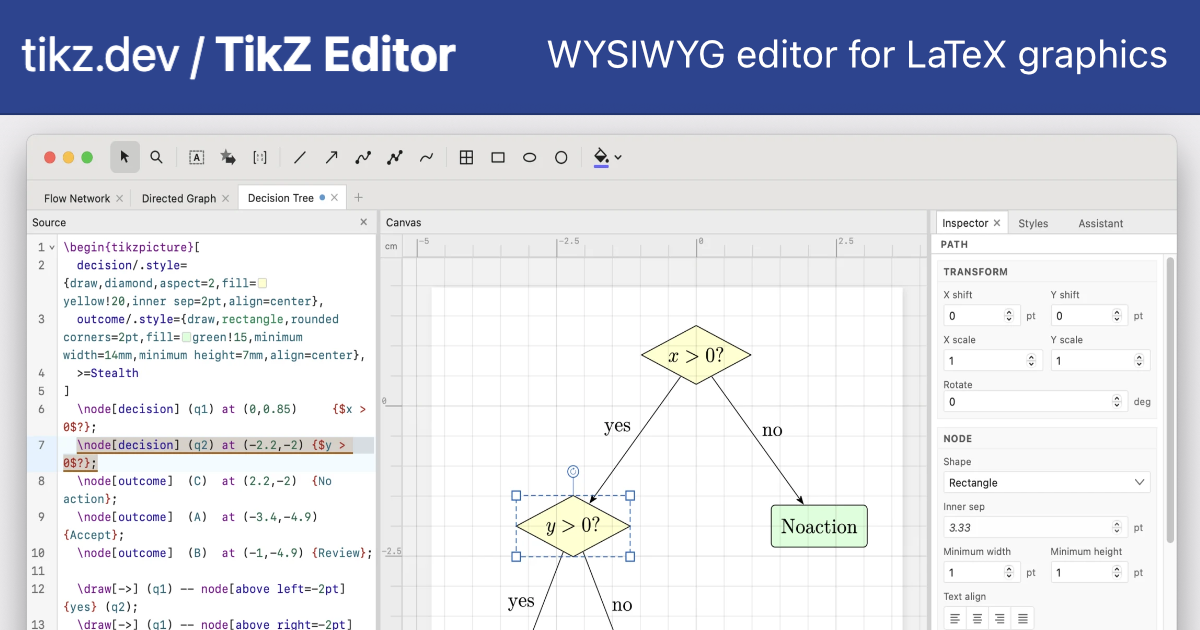
A newly released free tool called TikZ Editor offers a WYSIWYG interface for creating diagrams in LaTeX. Users can drag and drop elements to instantly generate clean TikZ code without disrupting existing document formatting. The application is accessible both as a web-based tool and a dedicated desktop app.
CommentsSwift Package Index joins Apple
2026-06-23Apple has acquired the Swift Package Index and its creator Dave Verwer, prompting widespread congratulations from the developer community. This marks Verwer's second major successful exit recently, following the handoff of his popular iOS Dev Weekly newsletter. However, the move has also sparked concern among some independent developers about building competing tools, citing Apple's consistent history of absorbing and later discontinuing third-party apps.
CommentsBaidu has released Unlimited OCR, an advanced optical character recognition tool capable of one-shot long-horizon parsing for exceptionally long documents. This new model processes complex layouts and extracts text in a single pass, eliminating the need for document chunking and significantly improving large-scale digitization efficiency.
Comments
A developer was fired by Google after creating a Google Workspace CLI tool that rapidly went viral on Hacker News and GitHub. The creator described the aftermath of the project's massive success as a confusing journey that ultimately involved high-level company leadership.
CommentsWill It Mythos?
2026-06-23The article investigates whether the restricted large language model Mythos is truly uniquely capable of finding complex security bugs compared to other models. Drawing on experience with a custom automated bug-hunting tool, the author evaluates how different LLMs perform at identifying vulnerabilities to determine if Mythos's exclusive reputation is justified.
Comments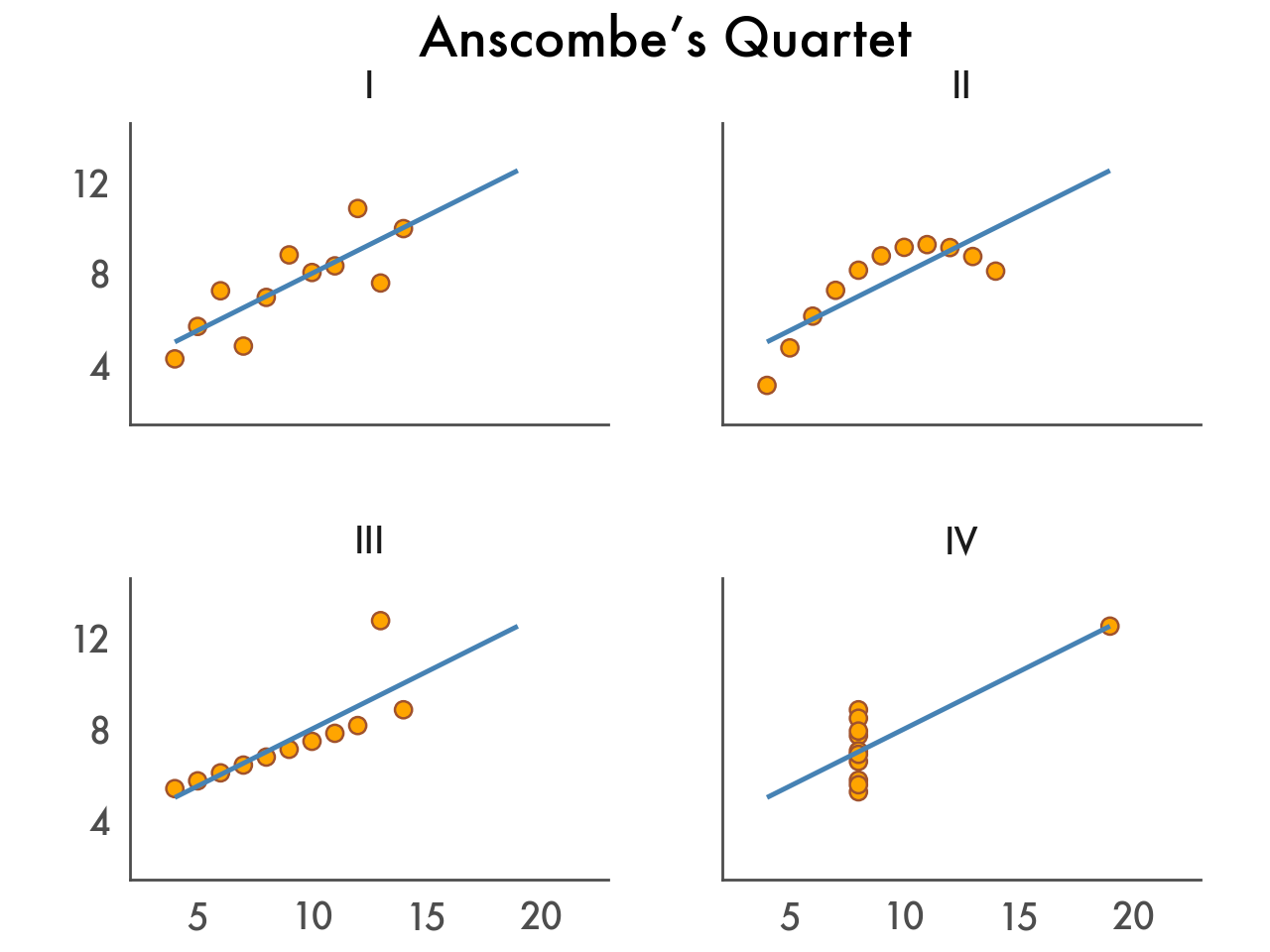
Plotnine
2026-06-23The Python data visualization library Plotnine is preparing for its upcoming 0.16 release, introducing new capabilities that are currently available via a pre-release build. The update prompted a lengthy community discussion regarding data visualization best practices, specifically focusing on the effectiveness of violin plots featured on the project homepage. Many participating developers criticized violin plots in favor of alternative distribution visualizations, advocating for the use of strip, swarm, and raincloud plots instead.
CommentsIn praise of memcached
2026-06-23Prompted by an article praising Memcached, engineers are debating the merits of using simple, volatile caching versus feature-rich databases like Redis that often struggle when combining persistence with caching. While many developers favor Memcached for its straightforward approach to avoid complex Redis outages, others argue that growing teams inevitably require advanced data structures regardless of the initial choice. Ultimately, the discussion highlights that avoiding production issues like cache stampedes relies more on sound architectural design and abstraction than the specific caching technology employed.
CommentsThe Low-Tech AI of Elden Ring
2026-06-23Discussions surrounding the low-tech AI of Elden Ring reveal that the game's notoriously cryptic NPC questlines are built on primitive custom bytecode systems and early behavior tree implementations. These strict technical limitations result in janky design choices, such as requiring players to repeatedly exhaust dialogue to advance a quest. However, players and the market ultimately reward this abstruse approach, as it creates a deeply immersive world where NPCs feel driven by their own independent goals rather than serving as mere utilities.
CommentsA new command-line tool named ffs enables rapid file searches by reading SSDs directly and completely bypassing the operating system kernel. This direct-access approach circumvents traditional system overhead to provide a highly efficient method for locating files.
Comments
Dirty Little Zine is a free browser-based editor that allows users to design eight-page printable zines from a single sheet of paper by uploading photos and adding captions. Creators can then export their finished layouts as high-resolution PDF or JPG files in either US Letter or A4 formats for easy physical printing.
Comments
OpenAI DayBreak – GPT-5.5-Cyber
2026-06-23OpenAI has launched its new DayBreak cybersecurity suite, introducing the specialized GPT-5.5-Cyber model and Codex Security. These tools are designed to help enterprises identify, validate, and patch software vulnerabilities at scale.
CommentsF3
2026-06-23The open-source project F3 has introduced a new data file format designed to modernize data storage and management for future applications. Highlighted at SIGMOD 2026, this initiative aims to provide developers with a highly efficient and scalable alternative for handling complex datasets.
Comments
An Introduction to YOLO26
2026-06-23YOLO26 is a newly introduced, edge-optimized object detection model that eliminates Non-Maximum Suppression to achieve 43% faster CPU inference. A comprehensive overview details the model's performance benchmarks across various sizes and outlines its specific licensing terms. Additionally, the report provides a direct performance comparison between YOLO26 and the competing RF-DETR architecture.
Comments2026-06-22

Steam Machine launches today
2026-06-22The Steam Machine officially launches today, marking a highly anticipated release for the platform. This update provides all the necessary details on how to sign up to get started. It also explores the development journey and background that led to this major milestone.
Comments
Deno Desktop
2026-06-22Deno Desktop enables developers to build self-contained desktop applications directly from Deno projects. The tool streamlines the development workflow with features like framework auto-detection, hot reloading, and native windowing. Additionally, it simplifies deployment by providing built-in cross-platform distribution and automatic updates.
CommentsHelp I accidentally a wigglegram
2026-06-22A recent tech discussion explores the evolution of wigglegrams and stereograms, highlighting techniques that range from dedicated multi-lens hardware to synthetic depth mapping on modern smartphones. While the original poster's accidental attempts lack the precise parallax of professional 3D rigs, commenters note that mobile features and generative AI are making pseudo-3D creation more accessible. In response, enthusiasts are sharing custom software libraries, DIY camera builds, and stereoscopic apps to revive these underrated visualization methods.
CommentsCorporate budget silos and cumbersome approval processes frequently drive employees to bypass official procurement channels, resulting in massive overspending on expensive outsourcing firms and cloud infrastructure. Because funds are strictly compartmentalized, managers can artificially reduce full-time headcount costs only to immediately inflate contractor and operational budgets. Ultimately, what appears to be corporate fraud or irrational waste is often just staff finding creative workarounds to deliver projects under broken financial incentives.
Comments
GLM-5.2 – How to Run Locally
2026-06-22Z.ai has released instructions for running its new GLM-5.2 model entirely on local hardware. This development allows users to deploy the advanced AI on their own machines without relying on cloud infrastructure. The guide provides detailed instructions for setting up and optimizing the model for offline use.
CommentsTech community discussions suggest there is minimal downside to switching to open-weight models, as they are only a few months behind their proprietary counterparts. Additionally, user suspicions regarding silent performance degradation in paid services make open-source and local inference alternatives increasingly appealing for developers.
CommentsReaders discussing a $400,000 pledge to the Zig software foundation engaged in a deep philosophical debate regarding the nature of formal versus informal truths. The conversation extensively explored epistemology, the limitations of human perception, and whether current models of quantum and classical physics represent absolute reality.
Comments
A new project called Oak was recently showcased on Hacker News as a Git alternative specifically built for AI agents. The tool provides a version control system tailored to machine-driven workflows, allowing autonomous coding agents to efficiently manage and track changes in codebases.
CommentsA critical Codex logging bug that threatened to write terabytes of data to local SSDs has been resolved by developers. The team merged three pull requests to address the issue, successfully reducing the excessive log output by 85 percent. These fixes are now available in the latest software release.
Comments
A developer frustrated with online advertising has launched Puzzle Lair, a free, ad-free website dedicated to logic puzzles. The platform aggregates multiple game types like Sudoku, Kakuro, and Nonograms into a single clean interface. Users can solve daily challenges, track their personal statistics, and compete against others on global leaderboards.
Comments
Minecraft Java Edition 26.2 has officially launched as the first version of the game to support the Vulkan 1.2 graphics API. This update shifts the rendering engine to Vulkan, promising enhanced graphical performance and higher frame rates for players.
Comments
Chevron has signed a 20-year power purchase agreement with Microsoft to supply dedicated electricity to a new data center in West Texas. The co-located power facility, developed through Project Kilby in collaboration with Engine Number 1, will provide reliable energy to support the tech giant's expanding infrastructure.
Comments
Sakana Fugu
2026-06-22Sakana Fugu is a newly launched model interface that enables the seamless coordination of specialized AI agents. By routing multiple distinct models through a single OpenAI-compatible API, it significantly simplifies the development and deployment of complex multi-agent systems.
CommentsMemory Safe Inline Assembly
2026-06-22A recent discussion on Fil-C's memory-safe inline assembly highlights a debate over its choice to use runtime panics instead of compile-time errors for unsafe code, which critics argue merely delays crashes to production. However, supporters defend the approach as a practical way to port legacy C applications without full rewrites, noting that the feature's implementation was notably accelerated by using AI to parse x86_64 assembly.
CommentsReaders discussing the mechanics behind Anthropic's Extended Thinking feature note that major AI companies intentionally hide their models' raw reasoning processes to protect proprietary research. Exposing these internal mechanics would allow competitors to easily replicate their advanced thinking workflows by training on the exposed data. Consequently, companies choose to summarize or postprocess these cognitive outputs to maintain a competitive edge in the AI market.
Comments