Programming Tech News
Writing software is a craft that keeps reinventing itself. This section gathers news and articles for people who program, covering language releases, compilers and runtimes, frameworks, development workflows, and the ideas that change how code gets written and reviewed.
Typical stories include new versions of Rust, Python, Java, JavaScript, and TypeScript, performance and debugging investigations, essays on architecture and code quality, and discussions of how AI coding assistants are changing day-to-day development. Hands-on tutorials and lessons from long-running projects show up often.
The tools and practices developers choose affect how fast teams ship and how well their software holds up over time. Working engineers, students learning to code, and engineering leaders follow this coverage to sharpen their skills and make better technical decisions.
2026-10-25
Readers of an article on software ambition highlight a shift toward building high-performance, native desktop applications in Rust instead of relying on Electron. They argue that while AI tools eliminate the coding bottleneck, development teams must also overhaul slow processes like code reviews to actually ship products. Furthermore, the community believes that AI-driven productivity gains will generate more work and opportunities rather than leading to developer layoffs.
CommentsThe Goose Programming Language
2026-10-25The newly introduced Goose programming language has sparked community debate after its creator revealed that artificial intelligence was heavily used to write both the code and its documentation. While critics question the reliability and human readability of machine-generated code, the creator defends the approach by highlighting the AI's ability to implement complex algorithms and eliminate memory errors. The discussion ultimately underscores a broader industry divide regarding the practical utility and skill required to effectively integrate AI into software development.
Comments

The Node2Shell vulnerability has evolved into a broader threat known as HTTP2Shell, exploiting a critical Brotli flaw to impact numerous HTTP libraries and applications utilizing Brotli or brotlicffi. Tracked as CVE-2026-111497, this issue requires developers to immediately check their software versions and apply the available security patches.
Comments
Roku has migrated its developer repositories from GitHub to GitLab. This transition shifts the primary hosting environment for the streaming company's channel-building community. Developers will now need to use the new GitLab platform to access and contribute to Roku's open-source projects.
CommentsDiscussions surrounding the performance limits of pure functional programming compared to C highlight how C's direct memory mutation and copy elision align perfectly with modern hardware's place-oriented architecture. While functional languages offer strong theoretical parallelism, their abstractions introduce indirection that hinders the spatial and temporal locality required for maximum CPU efficiency, making low-level hardware tuning essential for bridging the performance gap.
CommentsA new harness called GVS5H allows five Qwen3.8-27B models to match the coding performance of Claude Fable 5 on the LiveCodeBench Hard benchmark. This breakthrough offers a highly cost-effective alternative, delivering top-tier coding capabilities at a fifth of the price. Additionally, the system is optimized enough to be deployed entirely on a single GPU.
CommentsBbtree: Fastest Ordered Map
2026-10-25Bbtree is a high-performance ordered map that serves as a direct drop-in replacement for the standard library's BTreeMap. It significantly improves execution speed by minimizing cache misses, instructions, and cache coherence traffic. The developers also outline the specific methods used to guarantee the new data structure's correctness.
CommentsSmall Programs and Languages
2026-10-25A newly shared article and its accompanying discussion celebrate the art of writing highly optimized software and designing little languages within strict memory constraints. Community members highlight how working within tight technical limits, such as building tiny programs in uxn or minimalist operating systems, fosters deep creativity. Ultimately, these exercises in extreme constraint serve to rekindle a passion for software engineering among developers.
CommentsWhy Gopher in 2026?
2026-10-25Discussions surrounding the Gopher protocol highlight its appeal as a simple, anti-surveillance alternative to modern social media, though users criticize the network for lacking diverse content beyond meta-discussions and personal blogs. Consequently, while Gopher thrives as a charming digital niche, it struggles to gain mainstream traction because it prioritizes platform building over the compelling content acquisition needed to attract casual users.
CommentsReader discussions surrounding the importance of limitations reveal that constraints actually foster creativity, deeper learning, and focused problem-solving by forcing individuals to think within strict boundaries. While the open-ended nature of the real world and modern software development can often lead to decision paralysis, structured rules provide a necessary framework for innovation. Ultimately, embracing these restrictions rather than avoiding them leads to more meaningful and successful project outcomes.
Comments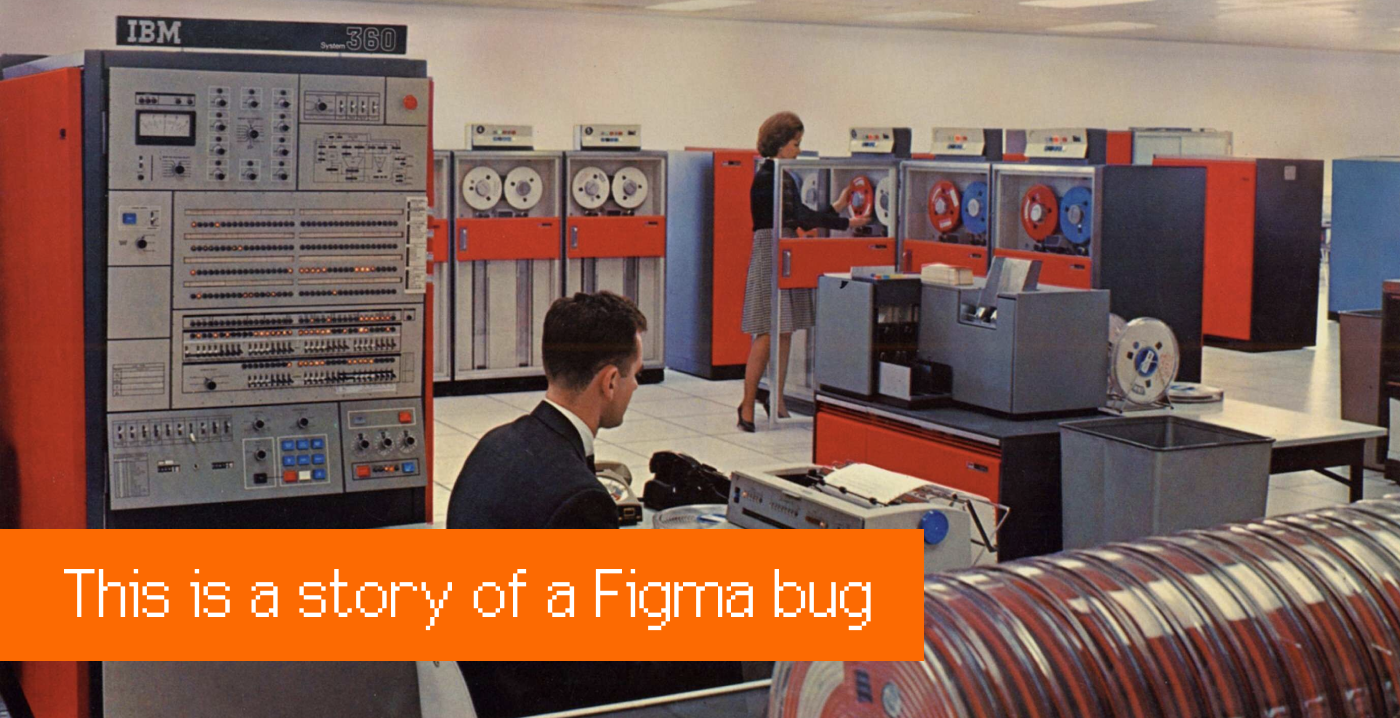
A perceived software bug in the design tool Figma was recently traced back to a specific keyboard layout decision made decades ago. The incident highlights how legacy hardware choices from the early days of computing continue to create unexpected challenges for modern software development.
CommentsRewriting a Commercial Engine in Jai
2026-10-25After eight years of development using TypeScript and three.js, a commercial engine has been completely rewritten using the Jai programming language and WebGPU. The new architecture notably operates without a traditional rendering engine, and the article explores the specific motivations behind this major technical pivot.
Comments2026-10-24
A newly disclosed remote code execution vulnerability dubbed http2shell affects the Brotli decoder across Node, Python, and .NET environments, sparking debate over its actual server-side impact. While some developers argue the threat is overblown because the vulnerable decoder is not enabled by default, others warn that hidden dependencies in popular libraries could leave many systems unexpectedly exposed. Commenters advise checking dependency trees and applying patches, despite frustrations over the sensationalized naming of the underlying memory bug.
CommentsA new interactive project called Impossible Machines allows users to declaratively program physical interactions within a simulated environment. By simply defining a starting cause and a desired effect, the system automatically generates the missing mechanical components required to bridge the two.
Comments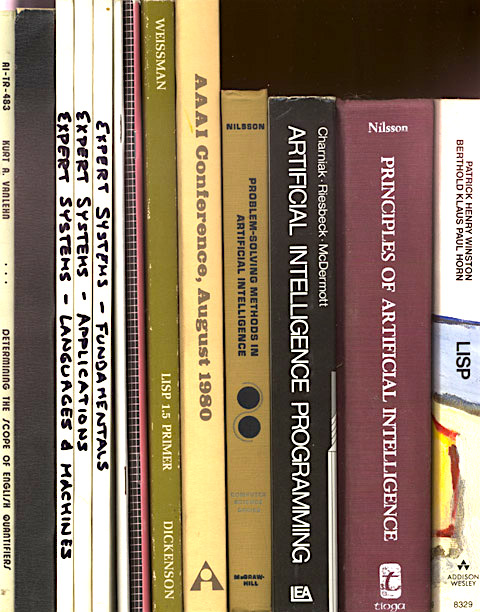
LISP Comes of Age (1980)
2026-10-24This historical Byte magazine report from 1980 covers the Stanford LISP conference, which convened immediately following the AAAI Artificial Intelligence Conference. The article highlights the maturation of the LISP programming language and its growing importance in the early days of artificial intelligence research.
Comments
Bringing uv and ty together
2026-10-24An experimental integration between uv and ty introduces first-class support for Python scripts across the command line and code editors. This update also features a unified uv check command to streamline developer workflows.
CommentsCorgi is a new multiplexer tool designed to manage both terminal sessions and AI agents from a single unified interface. It acts as a centralized helper to streamline developer workflows involving concurrent automated tasks. By combining terminal and agent management, the project aims to significantly reduce the overhead of running multiple background processes.
CommentsAnimations for System Builders
2026-10-24A recent article highlights the effective use of animations in system builder user interfaces to intuitively guide user attention to critical elements. Readers praised the design for purposefully highlighting important UI components without being distracting. However, some in the community questioned why the animations were implemented as videos instead of native HTML and discussed alternative tools like Motion Canvas.
Comments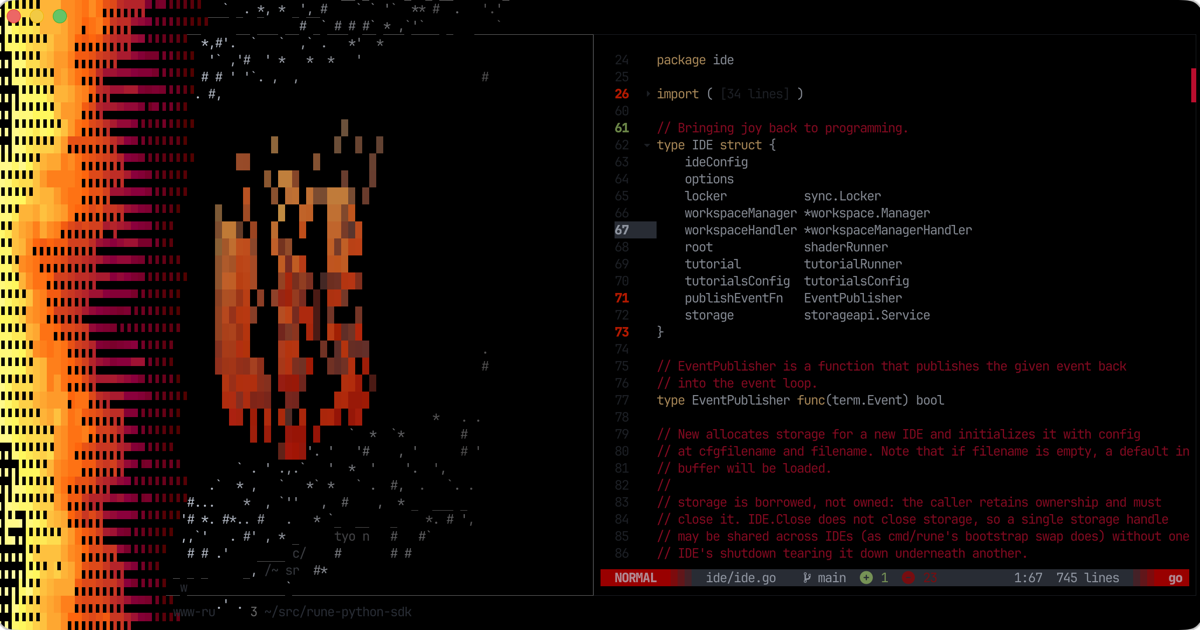
Rune 1.3 introduces TypeScript support, Helix editor integration, and Kitty graphics to enhance the platform. The update also adds a new browser package, animated activity tabs, and full workspace restoration including Agent conversations. This milestone marks the first release to feature community contributions.
CommentsNo Source Code? No Problem
2026-10-24A recent discussion highlights how AI-driven agentic coding is enabling developers to successfully recreate legacy software without access to the original source code, a feat recently demonstrated by reviving the classic game No One Lives Forever. While this capability is celebrated for preserving retro projects and challenging corporate monopolies, critics warn it could stifle open-source innovation and force companies to adopt restrictive, online-only business models to protect their intellectual property.
CommentsA new 2025 guide explores systemd-nspawn, a lightweight containerization tool that creates virtual machine-like environments on Linux without requiring a traditional hypervisor. The article provides a practical walkthrough for setting up and configuring these efficient containers. It highlights how this technology offers developers a streamlined and resource-friendly approach to modern system management.
CommentsDNS: A Replacement for Finger
2026-10-24A recent proposal suggests using the DNS protocol to replace the legacy Finger protocol for sharing personal status updates. Readers note that implementing this requires delegating DNS zones to third-party providers for real-time API updates. Additionally, the community warns that storing large amounts of data in DNS TXT records could expose servers to amplification DDoS attacks.
Comments
C vs. C#: racing VLC's Gaussian blur
2026-10-24A new benchmark compares the execution speed of C and C# by porting VLC's Gaussian blur video filter line-by-line into C#. Both implementations were optimized and tested within VLC 4, ensuring byte-identical output throughout the performance race.
CommentsTwelve Years of Distributed SQLite
2026-10-24The distributed database project rqlite is celebrating its twelfth anniversary since its initial release in September 2014. By placing a Raft consensus log in front of SQLite, the tool replicates writes across a cluster to ensure high availability and prevent data loss if a node fails.
Comments2026-10-23
A security researcher apologized for prematurely disclosing a PHP remote code execution vulnerability after unknowingly breaking a coordinated disclosure embargo. The incident sparked a debate within the tech community about whether third parties who are not explicitly informed of an embargo are still ethically bound by responsible disclosure practices. Commenters analyzed the complexities of information asymmetry and the game theory behind coordinated security announcements to determine accountability.
CommentsA new GitHub project called hackios-xnu-kernel is working to port Apple's XNU kernel to Android hardware. This open-source initiative aims to allow users to run the full iOS 16.5 firmware natively on non-Apple smartphones. Developers interested in the project can now create an account and contribute to the repository's ongoing development.
Comments
Developers have released earstrip, a new C++ and WebAssembly triangulation library designed to outperform the popular earcut algorithm. By rebuilding the ear clipping process from scratch, the library can triangulate 3.7 million real-world map polygons in just 489 milliseconds.
CommentsDocker is weird
2026-10-23Docker's creator joined a community discussion to clarify the platform's technical evolution from OpenVZ to LXC and eventually to an in-house Go implementation. The conversation also highlighted Docker's historical struggles with monetization and enterprise adoption, noting that the company's heavy open-source focus and initial neglect of enterprise needs allowed alternatives like Podman to gain traction.
Comments
Large language models are making formal software verification scalable by automating the proof of security properties in compiled code. For example, Claude successfully verified 123 open-source libraries and uncovered hidden bugs that had evaded detection for years.
CommentsA developer has published Hedra, a 3D open-world game they built entirely from scratch while in high school. The impressive project features a massive codebase of over 100,000 lines of code. The full source code is now publicly available on GitHub for the tech community to explore.
Comments