Programming Tech News
Writing software is a craft that keeps reinventing itself. This section gathers news and articles for people who program, covering language releases, compilers and runtimes, frameworks, development workflows, and the ideas that change how code gets written and reviewed.
Typical stories include new versions of Rust, Python, Java, JavaScript, and TypeScript, performance and debugging investigations, essays on architecture and code quality, and discussions of how AI coding assistants are changing day-to-day development. Hands-on tutorials and lessons from long-running projects show up often.
The tools and practices developers choose affect how fast teams ship and how well their software holds up over time. Working engineers, students learning to code, and engineering leaders follow this coverage to sharpen their skills and make better technical decisions.
2026-10-11
Build your own decision model
2026-10-11A new technical guide explores how to build System one decision models that infer and respond with calibrated probabilities for every allowed answer. It demonstrates how developers can use Structured Output to constrain everyday language models into generating guaranteed valid JSON in a single pass.
Comments
A developer spent 500 billion AI tokens to decompile and accurately recreate a popular first-person shooter game. Despite achieving a stable and feature-complete version, the project and its related blog posts were removed following legal intervention from the game's corporate publisher.
Comments
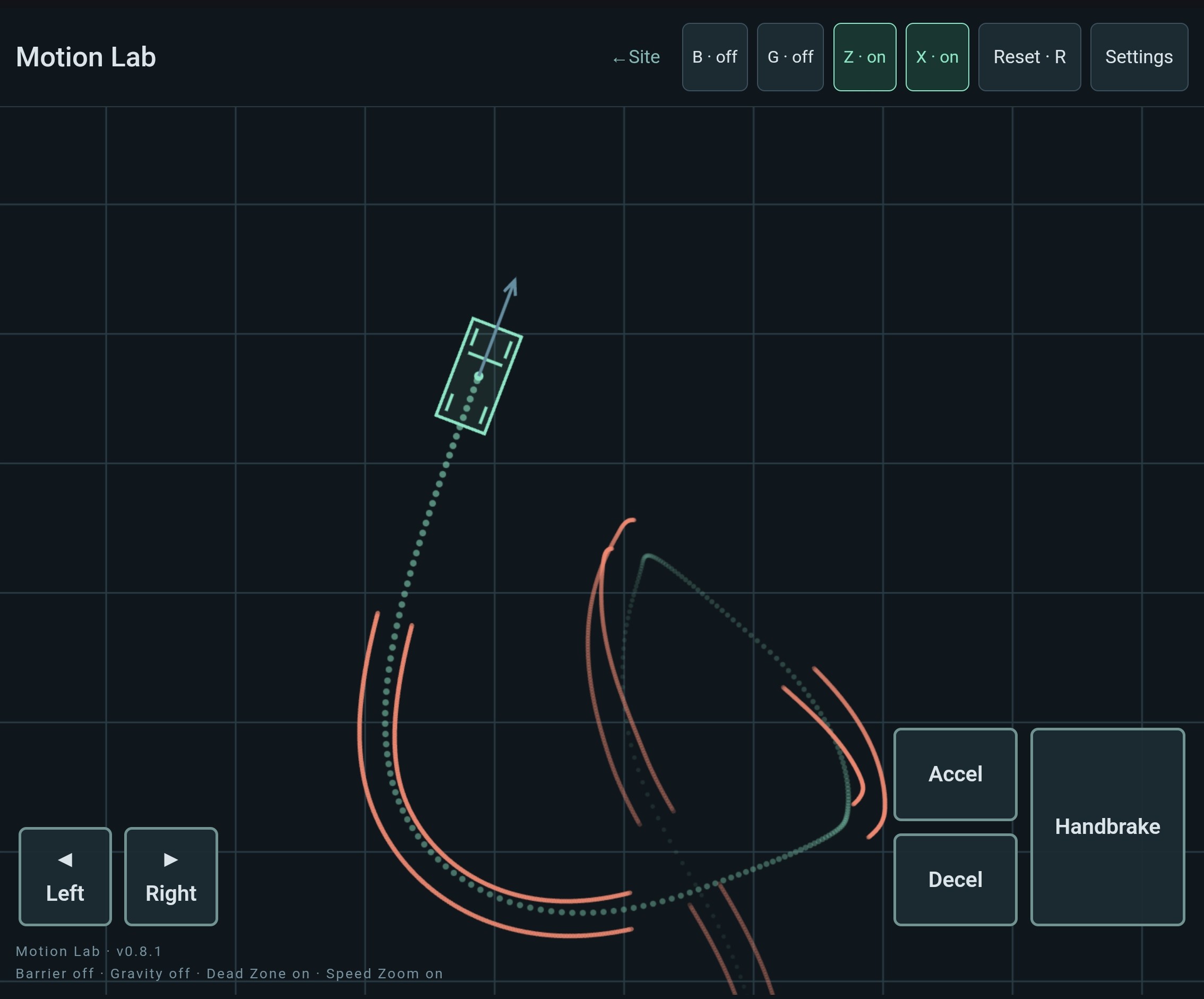
2D Vehicles
2026-10-11This tech retrospective explores the history of a 2D vehicle physics prototype originally developed in 1996. The article details the project's evolution over the years, culminating in its modern remaster released as Motion Lab.
CommentsDevelopers have launched Veda, billed as the first agentic-native hobby operating system designed to integrate AI agents directly into the core computing experience. The open-source project is now live on GitHub, inviting the community to contribute to its ongoing development.
CommentsNix wrote half of my debugger
2026-10-11A developer details their experience using Rewind VM, a deterministic virtual machine that treats Nix builds as pure functions to effortlessly isolate and resolve race conditions. The tool has practically built its own advanced debugger features, rapidly expanding to include thread lanes, stack frames, and enhanced GDB support. Despite its powerful capabilities, the author questions why this deterministic approach to debugging complex build environments remains largely underutilized.
Comments
A developer has released a recurrent neural network designed to generate Korean handwriting strokes in celebration of Hangul Day 2026. The project adapts Alex Graves' architecture and features a newly published dataset compiled from 4,500 lines of smartpen handwriting.
Comments
Knuth reward check
2026-10-11The author reflects on receiving a famous hexadecimal reward check from computer science pioneer Donald Knuth twenty years ago. Knuth traditionally issues these checks to individuals who discover bugs in his foundational programming books or software.
Comments
Why DuckDB 2.0 is faster
2026-10-11DuckDB 2.0 alpha introduces significant performance upgrades over version 1.5.5, achieving up to a 90x speedup for recursive CTEs, 6x faster VARIANT processing, and improved S3 async I/O. The update explores the specific architectural changes responsible for these gains and provides practical advice on data modeling to help developers fully leverage the enhanced speed.
Comments
Cockroach Labs developed MOLT Sinai, an AI coding teaching hospital that treats software bugs like patients and manages coding agents as a medical team. After five months of refining this clinical framework, the company successfully shipped IBM Db2 migration support in under two days.
Comments
Unikernels were hard. key word: were
2026-10-11Former MirageOS developer Justin Cormack explains that unikernels are experiencing a resurgence because the historical friction that made them difficult to use has disappeared. With traditional operating systems now viewed as design debt, unikernels offer a compelling and highly secure alternative for modern software deployment.
Comments
Researchers have introduced byteification, a novel method that retrofits existing subword-based large language models to operate directly on raw byte encoding with minimal extra training. This approach overcomes previous performance limitations, enabling byte-level models to match traditional systems while excelling at the fine-grained character-level reasoning required for complex scientific data like computer code and biological sequences.
Comments
OpenSCAD is highly regarded for allowing programmers to create parametric 3D models using plain, version-controllable text, but its code-based workflow makes iterative design and complex operations like filleting frustrating. While it remains an excellent niche tool for highly parametric tasks and AI code generation, users caution against using it for general-purpose modeling and instead recommend interactive, kernel-based alternatives like FreeCAD for broader CAD workflows.
CommentsDiffle is a new keyboard-first diff viewer designed to help developers navigate code changes efficiently without relying on a mouse. The tool features Language Server Protocol support for enhanced code intelligence and includes direct GitHub integration for seamless version control workflows.
Comments
Rampart is a new open-source project that enables browser-native, on-device redaction of personally identifiable information. It operates entirely locally and is recognized as one of the smallest and most effective personal information filters capable of running in a web browser.
Comments
C for Rust programmers
2026-10-11A new guide explores the unexpected details and nuanced differences Rust developers encounter when learning the C programming language. It highlights key challenges to help programmers transition more smoothly between the two systems languages.
Comments
Early results from the InnovationEval assessment indicate that current AI models are struggling to replicate a recent human algorithmic innovation. The findings highlight a persistent gap in artificial intelligence, demonstrating that these systems cannot yet match human-level algorithmic breakthroughs.
Comments2026-10-10
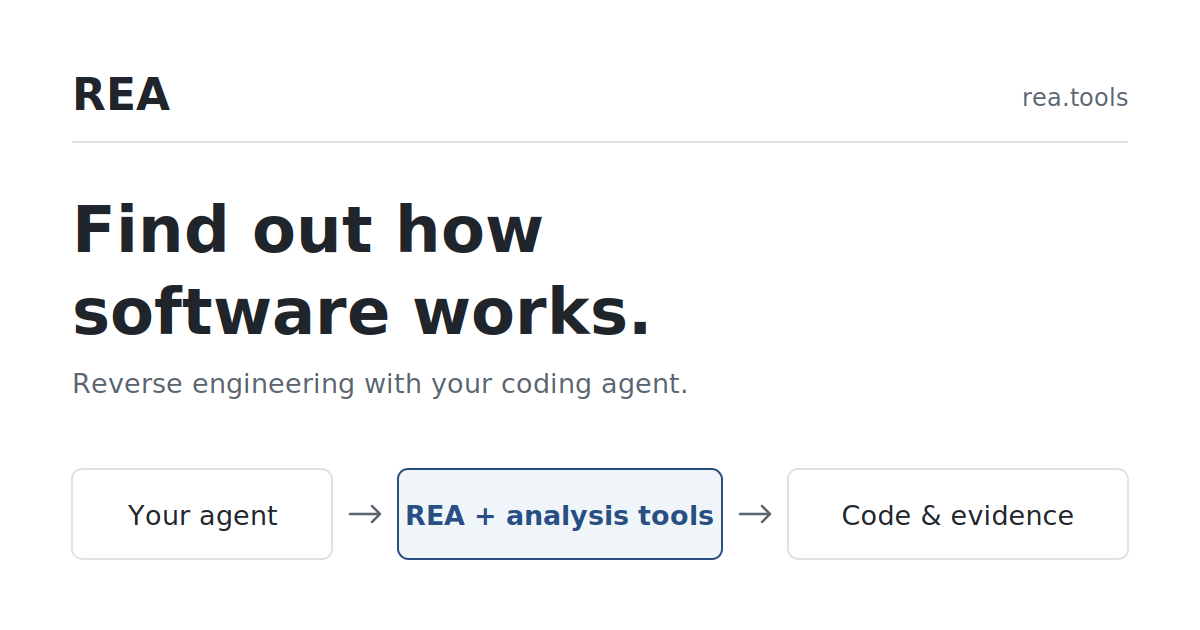
REA Reverse – Engineer Anything
2026-10-10REA is a new tool that allows users to reverse engineer applications, binaries, and browser behavior using a coding agent. The platform simplifies complex software analysis by offering clear guides and interactive examples.
Comments
Cloudflare acquires Deno
2026-10-10Cloudflare has acquired Deno, the secure runtime for JavaScript and TypeScript, to strengthen its developer platform and edge computing offerings. This strategic move positions the company to integrate Deno's modern capabilities with its global network to build the future of the web.
CommentsEurydice is a new tool that compiles Rust code into readable C, providing an alternative to the traditional rustc and LLVM pipeline. This approach allows developers to translate their Rust projects into clean, human-readable C code.
Comments
An analysis of 23 core open source projects reveals that 11 of them, including critical tools like sudo and bash, are maintained by only one or two individuals. The study highlights the heavy concentration of development efforts in the ecosystem by detailing the identities and funding sources of these key contributors.
Comments
Rewriting Prime Agent in Rust
2026-10-10The newly released Prime Agent has been completely rewritten from the ground up in Rust to improve overall system performance. This major architectural update delivers a faster, cleaner, and significantly more reliable experience for users.
Comments
100+ reactions to 100+ solutions
2026-10-10In response to OpenAI's October 6 announcement, a new community-driven resource has compiled over 100 reactions and proposed solutions. This collection provides an updating snapshot of the tech community's collective sentiment as developers grapple with the recent changes.
CommentsDiscussions surrounding the Lean Theorem Prover highlight growing concerns over the reliability of AI-generated mathematical proofs and the potential for underlying soundness bugs in the system's kernel. While automated proof checkers are necessary to mitigate AI hallucinations, experts emphasize that human oversight remains the ultimate backstop against theoretical flaws. Furthermore, current autoformalization tools struggle to accurately translate complex papers, often producing formally verified proofs that fail to capture the original mathematical intent.
CommentsA recent article advocates for including upgrade mechanisms in initial smart contract releases, prompting readers to argue that such features act as backdoors that violate the foundational code is law principle. Critics contend that this upgradability destroys the immutability and trust essential to decentralized contracts. Consequently, readers suggest that if upgradeability is necessary, traditional financial systems remain a cheaper and more functional alternative.
CommentsA recent mathematical paper regarding the irrationality exponent of logarithms of rational numbers has sparked online discussion after a confusing footnote referencing the author of The Da Vinci Code led some readers to question its authenticity. Despite the missing article, the community clarified that the work is a legitimate variation of a previous OpenAI proof concerning pi that has been formally verified in Lean.
CommentsProgramming Isn't Special
2026-10-10In his latest blog post, software engineer Glyph Lefkowitz argues that programming is not a magical or unique discipline, but rather a standard trade like any other. He challenges the tech industry's culture of exceptionalism, encouraging developers to view their work as a practical craft rather than an elite calling.
CommentsA new MIT-licensed command-line tool enables AI agents like Claude Code and Codex to draw temporary visual overlays, such as arrows and text, directly onto a Mac screen. The application features click-through functionality to prevent interrupting user workflows and automatically dismisses the annotations after a brief period.
Comments2026-10-09
Biomedical engineering professor Martin Uecker is making significant contributions to the C programming language by working to reduce undefined behavior and improve overall code safety. His cross-disciplinary efforts address critical vulnerabilities in the language, highlighting the ongoing industry push to modernize and secure core software infrastructure.
Comments
Yes, and
2026-10-09In his latest essay, Carson Gross addresses the anxieties of young computer science students regarding the rapid rise of artificial intelligence. He advises them to adopt a collaborative mindset, encouraging them to embrace and build upon AI advancements rather than fearing for their future careers.
Comments