Programming Tech News
Writing software is a craft that keeps reinventing itself. This section gathers news and articles for people who program, covering language releases, compilers and runtimes, frameworks, development workflows, and the ideas that change how code gets written and reviewed.
Typical stories include new versions of Rust, Python, Java, JavaScript, and TypeScript, performance and debugging investigations, essays on architecture and code quality, and discussions of how AI coding assistants are changing day-to-day development. Hands-on tutorials and lessons from long-running projects show up often.
The tools and practices developers choose affect how fast teams ship and how well their software holds up over time. Working engineers, students learning to code, and engineering leaders follow this coverage to sharpen their skills and make better technical decisions.
2026-10-10
REA Reverse – Engineer Anything
2026-10-10REA is a new tool that allows users to reverse engineer applications, binaries, and browser behavior using a coding agent. The platform simplifies complex software analysis by offering clear guides and interactive examples.
Comments
Cloudflare acquires Deno
2026-10-10Cloudflare has acquired Deno, the secure runtime for JavaScript and TypeScript, to strengthen its developer platform and edge computing offerings. This strategic move positions the company to integrate Deno's modern capabilities with its global network to build the future of the web.
Comments
Eurydice is a new tool that compiles Rust code into readable C, providing an alternative to the traditional rustc and LLVM pipeline. This approach allows developers to translate their Rust projects into clean, human-readable C code.
Comments
An analysis of 23 core open source projects reveals that 11 of them, including critical tools like sudo and bash, are maintained by only one or two individuals. The study highlights the heavy concentration of development efforts in the ecosystem by detailing the identities and funding sources of these key contributors.
Comments
Rewriting Prime Agent in Rust
2026-10-10The newly released Prime Agent has been completely rewritten from the ground up in Rust to improve overall system performance. This major architectural update delivers a faster, cleaner, and significantly more reliable experience for users.
Comments
100+ reactions to 100+ solutions
2026-10-10In response to OpenAI's October 6 announcement, a new community-driven resource has compiled over 100 reactions and proposed solutions. This collection provides an updating snapshot of the tech community's collective sentiment as developers grapple with the recent changes.
CommentsDiscussions surrounding the Lean Theorem Prover highlight growing concerns over the reliability of AI-generated mathematical proofs and the potential for underlying soundness bugs in the system's kernel. While automated proof checkers are necessary to mitigate AI hallucinations, experts emphasize that human oversight remains the ultimate backstop against theoretical flaws. Furthermore, current autoformalization tools struggle to accurately translate complex papers, often producing formally verified proofs that fail to capture the original mathematical intent.
CommentsA recent article advocates for including upgrade mechanisms in initial smart contract releases, prompting readers to argue that such features act as backdoors that violate the foundational code is law principle. Critics contend that this upgradability destroys the immutability and trust essential to decentralized contracts. Consequently, readers suggest that if upgradeability is necessary, traditional financial systems remain a cheaper and more functional alternative.
CommentsA recent mathematical paper regarding the irrationality exponent of logarithms of rational numbers has sparked online discussion after a confusing footnote referencing the author of The Da Vinci Code led some readers to question its authenticity. Despite the missing article, the community clarified that the work is a legitimate variation of a previous OpenAI proof concerning pi that has been formally verified in Lean.
CommentsProgramming Isn't Special
2026-10-10In his latest blog post, software engineer Glyph Lefkowitz argues that programming is not a magical or unique discipline, but rather a standard trade like any other. He challenges the tech industry's culture of exceptionalism, encouraging developers to view their work as a practical craft rather than an elite calling.
CommentsA new MIT-licensed command-line tool enables AI agents like Claude Code and Codex to draw temporary visual overlays, such as arrows and text, directly onto a Mac screen. The application features click-through functionality to prevent interrupting user workflows and automatically dismisses the annotations after a brief period.
Comments2026-10-09
Biomedical engineering professor Martin Uecker is making significant contributions to the C programming language by working to reduce undefined behavior and improve overall code safety. His cross-disciplinary efforts address critical vulnerabilities in the language, highlighting the ongoing industry push to modernize and secure core software infrastructure.
Comments
Yes, and
2026-10-09In his latest essay, Carson Gross addresses the anxieties of young computer science students regarding the rapid rise of artificial intelligence. He advises them to adopt a collaborative mindset, encouraging them to embrace and build upon AI advancements rather than fearing for their future careers.
CommentsSVG Spark is a newly launched suite of ten free, client-side utilities for developers and creators working with SVGs. Running entirely within the web browser, the toolkit includes essential features such as converters, formatters, PDF tools, and a regex debugger to streamline design and development workflows.
CommentsA recent Hacker News discussion explores popular self-hosting applications for cheap virtual private servers, with users recommending tools for media streaming, photo backups, and code repositories. The conversation also sparked a debate over the privacy implications of Tailscale and the ethics of media piracy, which participants jokingly euphemized as collecting Linux ISOs. Some users defended paying for high-quality media, arguing that piracy and artificial intelligence are actively harming art and culture.
CommentsA newly proposed terminal protocol introduces a push-based mechanism for applications to report their execution status directly to terminal emulators, sparking debate over using this OSC approach versus the existing BSD SIGINFO pull method. Proponents favor the new protocol for its superior multiplexing support and safer framing, which has already inspired developers to explore custom notifications and advanced pane management integrations.
CommentsEdi Life OS is a new self-hosted dashboard designed to help users track personal habits, goals, finances, and tasks. The open-source project features a built-in MCP server, allowing users to seamlessly integrate their personal productivity data with AI assistants.
Comments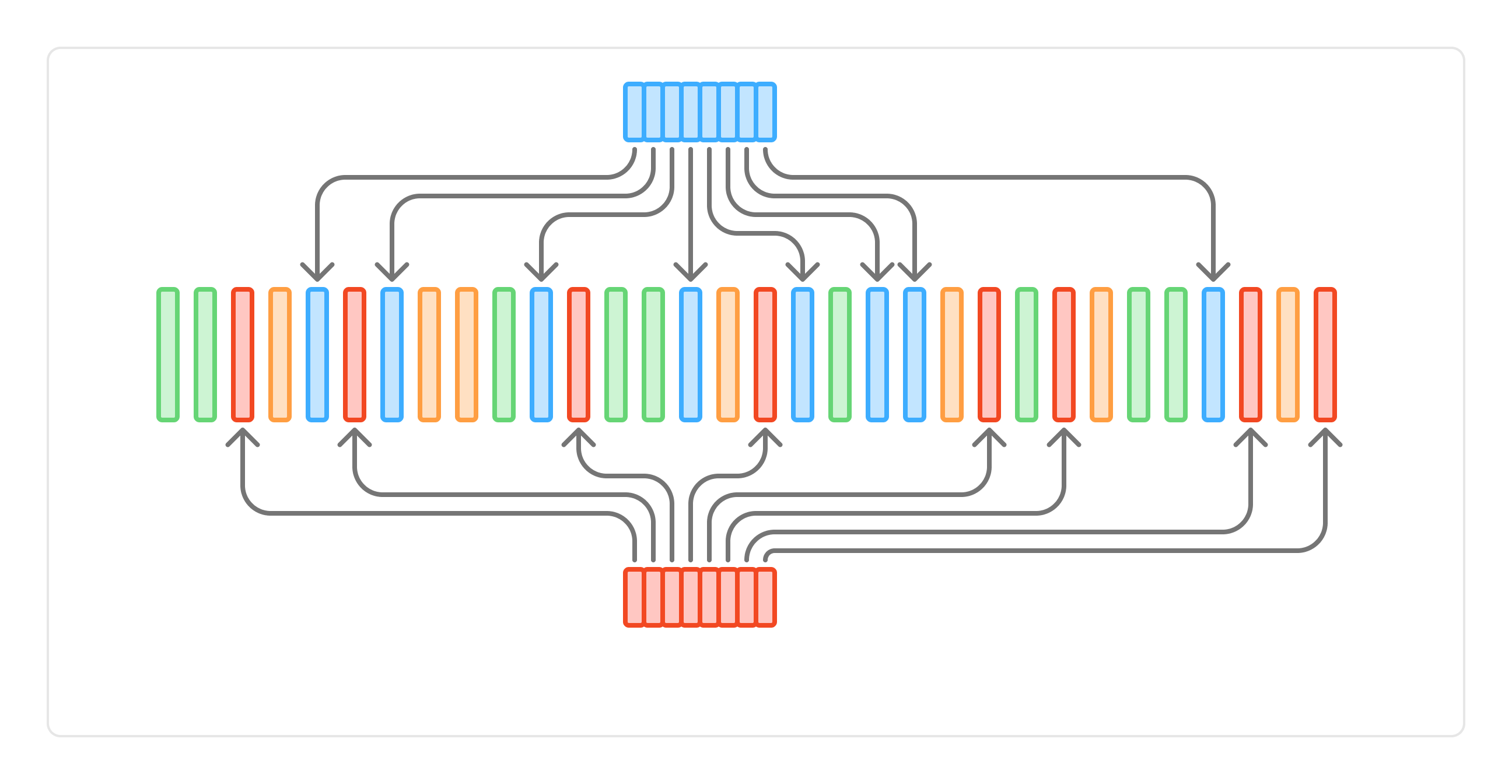
A recent blog post details a 2026 summer intern project focused on scaling and benchmarking a critical message bus using a new indexing strategy. This technical deep dive is featured in a special series highlighting the impactful contributions of the company's summer interns.
Comments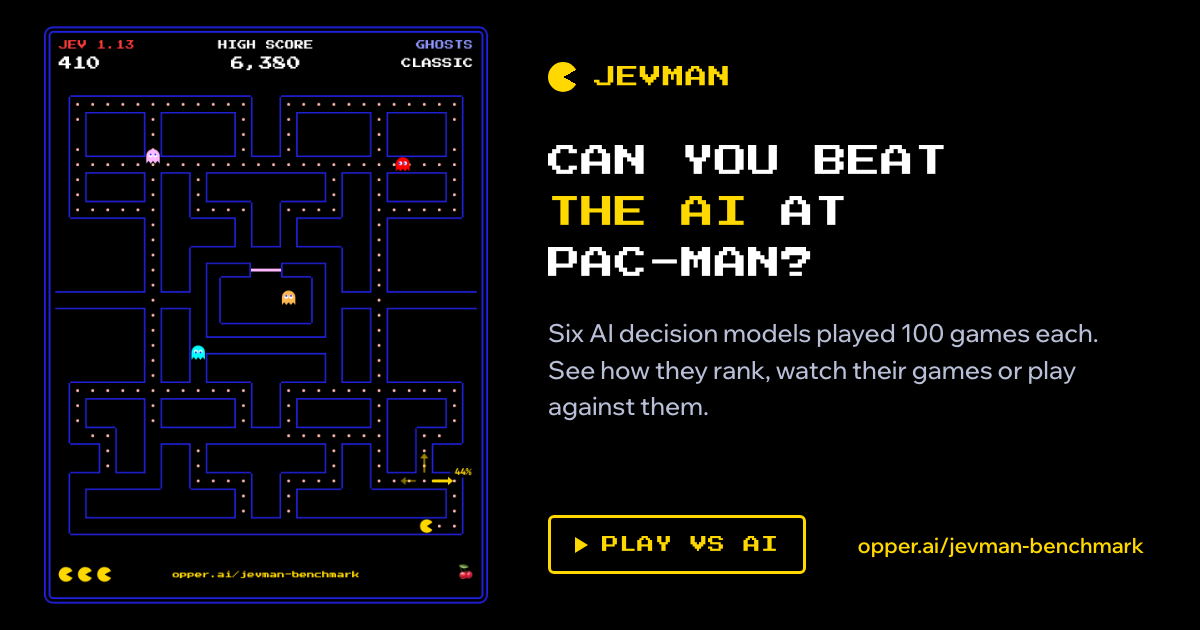
Jevman is a new project that features six AI decision models playing Pac-Man in real time against classic arcade ghosts. Users can watch the algorithms navigate the maze, check a leaderboard to see which model performs best, or play against the AI themselves.
Comments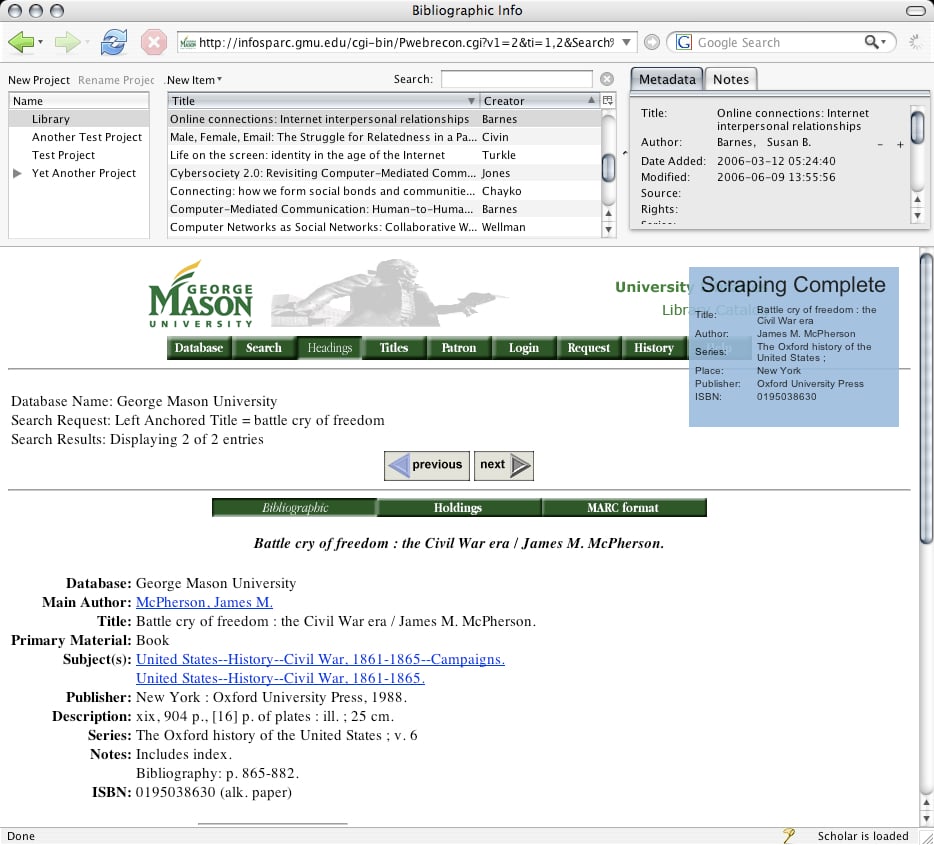
The Slow Formation of Durable Software
2026-10-09A group of historians spent years conceptualizing and developing Zotero, a research application that is now used by millions of people. This article examines their patient, deliberate approach to building the tool, highlighting how slow and thoughtful development can lead to highly durable software.
Comments
A developer challenged Claude Opus 5.5 and GPT-6 Astra to visualize Italo Calvino's novel Invisible Cities using Three.js from a single prompt. The six-hour experiment evaluates how these advanced AI models handle complex tasks in design, user experience, and interactive data visualization. Ultimately, the project showcases the growing potential of AI to generate explorable web experiences with minimal human intervention.
Comments2026-10-08

Margaret Hamilton has died
2026-10-08Margaret H. Hamilton, a profoundly influential computer scientist who led the software engineering team for NASA's Apollo program at MIT's Instrumentation Lab, has died at age 90. Her pioneering work on the missions cemented her legacy as a foundational figure in the history of computer science.
CommentsDocker Agent
2026-10-08Docker has introduced Docker Agent, a new platform developed by its engineering team to serve as a dedicated builder and runtime for AI agents. This release provides developers with a streamlined environment to create, manage, and deploy artificial intelligence applications.
CommentsA developer has created a minimal, proof-of-concept kernel written in Swift that runs within the QEMU emulator, sparking community discussions about the potential of Embedded Swift for low-level development. Enthusiasts praise the language's seamless C/C++ interoperability and ability to handle fundamental system tasks, suggesting these techniques could eventually be used to write drivers for established embedded operating systems like Zephyr or U-Boot.
CommentsA new article explores the programming idiom of pushing ifs up and fors down to optimize code structure. The author analyzes the theoretical foundations of this rule, highlighting its practical applications in query optimization and functional programming algebra. Finally, the post discusses the limitations of the concept and identifies where the analogy stops being useful.
Comments
This piece examines the technical pitfalls of attempting to hot-patch a function that has already been hot-patched. It details the underlying complications of modifying an already modified function at the code level. The author concludes by warning developers that hot-patching is a Windows-specific operating system mechanism and should not be used in custom applications.
Comments
Sharing AI progress in mathematics
2026-10-08OpenAI has published new results on open mathematical problems solved by an internal frontier model, demonstrating significant AI progress in the field. To support the broader research community, the company also released the associated Lean proof formalizations and detailed documentation on GitHub.
Comments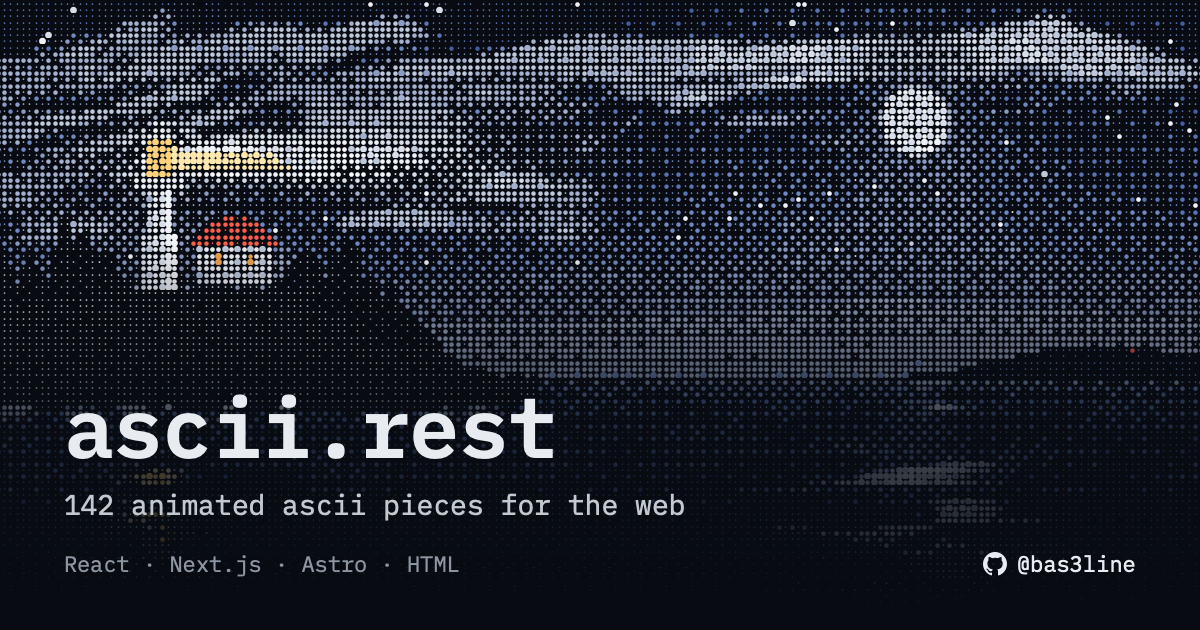
Animated ASCII Art for Web Pages
2026-10-08A new open-source TypeScript library offers 191 animated ASCII art pieces for web developers looking to add retro flair to their sites. The zero-dependency tool integrates seamlessly with React, Next.js, and Astro, or works with a simple HTML tag. The project is fully available under the MIT license.
Comments
Anti-patterns in software blogging
2026-10-08A recent article explores common anti-patterns in software blogging that hinder effective communication with developer audiences. It provides actionable advice on avoiding these pitfalls to create more engaging and useful technical content.
Comments