Programming Tech News
Writing software is a craft that keeps reinventing itself. This section gathers news and articles for people who program, covering language releases, compilers and runtimes, frameworks, development workflows, and the ideas that change how code gets written and reviewed.
Typical stories include new versions of Rust, Python, Java, JavaScript, and TypeScript, performance and debugging investigations, essays on architecture and code quality, and discussions of how AI coding assistants are changing day-to-day development. Hands-on tutorials and lessons from long-running projects show up often.
The tools and practices developers choose affect how fast teams ship and how well their software holds up over time. Working engineers, students learning to code, and engineering leaders follow this coverage to sharpen their skills and make better technical decisions.
2026-09-28
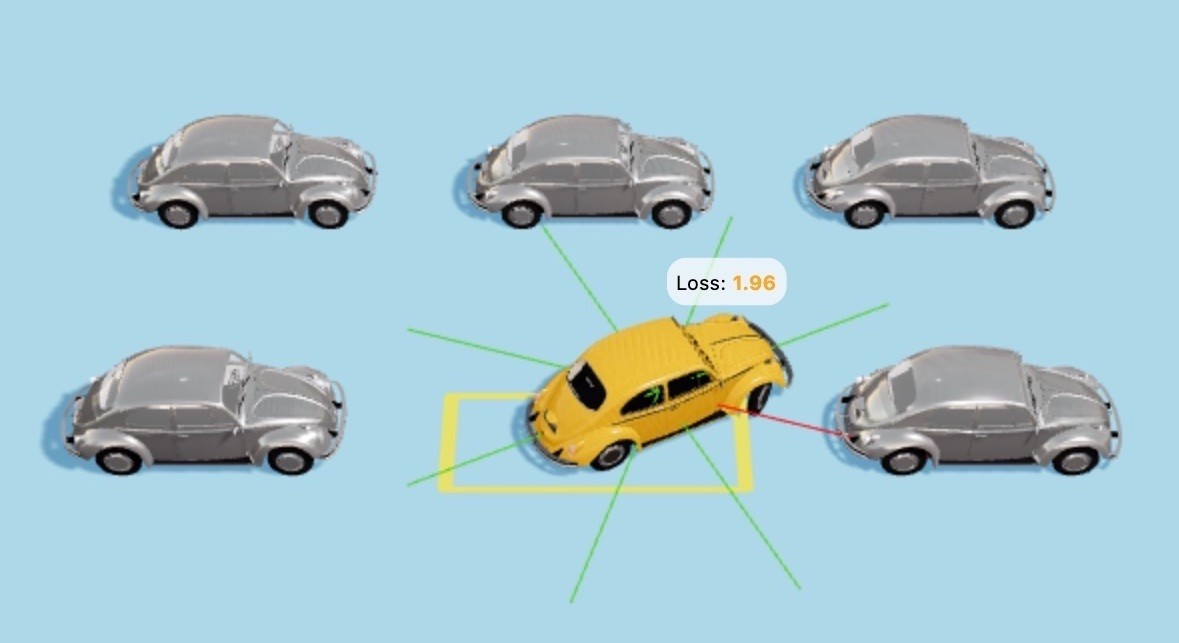
A 2021 technical demonstration showcases a vehicle successfully trained to self-park using a genetic algorithm. By leveraging evolutionary computing instead of traditional programming, the car autonomously learns to navigate and park, highlighting innovative machine learning applications in autonomous driving.
Comments
Ember-1
2026-09-28Fireworks Research has unveiled Ember-1, a new specialized model that matches the output quality of Kimi K3 while consuming 40% fewer tokens. This significant reduction in token usage offers developers a much more efficient and cost-effective solution for their applications.
Comments
A new open-source guitar amp and effects pedal project named Coyopedal utilizes the Waveshare ESP32-S3-Touch-AMOLED-2.06 hardware to create a compact NAM pedalboard. Developed by dashersw, the project features direct SD-card model loading and a custom Gea-compiled native frontend for seamless digital tone shaping.
CommentsA recent article and subsequent reader discussion emphasize that human code review serves a broader purpose than mere bug detection, functioning primarily as a tool for team collaboration, architectural defense, and shared system comprehension. While some engineers argue that manual reviews will become a bottleneck in the era of AI-generated code, others defend the practice as essential for liability shielding, validating test coverage, and evaluating overall deployment strategies. Ultimately, the debate highlights that effective code review is about assessing the broader problem-solving approach and team alignment rather than just scrutinizing the code itself.
CommentsThe state of SIMD in Rust in 2026
2026-09-28The author reflects on the significant advancements made to Rust's SIMD capabilities over the past year, including their own personal contributions. The piece provides a comprehensive overview of the current state of SIMD in the language as of 2026.
CommentsDon't couple your Go code to GitHub
2026-09-28A recent technical post advises Go developers to avoid tightly coupling their code with GitHub-specific APIs and tools to ensure better code portability and flexibility. Ultimately, this decoupling practice allows developers to switch or update their underlying infrastructure without requiring significant code rewrites.
CommentsWhat I did at Recurse Center
2026-09-28The author recounts their summer experience at the Recurse Center, a Brooklyn-based programming retreat recommended by a friend. The post details the various projects and activities the writer completed during their time at the retreat.
CommentsImp is a full port of DSPy to the BEAM
2026-09-28The newly released Imp project is a full port of the DSPy framework to the BEAM virtual machine, bringing programmatic language model development to Elixir. It enables developers to build declarative, self-improving AI applications by combining DSPy's optimization capabilities with the robust concurrency of the Elixir ecosystem.
CommentsThe Go team is addressing unnecessary binary bloat caused by the largely unused FIPS140 cryptographic module. This code, particularly its random number generator, adds significant size to binaries despite being required by only a niche group of users. Consequently, the project aims to restructure the package so it does not inflate standard Go applications.
CommentsWriting Efficient C++ Code (2013)
2026-09-28Discussions surrounding a 2013 article on efficient C++ programming emphasize prioritizing cache locality and contiguous memory layouts over traditional, pointer-heavy data structures to minimize costly cache misses. While packing data into arrays or vectors generally outperforms theoretical algorithmic complexity on modern hardware, developers caution that standard C++ library tools can be inherently slow and fragmented. Ultimately, readers conclude that while data-oriented design is crucial, complex applications still require rigorous profiling to avoid the hidden pitfalls of misguided optimizations.
CommentsFakecloud is a free, open-source local AWS emulator designed to simplify integration testing. It operates as a single binary that requires no authentication and has no paid tiers. Additionally, the tool provides first-party SDKs to streamline test assertions for developers.
Comments2026-09-27

Go Concurrency Distilled
2026-09-27A newly released interactive mini-book titled Go Concurrency Distilled offers developers a hands-on approach to mastering concurrent programming in Go. The resource provides practical exercises and insights to help programmers efficiently leverage the language's powerful concurrency features.
CommentsReladraw is a new open-source diagramming language that gives users full manual control over element placement. Unlike tools with automated layouts, it allows creators to precisely dictate the exact position of every diagram component. The project is currently available for public contribution on GitHub.
CommentsThe rise of AI-driven code generation is prompting a fundamental reevaluation of how programming languages are designed. As machines become the primary writers of code, future languages will likely evolve to prioritize machine efficiency and optimization over human readability. This transition will ultimately reshape the entire landscape of software development.
Comments
Researchers have reverse-engineered the historic Intel 8087 floating-point coprocessor to uncover the underlying hardware mechanics of its tangent calculation. The analysis reveals that the 1980 chip employs a more complex method than the standard CORDIC algorithm to compute trigonometric functions.
CommentsDrawgent is a next-generation social coding platform that integrates an AI coding agent directly onto a live Excalidraw canvas. This tool enables developers to collaboratively build and visualize software projects in real-time by seamlessly merging visual whiteboarding with automated code generation.
CommentsA new technique enables the generation of custom fonts where every large language model token is rendered at the exact same visual width. This ensures uniform text alignment and spacing in AI outputs, offering improved visual consistency for user interfaces and data visualizations.
CommentsA new introduction to modern Object Pascal has sparked nostalgic discussions among developers who originally learned to code using Turbo Pascal and Delphi. The community highlights the language's historical impact on early software while expressing renewed interest in its modern capabilities, such as compiling to JavaScript and supporting inline variable declarations. Some readers also suggest that a light fork could further modernize the ecosystem by cleaning up legacy namespaces and starting the runtime library afresh.
CommentsReaders discussing an article about modifying programming languages criticized the recurring trend of dismissing fundamental concepts just because LLMs can process them faster. However, the discussion highlights that the fear of language macros is largely overblown. While macro abuse can occur, features like the core.async library in Clojure show that macros often improve code readability and understanding when used properly.
Comments
The Lost Atomic Update on Loongson CPU
2026-09-27A new technical article details a developer's troubleshooting process for a missing atomic update bug on the Loongson CPU. The piece provides practical insights into low-level programming and board-level debugging required to resolve this critical hardware synchronization issue.
Comments
This article explores strategies for software developers to maintain their passion for coding amid the rapid rise of large language models. It addresses common industry anxieties, including AI burnout, job displacement by less skilled programmers, and frustrations over declining code quality. Ultimately, the piece offers guidance on how to uphold high engineering standards and find fulfillment in an increasingly AI-driven landscape.
CommentsA single Twitch chat message was able to achieve remote code execution on a streamer's PC by exploiting a vulnerable chat overlay in OBS. The severe vulnerability stemmed from a lack of backend message sanitization combined with the streaming software running an outdated Chromium engine. Furthermore, the exploit was facilitated by OBS having its browser sandbox completely disabled, leaving the system highly exposed to malicious payloads.
Comments2026-09-26
Plan mode is dead
2026-09-26The author of a recent piece argues that plan mode is dead, reversing their earlier belief that planning would be the most critical aspect of building software with AI. This shift suggests a fundamental change in how developers should approach AI-assisted coding and software creation.
Comments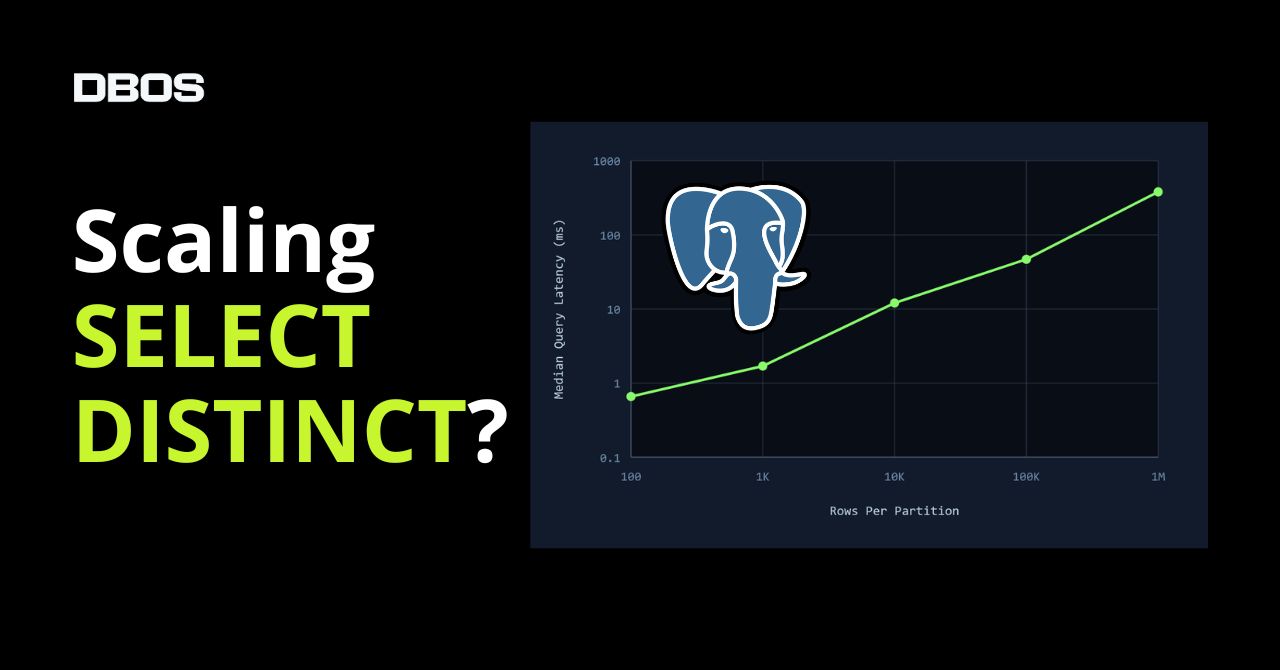
Postgres SELECT DISTINCT Does Not Scale
2026-09-26A recent technical analysis reveals that PostgreSQL's SELECT DISTINCT command suffers from severe performance degradation as datasets scale. The authors break down the underlying reasons for this unexpected bottleneck and outline the specific optimization strategies they implemented to resolve the issue.
Comments
Platform-independent SIMD in Go
2026-09-26Go 1.27 introduces an experimental, platform-agnostic API to bring SIMD capabilities directly into the language. This addition allows developers to write high-performance, vectorized code that runs consistently across diverse hardware architectures without relying on platform-specific implementations.
CommentsThe open-source project git-bug provides a distributed, offline-first bug tracking solution embedded directly within Git repositories. By keeping issue tracking inside the version control system, developers can manage bugs seamlessly without relying on external servers or internet connectivity.
CommentsHacker Atlas is a new interactive tool that visualizes and maps the topics discussed on Hacker News. The project features a semantic graph and category breakdowns that help users track conversation trends and uncover niche discussions. While the community praises the concept, readers suggest future updates should include historical data graphs and continuous scrolling.
CommentsRemembering Johannes Doerfert
2026-09-26The LLVM project community is paying tribute to Johannes Doerfert, a dedicated contributor to the open-source compiler infrastructure. This memorial highlights his significant impact on the project and the lasting legacy he leaves behind in the software development trenches.
CommentsI wrote a ray tracer in Brainfuck
2026-09-26A developer has successfully built a ray tracer using the notoriously difficult esoteric programming language Brainfuck. To accomplish this, they designed a custom domain-specific language and utilized a Python-based code generator to compile the final output. The project highlights an impressive technical workaround for rendering complex graphics in an extremely constrained programming environment.
CommentsThis technical piece explores the mathematical principles of Fourier analysis through a creative visualization that draws a llama using rotating circles. By programming a series of connected epicycles, the project demonstrates how complex spatial curves can be accurately reconstructed from simpler frequency components. The demonstration highlights the fascinating intersection of advanced mathematics, computer programming, and digital art.
Comments