Programming Tech News
Writing software is a craft that keeps reinventing itself. This section gathers news and articles for people who program, covering language releases, compilers and runtimes, frameworks, development workflows, and the ideas that change how code gets written and reviewed.
Typical stories include new versions of Rust, Python, Java, JavaScript, and TypeScript, performance and debugging investigations, essays on architecture and code quality, and discussions of how AI coding assistants are changing day-to-day development. Hands-on tutorials and lessons from long-running projects show up often.
The tools and practices developers choose affect how fast teams ship and how well their software holds up over time. Working engineers, students learning to code, and engineering leaders follow this coverage to sharpen their skills and make better technical decisions.
2026-08-02
Go 1.27 Interactive Tour
2026-08-02A new interactive tour is now available to explore the latest language, runtime, and standard library updates in Go 1.27. Developers can examine these notable changes firsthand through short, editable, and runnable code examples.
CommentsDiátaxis
2026-08-02Diátaxis is a widely-adopted framework in the software industry that provides a systematic approach to thinking about and creating technical documentation. This pragmatic methodology helps developers structure their documentation more effectively to meet the needs of their users.
Comments
Leonardo de Moura, creator of the Lean theorem prover and Z3 SMT solver, released a postmortem detailing the root causes and resolution of Kernel Soundness Bug 14576. The analysis provides critical insights into maintaining the integrity of formal verification systems and preventing similar vulnerabilities in future kernel updates.
Comments
AI infrastructure startup Morph, a YC S23 company, is hiring a Member of Technical Staff to optimize its inference stack for open models. The performance engineer will work directly with founders to improve system speed, cost-efficiency, and reliability by optimizing everything from individual GPU kernels to distributed execution. Ideal candidates will possess deep expertise in GPU performance and complex production systems to help scale frontier-level model serving.
Comments
A recent bug in the COLDCARD hardware wallet was traced to a flaw where the random.bytes() function executed without throwing errors but failed to produce secure randomness. The specifics of this silent failure were detailed in a revealing commit message, highlighting the hidden dangers of unverified execution in cryptographic code.
Comments
The Art of 64-bit Assembly
2026-08-02The article explores the rigorous discipline of 64-bit assembly programming, emphasizing the need for a deep, foundational understanding of hardware. It highlights that working at this low level leaves developers with no high-level abstractions, shortcuts, or runtime environments to hide behind when debugging.
Comments
While developing a quantum compiler named Catalyst, a software team accidentally created an LLVM compiler for the Jax machine learning framework. This unexpected tool emerged as a byproduct of extensive problem-solving and provides a novel way to optimize Jax programs.
CommentsUsers of the popular command-line search tool ripgrep have reported occasional segmentation faults when executing exceptionally large directory searches using musl binaries. These crashes disrupt the tool's recursive regex functionality during heavy workloads. The issue is currently being tracked on the project's GitHub repository as developers investigate a fix.
Comments2026-08-01
qm – Multiplayer agent harness for work
2026-08-01YC Software has released qm, an open-source multiplayer agent harness designed to streamline collaborative work. Developers can explore the framework and contribute to its ongoing development via the project's GitHub repository.
CommentsThe article introduces Flint, a new visualization language designed for the AI era. In the discussion section, readers recommend checking out Vega, an existing visualization grammar, as a point of comparison.
Comments
Progressive Web Components
2026-08-01A new lightweight library named Elena has been introduced to help developers easily build Progressive Web Components. This tiny framework is designed to streamline the development process and simplify the creation of modern web applications.
Comments
The June update for the Servo web engine introduces key improvements to real-world compatibility, media queries, and SharedWorker support. Furthermore, the developers have launched a new initiative inviting the community to help write future monthly progress reports.
CommentsA new dependency-free C inference engine called waste allows users to run the massive 2.78-trillion-parameter Kimi K3 model using only 29 GB of RAM. It achieves this feat by streaming activated weights directly from NVMe storage rather than loading the entire model into memory. While the inference speed is a slow 0.50 tokens per second, it demonstrates a novel approach to running extremely large AI models on limited hardware.
Comments
Let's make the worst Htmx
2026-08-01A developer is demystifying the popular web library htmx by building a deliberately flawed clone from scratch. This humorous, hands-on project allows programmers to deeply understand the framework's core mechanics through unconventional reverse-engineering.
CommentsThe Go Collections working group has proposed adding generic collection data structures to the Go standard library under a new container package. This initiative aims to provide developers with common, pragmatic data structures directly within the language's core ecosystem.
Comments
Python lacks a built-in method to display floating-point numbers in binary format. However, developers can work around this limitation by converting the language's native hexadecimal representation of floats into binary. This article details the steps to easily achieve this conversion for debugging and analysis.
Comments
Giles Bowkett recently showcased Archaeopteryx at the RubyFringe conference, introducing a novel Ruby-based tool that algorithmically generates MIDI drum patterns. The project aims to revolutionize algorithmic music composition by allowing developers to write code that creates complex rhythmic tracks. The enthusiastic reception at the event highlighted the project's success in blending software development with creative musical expression.
CommentsTermixer (TUI DJ Mixer)
2026-08-01Termixer is a new terminal-based DJ application that brings a two-deck mixer, sample pads, and a sequencer directly to any Unix command line. The tool provides a unique text-based user interface for developers and terminal enthusiasts to produce and mix music without leaving their native environment.
CommentsA solo developer has spent two years building a new open-source web browser that recently achieved a perfect 100% score on the Acid3 test, serving as a strong proof of concept for the project. Although the benchmark is largely obsolete for modern web standards, the community is highly engaged, requesting a Linux release and modern performance benchmarks to compare its speed against industry giants like Chrome.
Comments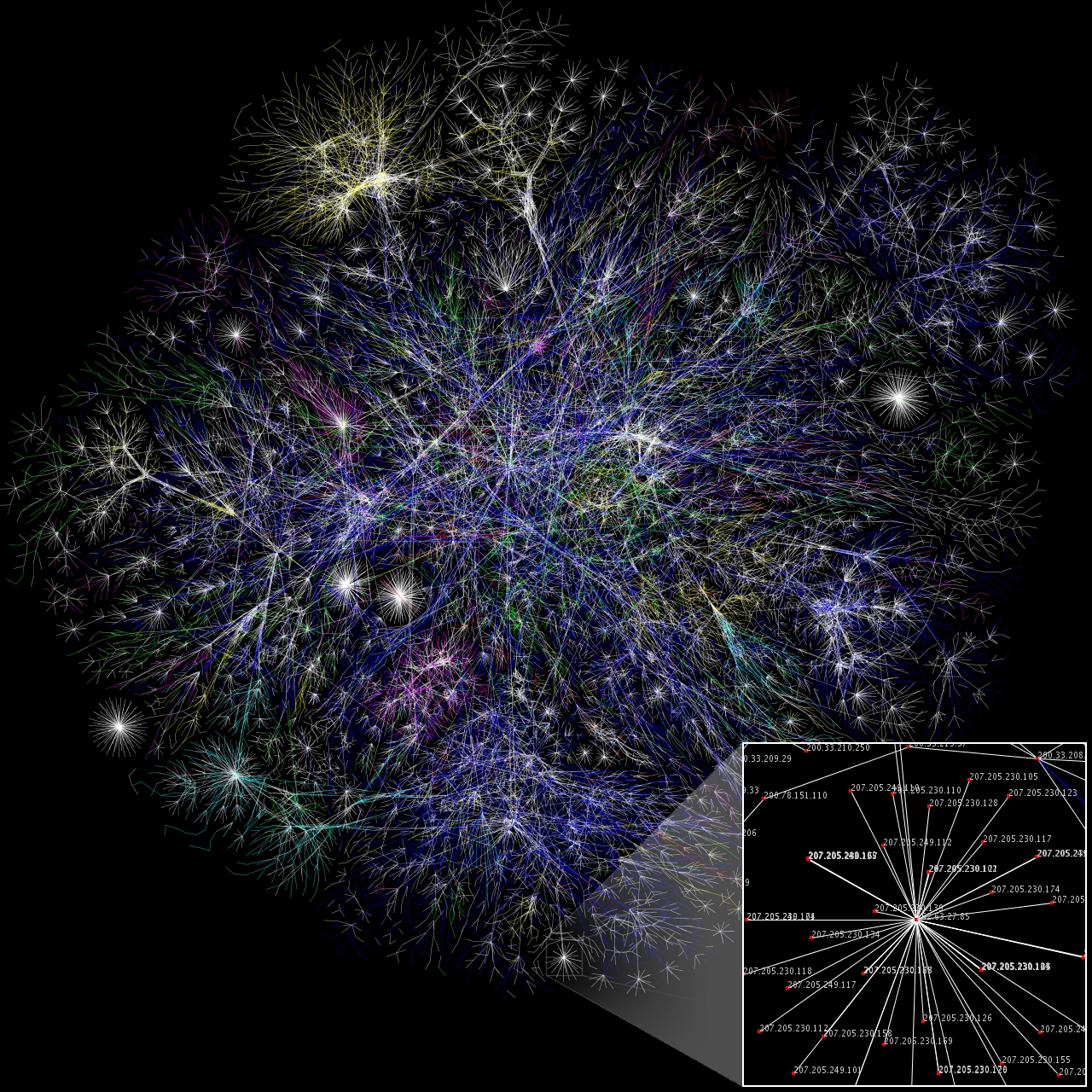
Despite initial skepticism, a developer has successfully implemented basic graph algorithms like PageRank and WCC using Apache DataFusion on billion-scale datasets. The solution efficiently processes a two-billion-edge graph using a strict 10 GB RAM limit, significantly outperforming the memory footprint of traditional graph representations. This achievement highlights DataFusion's emerging potential for highly memory-efficient, large-scale graph analytics and entity resolution.
CommentsJW Labs has released a research post detailing predictive speculative KV replication, a new technique designed to optimize Large Language Model inference during bursty traffic. By anticipating workload spikes and proactively replicating key-value caches, the proposed method aims to significantly reduce latency and improve overall system throughput.
Comments2026-07-31
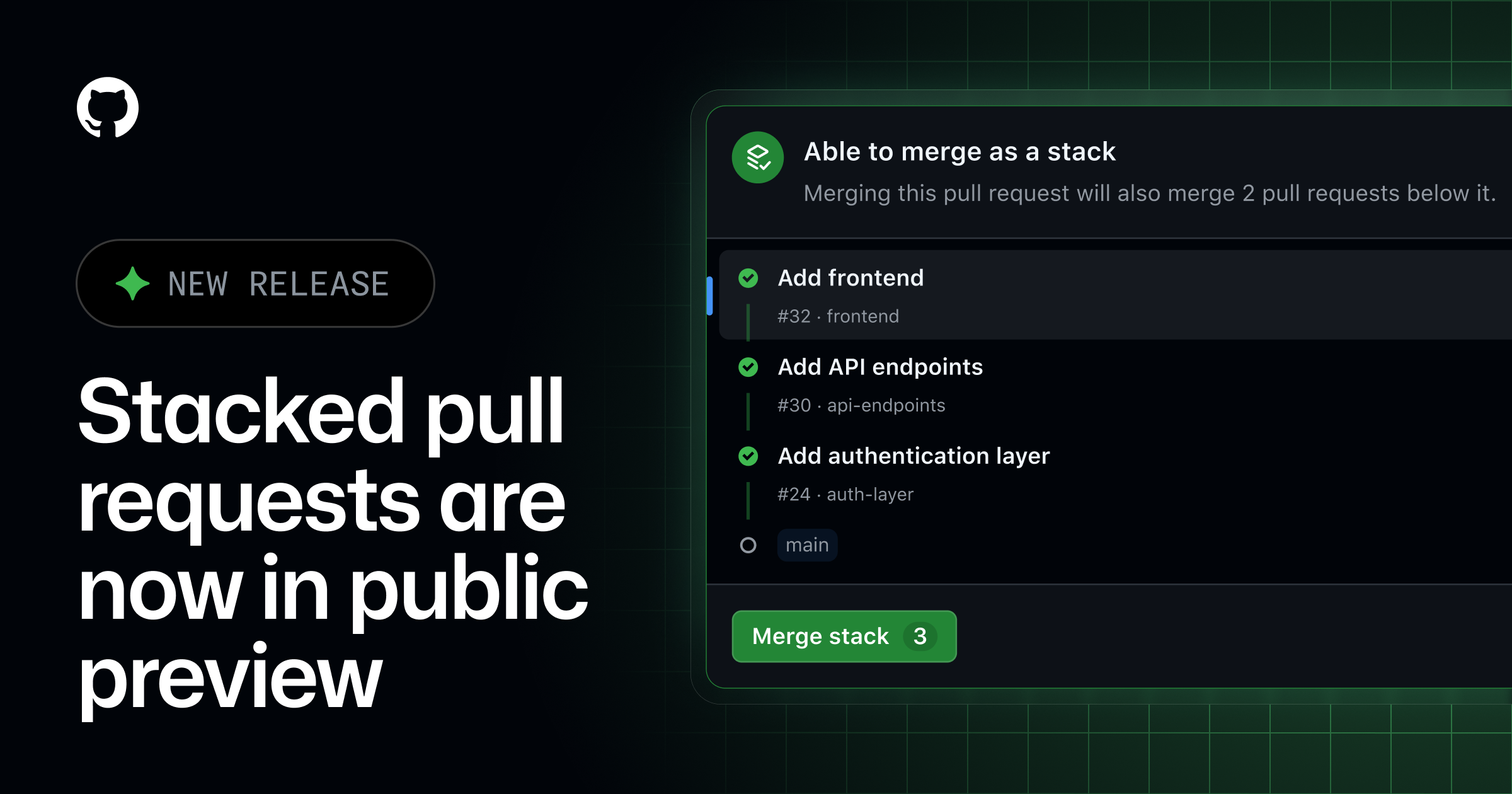
Stacked PRs are now live on GitHub
2026-07-31GitHub has officially launched stacked pull requests, allowing developers to divide massive code changes into smaller, more manageable reviews. By organizing updates into an ordered series of focused layers, this new feature significantly streamlines the code review process for complex projects.
Comments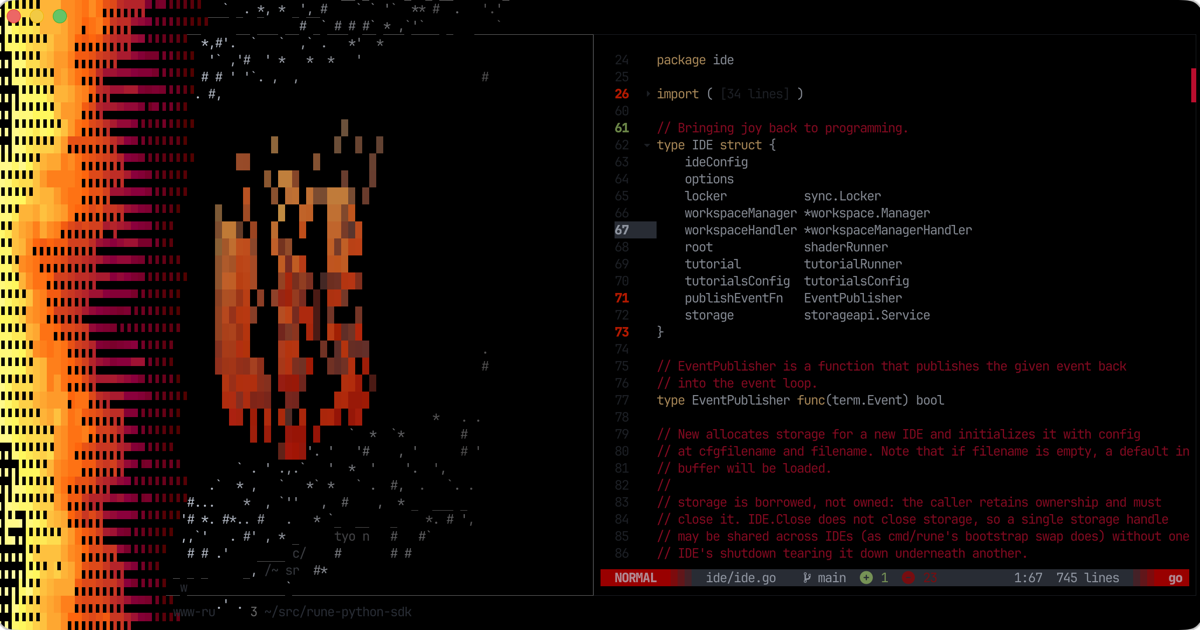
The latest Rune update makes the software free for personal use and introduces a perpetual commercial license alongside significant SSH workspace improvements. This release also adds first-class Python support, an integrated Emacs editor, and a new workspace symbol index.
Comments
A recent A/B benchmark test on SkillsBench evaluates whether the Caveman token-compression technique actually saves 65 percent of tokens when used with Claude Code. The study investigates if speaking to AI agents in simplified language effectively reduces token usage without degrading the overall quality of the output.
Comments
Bad Apple but It's Traceroute
2026-07-31A developer has recreated the famous Bad Apple animation using the output of the traceroute command. This creative demo builds directly upon the creator's recent tutorial about manipulating the network tool to display almost arbitrary strings.
Comments
The Religion of Speed
2026-07-31This piece critiques the modern tech industry's obsession with rapid development, arguing that the pressure to ship products quickly has evolved from a practical strategy into a moral imperative. By treating speed as a religion, companies now prioritize rushed deployment over thoughtful engineering. Ultimately, this cultural shift glorifies moving fast at the expense of quality and sustainable innovation.
CommentsCodePen 2.0
2026-07-31CodePen has officially launched version 2.0 in a massive update that its creator describes as their largest personal career accomplishment. This new iteration required significantly more development effort than the original platform. Detailed information about the extensive technical changes can be explored in the newly released Why 2.0 podcast.
Comments
The Economic Benefit of Refactoring
2026-07-31Thoughtworks experts highlight the substantial economic benefits of code refactoring within the context of modern software delivery. They explain how AI-assisted tools can significantly accelerate this process and help teams systematically eliminate technical debt. Ultimately, these combined practices lead to improved developer productivity and reduced long-term engineering costs.
CommentsThe Memo-1 is an open-source computer built from scratch around the classic 6502 microprocessor, uniquely utilizing a retro Minitel as its terminal. Hardware enthusiasts can explore the system's design and contribute to the project's ongoing development through its GitHub repository.
Comments
2x, not 10x: coding with LLMs in 2026
2026-07-31Recent analysis highlights that while Large Language Models improve coding productivity in 2026, realistic gains are a twofold increase rather than a tenfold revolution. Experts urge the tech industry to calibrate their enthusiasm and manage expectations regarding AI capabilities. Ultimately, developers should view these tools as highly effective assistants rather than magical replacements for human engineering.
Comments