Programming Tech News
Writing software is a craft that keeps reinventing itself. This section gathers news and articles for people who program, covering language releases, compilers and runtimes, frameworks, development workflows, and the ideas that change how code gets written and reviewed.
Typical stories include new versions of Rust, Python, Java, JavaScript, and TypeScript, performance and debugging investigations, essays on architecture and code quality, and discussions of how AI coding assistants are changing day-to-day development. Hands-on tutorials and lessons from long-running projects show up often.
The tools and practices developers choose affect how fast teams ship and how well their software holds up over time. Working engineers, students learning to code, and engineering leaders follow this coverage to sharpen their skills and make better technical decisions.
2026-06-06
How LLMs work
2026-06-06This guide provides a comprehensive, ground-up walkthrough of the underlying mechanics behind modern Large Language Models. It breaks down the complex architecture step-by-step, starting with basic tokenization and exploring the inner workings of transformer blocks. The piece concludes by explaining the continuous next-token prediction loop that ultimately drives text generation.
CommentsMoving beyond fork() + exec()
2026-06-06The traditional fork() and exec() system calls have been the foundation of Unix process creation for decades, but their legacy design is increasingly inefficient for modern computing environments. A recent analysis explores these limitations and highlights the alternative mechanisms and newer APIs developers are adopting to streamline process instantiation and improve overall system performance.
Comments
Achieving frame rates up to 100,000 FPS, a community has successfully compiled Pokemon Emerald directly to WebAssembly using a community-driven decompilation rather than a traditional GBA emulator. The web port supports essential features like saving and speed adjustments, though users have reported minor menu crashes and requested customizable keyboard controls.
CommentsReader discussions surrounding the announcement of Zeroserve quickly pivoted to debating the sunsetting of the Techempower web server benchmarks and the launch of a new competitor, http-arena. Much of the conversation focused on criticizing the new leaderboard user interface, with users complaining that its color palette and overall design look heavily AI-generated. In response, the developer acknowledged the rough design and implemented changes like zebra-striped tables to improve readability.
CommentsAsk HN: Why is the HN crowd so anti-AI?
2026-06-06Hacker News users debate the perception that the community is anti-AI, concluding that the platform simply reflects broader societal divisions regarding the technology. While many developers appreciate the productivity benefits of generative AI, experienced engineers caution against the trend of vibe coding by emphasizing that generating raw code is not a substitute for proper software architecture. Ultimately, the discussion highlights a nuanced perspective where practitioners recognize the strengths of large language models but remain highly critical of their current limitations in handling complex, production-level projects.
CommentsA new infinite canvas note-taking app utilizes a non-Euclidean Poincaré disk to organize exponentially growing knowledge trees in hyperbolic space. Users praise the interface's intuitive spatial navigation for visualizing complex data and mapping knowledge effectively. The community also discussed potential enhancements, suggesting geometric text distortion, grid overlays, and offline stylus support to improve the overall experience.
CommentsA recent blog post from a Clojure developer examines the severe performance drawbacks of using standard UUIDs as primary keys in SQLite databases. Because these identifiers are randomly generated, they cause significant index fragmentation and page splits within SQLite index structures. Consequently, developers experience degraded write performance and increased disk operations, highlighting the need for monotonically increasing identifiers.
CommentsSem is a new code analysis tool that maps code dependencies as graph entities on top of Git using the tree-sitter parser. While developers praise its ability to quickly identify transitively affected files and tests, its setup process sparked community debate over user-friendliness and the creator's response to uninstall complaints.
Comments
A viral tech joke highlighting the notoriously steep learning curve of C++ has gained traction online after a user joked about abandoning the language's definitive book after just looking at the back cover. The punchline about skipping the required reading perfectly captures the intimidation many developers feel toward the language. This humorous observation continues to resonate with programmers who frequently struggle with the dense syntax and complex documentation of C++.
Comments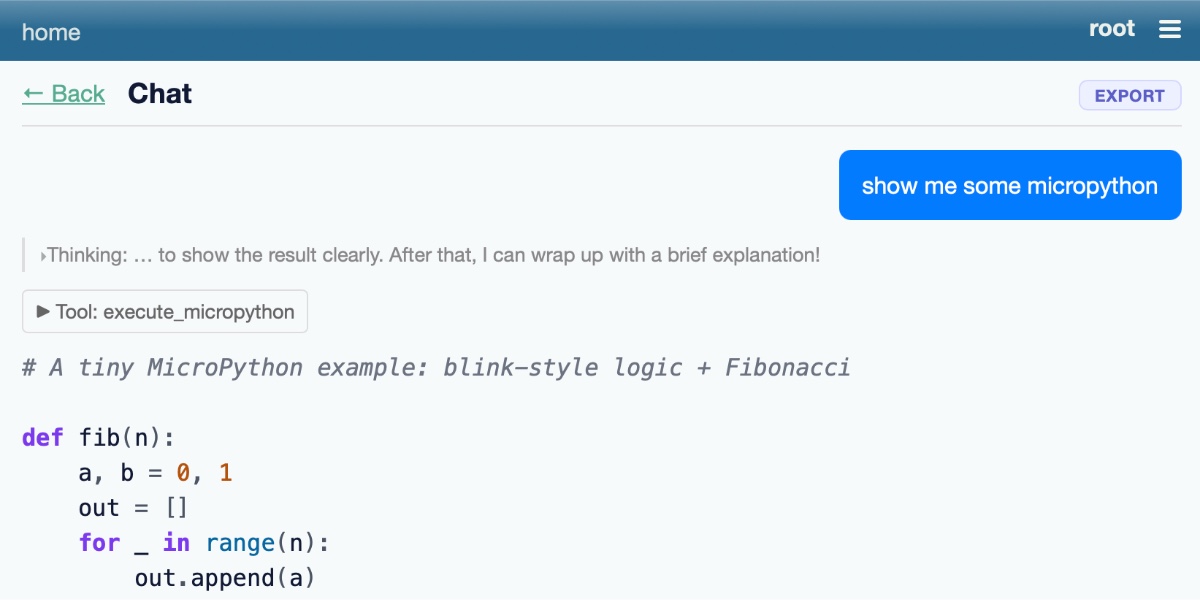
A developer has combined MicroPython and WebAssembly to create a robust sandbox environment for securely executing Python code. After years of experimenting with various isolation methods, this latest approach is believed to finally provide the ideal characteristics for safe and efficient script execution.
CommentsA reader discussion on building Rust procedural macros emphasizes the importance of choosing declarative macros to avoid significantly slowing down compilation times. While procedural macros remain necessary for complex tasks like parsing types and annotating structs, developers hope that upcoming improvements to the declarative macro system will reduce this reliance. Ultimately, the debate mirrors long-standing programming language design discussions about balancing metaprogramming power with compilation speed and code maintainability.
Comments
"Maybe later" was a feature
2026-06-06A newly shared developer insight highlights the importance of software minimalism, suggesting that the most valuable code is often the code a team chooses not to write. By deferring unnecessary features and avoiding codebase bloat, engineers can maintain cleaner repositories and focus on delivering true user value. This approach champions simplicity and restraint over constant feature expansion in modern software development.
Comments2026-06-05
Mouseless is a new cross-platform tool for macOS, Linux, and Windows that allows users to navigate and control their operating systems using only the keyboard. Readers are eager to try it as an alternative to apps like Shortcat and Homerow, hoping it resolves the speed and accessibility issues present in current software. However, some users caution that its dynamic hotkeys might hinder muscle memory and point out that its common name makes the app difficult to search for online.
CommentsMicrosoft has open-sourced pg_durable, a new project that enables in-database durable execution for PostgreSQL. The repository is now available on GitHub, inviting developers to explore the codebase and contribute to its ongoing development.
CommentsDid Claude increase bugs in rsync?
2026-06-05The rsync project maintainer faced severe community backlash after a release containing Claude AI-assisted commits introduced breaking changes and regressions. Although critics blamed the AI for disrupting workflows, the developer defended the update as a deliberate choice to prioritize critical security fixes, highlighting ongoing tensions over the use of generative AI in open-source development.
Comments
Changing how we develop Ladybird
2026-06-05The team behind the Ladybird web browser is overhauling its code contribution process to streamline development. This shift in workflow is a crucial step as the project prepares to officially release the browser for everyday public use.
Comments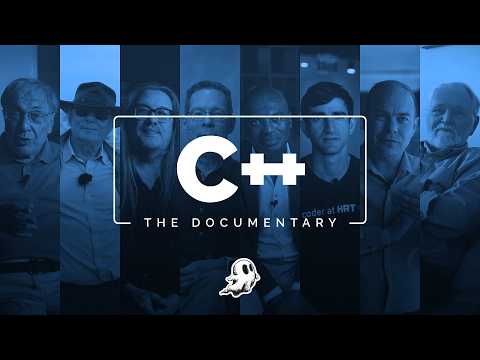
C++: The Documentary
2026-06-05A new documentary exploring the history of the C++ programming language has premiered on YouTube. The release featured a live chat with C++ creator Bjarne Stroustrup and other key figures involved in its development. The film celebrates the collaborative efforts of the hundreds of developers who have advanced the language over the years.
Comments
Despite its widespread adoption in the open-source community, the Conventional Commits standard is facing backlash from developers who consider it an actively detrimental practice. The author argues that enforcing this strict commit format misdirects developer focus and ultimately fails to deliver on its core promises.
Comments
SaturnCI is a newly introduced continuous integration platform specifically tailored for Ruby on Rails applications. It utilizes a specialized agent skill designed to streamline and automate the test-driven development process. This tool enables Rails developers to seamlessly integrate rigorous testing workflows directly into their continuous integration pipelines.
Comments
Cooldown Support for Ruby Bundler
2026-06-05Ruby Bundler is introducing a new cooldown feature to mitigate supply chain attacks that exploit the brief window immediately after a compromised gem is published. The new cooldown period delays the availability of newly released packages, preventing malicious versions from being instantly resolved during a standard bundle install.
CommentsAlibaba has released Open Code Review, a free and open-source CLI tool that combines deterministic pipelines with LLM agents for automated code analysis. The hybrid architecture provides precise, line-level feedback and includes built-in rulesets to detect common bugs and security vulnerabilities. Compatible with OpenAI and Anthropic models, the tool brings battle-tested, enterprise-grade code review capabilities to developers.
CommentsA newly introduced branchless quicksort implementation has demonstrated faster sorting performance than standard C++ algorithms like std::sort and pdqsort in recent benchmarks. The accompanying discussion highlights the original author's subsequent collaboration on ipnsort and driftsort, two high-performance sorting algorithms recently integrated into the Rust standard library. Additionally, the thread explores the design of the misfortunate Rust crate, which intentionally violates the expected social contract of standard traits to test edge cases in safe Rust implementations.
CommentsTransformers are inherently succinct
2026-06-05A new paper demonstrates that the inherent succinctness of transformers makes basic formal verification problems computationally intractable, leading experts to advise against using them in systems requiring strict mathematical correctness. Although some practitioners note that theoretically intractable problems often have practical solutions, the general consensus is that large language models should not serve as the core of formally verified systems. Additionally, the research suggests transformers possess surprisingly low expressive power compared to recurrent neural networks, which could drive a resurgence of nonlinear RNNs for memory-efficient applications.
Comments
The author recently experimented with fine-tuning a local large language model to write technical documentation in the nostalgic style of the 1980s and 1990s. Although connected frontier models currently remain more powerful, this project highlights early steps toward a specialized, local-first future for AI-assisted technical writing.
CommentsLowfat is a new command-line filter that strips unnecessary noise from terminal output to significantly reduce token consumption when using large language models. The open-source tool reportedly saves up to 91.8% of API tokens, offering developers a simple way to lower costs and streamline AI-assisted workflows.
Comments2026-06-04

UC Berkeley computer science classes are experiencing a drastic increase in failing grades during the spring 2026 semester, marking a sharp departure from historical grading guidelines. This decline in student performance is largely attributed to a growing reliance on AI tools and deteriorating foundational math skills.
Comments
VoidZero Is Joining Cloudflare
2026-06-04VoidZero, the team behind popular web tools like Vite, Vitest, and Rolldown, is officially joining Cloudflare. Despite the acquisition, the team confirmed that Vite will remain completely open source and vendor-agnostic for the broader community.
CommentsAnthropic has released an open-source framework designed to enhance AI-powered vulnerability discovery and software defense. The customizable autonomous harness provides essential skills for threat modeling, automated scanning, triage, and patching. Developers can leverage this reference tool to significantly streamline the identification and resolution of code vulnerabilities.
Comments
A security researcher built a deliberately vulnerable book review app and spent $1,500 to test if Large Language Models could successfully hack it. The experiment aimed to determine if AI can reproduce common classes of software exploits typically found in real-world applications.
CommentsHuawei has introduced KVarN, a new native vLLM backend designed for KV-cache quantization. This calibration-free enhancement allows developers to achieve three to five times more context length while maintaining FP16-level accuracy and exceeding standard throughput. The improved performance can be easily enabled for AI agents using just a single flag.
Comments