Programming Tech News
Writing software is a craft that keeps reinventing itself. This section gathers news and articles for people who program, covering language releases, compilers and runtimes, frameworks, development workflows, and the ideas that change how code gets written and reviewed.
Typical stories include new versions of Rust, Python, Java, JavaScript, and TypeScript, performance and debugging investigations, essays on architecture and code quality, and discussions of how AI coding assistants are changing day-to-day development. Hands-on tutorials and lessons from long-running projects show up often.
The tools and practices developers choose affect how fast teams ship and how well their software holds up over time. Working engineers, students learning to code, and engineering leaders follow this coverage to sharpen their skills and make better technical decisions.
2026-06-05
Mouseless is a new cross-platform tool for macOS, Linux, and Windows that allows users to navigate and control their operating systems using only the keyboard. Readers are eager to try it as an alternative to apps like Shortcat and Homerow, hoping it resolves the speed and accessibility issues present in current software. However, some users caution that its dynamic hotkeys might hinder muscle memory and point out that its common name makes the app difficult to search for online.
CommentsMicrosoft has open-sourced pg_durable, a new project that enables in-database durable execution for PostgreSQL. The repository is now available on GitHub, inviting developers to explore the codebase and contribute to its ongoing development.
Comments
Did Claude increase bugs in rsync?
2026-06-05The rsync project maintainer faced severe community backlash after a release containing Claude AI-assisted commits introduced breaking changes and regressions. Although critics blamed the AI for disrupting workflows, the developer defended the update as a deliberate choice to prioritize critical security fixes, highlighting ongoing tensions over the use of generative AI in open-source development.
Comments
Changing how we develop Ladybird
2026-06-05The team behind the Ladybird web browser is overhauling its code contribution process to streamline development. This shift in workflow is a crucial step as the project prepares to officially release the browser for everyday public use.
Comments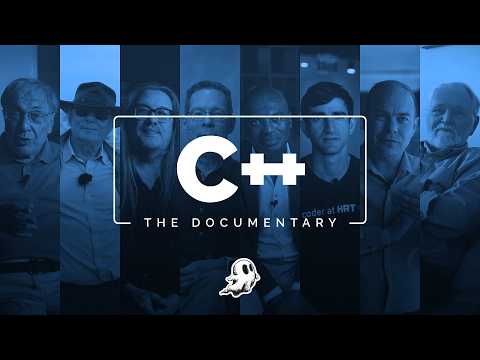
C++: The Documentary
2026-06-05A new documentary exploring the history of the C++ programming language has premiered on YouTube. The release featured a live chat with C++ creator Bjarne Stroustrup and other key figures involved in its development. The film celebrates the collaborative efforts of the hundreds of developers who have advanced the language over the years.
Comments
Despite its widespread adoption in the open-source community, the Conventional Commits standard is facing backlash from developers who consider it an actively detrimental practice. The author argues that enforcing this strict commit format misdirects developer focus and ultimately fails to deliver on its core promises.
Comments
SaturnCI is a newly introduced continuous integration platform specifically tailored for Ruby on Rails applications. It utilizes a specialized agent skill designed to streamline and automate the test-driven development process. This tool enables Rails developers to seamlessly integrate rigorous testing workflows directly into their continuous integration pipelines.
Comments
Cooldown Support for Ruby Bundler
2026-06-05Ruby Bundler is introducing a new cooldown feature to mitigate supply chain attacks that exploit the brief window immediately after a compromised gem is published. The new cooldown period delays the availability of newly released packages, preventing malicious versions from being instantly resolved during a standard bundle install.
CommentsAlibaba has released Open Code Review, a free and open-source CLI tool that combines deterministic pipelines with LLM agents for automated code analysis. The hybrid architecture provides precise, line-level feedback and includes built-in rulesets to detect common bugs and security vulnerabilities. Compatible with OpenAI and Anthropic models, the tool brings battle-tested, enterprise-grade code review capabilities to developers.
CommentsA newly introduced branchless quicksort implementation has demonstrated faster sorting performance than standard C++ algorithms like std::sort and pdqsort in recent benchmarks. The accompanying discussion highlights the original author's subsequent collaboration on ipnsort and driftsort, two high-performance sorting algorithms recently integrated into the Rust standard library. Additionally, the thread explores the design of the misfortunate Rust crate, which intentionally violates the expected social contract of standard traits to test edge cases in safe Rust implementations.
CommentsTransformers are inherently succinct
2026-06-05A new paper demonstrates that the inherent succinctness of transformers makes basic formal verification problems computationally intractable, leading experts to advise against using them in systems requiring strict mathematical correctness. Although some practitioners note that theoretically intractable problems often have practical solutions, the general consensus is that large language models should not serve as the core of formally verified systems. Additionally, the research suggests transformers possess surprisingly low expressive power compared to recurrent neural networks, which could drive a resurgence of nonlinear RNNs for memory-efficient applications.
Comments
The author recently experimented with fine-tuning a local large language model to write technical documentation in the nostalgic style of the 1980s and 1990s. Although connected frontier models currently remain more powerful, this project highlights early steps toward a specialized, local-first future for AI-assisted technical writing.
CommentsLowfat is a new command-line filter that strips unnecessary noise from terminal output to significantly reduce token consumption when using large language models. The open-source tool reportedly saves up to 91.8% of API tokens, offering developers a simple way to lower costs and streamline AI-assisted workflows.
Comments2026-06-04

UC Berkeley computer science classes are experiencing a drastic increase in failing grades during the spring 2026 semester, marking a sharp departure from historical grading guidelines. This decline in student performance is largely attributed to a growing reliance on AI tools and deteriorating foundational math skills.
Comments
VoidZero Is Joining Cloudflare
2026-06-04VoidZero, the team behind popular web tools like Vite, Vitest, and Rolldown, is officially joining Cloudflare. Despite the acquisition, the team confirmed that Vite will remain completely open source and vendor-agnostic for the broader community.
CommentsAnthropic has released an open-source framework designed to enhance AI-powered vulnerability discovery and software defense. The customizable autonomous harness provides essential skills for threat modeling, automated scanning, triage, and patching. Developers can leverage this reference tool to significantly streamline the identification and resolution of code vulnerabilities.
Comments
A security researcher built a deliberately vulnerable book review app and spent $1,500 to test if Large Language Models could successfully hack it. The experiment aimed to determine if AI can reproduce common classes of software exploits typically found in real-world applications.
CommentsHuawei has introduced KVarN, a new native vLLM backend designed for KV-cache quantization. This calibration-free enhancement allows developers to achieve three to five times more context length while maintaining FP16-level accuracy and exceeding standard throughput. The improved performance can be easily enabled for AI agents using just a single flag.
Comments
A recent arXiv paper systematically evaluates variants of the standard query, key, and value projections used in transformer architectures. The study investigates whether all three projections are strictly necessary by exploring alternative configurations to optimize model efficiency and performance. These insights could help developers create more streamlined and computationally effective transformer designs for future AI applications.
Comments
Learn SQL Once, Use It for 30 Years
2026-06-04SQL has maintained its industry relevance for decades because it is fundamentally built on mathematics rather than fleeting technological trends. This enduring stability makes learning the language a valuable, long-term investment for developers looking to future-proof their technical skill sets.
Comments
JLink JTAG Access on the Pinecil
2026-06-04Building on previous hardware modifications, a developer has established JLink JTAG access on the Pinecil smart soldering iron for advanced debugging. This renewed exploration of the device was prompted by the recent addition of upstream support for its Bouffalo Lab BL706 microcontroller in the Zephyr operating system.
Comments2026-06-03

Elixir version 1.20 is now a gradually typed language, marking a significant shift in how code is validated. This update ensures that every program is automatically type-checked to detect verified bugs and typing violations.
CommentsA newly discovered vulnerability in Visual Studio Code allows attackers to steal GitHub authentication tokens with a single click. This security flaw puts developers at risk of having their repositories and sensitive source code compromised if the exploit is triggered.
CommentsMathematicians and technologists warn that the rapid advancement of AI threatens to erode fundamental human understanding by outsourcing critical cognitive work in mathematics and programming. Although some view this automation as inevitable technological progress, critics argue that delegating tasks to AI sacrifices essential knowledge and quality for mere efficiency. Ultimately, they fear that an overreliance on AI will sever vital human control over the foundational technologies shaping our society.
CommentsGooey is a new hybrid immediate and retained mode UI framework for the Zig programming language designed to build fast, GPU-rendered applications. It supports cross-platform development by leveraging graphics APIs such as Metal, WebGPU, and Vulkan across macOS, WebAssembly, and Wayland environments.
CommentsEvery Byte Matters
2026-06-03A recent article highlights how Java developers frequently add numerous fields to large classes without considering the resulting memory overhead. Instead of evaluating the byte-level impact of these additions, programmers typically rely on asymptotic algorithmic analysis to measure performance. The author argues that true optimization requires recognizing that the memory cost of every single field matters in class design.
Comments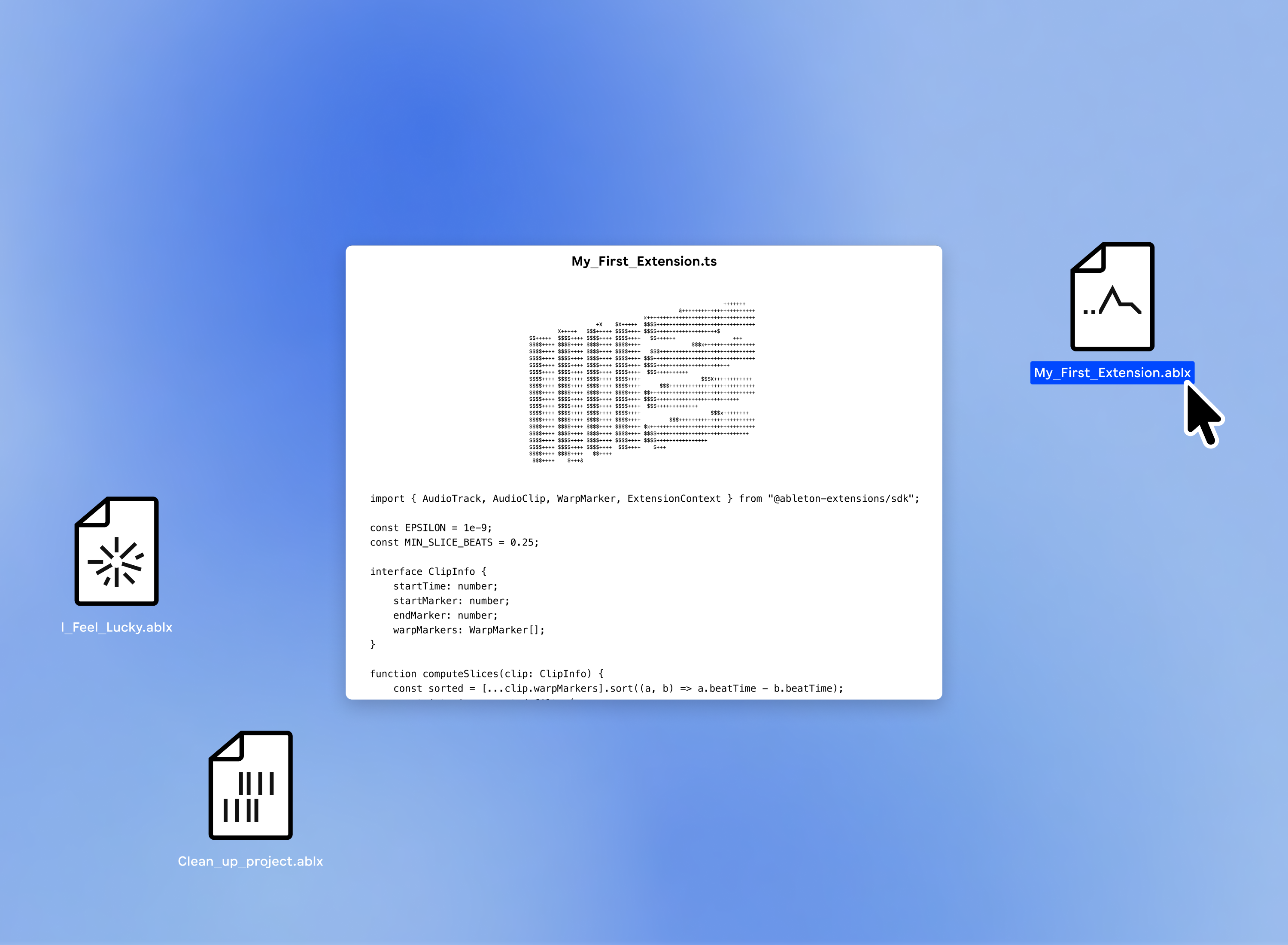
Ableton Extensions SDK
2026-06-03Ableton has introduced the Extensions SDK, an open JavaScript toolkit designed to expand the capabilities of its Live 12 Suite. This framework empowers developers and users to build custom tools that introduce fresh functionalities directly into the music production software.
Comments
After six years of development, the reactive notebook environment Pluto.jl has reached its official 1.0 release. This milestone celebrates the project's significant progress and signifies that the platform is fully mature and ready for widespread use.
Comments
Edsger is a newly launched handwritten Clojure REPL designed specifically for the reMarkable 2 e-ink tablet, allowing developers to write and execute functional code by hand. To demonstrate the tool's capabilities, the creator also published a companion blog post written entirely by hand.
CommentsA developer has reverse-engineered the classic 1990 DOS game Test Drive 3 to extract and map its complete world routing data. This open-source project is now available on GitHub, allowing fans to explore the retro game environment and contribute to further development.
Comments