Programming Tech News
Writing software is a craft that keeps reinventing itself. This section gathers news and articles for people who program, covering language releases, compilers and runtimes, frameworks, development workflows, and the ideas that change how code gets written and reviewed.
Typical stories include new versions of Rust, Python, Java, JavaScript, and TypeScript, performance and debugging investigations, essays on architecture and code quality, and discussions of how AI coding assistants are changing day-to-day development. Hands-on tutorials and lessons from long-running projects show up often.
The tools and practices developers choose affect how fast teams ship and how well their software holds up over time. Working engineers, students learning to code, and engineering leaders follow this coverage to sharpen their skills and make better technical decisions.
2026-05-15
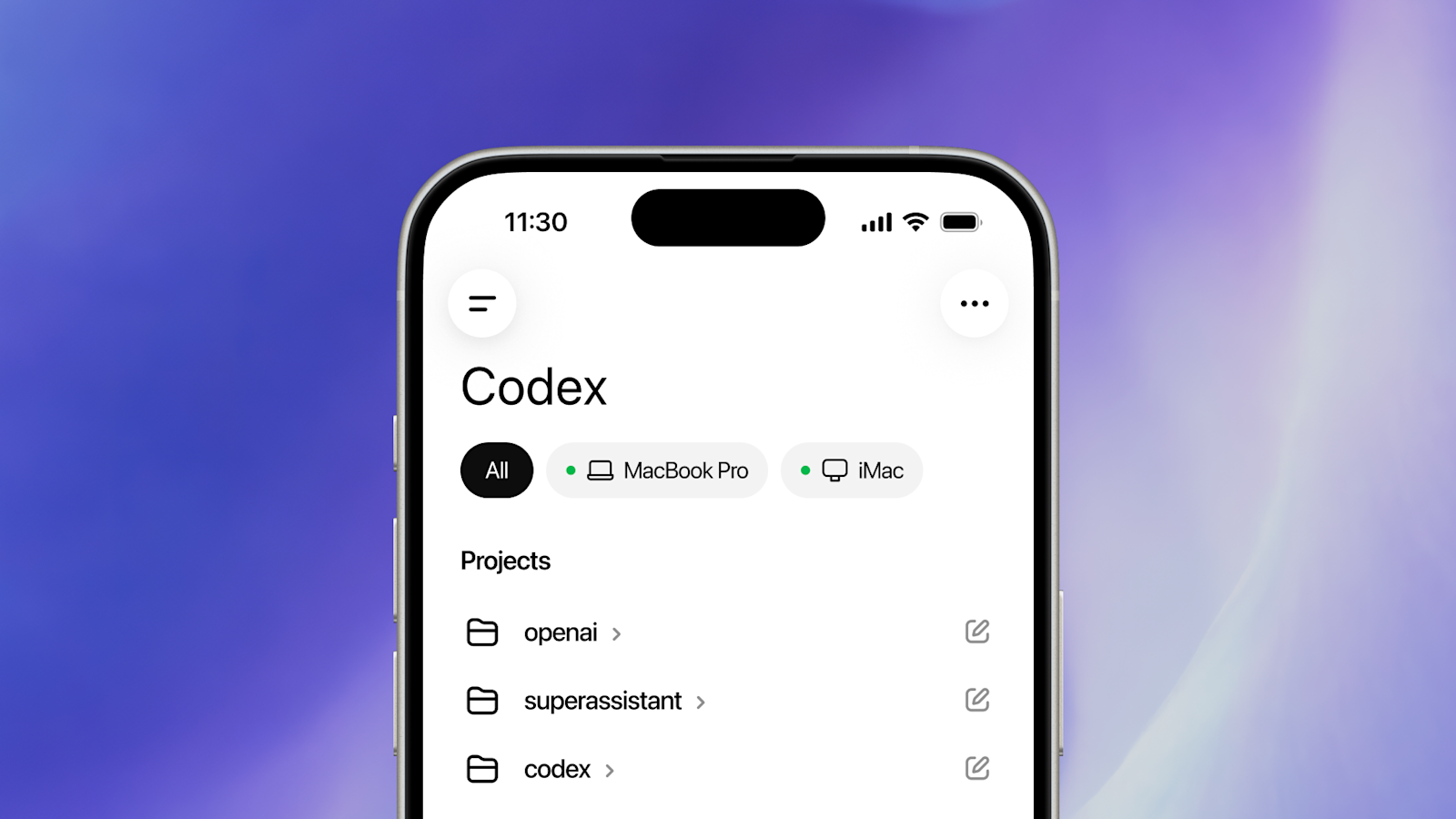
Codex is now in the ChatGPT mobile app
2026-05-15Codex is now available in the ChatGPT mobile app, enabling users to manage coding tasks on the go. This update allows developers to monitor, steer, and approve these processes in real time across various devices and remote environments.
CommentsA few words on DS4
2026-05-15An article discussing DwarfStar4, a new inference runtime for the DeepSeek 4 language model requiring 96GB of VRAM, sparked humorous confusion in the comments section. Readers initially mistook the DS4 abbreviation in the title for references to the PlayStation controller, the Dark Souls 4 video game, or the Citroen DS 4 automobile.
Comments

A new interactive project allows users to watch a neural network train itself to play the classic game Snake. While the AI can achieve near-perfect scores on a small grid, observers note that the model's performance eventually collapses. Users speculate this degradation is caused by numerical instability, flawed reward structures, or the snake getting trapped in an endless loop when it runs out of space.
CommentsA new open-source GitHub project called Image-blaster introduces an image-to-world skillset for the Claude AI model. The tool enables users to instantly generate detailed 3D environments, meshes, and sound effects from just a single input image. Developers can access and contribute to the ongoing development of the project directly on GitHub.
Comments
Radicle is an open-source, peer-to-peer code collaboration stack designed to function as a sovereign code forge. Built directly on Git, it offers developers a decentralized alternative for hosting and managing their software projects.
CommentsShowcased on Hacker News, an open-source GitHub project implements a custom nibble-oriented CPU in Verilog to build a scientific calculator. The repository documents the complete hardware design process from basic FPGA gates to a functional device and welcomes community contributions.
Comments
O(x)Caml in Space
2026-05-15DPhi Space's ClusterGate-2, a pure-OCaml CCSDS protocol stack featuring end-to-end-encrypted command and control and post-quantum key rotation, successfully booted in orbit aboard the Borealis satellite. This milestone establishes a highly secure foundation for space communications, with the next iteration of the technology already planned as OxCaml.
CommentsGyroflow is an open-source software project that provides advanced video stabilization by utilizing gyroscope data. Developers looking to contribute to the tool can participate in its development via the project's GitHub repository.
CommentsAmazon and other big tech companies are pressuring employees to increase their AI tool usage as a performance metric, prompting workers to fabricate tasks just to burn through AI tokens. Critics argue this creates a perverse incentive that inflates token consumption without actually improving real productivity or development velocity.
Comments2026-05-14
New Nginx Exploit
2026-05-14A newly discovered exploit for the Nginx web server is now available on GitHub, specifically targeting the CVE-2026-42945 vulnerability. Developed by DepthFirstDisclosures, the exploit tool named Nginx-Rift is currently open for community code review and contributions.
CommentsRewrite Bun in Rust has been merged
2026-05-14The popular all-in-one JavaScript runtime and package manager Bun has officially merged its major rewrite in the Rust programming language. Spearheaded by creator Jarred Sumner, this architectural transition leverages Rust's performance and memory safety to further enhance the tool's speed and reliability.
Comments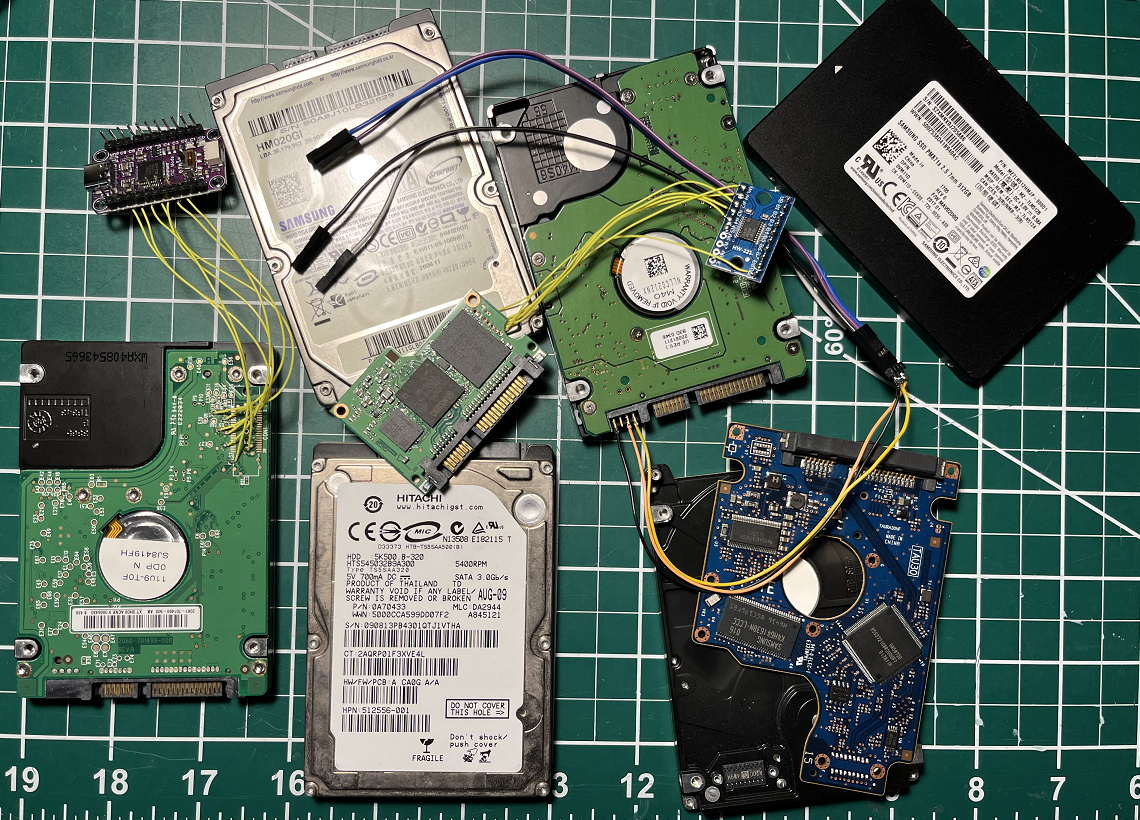
HDD Firmware Hacking
2026-05-14A new technical deep dive explores the inner workings of storage devices by dumping, reverse engineering, and modifying the firmware of various HDDs and SSDs. This hands-on project provides a comprehensive look at how hard drives function at the lowest software levels.
Comments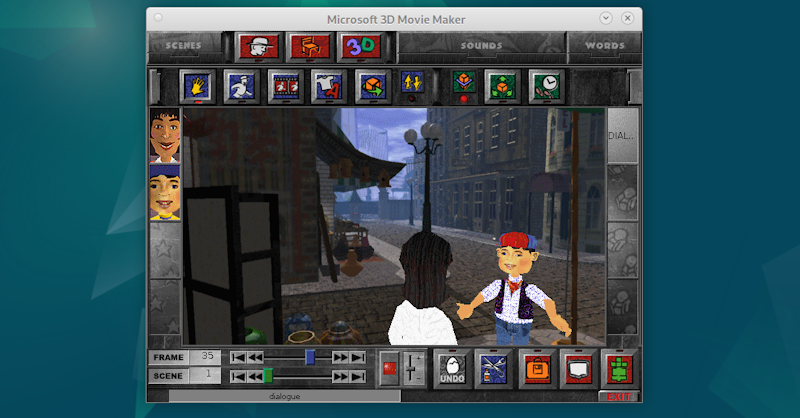
Porting 3D Movie Maker to Linux
2026-05-14An open-source project is porting Microsoft's nostalgic 1990s animation software, 3D Movie Maker, to the Linux operating system. This effort allows users to experience the classic movie-making features and the iconic dog mascot McZee on open-source platforms.
Comments
This piece breaks down the GGUF file format to explain the essential metadata and extra components needed to run a language model independently of its raw weights. Additionally, it highlights the current limitations of the format by identifying what crucial information is still missing for seamless deployment.
CommentsA new open-source project introduces a specialized skill for AI coding assistants like Claude Code and OpenAI Codex to foster deliberate practice. The tool, named learning-opportunities, helps developers actively refine their programming abilities while working alongside AI. By prompting users to engage critically with the code, it prevents over-reliance on automated generation and promotes continuous learning.
CommentsShow HN: Nibble
2026-05-14A new open-source project named Nibble allows developers to generate LLVM IR without using malloc or relying on external dependencies. The lightweight tool is available on GitHub and is designed to be entirely self-contained. This makes it a highly practical solution for low-level code generation in constrained environments.
CommentsOblivious DNS over HTTPS is a protocol that separates user identity from DNS queries without requiring account sign-ups. A developer has released Numa v0.14, an MIT-licensed tool for deploying clients and relays, alongside the launch of the second public ODoH relay to expand the anonymous DNS ecosystem.
CommentsSaying Goodbye to one line of APL
2026-05-14A discussion surrounding an article about saying goodbye to a classic APL one-liner sparked nostalgia for the dense, vector-oriented language and its chalkboard origins. Readers brainstormed modern ways to interact with the code, suggesting tablet-based stylus apps with live evaluation and exploring modern dialects like BQN. The conversation also featured a detailed technical breakdown of a complex one-liner that uses boolean algebra to efficiently reduce consecutive spaces in a string.
Comments
Int a = 5; a = a++ + ++a; a =? (2011)
2026-05-14Developers are revisiting a notorious C programming interview question involving complex increment operators that triggers undefined behavior and sequence point violations. Commenters recall the frustration of interviewers mistakenly treating specific compiler outputs as the definitive answer rather than acknowledging the language rules. The community consensus emphasizes that the only appropriate response is to recognize such code as unmaintainable and refuse to write it.
Comments2026-05-13
The FULU-Foundation is actively seeking GitHub contributors for its open-source OrcaSlicer-bambulab project to restore full BambuNetwork support for Bambu Lab 3D printers. Developers interested in advancing 3D printing software can join the initiative by creating a GitHub account to assist with development.
Comments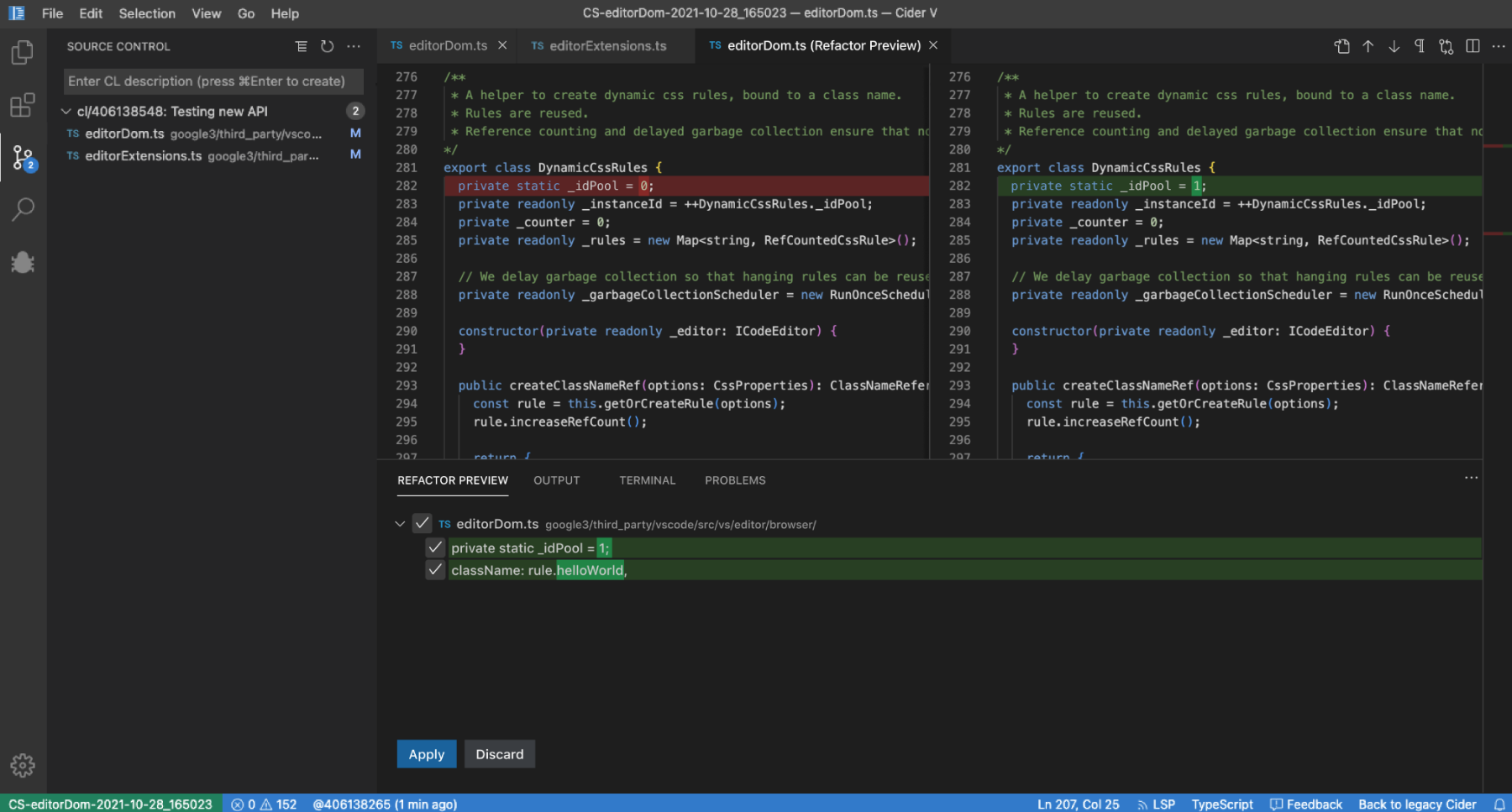
A History of IDEs at Google
2026-05-13Laurent Le Brun's blog post details the evolution of Google's internal development environments, tracing the company's shift from relying on third-party tools to building bespoke, cloud-based IDEs tailored for its massive monorepo. This overview highlights how the immense scale and complexity of Google's codebase forced the tech giant to engineer highly customized, scalable software ecosystems rather than relying on commercially available tools.
CommentsThe Emacsification of Software
2026-05-13As AI makes software production increasingly effortless, developers are retreating into highly personalized, isolated coding environments akin to custom Emacs configurations. While this trend maximizes individual productivity, it creates severe bottlenecks for collaboration and code sharing because these custom environments are nearly impossible for others to understand or integrate. This shift is now challenging traditional version control platforms like GitHub and forcing teams to rethink how they collaborate on highly fragmented, individually generated code.
Comments
Python 3.14 introduced a new incremental garbage collector that caused significant memory pressure in production environments. Consequently, developers have decided to revert this feature in both Python 3.14 and 3.15 to restore the previous garbage collection system.
Comments
Leaving GitHub for Forgejo
2026-05-13A DevOps consultancy details its decision to migrate code repositories and development workflows from GitHub to Forgejo, prioritizing self-hosted and open-source solutions. This move reflects a growing trend among tech professionals to seek greater control, security, and operational continuity outside of proprietary platforms.
CommentsDeveloper nooga has released a work-in-progress roguelike game that procedurally generates a new name for every playthrough. Written in a concise 4,000 lines of code, the open-source project is currently available on GitHub for community contributions.
CommentsTech enthusiasts recently dissected a classic chess puzzle requiring the placement of four queens and one bishop to attack every square on a chessboard. By utilizing Python scripts and constraint programming, the community discovered 388 possible solutions, explored alternative piece combinations, and highlighted the puzzle's counter-intuitive need for overlapping piece responsibilities.
Comments
A recent arXiv paper introduces a novel method for deterministic, fully-static whole-binary translation that completely eliminates the need for heuristics. By translating entire software binaries at compile time with strict predictability, this approach ensures exact cross-architecture code execution without relying on dynamic runtime analysis. This systematic technique promises to significantly improve software portability and performance across diverse hardware platforms.
Comments
My graduation cap runs Rust
2026-05-13Software developer Eric Park recently shared details about his custom graduation cap, which features a microcontroller programmed entirely in the Rust programming language. The project serves as a creative exploration of embedded systems, demonstrating the growing versatility of Rust in hardware and DIY maker communities.
CommentsS-100 Virtual Workbench
2026-05-13The S-100 Virtual Workbench provides an emulation environment for classic S-100 bus computers, sparking nostalgic conversations among veteran developers about their early programming experiences. Readers fondly recalled the hardware limitations and DIY ethos of the era, sharing memories of coding on Heathkit machines and early minicomputers. These discussions highlight how overcoming the technical constraints of early personal computing shaped a generation of hobbyists and programmers.
Comments
A Linux kernel optimization inadvertently caused a severe performance drop in the QUIC protocol. The bug occurred because the system pinned the CUBIC congestion window at its minimum floor by confusing RTT wait times with actual application idleness. Developers resolved the issue by updating the code to accurately measure and distinguish between these two types of idle periods.
Comments