Programming Tech News
Writing software is a craft that keeps reinventing itself. This section gathers news and articles for people who program, covering language releases, compilers and runtimes, frameworks, development workflows, and the ideas that change how code gets written and reviewed.
Typical stories include new versions of Rust, Python, Java, JavaScript, and TypeScript, performance and debugging investigations, essays on architecture and code quality, and discussions of how AI coding assistants are changing day-to-day development. Hands-on tutorials and lessons from long-running projects show up often.
The tools and practices developers choose affect how fast teams ship and how well their software holds up over time. Working engineers, students learning to code, and engineering leaders follow this coverage to sharpen their skills and make better technical decisions.
2026-05-13
The FULU-Foundation is actively seeking GitHub contributors for its open-source OrcaSlicer-bambulab project to restore full BambuNetwork support for Bambu Lab 3D printers. Developers interested in advancing 3D printing software can join the initiative by creating a GitHub account to assist with development.
Comments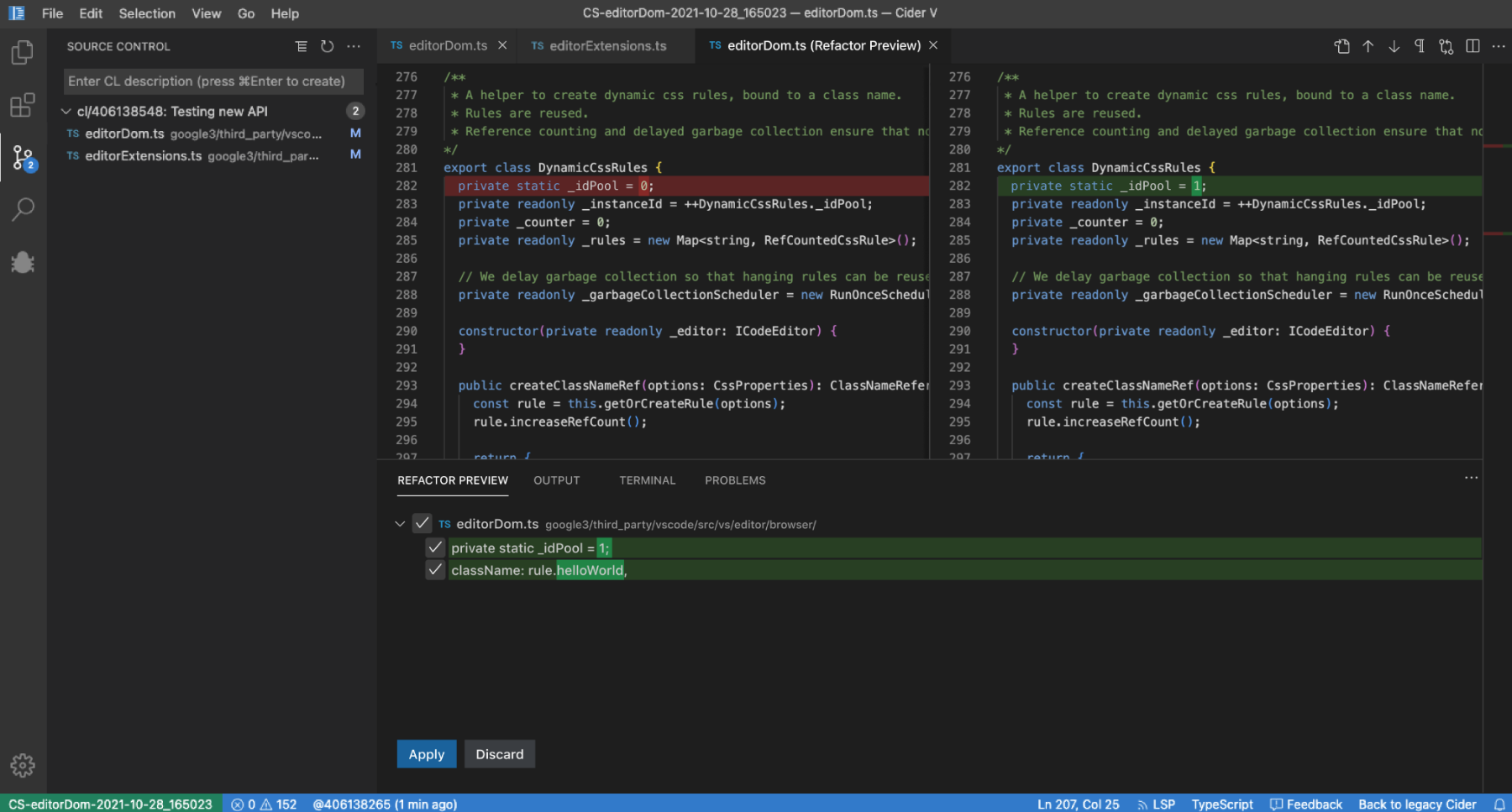
A History of IDEs at Google
2026-05-13Laurent Le Brun's blog post details the evolution of Google's internal development environments, tracing the company's shift from relying on third-party tools to building bespoke, cloud-based IDEs tailored for its massive monorepo. This overview highlights how the immense scale and complexity of Google's codebase forced the tech giant to engineer highly customized, scalable software ecosystems rather than relying on commercially available tools.
Comments
The Emacsification of Software
2026-05-13As AI makes software production increasingly effortless, developers are retreating into highly personalized, isolated coding environments akin to custom Emacs configurations. While this trend maximizes individual productivity, it creates severe bottlenecks for collaboration and code sharing because these custom environments are nearly impossible for others to understand or integrate. This shift is now challenging traditional version control platforms like GitHub and forcing teams to rethink how they collaborate on highly fragmented, individually generated code.
Comments
Python 3.14 introduced a new incremental garbage collector that caused significant memory pressure in production environments. Consequently, developers have decided to revert this feature in both Python 3.14 and 3.15 to restore the previous garbage collection system.
Comments
Leaving GitHub for Forgejo
2026-05-13A DevOps consultancy details its decision to migrate code repositories and development workflows from GitHub to Forgejo, prioritizing self-hosted and open-source solutions. This move reflects a growing trend among tech professionals to seek greater control, security, and operational continuity outside of proprietary platforms.
CommentsDeveloper nooga has released a work-in-progress roguelike game that procedurally generates a new name for every playthrough. Written in a concise 4,000 lines of code, the open-source project is currently available on GitHub for community contributions.
CommentsTech enthusiasts recently dissected a classic chess puzzle requiring the placement of four queens and one bishop to attack every square on a chessboard. By utilizing Python scripts and constraint programming, the community discovered 388 possible solutions, explored alternative piece combinations, and highlighted the puzzle's counter-intuitive need for overlapping piece responsibilities.
Comments
A recent arXiv paper introduces a novel method for deterministic, fully-static whole-binary translation that completely eliminates the need for heuristics. By translating entire software binaries at compile time with strict predictability, this approach ensures exact cross-architecture code execution without relying on dynamic runtime analysis. This systematic technique promises to significantly improve software portability and performance across diverse hardware platforms.
Comments
My graduation cap runs Rust
2026-05-13Software developer Eric Park recently shared details about his custom graduation cap, which features a microcontroller programmed entirely in the Rust programming language. The project serves as a creative exploration of embedded systems, demonstrating the growing versatility of Rust in hardware and DIY maker communities.
CommentsS-100 Virtual Workbench
2026-05-13The S-100 Virtual Workbench provides an emulation environment for classic S-100 bus computers, sparking nostalgic conversations among veteran developers about their early programming experiences. Readers fondly recalled the hardware limitations and DIY ethos of the era, sharing memories of coding on Heathkit machines and early minicomputers. These discussions highlight how overcoming the technical constraints of early personal computing shaped a generation of hobbyists and programmers.
Comments
A Linux kernel optimization inadvertently caused a severe performance drop in the QUIC protocol. The bug occurred because the system pinned the CUBIC congestion window at its minimum floor by confusing RTT wait times with actual application idleness. Developers resolved the issue by updating the code to accurately measure and distinguish between these two types of idle periods.
CommentsTraceway is a new MIT-licensed observability stack that allows developers to self-host comprehensive monitoring and troubleshooting tools in under 90 seconds. Designed to provide a complete view of system behavior, this open-source solution aims to be the only tool teams need to quickly identify and resolve application issues.
Comments
Y Combinator P26 startup Ardent has launched a tool that creates isolated Postgres database sandboxes in under six seconds with zero migration required. The platform enables coding agents and developers to safely test, clean, and migrate data on separate branches without risking production environments.
CommentsThe vi family
2026-05-13This article explores the enduring legacy of the vi text editor family and its popular modern variants like vim. It highlights why mastering vi remains a worthwhile investment for developers of all skill levels. Ultimately, the piece positions the software as the only text editor programmers will ever truly need to learn.
CommentsThe newly released open-source tool fc provides a research-grade solution for the lossless compression of floating-point data streams. It is designed to efficiently reduce file sizes for complex numerical datasets without sacrificing any underlying data integrity. Developers and researchers can explore the project details and access the source code through the xtellect/fc repository.
Comments2026-05-12
Senior developers often struggle to communicate their expertise because they focus on technical complexity while business stakeholders prioritize managing uncertainty. This misalignment hinders collaboration, but the integration of AI offers a unique opportunity to bridge the communication gap. By adapting their messaging to address business risks, engineering leaders can better align technical execution with organizational goals in the AI era.
Comments
If AI writes your code, why use Python?
2026-05-12AI coding assistants are challenging the long-standing dominance of Python and TypeScript. These languages were historically favored because their rapid development speeds outweighed slower execution performance. However, as AI automates much of the programming process, developers may soon prioritize runtime efficiency over the sheer ease of writing code.
Comments
Rendering the Sky, Sunsets, and Planets
2026-05-12A new article explores techniques for rendering realistic skies, sunsets, and entire planets in real time directly within the browser. The guide details a progression of shader-based methods, from simple sky domes to complex atmospheric simulations utilizing raymarching and scattering models.
CommentsCERT has disclosed six critical security vulnerabilities in the widely used dnsmasq DNS and DHCP server. The announcement has reignited developer debates over the necessity of rewriting legacy C codebases in memory-safe languages like Rust to prevent future exploits. However, critics warn that while memory safety eliminates certain bugs, it is not a universal fix and rewritten projects can still suffer from other security flaws.
CommentsThey Live (1988) inspired Adblocker
2026-05-12A developer has created an open-source adblocker inspired by the 1988 cult film They Live that replaces standard web advertisements with the movie's iconic subliminal slogans. The project is currently available on GitHub for users who want to browse the internet while seeing hidden messages like consume and obey.
CommentsLearning Software Architecture
2026-05-12A recent article responds to an inquiry from a research physicist seeking guidance on learning software architecture. The piece outlines practical strategies and resources for mastering software design skills tailored to those with a scientific background.
Comments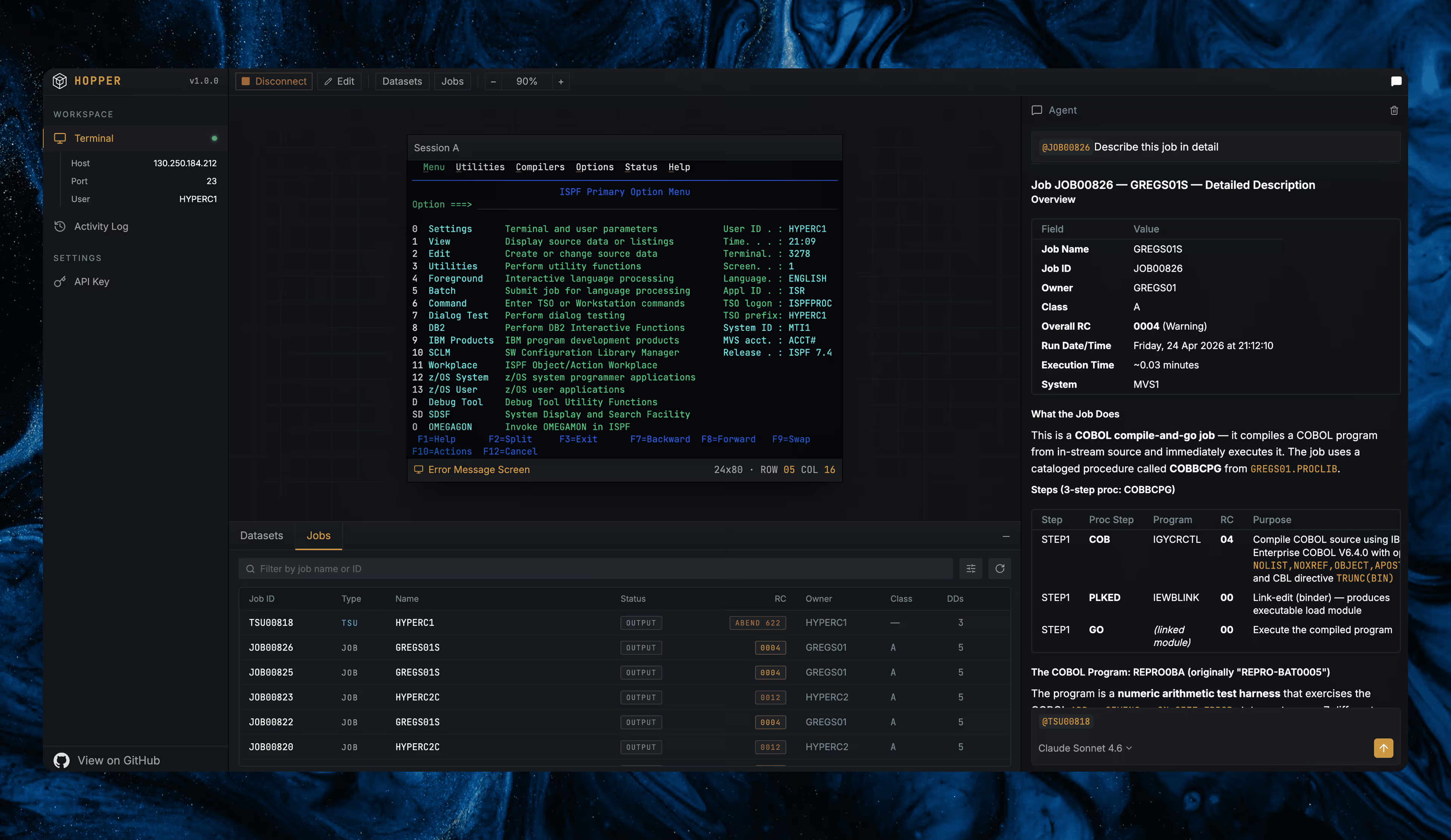
Hopper is a new agentic TN3270 terminal emulator that brings modern AI capabilities to legacy mainframe and COBOL environments. The tool allows AI agents to autonomously navigate ISPF, write column-strict JCL, debug failed jobs, and query VSAM directly within z/OS.
CommentsSoftware Internals Book Club
2026-05-12The Software Internals Book Club engages hundreds of developers in deep technical discussions on complex software books via a dedicated mailing list. Reader discussions highlight community interest in accessing archived comments and joining future cohorts, while also sparking technical debates about the complexities of email validation and the need for updated networking literature.
Comments
This piece highlights the importance of crafting clear and helpful error messages to improve the everyday online user experience. It emphasizes that effective error handling is a collaborative team effort that can transform frustrating system failures into positive user interactions.
CommentsY Combinator Summer 2024 startup Voker has launched an analytics platform designed to help developers monitor and improve AI agents in production. The tool eliminates the need to manually sift through logs, enabling teams to proactively identify and resolve agent issues before they impact end users.
CommentsGigacatalyst is an embedded AI builder that allows SaaS customers to generate custom frontend user interfaces on the fly using natural language prompts. The tool sandboxes the generated code to keep it independent of the core application, ensuring safe and easy sharing of new features without relying on third-party plugins. Currently serving over 2,000 daily users, the platform reflects a broader industry shift toward highly customizable, AI-driven enterprise software.
CommentsIntroduced on Hacker News, Statewright is a new open-source project that uses visual state machines to implement guardrails for AI agents. By restricting behaviors to defined operational states, the tool aims to make autonomous AI systems more reliable. Developers can find the source code and contribute to the project on GitHub.
Comments2026-05-11
A sophisticated supply-chain attack compromised 42 TanStack packages on the npm registry after an attacker exploited GitHub Actions vulnerabilities to publish 84 malicious versions. The breach chained a pull request exploit with cache poisoning and OIDC token extraction, prompting developers to review the official postmortem and audit their dependencies.
CommentsI'm going back to writing code by hand
2026-05-11In a piece about returning to manual coding, the author and readers criticize AI code generators for lacking the human judgment required to adapt architectural constraints over time. Without exhaustive, line-by-line human review, AI tools often contort software to fit outdated rules or hide catastrophic mistakes that eventually render the codebase unmaintainable. Consequently, developers are finding that the intense oversight needed to prevent hidden errors makes writing code by hand a more reliable and practical approach.
Comments
GitLab has announced a workforce reduction and the elimination of its CREDIT core values in a recent letter to customers and investors. The software development company stated that these structural changes are intended to streamline operations and better align with its current business priorities.
Comments