Programming Tech News
Writing software is a craft that keeps reinventing itself. This section gathers news and articles for people who program, covering language releases, compilers and runtimes, frameworks, development workflows, and the ideas that change how code gets written and reviewed.
Typical stories include new versions of Rust, Python, Java, JavaScript, and TypeScript, performance and debugging investigations, essays on architecture and code quality, and discussions of how AI coding assistants are changing day-to-day development. Hands-on tutorials and lessons from long-running projects show up often.
The tools and practices developers choose affect how fast teams ship and how well their software holds up over time. Working engineers, students learning to code, and engineering leaders follow this coverage to sharpen their skills and make better technical decisions.
2026-05-08
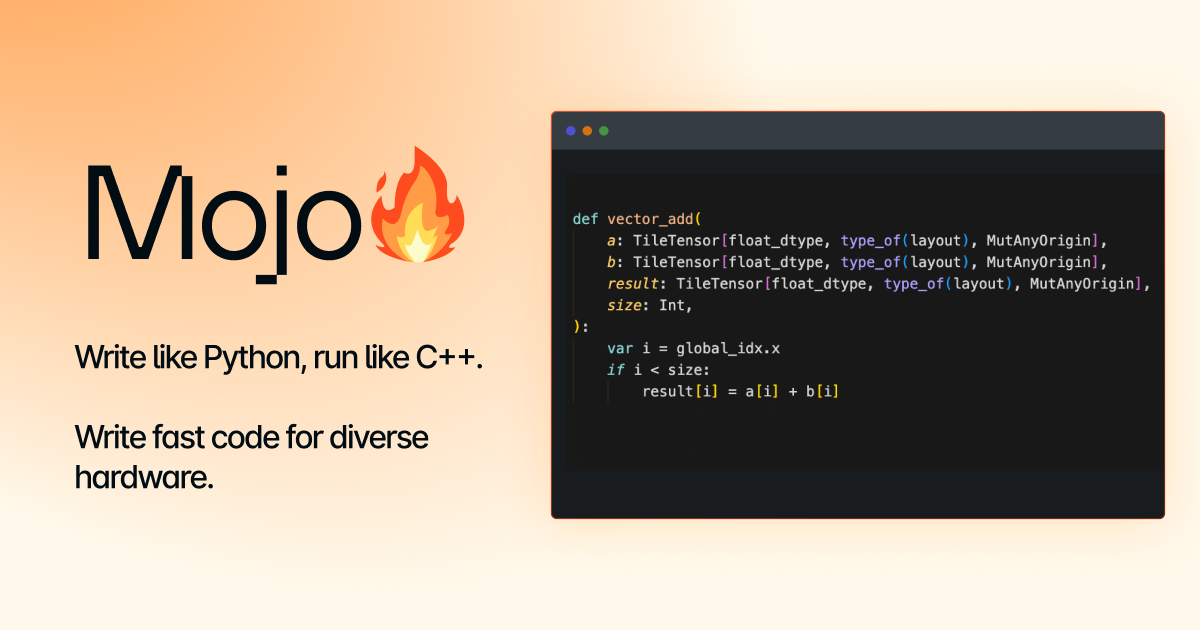
Mojo 1.0 Beta
2026-05-08The Mojo programming language has officially reached its 1.0 Beta milestone, advancing its mission to combine Python's ease of use with C-level performance for artificial intelligence. This release delivers increased stability and new capabilities to help developers efficiently build and deploy complex machine learning models. The update signals that Mojo is rapidly maturing and preparing for widespread adoption in the competitive AI landscape.
CommentsA recent project hosts a website entirely from the RAM of a Raspberry Pi Zero by offloading computationally heavy TLS termination to an external cloud provider. However, community discussions question the necessity of the complex proxy setup and note that modern operating systems already cache web pages in RAM by default, diminishing the technical impressiveness of the project.
Comments
PC Engine CPU
2026-05-08Community discussions highlight the historically underrated processing power of the PC Engine's 8-bit CPU, noting that its high clock speed and specialized memory transfer capabilities enabled impressive arcade ports that rivaled 16-bit competitors. Enthusiasts also explored the theoretical performance limits of modern 6502-based architectures while praising the system's compact physical design and highly optimized console adaptations of classic Capcom games.
CommentsRecent analysis of the XZ Utils backdoor suggests that the GNU IFUNC mechanism was the fundamental enabler of the exploit, transforming a standard supply chain compromise into a deeply hidden system-level threat. By weaponizing indirect function resolution, the attacker successfully concealed malicious code within the liblzma library, highlighting a critical need to reevaluate the security implications of IFUNC features in modern build systems.
CommentsPrompted by a developer's report of an unexpected UUIDv4 collision, the tech community emphasizes that such failures are surprisingly common due to flawed or poorly understood entropy sources. To prevent this, experts advise against using UUIDv4 in high-reliability systems, recommending instead the aggregation of multiple diverse, non-deterministic data points. Furthermore, modern cryptographic techniques can extract true randomness from these imperfect sources by blending them into a single, unpredictable seed.
CommentsClojureScript Gets Async/Await
2026-05-08ClojureScript has officially integrated native async/await support into its core compiler, overcoming previous community skepticism regarding implementation complexity. Spearheaded by developer borkdude after prototyping the feature in his Squint project, this update provides a modern alternative to the older core.async library. The release has also sparked broader discussions within the community regarding asynchronous error handling and the shift toward minimal JavaScript frontends using server-sent events.
CommentsReader discussions surrounding a recent article highlight ongoing developer frustrations with command-line tools that mishandle stdout, stderr, and exit codes instead of simply fixing underlying problems. While POSIX conventions dictate keeping stdout clean for data piping and using stderr for logging, many tools and brittle system environments continue to violate these expectations. Participants emphasize that adhering to these foundational CLI practices is essential for reliable scripting and automation.
Comments
Researchers have developed a closed-form polynomial autoencoder that achieves fourfold compression of transformer embeddings while outperforming traditional PCA. By pairing a PCA encoder with a quadratic Ridge decoder, the method delivers superior accuracy without requiring neural networks or iterative training.
Comments2026-05-07

Reliable AI agents handling complex tasks require deterministic control flow encoded directly in software rather than relying on increasingly elaborate prompt chains. Shifting the focus from complex prompting to structured software design will ultimately result in more stable and predictable agent performance.
Comments
AlphaEvolve is a coding agent powered by Gemini that optimizes algorithms to accelerate scientific progress across multiple disciplines. By applying this technology to complex challenges in genomics, quantum physics, and global infrastructure, the tool aims to solve critical real-world problems at scale.
CommentsProgramming Still Sucks
2026-05-07A recent tech commentary highlights the tiresome, repetitive questions programmers face from non-tech individuals about AI replacing their jobs. Through a brief social anecdote, the author illustrates how this specific inquiry has become an exhausting cliché, proving that the social annoyances and public misconceptions surrounding the programming profession remain unchanged.
CommentsPermacomputing Principles
2026-05-07The Permacomputing movement advocates for the sustainable and ecological use of technology, drawing parallels to agricultural permaculture. However, its explicit alignment with anti-capitalist and progressive political ideologies has sparked debate, with some critics arguing this broad framing alienates potential supporters. Proponents counter that addressing systemic societal and environmental challenges is an inherently political act that is fundamental to the practice.
Comments
A new study introduces ProgramBench, a benchmark designed to evaluate whether large language models can reconstruct software programs entirely from scratch. The evaluation tests fundamental code logic and architecture comprehension rather than relying on simple pattern matching or partial code completion. Ultimately, this research provides critical insights into the true programming capabilities and structural limitations of current generative AI models.
Comments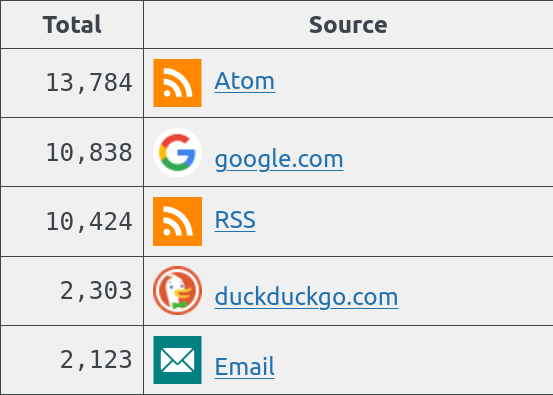
After analyzing their website traffic, a blogger discovered that RSS feeds generate more visitors than Google search. The author attributes this trend to focusing on semantic HTML and metadata rather than pursuing aggressive search engine optimization.
CommentsA new open-source project named TRUST has been shared on Hacker News for its unique approach to coding in Rust like it is 1989. Developers interested in this unconventional programming style can explore the code and contribute to the repository on GitHub.
CommentsA discussion surrounding a 2004 tutorial on TI-83 Plus Basic programming has prompted readers to share how secretly coding on graphing calculators during math classes launched their tech careers. Many current software developers credit their early experiences writing games, chat programs, and math solvers on devices like the TI-83 and TI-85 as the foundational spark for their professional journeys in computer science and engineering.
Comments
The author shares their experience and key takeaways from developing OurCar, a custom utility app designed specifically for their family. This personal project highlights the unique challenges and rewards of building a tailored software solution for everyday household needs from scratch.
Comments
RaTeX is a pure Rust LaTeX rendering engine that ensures KaTeX-compatible math layout across multiple platforms. It offers ready-to-use packages for Web, iOS, Android, Flutter, and React Native to deliver a consistent display list for cross-platform development.
CommentsBuilding my own Vi text editor in BASIC
2026-05-07A developer recently built a custom Vi text editor in BASIC, sparking a nostalgic discussion among readers about their early programming experiences. The conversation highlighted the historical context of the language's line-numbered editing system, which served as an essential workaround before the advent of modern visual text editors. While the original creator enjoys the retro challenge of using such an outdated environment, many readers expressed relief at having transitioned to structured languages.
Comments
Principles for agent-native CLIs
2026-05-07A new guide outlines the core principles for designing command-line interfaces optimized specifically for AI agents, prioritizing structured, predictable, and machine-readable outputs over human-centric interactions. This shift toward agent-native CLIs highlights the broader industry trend of adapting fundamental developer tools to enable seamless automation and autonomous system interactions.
Comments2026-05-06
Simon Willison recently joined the High Leverage podcast to discuss the evolving landscape of AI coding tools. He highlights the rapid convergence of informal vibe coding and autonomous agentic engineering, expressing concern that this shifting paradigm is merging faster than he would prefer.
Comments
The bottleneck was never the code
2026-05-06The team at .txt recently conducted an internal experiment that had been delayed for over a year to identify workflow inefficiencies. The study aimed to pinpoint what was truly slowing down their engineering projects. Ultimately, the experiment revealed that the software code was never the actual bottleneck.
CommentsFrom Supabase to Clerk to Better Auth
2026-05-06This article explores the common frustrations developers face with authentication systems by detailing the author's migration journey from Supabase and Clerk to the Better Auth framework. It highlights the unexpected pitfalls and complexities of implementing login flows, illustrating why finding a reliable auth solution remains an ongoing challenge in modern app development.
Comments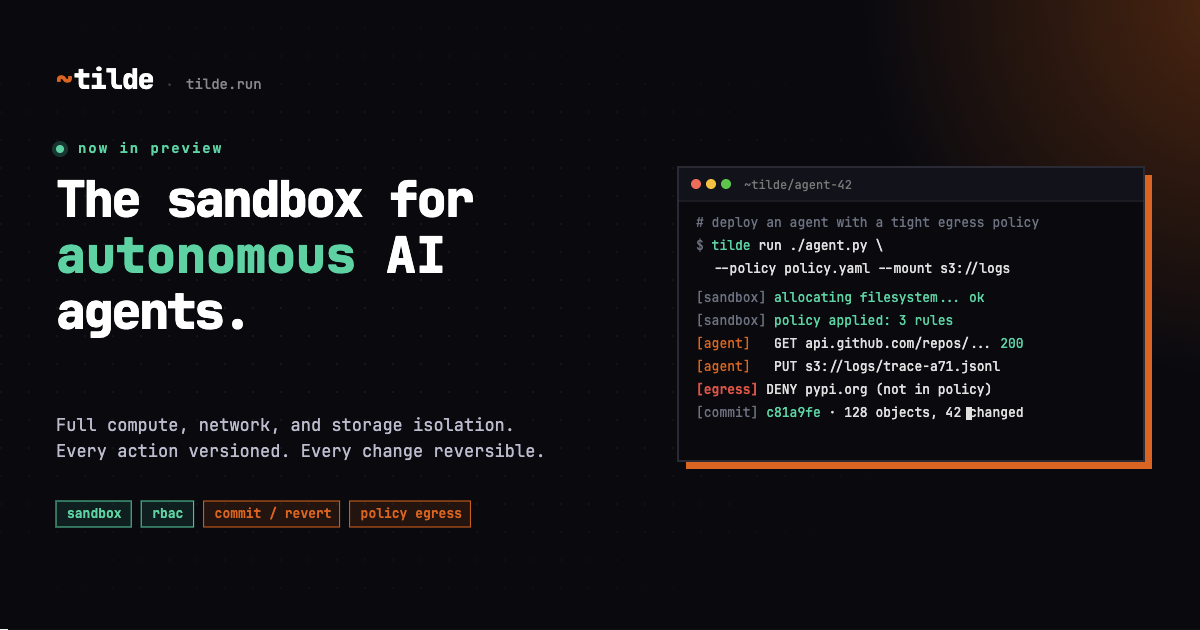
Tilde.run is a new AI agent sandbox that unifies GitHub, S3, and Drive into a single transactional, versioned filesystem to make data operations fully auditable. The platform provides comprehensive network logging and allows developers to roll back any execution with just one command.
CommentsShow HN: Hallucinopedia
2026-05-06Hallucinopedia is a newly launched project on Hacker News that acts as an encyclopedia for a procedurally generated universe. The world and its lore do not actually exist until a user visits the site, dynamically creating the content on the fly. This interactive platform offers a unique approach to generative digital world-building and exploration.
CommentsA satirical project has reimagined the traditional contribution graph by replacing GitHub's green squares with red ones to track platform outages instead of code commits. This humorous visual tool logs the service's downtime, offering a frustratingly familiar reflection of the platform's reliability issues directly on a developer's activity dashboard.
CommentsA developer is searching for original server files from the late 1990s and early 2000s to accurately reverse-engineer the 1998 Ultima Online demo world, prompting readers to share archived backups. The discussion also touches on the game's enduring popularity, noting that hardcore third-party servers still host thousands of active players today. Furthermore, many fans reminisced about how their early involvement in coding for private community emulators ultimately launched their professional careers in software engineering.
Comments
Wiki Builder is a new open-source Claude Code plugin that streamlines the creation of LLM knowledge bases into a one-command workflow. Developers can simply point the AI agent at source materials to automatically generate structured wiki pages, indexes, and concept maps.
CommentsA developer successfully ported Wolfenstein 3D to the Game Boy Color using a custom cartridge, demonstrating an impressive technical execution that pushes the classic console's hardware limits. Community discussions highlight the project's innovation while delving into the complex programming techniques, such as mid-frame tile switching and directly driving the LCD, required to overcome the system's original constraints. Fans also reminisced about early handheld first-person shooters like Faceball 2000 while debating the intricate memory and rendering optimizations necessary for such advanced ports.
Comments2026-05-05

Recent updates detail how Multi-Token Prediction drafters are significantly accelerating inference speeds for Gemma 4 models. By predicting multiple tokens simultaneously, this technique allows the AI to generate outputs up to three times faster. This optimization marks a major performance improvement for developers deploying these language models.
Comments