Programming Tech News
Writing software is a craft that keeps reinventing itself. This section gathers news and articles for people who program, covering language releases, compilers and runtimes, frameworks, development workflows, and the ideas that change how code gets written and reviewed.
Typical stories include new versions of Rust, Python, Java, JavaScript, and TypeScript, performance and debugging investigations, essays on architecture and code quality, and discussions of how AI coding assistants are changing day-to-day development. Hands-on tutorials and lessons from long-running projects show up often.
The tools and practices developers choose affect how fast teams ship and how well their software holds up over time. Working engineers, students learning to code, and engineering leaders follow this coverage to sharpen their skills and make better technical decisions.
2026-04-29

A bug in Claude Code routes API requests to extra usage billing instead of the included Max plan quota when the case-sensitive string HERMES.md appears in a git repository's commit history. This flaw has caused some developers to silently burn through hundreds of dollars in additional charges before realizing their standard subscription was bypassed.
Comments
Marking its 30th anniversary, the FastCGI protocol remains a superior choice for reverse proxies. Its unique architecture successfully avoids the inherent security vulnerabilities commonly associated with traditional HTTP reverse proxying setups. This enduring reliability makes it a highly secure and efficient foundation for modern web infrastructure.
Comments
Bugs Rust won't catch
2026-04-29Despite the safety guarantees of the Rust programming language, an external audit has uncovered 44 vulnerabilities in uutils, the Rust reimplementation of GNU coreutils. Canonical disclosed these flaws ahead of the 26.04 LTS release, demonstrating that memory-safe languages cannot prevent all software bugs.
Comments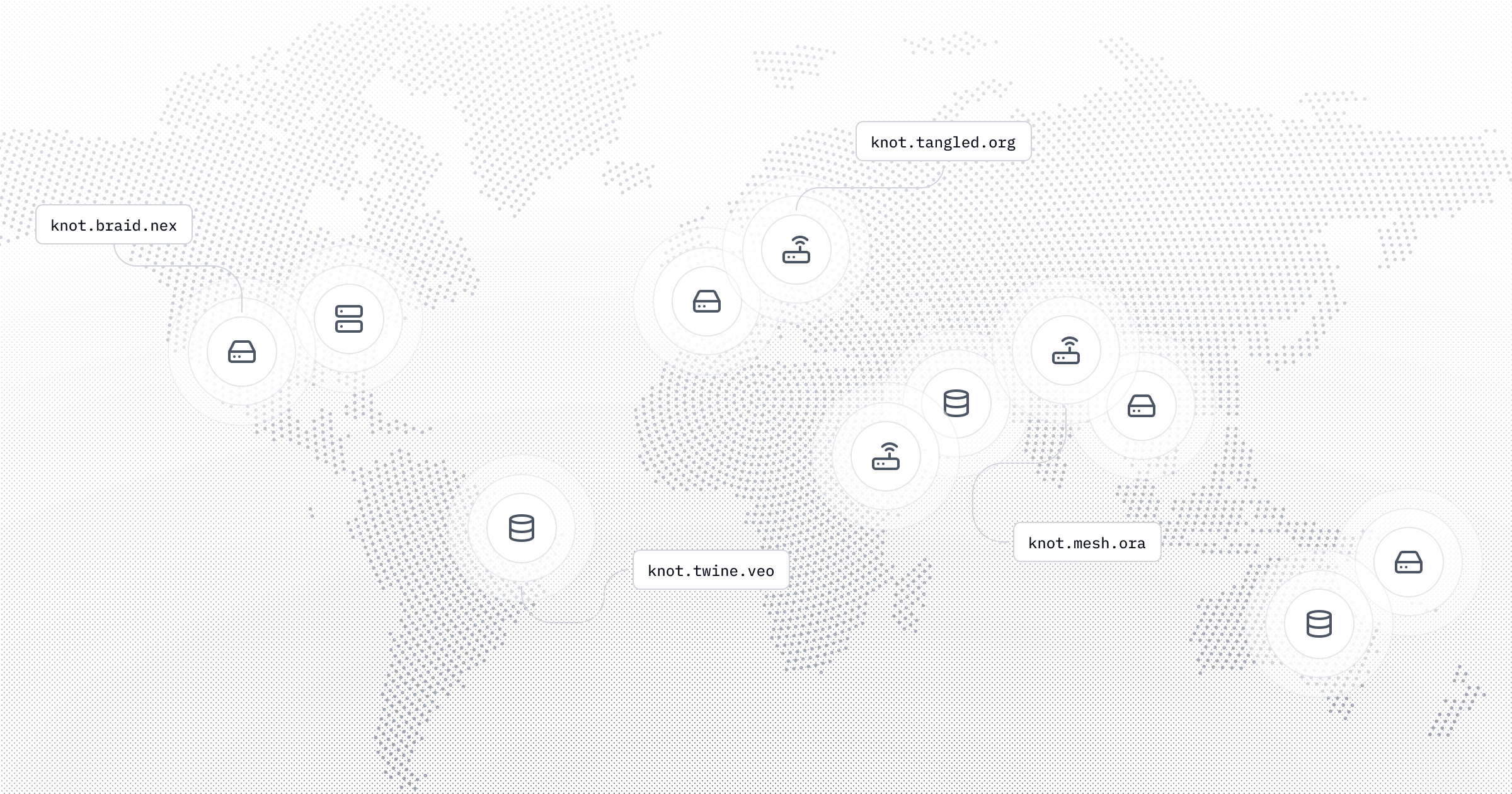
We need a federation of forges
2026-04-29Advocates are pushing for a decentralized federation of software forges to build a next-generation social coding platform. This proposed network would interconnect various open-source project hosting services, offering a distributed alternative to centralized repositories. By shifting away from single corporate entities, the federated model aims to give developers greater autonomy and control over their code.
CommentsOpenTrafficMap
2026-04-29A recent discussion on the feasibility of open-source mapping alternatives to Google and Waze highlights that while traffic congestion data is largely solved, maintaining accurate points of interest remains a significant challenge. Developers propose collaborative open platforms to streamline business data updates and reduce the workload for owners. However, participants acknowledge that overcoming the massive user bases and algorithmic moats of major tech monopolies will be highly difficult.
Comments
A new open-source code platform has been soft-launched for government organizations. This initiative enables these public sector bodies to collaboratively develop and independently publish software.
Comments
Warp is now open-source
2026-04-29Warp has officially transitioned to an open-source model, allowing the developer community to participate directly in the platform's ongoing development. Contributors will use an agent-first workflow managed by Oz, the company's cloud agent orchestration platform, to build and manage the project.
CommentsReader discussions highlight that developers prefer Lisp and Scheme over Haskell because rich standard libraries in dialects like Racket eliminate the need to write custom macros or bespoke domain-specific languages, while s-expressions provide a superior, universal format for manipulating complex data like JSON and XML. Furthermore, the community emphasizes that adopting these languages offers a transformative paradigm shift that deeply reshapes a developer's foundational understanding of software architecture.
CommentsA new open-source project applies Andrej Karpathy's AI development loop to the automated design of CPU architectures. The associated GitHub repository hosts a tournament to evaluate these auto-generated designs and encourages community contributions.
CommentsA new GitHub repository provides detailed transcriptions of Tim Paterson's original DOS 1.0 printouts, preserving the foundational code of the early PC operating system. The open-source project invites developers to contribute to this historical archive and explore the origins of early software development.
Comments
The co-founder of HashiCorp states that GitHub is no longer suitable for serious work due to frequent platform outages. As a result of these ongoing stability issues, he plans to move his Ghostty project to a different hosting service.
CommentsHardenedBSD Is Now Officially on Radicle
2026-04-29HardenedBSD has officially migrated its code repository from a heavily loaded self-hosted GitLab instance to Radicle. Radicle is a peer-to-peer Git forge that enables collaborative development by storing social features and code reviews directly as Git objects. The maintainers cited increasing server strain and a previously communicated desire to adopt this distributed infrastructure as the primary motivations for the move.
Comments
A game developer is building an agentic AI test harness to automate the slow and tedious process of manual play-testing. By allowing the AI to play the game and identify bugs, the creator aims to significantly speed up the iteration cycle of their AI-assisted development workflow.
CommentsRocky is an open-source SQL transformation engine built in Rust that type-checks entire data pipelines to catch breaking changes before execution. It provides advanced data management features including branching, replay, and column-level lineage, alongside adapters for major platforms like Databricks, Snowflake, BigQuery, and DuckDB. The project is released under the Apache 2.0 license as a single static binary.
Comments
Rip.so is a newly launched digital graveyard that serves as a memorial for defunct internet products and services. Highlighted on Hacker News, the site pays a nostalgic tribute to forgotten messengers, obsolete browsers, discontinued gadgets, and websites the internet forgot.
Comments2026-04-28
Ghostty is leaving GitHub
2026-04-28The creator of Ghostty announced an emotional departure from GitHub, citing the platform's degraded user experience resulting from massive scale and recent AI-driven shifts. Some community members argue that long-time users should stick around to help improve the platform. However, others strongly support the exit as a necessary way to vote with their feet and signal dissatisfaction with GitHub's declining fundamentals.
Comments
Before GitHub
2026-04-28Prior to the launch of GitHub, the open-source ecosystem was a complex landscape driven by personal reputation and significant technical friction. Developers navigated a cumbersome, decentralized environment to share, manage, and collaborate on software code.
Comments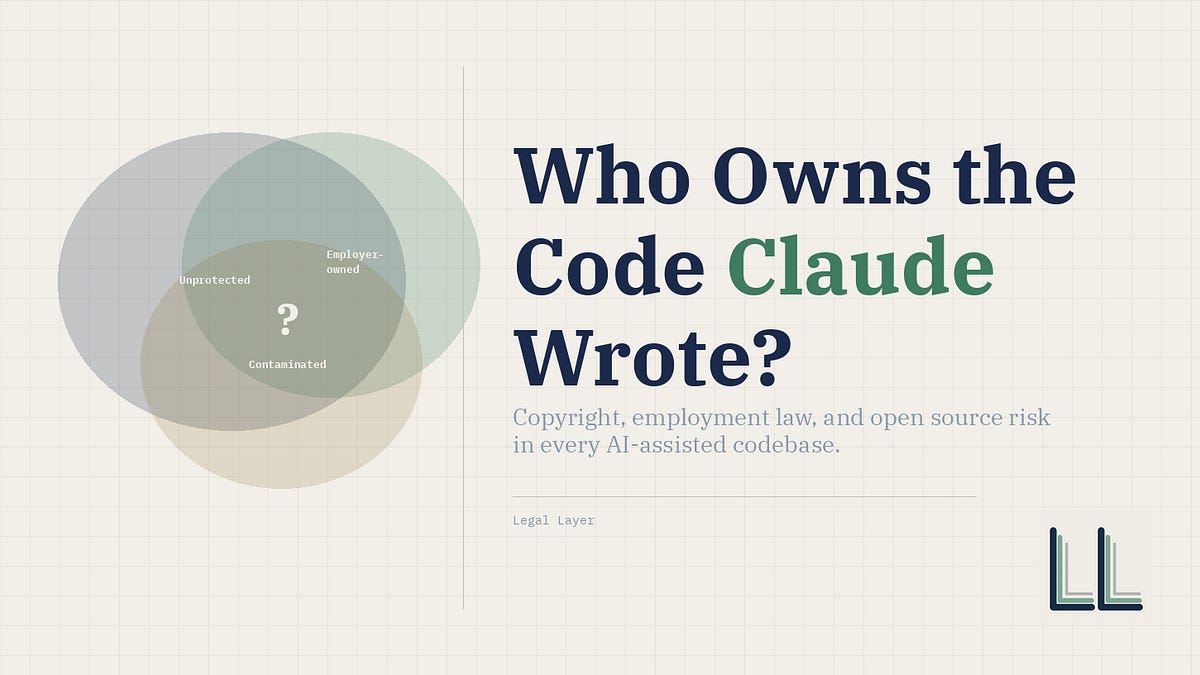
Who owns the code Claude Code wrote?
2026-04-28A new guide breaks down the complex copyright and ownership rules surrounding AI-generated code, specifically addressing outputs created by Claude Code. It provides developers with essential legal insights to navigate intellectual property rights and mitigate risks when integrating AI coding assistants into their workflow.
Comments
A high-severity remote code execution vulnerability, tracked as CVE-2026-3854, has been identified in GitHub Enterprise Server with a CVSS score of 8.7. Security teams should review the latest threat brief and utilize Wiz to scan for and patch any vulnerable instances.
CommentsVibeVoice: Open-source frontier voice AI
2026-04-28Microsoft has introduced VibeVoice, an open-source frontier voice AI project hosted on GitHub. This initiative invites developers and researchers to access the repository, collaborate, and contribute to the ongoing advancement of next-generation voice technologies.
Comments
An update on GitHub availability
2026-04-28GitHub has published a detailed update outlining the steps it has taken and continues to take to improve platform availability. The announcement highlights both recent infrastructure changes and ongoing initiatives designed to enhance overall system reliability and minimize future downtime.
CommentsI have officially retired from Emacs
2026-04-28Following a developer's announcement that they are retiring from Emacs to simplify their tech stack and reduce daily friction, community members shared mixed reactions to the shift. While some lament the departure, many revealed that the advent of LLMs has actually inspired them to deepen their integration with Emacs, leveraging its Lisp REPL and text-handling capabilities for advanced AI workflows.
CommentsThe open-source project CUA enables developers to programmatically control macOS applications in the background without disrupting the active user cursor. It aims to scale computer-use 2.0 by providing cross-OS fleets, open-source drivers, and benchmarks for AI model training and evaluation.
CommentsMeetings are forcing functions
2026-04-28While brief, focused meetings can serve as valuable forcing functions for team accountability, management often ruins them by expanding them into large, daily status updates. This performative oversight prioritizes the manager's need for control over engineering productivity, ultimately wasting significant work time and disrupting developer flow states. Effective standups instead require strict boundaries and small group sizes to act as quick interrupt routers rather than administrative traps.
CommentsHigh Performance Git
2026-04-28Ted Nyman's new book, High Performance Git, explores the internal mechanics of the popular version control system. The guide is specifically designed to help software developers effectively optimize and manage large repositories for better performance.
Comments
GitHub announced that its Copilot-powered code review feature for pull requests will now consume GitHub Actions minutes, shifting the resource cost for automated code assessments. This billing update directly impacts development teams worldwide, who will need to monitor their Actions usage to accommodate the change.
CommentsThe open-source framework pgrx enables developers to build PostgreSQL extensions using the Rust programming language. Maintained by the pgcentralfoundation on GitHub, the project is actively encouraging community collaboration and new contributions.
CommentsCJIT: C, Just in Time
2026-04-28The newly introduced CJIT utility simplifies C programming by allowing developers to instantly compile, link, and execute their code. This just-in-time approach eliminates traditional manual build steps, providing a significantly faster workflow for testing and iterating C applications.
Comments2026-04-27

Starting June 1, GitHub will transition its Copilot service to a usage-based billing model where developers consume GitHub AI Credits based on their actual usage. This shift represents a significant change in how the platform monetizes its popular AI coding assistant.
Comments