Programming Tech News
Writing software is a craft that keeps reinventing itself. This section gathers news and articles for people who program, covering language releases, compilers and runtimes, frameworks, development workflows, and the ideas that change how code gets written and reviewed.
Typical stories include new versions of Rust, Python, Java, JavaScript, and TypeScript, performance and debugging investigations, essays on architecture and code quality, and discussions of how AI coding assistants are changing day-to-day development. Hands-on tutorials and lessons from long-running projects show up often.
The tools and practices developers choose affect how fast teams ship and how well their software holds up over time. Working engineers, students learning to code, and engineering leaders follow this coverage to sharpen their skills and make better technical decisions.
2026-04-18
An anonymous analysis compares how Anthropic's Opus 4.6 and Opus 4.7 models calculate request tokens when processing identical transcripts. The evaluation highlights the differences in token counting between the two versions, providing developers with crucial data for optimizing API usage. These insights can help users better predict costs and manage resources when transitioning between the models.
Comments
Michael Rabin has died
2026-04-18Renowned computer scientist Michael Rabin has passed away, prompting widespread tributes from developers and former students. The tech community is mourning his loss while celebrating his foundational contributions, particularly the Rabin fingerprinting algorithm used in data deduplication and the Rabin-Karp method used in threat scanning. Alongside his technical legacy, former students fondly remember him as a masterful and engaging lecturer at universities like Harvard and Columbia.
Comments
Category Theory Illustrated – Orders
2026-04-18Readers discussing an illustrated guide to category theory recommend more rigorous mathematical textbooks, noting the subject's steep learning curve for those without advanced backgrounds. Commenters also critique the original article's mathematical accuracy, specifically highlighting flawed logic in its sorting code examples. Furthermore, users debate the author's confusing definitions regarding strict versus non-strict linear orders and the handling of equality in mathematical comparisons.
Comments
A developer has introduced Brunost, a new programming language that uses the Nynorsk written standard of Norwegian for its syntax. The creator humorously apologized to the tech community for adding yet another language to the already crowded programming landscape.
CommentsA developer has showcased a novel calculator that utilizes interval and union arithmetic to overcome floating-point precision issues and compute true inverses of mathematical functions. Originally built to test a custom TypeScript library for handling disjoint sets of intervals, the project has sparked community discussions regarding interval math standards, notation, and related graphical applications.
CommentsA new tool called MDV acts as a Markdown superset for creating data-rich documents, dashboards, and slides. It enables users to embed data and visualizations directly into their files. Additional features include live preview capabilities, HTML and PDF export options, and a dedicated VS Code extension.
CommentsOptimizing Ruby Path Methods
2026-04-18An Intercom engineer explains how optimizing Ruby path methods improved the continuous integration pipeline for their monolithic application. The optimization effort was one of the author's first major projects after joining the company.
Comments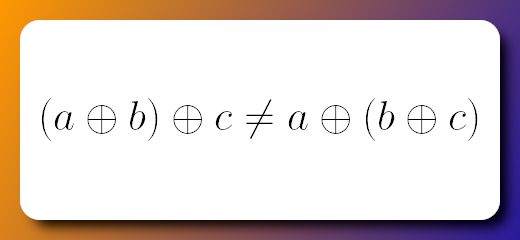
A recent article suggests that comparing floating-point numbers for equality is sometimes acceptable, but industry experts argue this view is overly reductive for computational geometry. Because geometric inputs are inherently inexact, exact floating-point comparisons are fundamentally unworkable for boundary representations, requiring geometry kernels to rely on fuzzy tolerances instead. While field-based representations can bypass these floating-point precision issues, developers note they introduce severe new complexities, such as the difficulty of implementing user-requested fillets in CAD software.
CommentsUnderstanding the FFT Algorithm (2013)
2026-04-18Reader discussions surrounding an article on the Fast Fourier Transform algorithm debate the level of mathematical complexity required to truly understand such concepts. Beyond theory, participants highlight practical applications ranging from removing visual artifacts on color e-ink displays to analyzing network traffic. The conversation also explores using frequency domain techniques like the Lomb-Scargle periodogram to process unevenly sampled packet capture data.
CommentsFuzix OS
2026-04-18FUZIX is a micro-Unix operating system designed for retrocomputing on old and resource-constrained hardware like 8-bit microcontrollers and the Raspberry Pi Pico. Although the project supports standard Unix-style processes and is making steady progress, poor documentation remains a notable issue for hobbyists. The development team is currently working on a portable C compiler to help alleviate the steep learning curve associated with the cross-compilation toolchain.
Comments
A presentation at the Onward! 2025 conference explores the concept of treating Unix executables as native Smalltalk methods to bridge the gap between the operating system and the programming environment. Joel Jakubovic from Charles University details this technical approach and discusses the broader implications for unifying Unix and Smalltalk.
Comments2026-04-17
Measuring Claude 4.7's tokenizer costs
2026-04-17Independent testing of Claude 4.7 reveals its new tokenizer consumes more tokens than officially documented on real-world content. The measured 1.47x increase in token usage exceeds the documentation's projected range of 1.0 to 1.35x. This discrepancy indicates developers may face higher-than-expected tokenization costs.
CommentsA newly announced project called Smol Machines has introduced a lightweight, self-contained virtual machine that boasts ultra-fast subsecond coldstart times. This highly portable tool provides developers with an efficient solution for rapidly spinning up isolated computing environments.
Comments
I’m spending months coding the old way
2026-04-17Despite the widespread integration of artificial intelligence in software development, one developer is deliberately spending the next three months coding without any AI assistance. This self-imposed return to traditional programming aims to reinforce fundamental skills and establish a baseline for evaluating the true impact of AI tools on the industry.
CommentsCadQuery is an open-source Python library that allows developers to build parametric 3D CAD models entirely through code. This scripting approach replaces traditional graphical interfaces to enable highly automated, customizable, and version-controlled design workflows.
CommentsA simplified model of Fil-C
2026-04-17A recent community discussion highlights Fil-C as an underrated project that brings memory safety to C without requiring a rewrite in Rust. However, critics emphasize that the project currently suffers from data race vulnerabilities due to non-atomic pointer updates and incurs noticeable performance overheads compared to compile-time safe alternatives. Despite these limitations, developers continue to experiment with the language, recently introducing a Bazel template to facilitate hermetic builds and invisible capability system variations.
Comments
Stage is a new AI tool that streamlines the code review process by organizing pull requests into logical chapters. This structured approach allows human reviewers to comprehend code changes much faster, ultimately putting developers back in control of their workflows.
CommentsA summary of Brad's HIPS 2025 keynote reflects on the evolution of High-Performance Computing programming over the past three decades. The discussion highlights both the significant technological advancements and the enduring paradigms that have shaped the field since the early 1990s.
CommentsA recent analysis highlights how the Ada programming language successfully solved fundamental design challenges back in 1983. Its forward-thinking architecture addressed core software engineering needs long before they became industry standards. Today, modern systems languages like Rust, Go, and C++ are still independently converging on the pioneering solutions Ada established over four decades ago.
CommentsA Python Interpreter Written in Python
2026-04-17A new project called Byterun implements a Python interpreter written entirely in Python, sparking community debate over the architectural differences between self-hosting interpreters and compilers. While critics note that circular interpreters can create inefficient runtime chains compared to self-hosted compilers, supporters highlight the project's value for educational experimentation and demystifying language execution. The ensuing discussion also delves into the technical nuances of bootstrapping and the exact definitions of interpreters, JIT compilers, and PyPy's compiled RPython subset.
CommentsIntroducing: ShaderPad
2026-04-17Programmer and designer Riley J. Shaw has introduced ShaderPad, a new project reflecting his commitment to repair and craft in technology. This release aligns with his broader mission to build transparent, remixable tools that promote a sustainable and accessible future.
CommentsReBot-DevArm: open-source Robotic Arm
2026-04-17Seeed-Projects has launched ReBot-DevArm, an open-source robotic arm designed specifically for developers. The project is hosted on GitHub, where the community is invited to contribute to its ongoing development.
CommentsThe GNU libc atanh is correctly rounded
2026-04-17The GNU C Library has updated its math functions to achieve fully correct rounding for the double-precision atanh operation, moving beyond the traditional 1 ULP accuracy target. This ongoing initiative provides strict numerical guarantees that are essential for designing reliable algorithms in critical fields like aerospace and medical simulations. While these highly accurate implementations perform well on modern CPUs, developers still face significant optimization challenges when adapting them for GPU and NPU architectures.
Comments
Discourse Is Not Going Closed Source
2026-04-17Following Cal.com's recent decision to close its source code over AI concerns, Discourse has announced it will remain open source. The platform's creators reaffirmed their commitment to transparent development after 13 years of building the software in public.
Comments2026-04-16

Qwen has released Qwen3.6-35B-A3B, an openly available model designed to deliver advanced agentic coding capabilities to developers. This release enhances the broader Qwen Studio ecosystem, which offers a comprehensive suite of multimodal features including image and video understanding, document processing, and web search integration.
Comments
Codex for almost everything
2026-04-16Positioning itself as a tool for almost everything, the updated Codex app for macOS and Windows introduces advanced features like computer use, in-app browsing, image generation, memory, and plugins. These comprehensive enhancements are designed to significantly accelerate and streamline developer workflows.
Comments
A newly introduced Android CLI tool allows developers to build applications three times faster by integrating seamlessly with any automated agent. This enhancement to the Android developer tools ecosystem streamlines workflows and significantly boosts overall productivity.
CommentsDiscussions surrounding a new Clojure documentary highlight the language's passionate community and career benefits, while criticizing corporate trends that favor commodified developers over high-quality software. A significant portion of the conversation focuses on commercial developers improperly using the interactive REPL, often defaulting to restarting the JVM instead of leveraging the language's intended rapid feedback loop. These exchanges ultimately reveal an ongoing tension between the language's foundational philosophy of interactive development and its practical commercial execution.
Comments
Tree-sitter integration is significantly enhancing the R programming experience by introducing modern development tooling. This upgrade provides R developers with advanced capabilities for parsing, searching, formatting, and editing their code. As a result, R now offers the same high-quality development environment previously limited to other mainstream programming languages.
CommentsAI cybersecurity is not proof of work
2026-04-16Tech community debates are questioning the validity of Anthropic's claims regarding its closed Mythos model and its advanced cybersecurity capabilities compared to open-source alternatives. Skeptics argue that without transparent testing setups, these assertions serve as marketing rather than proof, raising concerns about whether artificial intelligence genuinely discovers complex vulnerabilities or merely games benchmarks. The discussion also highlights broader disagreements over whether strong coding proficiency naturally translates to identifying arbitrary security flaws, emphasizing the need for practical and reproducible verification.
Comments