Programming News
SubmitProgramming keeps evolving as languages mature, tooling improves, and teams rethink how software should be written. This section follows that change, gathering news and articles about programming languages, compilers, development practices, and the craft of writing reliable, maintainable code.
Typical stories include language releases and proposals, deep dives into compiler and runtime internals, performance investigations, debates about coding style and architecture, and essays from experienced engineers on lessons learned. Popular ecosystems such as Rust, Python, JavaScript, and TypeScript appear regularly.
Keeping up with these topics helps developers choose the right tools, avoid known pitfalls, and grow their skills. Working engineers, students, and technical leaders follow this coverage to stay current with the ideas shaping how software gets built.
2026-11-02
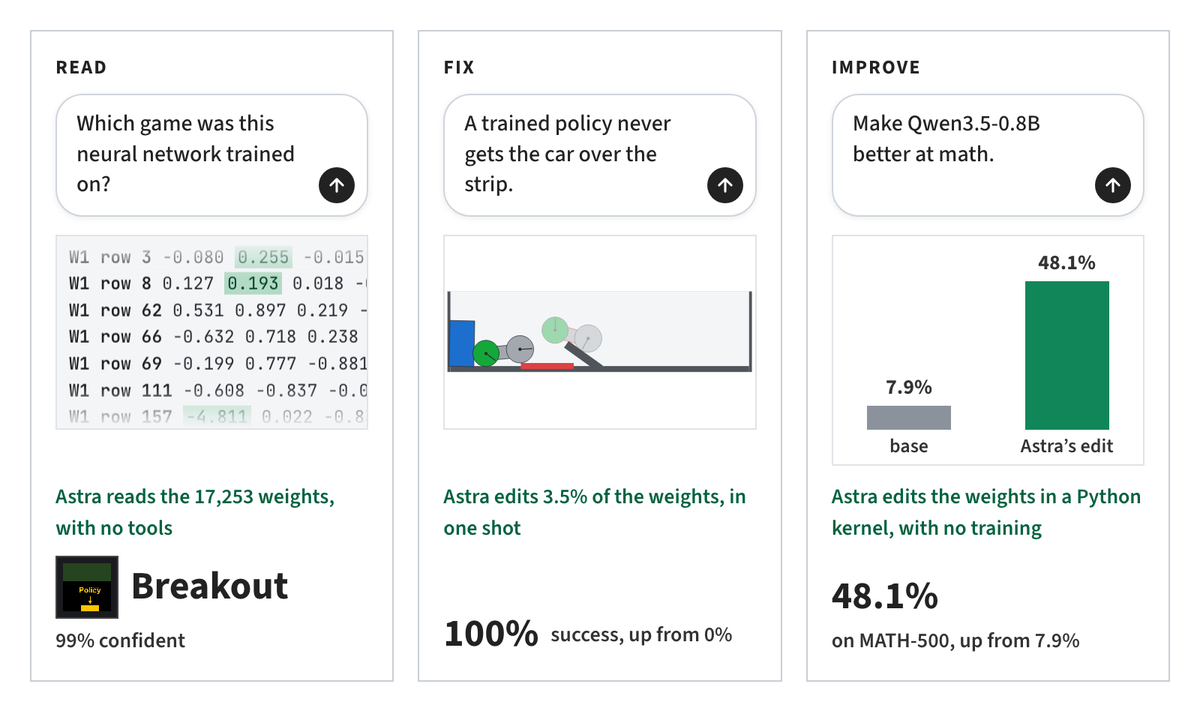
Astra can natively read and write neural network weights to improve Qwen. The work finds frontier LLMs are surprisingly capable at manipulating weights directly, exceeding expectations for humans or conventional algorithms.
CommentsWir müssen wissen – wir werden wissen
2026-11-02A blog post invoking Hilbert’s “We must know—we will know” argues that software developers should keep raising abstraction levels, refactoring and adopting higher-level languages until code can be held in one’s head. Readers debate where that level lies, especially with AI-generated code, warning that vague prompts are not specifications and that agents may silently fill underspecified behavior with plausible but inconsistent output. They suggest formal specifications and verification may become essential as AI accelerates coding without replacing the need to understand and check the result.
Comments
2026-11-01
Memdoor, a lightweight coding and automation agent packaged as a single CLI binary, uses a team of five Qwen3.8-27B models to outperform Fable 5 on LiveCodeBench Hard. It can run locally or over SSH, optimize token usage, and automate CI and cron jobs with durable workflows.
CommentsA reader discussion highlights a bootstrapped SaaS run for 20 years by two brothers, with users praising its longevity and a practical MP3-to-text conversion tool. Commenters ask how AI and coding agents have affected revenue, while others suggest most of the service’s regular users are non-developers who are largely unaware of tools like Claude.
Comments
ChatGPT and Codex usage limits merging
2026-11-01OpenAI is merging ChatGPT and Codex usage limits into a shared allowance, according to reader discussion. Commenters criticize the move as a cost-cutting measure that could frustrate paying subscribers, since agentic coding consumes far more tokens than typical chat and decoupled billing had been a reason to stay. Some warn users may switch providers or use ChatGPT less as a result.
CommentsShow HN phoria2 is a rebuilt canvas 3D library as a small WebGL 2 library that includes chart primitives for timeseries, heat-colored hour/day surface charts, and tiled dashboards, plus on-demand rendering and validation errors aimed at coding bots. Readers praised its mobile performance and aesthetics but raised questions about tween performance for live-streaming geometry updates, missing comparisons with Three/Babylon, and mobile hover/tap persistence.
CommentsOpenIDEA is a new Rust-built IDE that recreates familiar IntelliJ IDEA-style keymaps, tool windows, and search-everywhere in a fast native app. It bundles an editor, code insight, debugger, Git, terminal, database and HTTP clients with support for 60+ languages.
CommentsCopper is a minimal low-level programming language with OOP and generics that readers compare to Crystal for stronger typing and to Ruby/Python for its syntax. The one-person project drew interest for its design blog and changelog, including the author’s experiments with adding and later rejecting exceptions, though questions remain about Unicode support and garbage collection.
CommentsOmniDiff is a new open-source Git difftool written in Rust that aims to deliver fast, robust, and accurate diffing with content-aware behavior. The project is available on GitHub and is positioned as a high-performance alternative for developers comparing changes.
Comments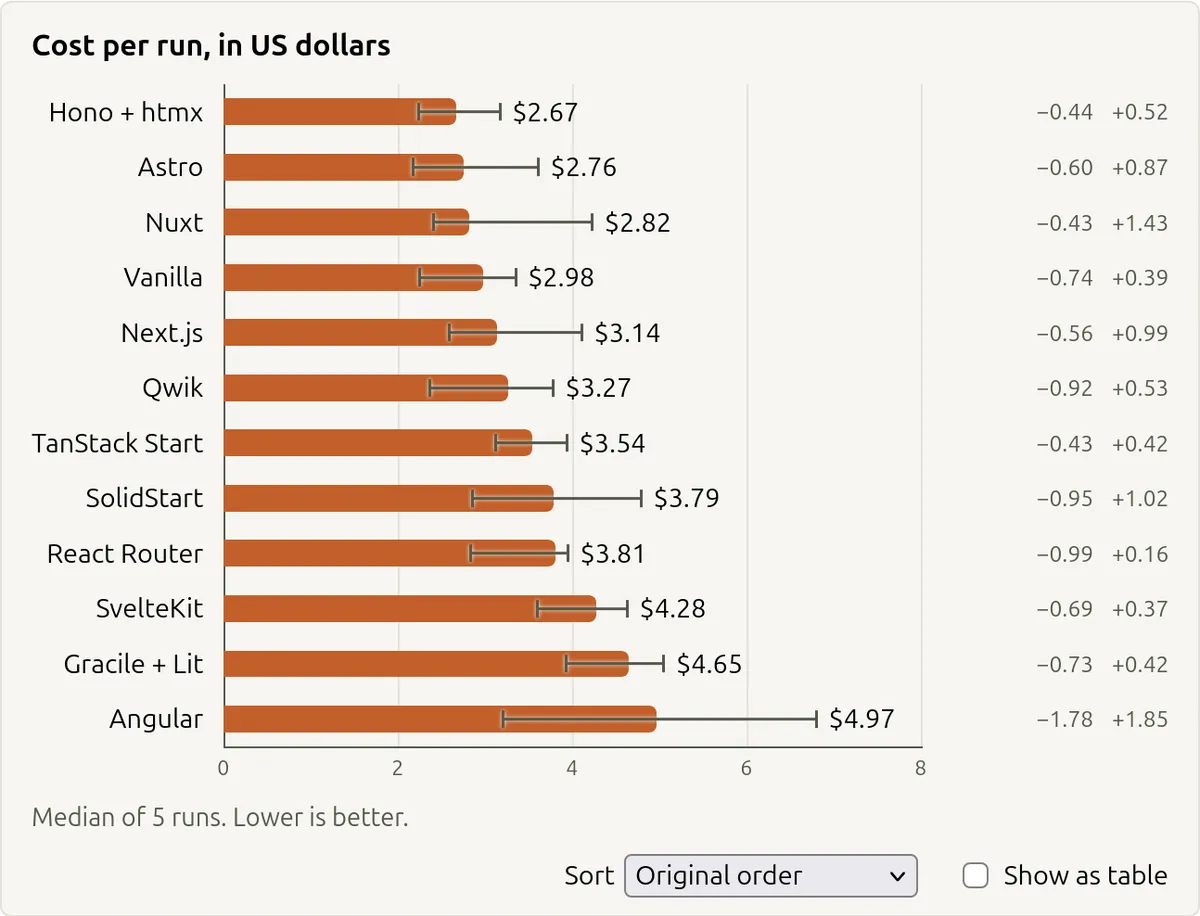
The AI cost of JavaScript frameworks
2026-11-01The article argues that JavaScript framework choices are often based on vibes, and that AI coding assistants add a new measurable cost: larger, more complex frameworks consume more context and tokens, making AI-assisted work slower and more expensive. It recommends weighing AI-readability and token efficiency alongside performance and developer experience.
Comments2026-10-31
A new Rust library, cfsolve, claims to solve Cloudflare Turnstile and challenge pages through request-based reverse engineering without needing a headless browser. The project is hosted on GitHub under chris124567/cfsolve.
CommentsSwitch Lowering in GCC
2026-10-31A discussion around GCC’s switch-lowering work highlights frustration that GCC and Clang still lack perfect hashes for large sparse switch tables; one commenter says they implemented this in their rcc C compiler in a day, especially useful for Unicode. Commenters note an LLVM patch was rejected a decade ago and GCC’s Unicode-related patches remain in branches, while also debating jump-table indirection and missed switch simplifications.
CommentsProspero is a new coding harness with a native GUI and a notably space-efficient Dear ImGui-based interface, drawing praise for thoughtful, opinionated design amid a wave of AI “slopware.” Commenters want to compare it with Zed and see whether its UI could work atop opencode or the Codex app-server protocol, while others flagged confusion over inconsistent platform support on the Professional Edition page.
Comments
The article explains that I/O read and write operations are less symmetric than programmers often assume, using POSIX read(2) and write(2) as examples. It highlights the semantic and behavioral differences between the two syscalls that matter in practice.
CommentsBrief History of PDP Computers
2026-10-31A retrospective on DEC’s PDP line examines how these minicomputers carved out a cheaper, more accessible niche than batch-oriented mainframes. Readers recall programming on PDP-10s and note that the “Programmable Data Processor” name may have helped DEC sidestep procurement rules that treated “computers” as high-scrutiny mainframes. The discussion also highlights preservation work, including browser-based PDP-7 emulators running early UNIX, PIXIE CAD software, games, and newly built Forth systems.
CommentsThe article explains why Python’s None is often an inadequate way to represent absence and how custom sentinel values can better fill that role. It also covers how PEP 661 makes sentinels first-class citizens in Python 3.15.
Comments2026-10-30
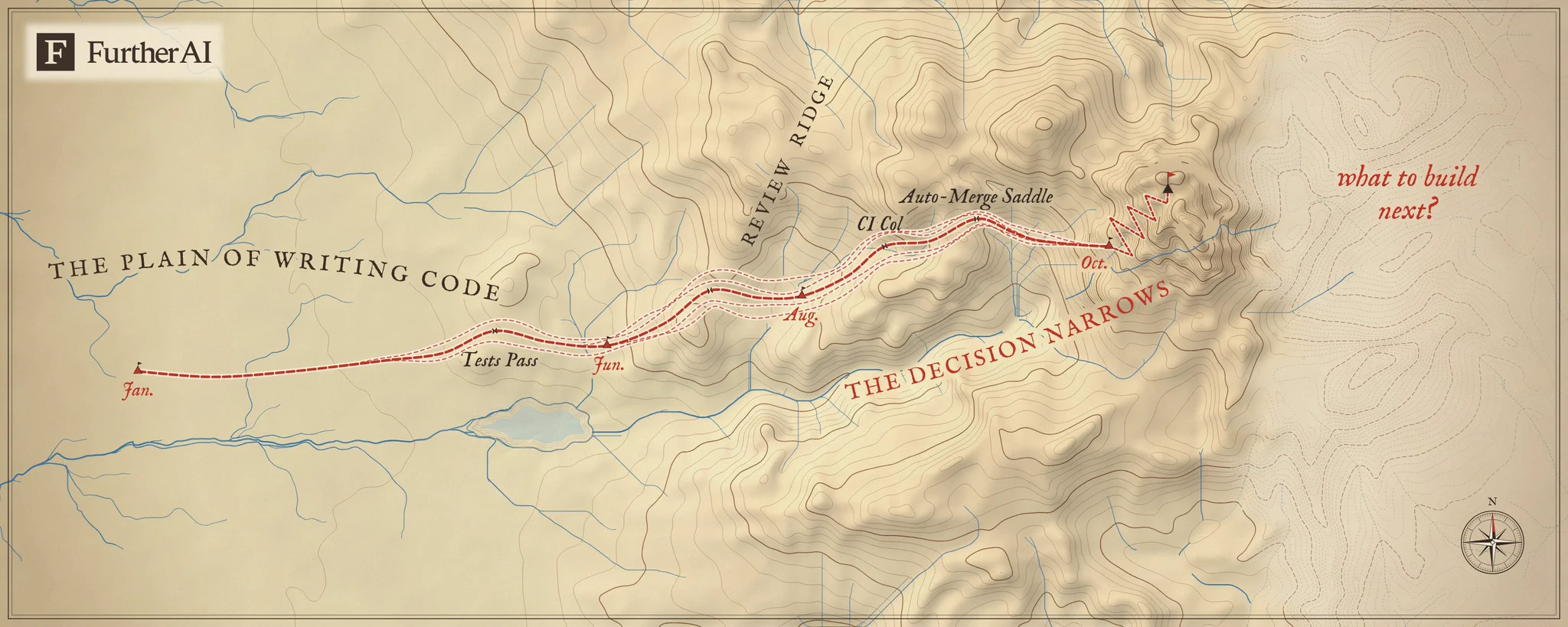
Building an AI-native engineering org
2026-10-30The article explores how engineering organizations can become AI-native by embedding AI across planning, coding, review, and operations rather than treating it as a bolt-on tool. It outlines the cultural, process, and platform changes needed to make AI a default part of how teams build and ship software.
CommentsCuis: The Modern Smalltalk-80
2026-10-30Cuis is a modern Smalltalk-80 environment that aims to preserve the original Smalltalk philosophy while updating it for contemporary use. It offers a compact, self-contained system for developers interested in live programming and object-oriented computing.
CommentsSanstun is a new sans-IO WireGuard implementation written in Rust, designed to be parallel-friendly and idiomatic. It aims to combine ease of use, security, and performance through its API.
CommentsLasm is a new Show HN project that lets developers write formally verified web apps in Lean and run them on JavaScript and WebAssembly runtimes, including Node, serverless, and edge environments. The tool aims to bring Lean’s verification capabilities to mainstream web deployment targets.
CommentsCompile-Time Dependent Types
2026-10-30A reader discussion on compile-time dependent types notes that mainstream systems-language features—C++ templates/constexpr, Rust const generics, Zig comptime, and C _Generic—are often restricted or lack a proper type system and are not true dependent types. It highlights Syl as an example of compile-time dependent typing with runtime simply typed code and type erasure, linked to staged compilation and two-level type theory, while questioning how well LTO and compiler optimization handle the resulting polymorphic code.
CommentsPython on My Wrist
2026-10-30A developer has revived the PineTime smartwatch by getting an up-to-date version of MicroPython and the wasp-os firmware running on it. The project shows how Python can be used on a low-cost wearable wrist device.
CommentsFlint-interactive introduces a high-level specification language for interactive data visualizations that separates visual encoding from interaction logic, letting a compiler handle the complex wiring. The goal is to make it easier and more reliable for AI agents to generate expressive interactive charts in chats, apps, and dashboards without unwanted style or layout changes. It is available as an MCP app for agent chats and as a programming API for bespoke interactions.
Comments
Wasmer is hiring remote OS and hypervisor experts in Europe (CET ±2) to help build WASIX, a WebAssembly-based OS emulation layer that brings full POSIX semantics such as threads, processes, sockets, and signals to Wasm. The role involves low-level systems work on syscall semantics, process/threading models, sandboxing, and the Wasmer runtime, requiring deep Linux internals or hypervisor experience plus Rust and C.
Comments2026-10-29
Mistral has released the weights of Mistral Large 4, nicknamed Le Chonk. The 1-trillion-parameter multimodal model was trained in Europe and is billed as the best open-weight model for coding.
Comments
Google’s Gemini 4 Carbon has taken the #1 spot on the Artificial Analysis Intelligence Index v5. It ranks second only to Claude Opus 5.5 on the separate Artificial Analysis Coding Agent Index.
CommentsA !!Con West 2019 talk argues that the programming keyword “else” was probably introduced as a literal translation from German. The accompanying GitHub project collects the evidence behind this etymological claim.
CommentsTreap (Cartesian Tree)
2026-10-29A project aims to translate the e-maxx.ru resource, which describes algorithms and data structures popular in competitive programming. It also seeks to improve and expand the collection by updating existing articles and adding new ones, including coverage of the Treap (Cartesian Tree).
CommentsNixpkgs for the Front End Impaired
2026-10-29Jinx, a new tool that compiles Nix to TypeScript, can evaluate all 231,777 nixpkgs attributes and produce the same drvPath as Nix, including running hello in a browser playground with no Nix installed. Its author argues the real magic is Nix’s store model rather than the language itself, so similar tools built on that model can achieve the same reproducibility and hermeticity.
Comments2026-10-28

An Anthropic team member argues that the traditional coding interview no longer provides useful hiring signal, at least for their team. They offer an optimistic take that this shift creates a major opportunity for junior engineers, with hunger mattering more than tenure.
Comments