Programming News
Programming keeps evolving as languages mature, tooling improves, and teams rethink how software should be written. This section follows that change, gathering news and articles about programming languages, compilers, development practices, and the craft of writing reliable, maintainable code.
Typical stories include language releases and proposals, deep dives into compiler and runtime internals, performance investigations, debates about coding style and architecture, and essays from experienced engineers on lessons learned. Popular ecosystems such as Rust, Python, JavaScript, and TypeScript appear regularly.
Keeping up with these topics helps developers choose the right tools, avoid known pitfalls, and grow their skills. Working engineers, students, and technical leaders follow this coverage to stay current with the ideas shaping how software gets built.
2026-10-27
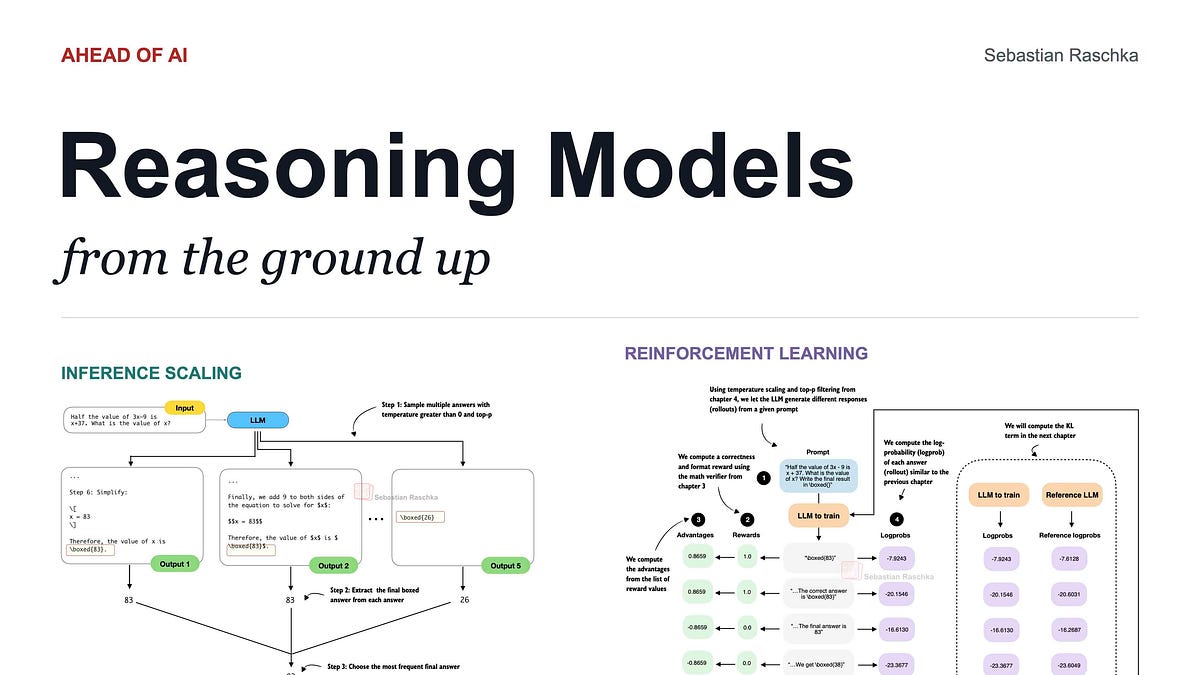
Sebastian Raschka has launched an extensive 11-hour video course teaching developers how to build reasoning models from scratch. Utilizing Python and PyTorch, the curriculum covers critical techniques including evaluation, inference-time scaling, reinforcement learning, and model distillation.
CommentsPython's experimental JIT to be removed
2026-10-27Python developers are removing the experimental just-in-time compiler that was recently introduced in CPython after it failed to deliver significant performance improvements. The core team will now redirect its efforts toward alternative optimization strategies for future releases.
Comments
Pharo 14
2026-10-27The release of Pharo 14 has prompted developers to reflect on the unique benefits of Smalltalk's image-based workflows and its continued relevance in the AI era. While many note that AI coding tools have made them less particular about which programming languages they use, enthusiasts still champion environments like Pharo, Squeak, and Cuis for recreational programming and practical deployment.
CommentsType Server Protocol
2026-10-27Microsoft hosts the official documentation and issue tracker for Pylance, its Python language server, on GitHub. Developers can contribute to the project's development and report bugs directly through the microsoft/pylance-release repository.
CommentsNietzschian Debugger
2026-10-27A new open-source tool called the Nietzschian Debugger offers an anti-AI approach to troubleshooting by using confrontational questioning to challenge developers. Instead of providing automated fixes, the project forces programmers to rigorously defend their logic based on the philosophy that what doesn't kill your code makes it stronger.
CommentsGforth 1.0
2026-10-27Gforth has reached version 1.0, solidifying its position as a fast, portable, and minimalist implementation of the Forth 2012 language. Community discussions highlight its ultra-thin architecture while exploring ways to improve its standard library and native executable compilation capabilities. Enthusiasts continue to champion Forth and its variants as engaging, logic-focused languages that preserve the art of programming in the age of AI.
Comments
As AI agents generate code faster than humans can review it, the role of software engineers is evolving rather than disappearing. Developers must maintain strong programming fundamentals, broad technical knowledge, and a readiness to troubleshoot complex errors when AI-generated systems inevitably break.
CommentsA recent discussion surrounding a 2019 article on programming Lisp within 64K bytes of memory has shifted focus to the language's historical formatting quirks. Developers debated the origins of cramming closing parentheses together, suggesting it stemmed from the physical constraints of early punch cards and teletypes. The thread also highlighted modern frustrations with counting nested parentheses, prompting suggestions for alternative syntaxes and autocompletion tools to improve the developer experience.
Comments
Four Months of Zig
2026-10-27After a multi-year absence, a developer shares their reflections on returning to the Zig programming language, detailing recent software projects, community interactions, and personal preferences. The article also provides direct comparisons between Zig and Rust to help developers evaluate the language against their previous language of choice.
Comments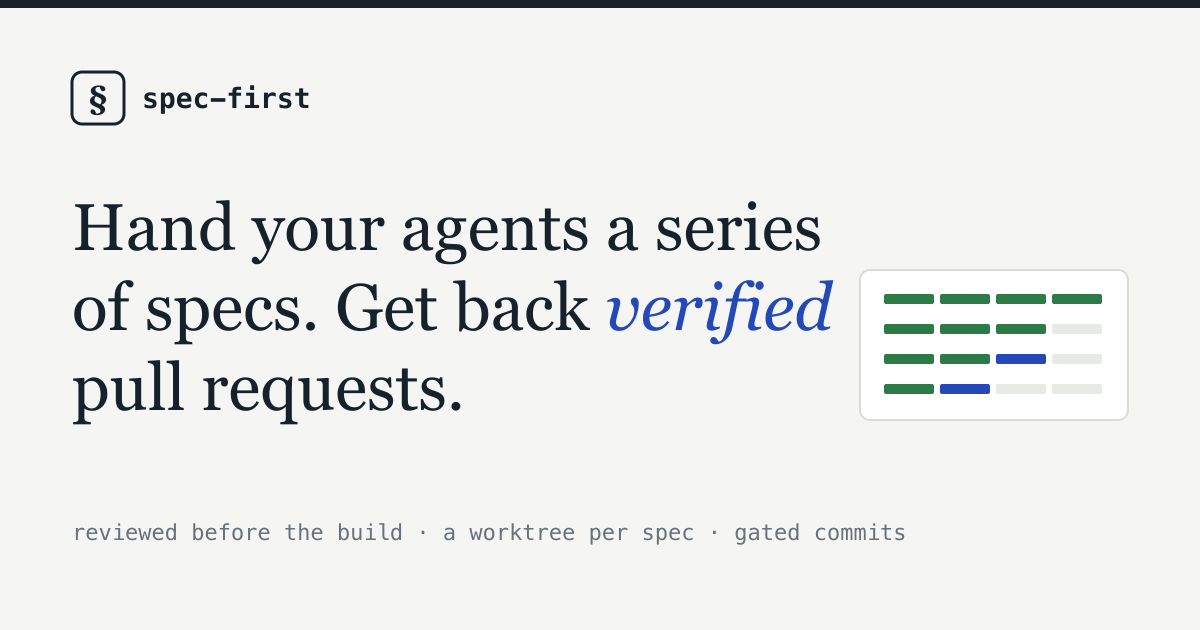
A new project introduces Prove, a plugin designed to bring specification-first agentic development to AI coding agents. This approach improves autonomous code generation by requiring reviewed specifications, utilizing isolated worktrees, and enforcing gated commits.
Comments
After a year of using Dioxus fullstack in production, a developer reports that the Rust code is remarkably stable and uneventful. Conversely, the continuous integration pipeline has emerged as a major pain point, causing frequent and frustrating deployment challenges.
Comments2026-10-26
Why I Am a Programmer
2026-10-26A reader discussion surrounding the article "Why I Am a Programmer" highlights the enduring appeal of software development through nostalgic reflections on early computing and retro gaming. Commenters emphasize the creative freedom of building digital worlds from scratch, noting that despite vast technological advancements since the early internet days, the core excitement of engineering with nothing but time and imagination remains unchanged.
CommentsA new toolkit called ADRs4AI introduces deliberation records specifically designed to track human-AI collaboration by versioning them in Git. This framework allows developers to preserve their thought processes and ensure that decisions compound over time, bringing greater structure to the emerging practice of deliberative programming.
CommentsPaperPilot is a new open-source, local AI copilot that processes PDF documents entirely offline using a pure-Rust engine with WebAssembly and Model Context Protocol support. By eliminating cloud dependencies, it offers developers a secure, privacy-focused tool for document interaction that is now available on GitHub for community contributions.
Comments2026-10-25
Readers of an article on software ambition highlight a shift toward building high-performance, native desktop applications in Rust instead of relying on Electron. They argue that while AI tools eliminate the coding bottleneck, development teams must also overhaul slow processes like code reviews to actually ship products. Furthermore, the community believes that AI-driven productivity gains will generate more work and opportunities rather than leading to developer layoffs.
CommentsThe Goose Programming Language
2026-10-25The newly introduced Goose programming language has sparked community debate after its creator revealed that artificial intelligence was heavily used to write both the code and its documentation. While critics question the reliability and human readability of machine-generated code, the creator defends the approach by highlighting the AI's ability to implement complex algorithms and eliminate memory errors. The discussion ultimately underscores a broader industry divide regarding the practical utility and skill required to effectively integrate AI into software development.
Comments
The Node2Shell vulnerability has evolved into a broader threat known as HTTP2Shell, exploiting a critical Brotli flaw to impact numerous HTTP libraries and applications utilizing Brotli or brotlicffi. Tracked as CVE-2026-111497, this issue requires developers to immediately check their software versions and apply the available security patches.
CommentsDiscussions surrounding the performance limits of pure functional programming compared to C highlight how C's direct memory mutation and copy elision align perfectly with modern hardware's place-oriented architecture. While functional languages offer strong theoretical parallelism, their abstractions introduce indirection that hinders the spatial and temporal locality required for maximum CPU efficiency, making low-level hardware tuning essential for bridging the performance gap.
CommentsA new harness called GVS5H allows five Qwen3.8-27B models to match the coding performance of Claude Fable 5 on the LiveCodeBench Hard benchmark. This breakthrough offers a highly cost-effective alternative, delivering top-tier coding capabilities at a fifth of the price. Additionally, the system is optimized enough to be deployed entirely on a single GPU.
CommentsRewriting a Commercial Engine in Jai
2026-10-25After eight years of development using TypeScript and three.js, a commercial engine has been completely rewritten using the Jai programming language and WebGPU. The new architecture notably operates without a traditional rendering engine, and the article explores the specific motivations behind this major technical pivot.
Comments2026-10-24

Kimi K3.1 Pro and K3.1 Pro Highspeed
2026-10-24Kimi has introduced the K3.1 Pro and K3.1 Pro Highspeed, their most capable 3T-class open-weight models featuring a massive 1-million-token context window. These new models deliver significant performance upgrades specifically targeting advanced capabilities in coding, 3D modeling, and financial research.
CommentsA newly disclosed remote code execution vulnerability dubbed http2shell affects the Brotli decoder across Node, Python, and .NET environments, sparking debate over its actual server-side impact. While some developers argue the threat is overblown because the vulnerable decoder is not enabled by default, others warn that hidden dependencies in popular libraries could leave many systems unexpectedly exposed. Commenters advise checking dependency trees and applying patches, despite frustrations over the sensationalized naming of the underlying memory bug.
Comments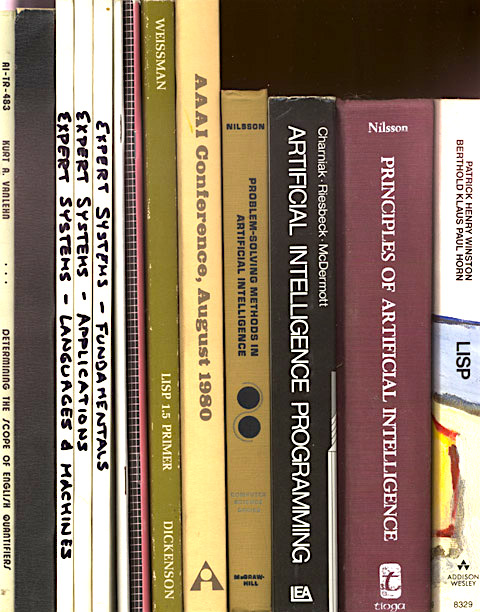
LISP Comes of Age (1980)
2026-10-24This historical Byte magazine report from 1980 covers the Stanford LISP conference, which convened immediately following the AAAI Artificial Intelligence Conference. The article highlights the maturation of the LISP programming language and its growing importance in the early days of artificial intelligence research.
Comments
Bringing uv and ty together
2026-10-24An experimental integration between uv and ty introduces first-class support for Python scripts across the command line and code editors. This update also features a unified uv check command to streamline developer workflows.
Comments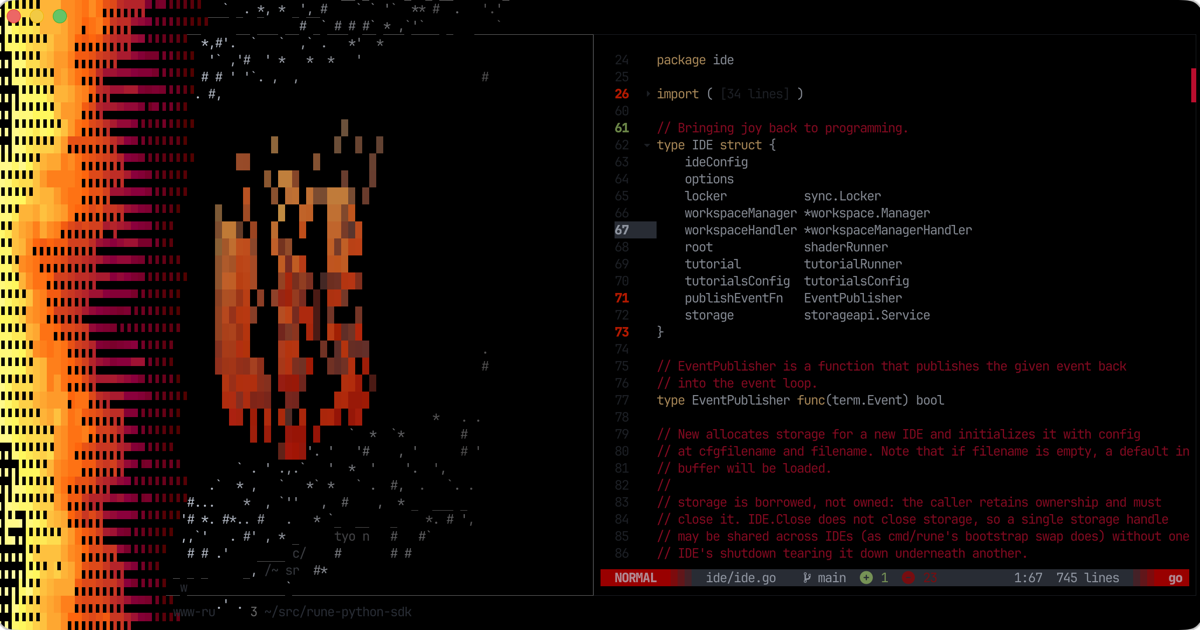
Rune 1.3 introduces TypeScript support, Helix editor integration, and Kitty graphics to enhance the platform. The update also adds a new browser package, animated activity tabs, and full workspace restoration including Agent conversations. This milestone marks the first release to feature community contributions.
CommentsNo Source Code? No Problem
2026-10-24A recent discussion highlights how AI-driven agentic coding is enabling developers to successfully recreate legacy software without access to the original source code, a feat recently demonstrated by reviving the classic game No One Lives Forever. While this capability is celebrated for preserving retro projects and challenging corporate monopolies, critics warn it could stifle open-source innovation and force companies to adopt restrictive, online-only business models to protect their intellectual property.
Comments2026-10-23
Revisiting a 1978 critique of natural language programming, a recent discussion debates whether AI models function as modern compilers or simply replace human software developers. Critics argue that unlike traditional compilers that precisely preserve formal semantics, AI translation of natural language is inherently ambiguous and can yield multiple interpretations. Ultimately, the thread highlights that both human engineers and AI require highly detailed, iterative communication to accurately transform vague specifications into functional code.
Comments
Jank is a native dialect of the Clojure programming language that features seamless interoperability with C++. This integration allows developers to easily combine the expressive syntax of Clojure with the performance and existing libraries of C++. It provides a powerful tool for programmers seeking to bridge functional programming with native C++ ecosystems.
Comments2026-10-22

A compromised release of LiteLLM 1.107.0 was discovered on PyPI, deploying a credential stealer and a persistent backdoor. These malicious implants execute automatically on every Python startup to silently harvest sensitive data from affected systems. Security researchers are investigating the supply chain attack and have released indicators of compromise to help developers detect the infection.
CommentsThe rapid deployment of AI coding agents is uncovering decades of hidden software vulnerabilities, sparking debate over whether AI companies are exacerbating the security crisis to profit from selling automated patching tools. While critics argue this creates a conflict of interest, others emphasize that the technology is merely exposing existing technical debt at an unprecedented scale. Consequently, the tech industry must adapt to this accelerated discovery cycle and coordinate globally to address the massive surge of newly exposed flaws.
Comments