Programming News
Programming keeps evolving as languages mature, tooling improves, and teams rethink how software should be written. This section follows that change, gathering news and articles about programming languages, compilers, development practices, and the craft of writing reliable, maintainable code.
Typical stories include language releases and proposals, deep dives into compiler and runtime internals, performance investigations, debates about coding style and architecture, and essays from experienced engineers on lessons learned. Popular ecosystems such as Rust, Python, JavaScript, and TypeScript appear regularly.
Keeping up with these topics helps developers choose the right tools, avoid known pitfalls, and grow their skills. Working engineers, students, and technical leaders follow this coverage to stay current with the ideas shaping how software gets built.
2026-10-19
The Free Pascal Compiler and Lazarus IDE have introduced full dynamic package support, a highly anticipated feature over two decades in the making. This update enables developers to instantly install and deploy native Pascal components and plugins without needing to rebuild the entire IDE. Currently available through the GetLazarus fork, these compiler and runtime enhancements will eventually be merged into the mainline Lazarus release.
Comments
A developer has introduced KillSwitch, an esoteric programming language specifically engineered to confound large language models and AI coding agents. By benchmarking major AI models against the language, the creator demonstrated their inability to successfully process or generate code within it.
Comments
A developer has proposed a novel reverse approach to Rust's borrow checking system after extensively brainstorming the concept offline with pencil and paper. The new memory management method evolved from an initial idea involving compile-time generational references. The programming community has praised both the innovative technical contribution and the author's dedication to hand-writing the accompanying blog post.
Comments
Superlite is a new autonomous build workflow for Claude Code that streamlines AI-assisted programming by eliminating the constant permission prompts required by existing tools. The accompanying article explains how this faster alternative works, provides usage instructions, and shares performance benchmarks.
Comments2026-10-18
JDK 28
2026-10-18Reader discussions surrounding JDK 28 highlight the accelerated evolution of modern Java, with developers praising its improved performance, lightweight server footprint, and near elimination of garbage collection pauses. While some question the language's relevance in the AI era, proponents argue that its robust runtime, deep telemetry, and advanced observability tools keep it highly competitive against alternative ecosystems like Elixir and Rust. Despite these ongoing advancements, some developers remain curious about Java's current startup times and its overall suitability for short-lived processes like shell commands.
CommentsParin is a newly announced open-source 2D game engine written in the D programming language. It aims to provide a delightfully simple development experience that sits between raylib and Godot in terms of complexity. The source code is currently available for community contribution on GitHub.
Comments2026-10-17

Butlerian Jihad
2026-10-17The article discusses an ideological push to negate thinking machines, emphasizing that humans must establish their own guidelines rather than relying on artificial intelligence. It argues that because reasoning depends on programming, humans must remain the ultimate authority over all technological systems.
CommentsMonte-Carlo Simulations
2026-10-17Reader discussion surrounding an article on Monte-Carlo simulations highlights the technique's versatility in approximating complex statistical values through randomized algorithms. Commenters shared diverse real-world applications of the method, ranging from predicting user behavior in mobile games and solving partial differential equations to building open-source retirement planning tools. The conversation also emphasized the growing accessibility of these numerical methods for programmers, alongside related techniques like bootstrapping.
CommentsC++26: The New Debugging Header
2026-10-17The upcoming C++26 standard introduces a new debugging header that standardizes programmatic breakpoints across different compilers and platforms. Previously, developers and major libraries had to rely on complex, platform-specific workarounds to trigger debugger breaks. This update eliminates the need to reinvent the wheel and significantly simplifies debugging tool implementation across the C++ ecosystem.
Comments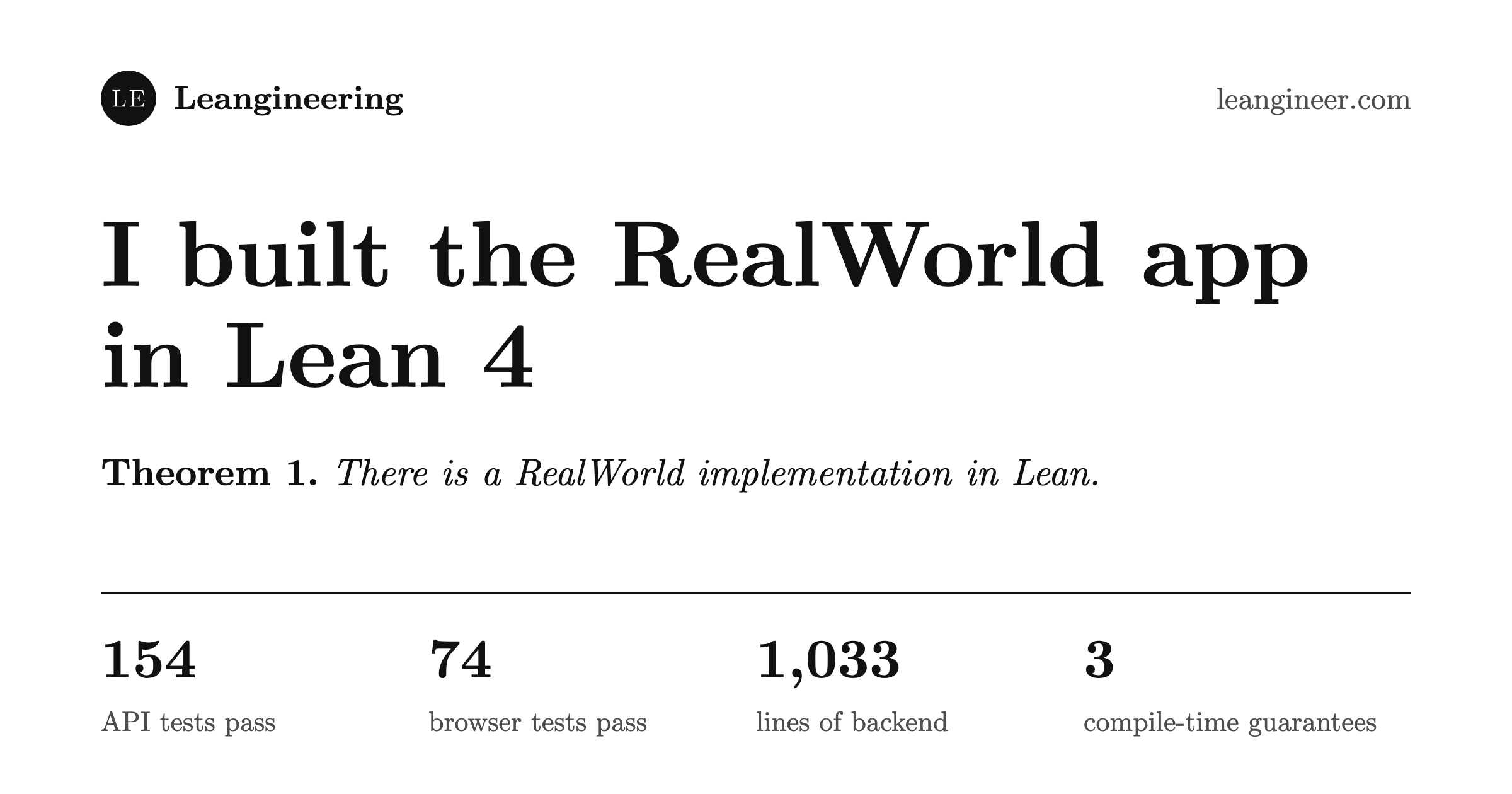
I built the RealWorld app in Lean 4
2026-10-17A developer successfully built the RealWorld reference full-stack application entirely using the Lean 4 programming language. While not yet fully production-ready, the project demonstrates that Lean 4 can be used to create significantly more robust software than typical full-stack builds.
Comments
Coconuts in Medieval Britain (2015)
2026-10-17This 2015 article explores the historical mystery of how coconuts ended up in medieval England. The piece examines ancient maritime trade routes and historical records to uncover the surprising global connections of the era.
Comments2026-10-16
Celebrating 70 Years of Fortran
2026-10-16Fortran is celebrating its 70th anniversary, marking seven decades since the pioneering language was first introduced. Despite its age, it remains a vital high-performance parallel programming language that continues to drive modern scientific and engineering applications.
CommentsAWS Labs has introduced Aidlc, a new framework that uses adaptive workflow steering rules to dynamically guide AI coding agents. By implementing AI-Driven Life Cycle methodologies, the tool aims to enhance the reliability and efficiency of autonomous software development processes.
CommentsThank You, Deno
2026-10-16Deno is joining Cloudflare and will wind down its independent investment in the runtime. Despite this transition, the tech community remains grateful for the project's existence and its lasting contributions to the industry.
CommentsNon-Determinism Doesn't Matter
2026-10-16Recent tech discussions challenge the argument that large language models cannot act as compilers due to their non-deterministic nature, noting that model outputs can easily be made deterministic. Commenters argue the true limitations of AI coding assistants stem from leaky abstractions requiring human debugging and their reliance on inductive reasoning rather than strict deductive logic. Ultimately, the consensus suggests that the stochastic errors and unpredictability of generated code, rather than theoretical non-determinism, remain the primary hurdles for automated software development.
Comments2026-10-15
OpenCode 2.0
2026-10-15OpenCode has officially launched version 2.0, introducing significant performance upgrades and new developer tools to its platform. This major update is designed to streamline the coding workflow and enhance collaboration for users.
Comments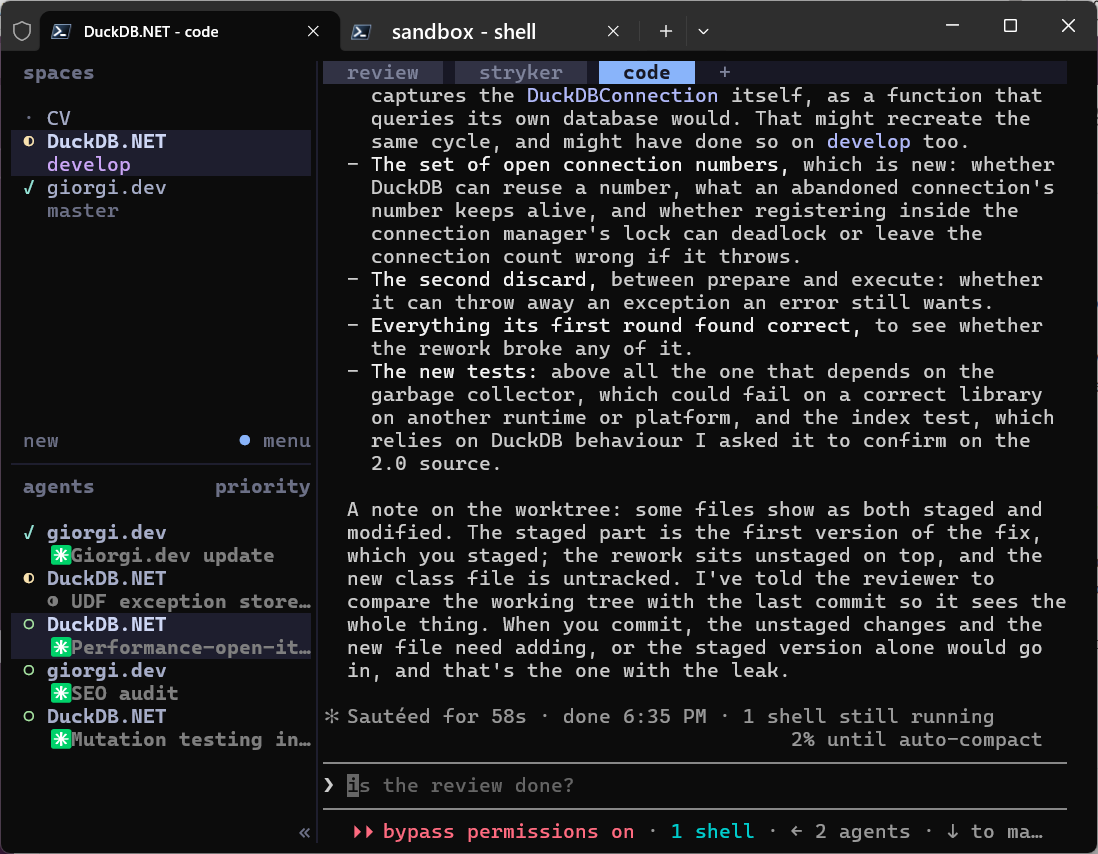
Giorgi Dalakishvili shows how he runs separate work and personal Claude Code accounts side by side in herdr, a terminal multiplexer built for AI coding agents, by giving each account its own CLAUDE_CONFIG_DIR. After a restart, herdr's session restore brought agents back on the wrong account, because it relaunches them with the server's environment rather than the pane's. The fix is a small launcher script that sets the account's config directory before starting each named herdr session, so every pane and restored agent inherits the right account.
CommentsYour C is not standard C
2026-10-15Reader discussions regarding GCC's failure to implement standard C pragmas have sparked broader debates about the fragmented state of the C programming language standard. While some developers criticize bloated compilers and questionable modern additions, others defend specific C11 and C23 features and praise alternative dialects like Plan 9 C. The conversation highlights deep community divisions over the language's ongoing evolution, with some noting that even C committee members are departing due to controversial design decisions.
Comments
Show HN: Ito – Build Terminal UIs in Lua
2026-10-15A new developer tool called Ito enables programmers to build and test terminal user interfaces using the Lua programming language. It simplifies the process of creating interactive text-based applications for the command line.
CommentsAWS has introduced Aidlc, a new framework that provides adaptive workflow steering rules for AI coding agents. This AI-Driven Life Cycle approach enables developers to dynamically guide and manage automated agents throughout the software development process.
Comments2026-10-14

Recreational Programming
2026-10-14A recent professional profile spotlights Christopher Phiri, a software developer, UX/UI designer, and illustrator who focuses on recreational programming. The overview outlines his educational background, work experience, and professional connections across the technology and design industries.
CommentsSpotatui is a fast, standalone music player written in Rust that features both a terminal and graphical interface. It allows users to stream Spotify natively without encountering standard web API rate limits. Additionally, the application supports a variety of other audio sources, including local files, Subsonic, radio, Qobuz, and YouTube.
Comments
A new open-source project called Parsimony has been introduced to benchmark the amount of extra code AI models generate. The tool measures AI verbosity to help developers evaluate the code efficiency of various AI programming assistants. By tracking these unnecessary additions, Parsimony aims to encourage more concise and effective AI-generated code.
Comments2026-10-13
A 2001 interview with programmer Giles Goddard details the immense technical hurdles of transitioning to true 3D game development during the creation of Super Mario 64. Community discussions highlight how the title's pioneering analog controls and immersive world design revolutionized the industry, cementing its legacy as a foundational masterpiece of the 3D console generation.
Comments2026-10-12
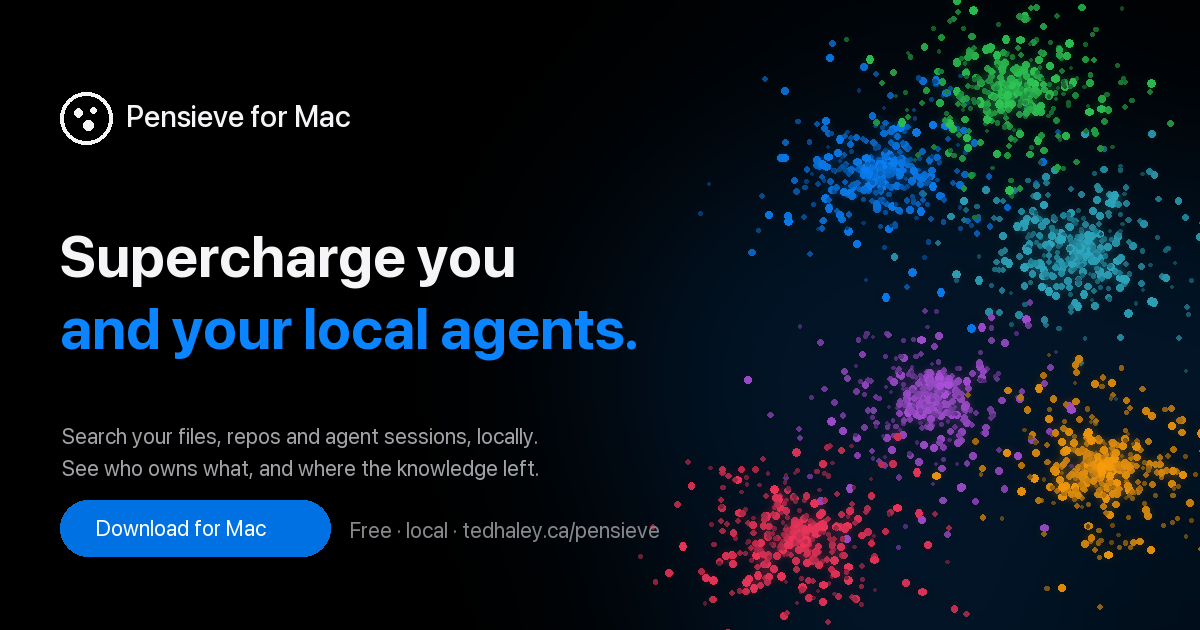
A new free Mac app uses local indexing to help AI agents locate code more efficiently, significantly reducing tool calls and token usage. The tool enables semantic and exact-word searching across local files, git repositories, and AI coding sessions by leveraging MCP context.
CommentsCalculus with Julia
2026-10-12A newly published tutorial introduces the Julia programming language through the practical application of calculus. Readers highly recommend the well-paced guide as an excellent starting point for university students learning to code.
CommentsNew York City's Click to Cancel rule is now in effect, but critics warn that companies like Adobe may circumvent the regulation by enforcing strict one-year contracts with hefty early cancellation fees. Some users suggest exploiting a 14-day subscription change window to bypass these penalties, while others anticipate more businesses will adopt similar long-term commitment strategies. Meanwhile, the broader tech community is discussing open-source alternatives to Adobe's software, highlighting a new Rust-based project called ArtCraft and debating the future of Affinity products under Canva's ownership.
CommentsSafe SIMD in Rust, even on the inside
2026-10-12A new approach to Rust's SIMD abstractions resolves previous safety concerns for developers writing performance-critical code. It eliminates the need for unsafe blocks by providing robust guarantees for low-level hardware optimizations. This improvement ensures that SIMD operations are now completely safe to use both at the API level and within internal implementations.
Commentsapsw: Another Python SQLite Wrapper
2026-10-12APSW, which stands for Another Python SQLite Wrapper, is an open-source project that provides a specialized interface for integrating SQLite databases within Python applications. Developers can explore the codebase and contribute to its ongoing development directly through its GitHub repository.
Comments2026-10-11

Knuth reward check
2026-10-11The author reflects on receiving a famous hexadecimal reward check from computer science pioneer Donald Knuth twenty years ago. Knuth traditionally issues these checks to individuals who discover bugs in his foundational programming books or software.
Comments